
Best Snowboards for Beginners in 2026

On this page7
- 01What’s the best all-mountain snowboard for beginners?
- 02Best beginner snowboard picks compared
- 03What’s the best Burton snowboard for beginners?
- 04What’s the best snowboard for women beginners?
- 05What are the best snowboard brands for beginners?
- 06What snowboard works from beginner to intermediate without rebuying?
- 07How much should you actually spend?
The best snowboard for beginners in 2026 is the Burton Cultivator ($429.95), a Flat Top all-mountain board built to keep edges from catching while you learn. If you want a board made specifically for a woman’s build and flex needs, the Salomon Lotus ($399.95) is the strongest current pick. Both share the traits that actually matter for a first board: soft-to-medium flex, a catch-free profile, and a shape that forgives skidded turns instead of punishing them.
This guide rounds up every real angle on “best beginner snowboard” into one list, so you are not reading six near-identical articles to answer one question: which board, which brand, and whether it works for women or for the jump from beginner to intermediate.
What’s the best all-mountain snowboard for beginners?
All-mountain is the only category worth shopping in as a beginner. It is not a compromise pick; it is the correct pick, because a groomer-only or powder-only board leaves you stuck the first time conditions change on you mid-run.
The Burton Cultivator, new for the 2026 season, is the current standard-bearer. Its Flat Top profile with Easy Bevel keeps the running edges lifted at the contact points, so you get the stability of a mostly flat base without the edge-catching that ruins a beginner’s first week. The Fly 900G wood core keeps weight down while still giving the board enough backbone to hold an edge as your technique improves.
The Rossignol Evader ($449.95) is the closest rival. Its Amptek Auto-Turn rocker runs a 70/30 rocker-to-camber blend, which floats and pivots more readily than the Cultivator’s flatter profile. Pick the Evader if you want a board that turns itself for you; pick the Cultivator if you want a board that grows with you into faster, more deliberate carving.
Best beginner snowboard picks compared
Prices are current 2026 US retail and move with sales, so treat this as a shopping shortlist, not fixed numbers.
| Board | Brand | Price (USD) | Profile / flex | Best for |
|---|---|---|---|---|
| Cultivator | Burton | $429.95 | Flat Top, soft-medium | Best overall beginner pick |
| Instigator PurePop Camber | Burton | $459.95 | PurePop Camber, medium | Faster progression, more pop |
| Lotus (Women’s) | Salomon | $399.95 | Flat Out Camber, soft (3/10) | Best women’s-specific board |
| Evader | Rossignol | $449.95 | Amptek Auto-Turn rocker, soft | Most catch-free, floatiest ride |
| Facts BTX | GNU | $429.99 | BTX hybrid, medium (4-7) | Best beginner-to-intermediate |
| Prime Raw | Nitro | $349.95 | Cam-Out camber, medium (5/10) | Best budget pick |
What’s the best Burton snowboard for beginners?
Burton is the market leader for a reason, and it earns the “safest default” label with two boards aimed squarely at new riders.
The Cultivator is the pick for someone who has never strapped in. Its twin shape rides identically switch or regular, which matters early on when you have not settled into a dominant stance, and its gender-neutral sizing runs from 135cm up through women’s-labeled lengths like 155w and 165w, so one model line covers most body types.
Step up to the Instigator PurePop Camber ($459.95) once you can already link turns and want a board that rewards it. Its Super Fly 800G core and PurePop Camber profile, which adds subtle flat zones just outside your feet, deliver more pop and edge grip than the Cultivator without tipping into an aggressive, catch-prone camber board. It is the honest “second board” for someone who bought a rental-style deck first and outgrew it in one season.
One Burton quirk worth knowing before you buy: every current Burton board uses the proprietary Channel mounting system, which needs Channel-compatible or EST bindings. It is not a dealbreaker, but check compatibility before you pair a Burton board with bindings from another brand. Our snowboard bindings size guide covers exactly how Channel mounting differs from the standard 2x4 and 4x4 patterns.
What’s the best snowboard for women beginners?
Women’s-specific boards are not a re-sticker of the men’s version. They typically use a softer, torsionally lighter flex tuned for lower average rider weight, and often a shorter effective edge for easier turn initiation at a given height.
The Salomon Lotus is the clearest women’s beginner pick on the market right now. Its 3/10 flex is genuinely soft, its Flat Out Camber profile trades snap for stability, and its Bite Free Edges are built specifically to reduce the catching that causes most beginner falls. It is a confidence-first board, not a compromise.
If you would rather stay in the Burton ecosystem, the gender-neutral Cultivator in a women’s-labeled length is a fair substitute, and it carries slightly more all-mountain versatility than the Lotus once you are past your first few weeks. Skip Burton’s Feelgood line for a first board despite its popularity; it is tuned as an aggressive carving board for experienced riders, not a learner’s deck, and its stiffer camber will fight you more than help you early on.
What are the best snowboard brands for beginners?
No single brand owns “best for beginners.” Five brands consistently build genuinely forgiving first boards, and picking between them comes down to feel and budget more than any real quality gap.
- Burton — the widest size range and dealer network; the Cultivator and Instigator cover most beginners.
- Salomon — the Lotus is the standout women’s board; Salomon’s men’s and unisex lines lean similarly forgiving.
- Rossignol — the Evader’s rocker-heavy profile is the most catch-free board on this list.
- GNU — the Facts BTX blends freestyle playfulness with genuine all-mountain manners.
- Nitro — the Prime Raw is the best-value entry point without cutting corners on core construction.
If you are choosing on price alone, Nitro and GNU currently undercut Burton by $30 to $80 for a comparably built board. If you are choosing on resale value and boot-fit ecosystem, Burton’s scale still wins.
What snowboard works from beginner to intermediate without rebuying?
This is the question the other five deserve an honest answer to, and it depends on avoiding boards built to be outgrown. Rental-fleet-style boards, ultra-soft learner decks, and anything marketed purely as “easiest to ride” tend to feel sluggish the moment you start carving with intent, usually within a season.
The GNU Facts BTX ($429.99) is the strongest progression pick here. Its BTX hybrid contour blends banana rocker underfoot with mild camber at the nose and tail, so it stays catch-free while you learn but holds an edge well enough to reward better technique later. Flex varies by size, from a soft 4 in the smaller lengths to a firmer 7 in the larger women’s-specific sizes, so size selection matters more than usual with this board.
The Nitro Prime Raw ($349.95) makes the same case at a lower price. Its Cam-Out camber profile and 5/10 medium flex sit right in the middle of forgiving and responsive, which is exactly the zone a board needs to occupy to still feel good a year after your first day. The Burton Cultivator, covered above, does this too; all three are built as one-board answers to “beginner to intermediate,” not as two separate purchases.
How much should you actually spend?
Budget $350 to $460 for a genuinely good new board from any of the brands above. That range buys real construction: a wood core, a catch-free profile, and a brand that stands behind it, not a big-box composite deck that flexes unpredictably.
Go lower only through end-of-season sales, which regularly knock 30 to 40 percent off these same boards each spring, or by buying last year’s graphic at a discount since the underlying construction rarely changes year to year. If you are still deciding whether to rent or buy at all, our complete beginner’s guide to snowboards walks through that math along with sizing by weight. And once you have picked a board, our beginner’s guide to snowboard bindings covers the one piece of gear people most often get wrong on their first setup.
Frequently asked questions
Pick by category, not hype: all-mountain over freestyle or powder-specific, a women’s-tuned flex if that fits your build, and a progression-friendly profile like the Cultivator, Facts, or Prime Raw if you do not want to buy a second board next season.
Frequently asked questions
What is the best all-mountain snowboard for beginners?+
The Burton Cultivator ($429.95) is the strongest 2026 pick: a Flat Top profile with Easy Bevel keeps edges catch-free, a soft-to-medium flex forgives mistakes, and gender-neutral sizing covers most riders. The Rossignol Evader ($449.95) is a close second if you want a rocker-heavier feel that floats more.
Is Burton the best snowboard brand for beginners?+
Burton is the safest default because of its size range, dealer network, and beginner-focused Flat Top boards like the Cultivator and Instigator. It is not the only good option: Salomon, Rossignol, GNU, and Nitro all build comparably forgiving boards, often for less, so do not assume you must pay for the Burton name.
What is the best snowboard for a woman who is a beginner?+
The Salomon Lotus ($399.95) is built specifically for new women riders, with a soft 3/10 flex and a Flat Out Camber profile that favors stability over snap. The gender-neutral Burton Cultivator, available in women's-specific lengths, is a strong alternative if you want a slightly less playful, more all-mountain ride.
Should a beginner buy an all-mountain or freestyle snowboard?+
All-mountain, without exception. Freestyle and powder-specific boards trade away the stability and predictable edge hold a new rider needs. Every board in this guide is all-mountain or all-mountain-freestyle, built to handle groomers, learning terrain, and the occasional powder day without punishing you for imperfect technique.
Can I use a beginner snowboard as I progress to intermediate?+
Yes, if you pick a progression-oriented board rather than a pure learner board. The Burton Cultivator, GNU Facts, and Nitro Prime Raw are all built with enough camber and edge hold to reward better technique as you improve, so you will not outgrow them after one season like you would a very soft rental-style deck.
How much does a good beginner snowboard cost in 2026?+
Expect $350 to $460 for a new board from a major brand, with the Nitro Prime Raw ($349.95) at the budget end and the Burton Instigator ($459.95) near the top. End-of-season sales regularly cut 30 to 40 percent off these prices, so shopping in spring for the following winter is the cheapest route in.
Sources
Play & tools
Free browser games and tools — no account, no download.
- Play today's Sports Connections — Today's Sports Connections — daily hints, answers, and play the grid.
- Play Guess the NFL Player — A new mystery NFL player every day. Eight guesses, with a clue on each — plus free unlimited mode.
- Explore all our games →
Related winter sports guides
View all →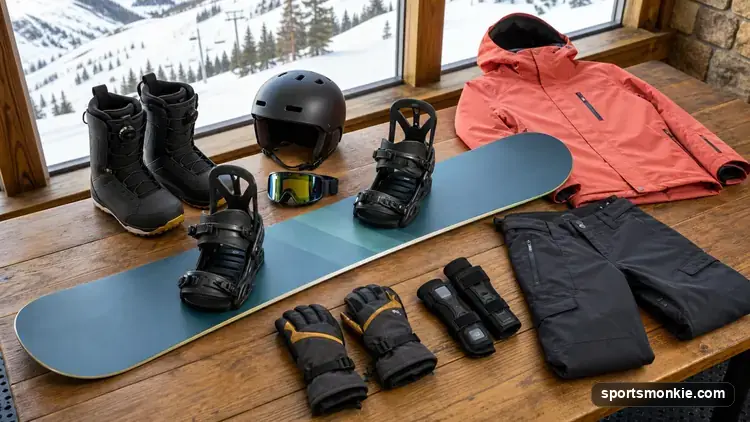
Snowboard Gear for Beginners: The Complete Checklist
The complete snowboard gear checklist for beginners, with real 2026 package prices and the rent-vs-buy math for a first season.
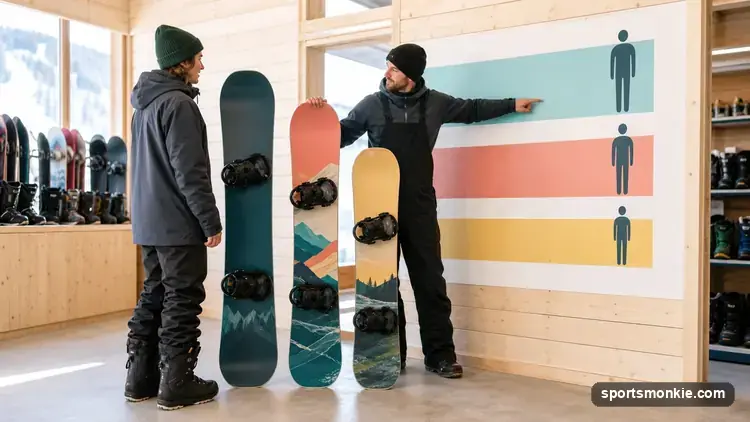
Snowboard Size Chart for Beginners: How to Size a Board
Snowboard size chart for beginners by weight, height, and boot width, plus how riding style shifts the number and the sizing mistakes that ruin a first season.
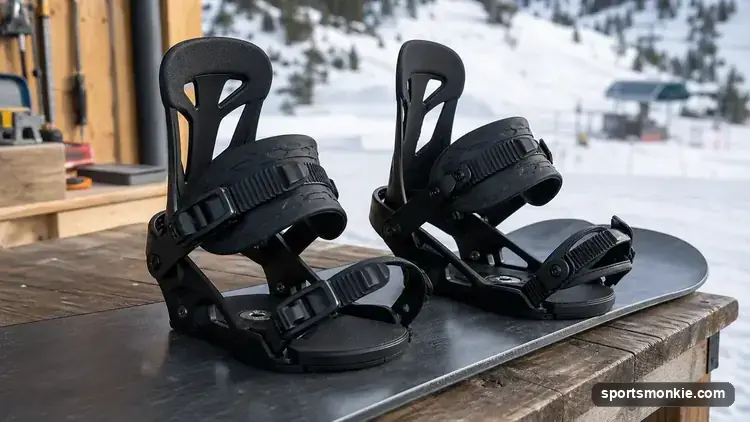
Snowboard Bindings for Beginners: Flex, Fit and Picks
The best snowboard bindings for beginners have soft-medium flex and easy entry. Strap vs rear-entry, sizing, and budget picks with real 2026 prices.
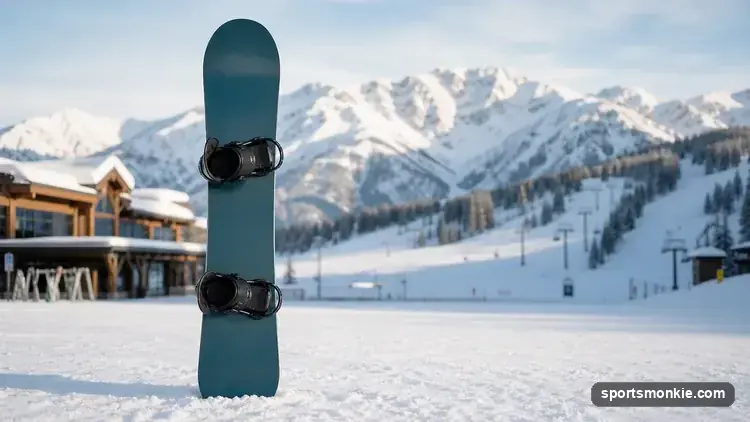
Snowboard for Beginners: How to Choose Your First Board
The best beginner snowboard is soft, all-mountain, and hybrid or rocker. Get profile, flex, and size right, with budget picks and a full gear checklist.

Adult Ski Lessons: What to Expect and Cost
Adult ski lessons explained: group vs private, what your first day covers, how long it takes to learn and typical 2026 price ranges, with tips to save.
Curling Rules Explained for Beginners
Curling is a team sport where players slide stones toward a target. The rules, scoring, sweeping and why players shout, explained simply for beginners.