
Snowboard for Beginners: How to Choose Your First Board
On this page6
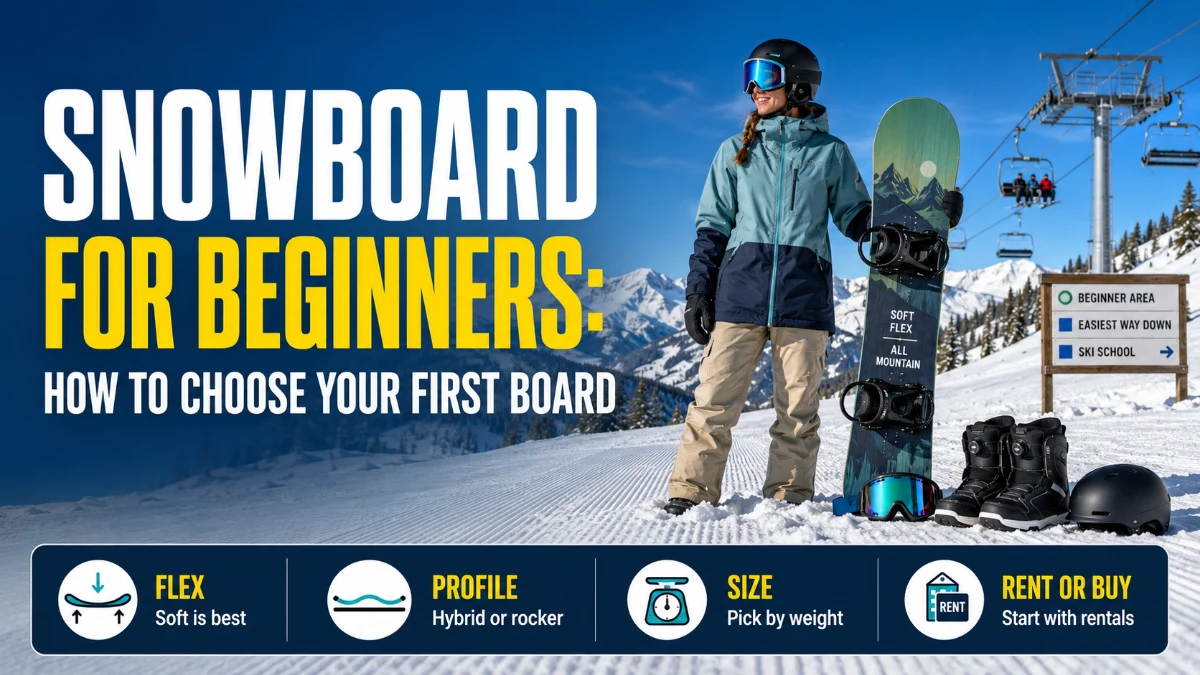
The best snowboard for a beginner is a soft-flexing, all-mountain board with a hybrid-camber or rocker profile and a true-twin shape, sized to your weight toward the shorter end of your range. Those traits keep the board catch-free and forgiving, so skidded turns and small mistakes don’t punish you. Get the profile, flex, and size right, and the exact brand matters far less than first-time buyers assume.
Below is what actually decides whether a board helps or fights you, a weight-based sizing table you can read at a glance, current budget picks with prices, and a straight answer on renting versus buying.
What kind of snowboard should a beginner buy?
Four traits separate a forgiving learner’s board from one that punishes you. The first is a soft flex, roughly 2 to 4 on the industry’s loose 1-to-10 scale, so the board bends under gentle pressure instead of demanding you muscle every turn. REI puts most beginners in the soft-to-medium range for exactly this reason.
The second trait is an all-mountain design, versatile enough to handle groomed runs, a little powder, and the icy patch you’ll meet on any real hill. The third is a forgiving profile (covered next) that keeps your edges from catching. The fourth is a symmetrical true-twin or directional-twin shape that rides the same both ways, which makes learning to stop evenly and ride switch far less frustrating. Nail these and the board quietly does its job while you work on balance. Skip anything sold as “aggressive,” “stiff,” or “freeride” for now.
Camber or rocker: the profile that decides forgiveness
Profile is the board’s shape lying flat on the ground, and it’s the single biggest factor in how forgiving a board feels. Traditional camber arches up in the middle with contact points near the tip and tail. It grips, carves, and pops beautifully, but it also catches edges and punishes sloppy technique, which makes it a poor first board. Full rocker curves the opposite way like a gentle banana, floating easily and forgiving edge catches, but it can feel loose and washy once you pick up speed. Tactics has a clear side-by-side breakdown of every profile if you want the visuals.
For most beginners the answer sits in the middle. Hybrid-camber boards put camber underfoot for stability and edge hold while lifting the tip and tail with rocker, so the board stays catch-free without feeling unstable. Burton notes these blended shapes give you the best of both worlds, and nearly every board on the list below uses one. If you’re choosing between a full-rocker board and a hybrid, take the hybrid; the small gain in stability is worth it once you leave the bunny slope.
What size snowboard do I need for my height and weight?
Weight, not height, is the number that matters most, so start with your body weight before anything else. evo’s size chart is built around weight for this reason, and beginners should lean toward the shorter end of their range because a shorter board turns and stops more easily at slow speed. As a rough visual check, a board stood on its tail should reach somewhere between your chin and nose.
Here’s a beginner-oriented starting range, sized down slightly from a standard all-mountain length for easier control:
| Rider weight | Beginner board length |
|---|---|
| Under 110 lb (50 kg) | 138–144 cm |
| 110–130 lb (50–59 kg) | 144–149 cm |
| 130–150 lb (59–68 kg) | 148–152 cm |
| 150–170 lb (68–77 kg) | 152–156 cm |
| 170–190 lb (77–86 kg) | 155–159 cm |
| 190–210 lb (86–95 kg) | 158–162 cm |
| Over 210 lb (95 kg) | 161–165 cm+ |
Two fit details trip people up. Riders with larger feet (roughly US men’s 11 and up) should look at a wide board so their boots don’t drag in the snow during turns; ideally your boots overhang the edges by only about a centimeter each side. And shape affects feel: a true-twin is symmetrical and rides identically both ways, a directional-twin leans slightly one direction while staying friendly, and a strongly directional board favors going downhill but feels awkward while you’re learning both stances. Twins and directional twins are the safest starting shapes. If you want the full binding-mounting and stance detail, our snowboard bindings size guide covers how the board and bindings fit together.
Best beginner snowboards for 2025–2026 (with prices)
The boards below are widely recommended for learners this season. Model years, availability, and pricing shift constantly and vary by region, so treat these as starting points and confirm current specs before buying. Prices are approximate US retail as of 2026.
| Board | Profile | Flex (approx.) | Shape | Price (USD) |
|---|---|---|---|---|
| Burton Ripcord | Flat top (rocker/flat) | Soft (~2/10) | Directional | ~$400 |
| Rossignol Evader | Rocker/camber hybrid | Soft | Directional | ~$400 |
| Salomon Pulse | Flat / rocker tips | Soft | Directional twin | ~$400 |
| Nitro Prime Raw | Camber (Cam-Out) | Soft-medium | Directional | ~$350 |
| Ride Agenda | Hybrid | Soft | Twin | ~$400 |
A few notes on the picks. The Burton Ripcord is about as textbook a first board as exists: a flat-to-rocker profile and very soft flex that make catching an edge hard to do. The Rossignol Evader and Salomon Pulse are the picks to watch for a discount, both catch-free and easy to skid into a turn, and both regularly drop toward $250–300 in end-of-season sales. The Nitro Prime Raw keeps real camber between your feet with early rise in the nose and tail, so it teaches genuine edge control while staying forgiving; pick it if you learn fast and want a board to grow into. The Ride Agenda is a friendly true-twin that’s happy on groomers and a first park lap.
If you can only spend on one component, spend it on boots, not the board. A $350 deck with well-fitted boots beats a $600 deck with rental boots every single day.
Should you rent or buy your first snowboard?
Rent for your first few days. It lets you feel different profiles and sizes before spending real money, and it removes the risk of buying the wrong board before you know what you like. But rentals add up fast, and that’s where buying wins.
Here’s the actual math. A US board-and-boot rental package runs about $45 to $55 a day at most resorts. A complete beginner setup (board, bindings, and boots) runs roughly $500 to $700 new, or around $400 to $450 if you buy a last-season board and hunt sales. At $50 a day, a $450 setup breaks even in nine rental days, and a $600 setup in twelve. If you plan to ride even one full week or a handful of weekends this season, buying is cheaper and you get gear dialed to your feet instead of whatever’s left on the rental wall.
If you’re building the whole kit, read our beginner’s guide to snowboard bindings next, since bindings are the one part people overspend or underspend on most.
Your complete beginner gear checklist
The board is one line on the shopping list. Boots are the most important purchase of all, because an ill-fitting boot ruins every run no matter how good the board is, so try several pairs and choose comfort over graphics.
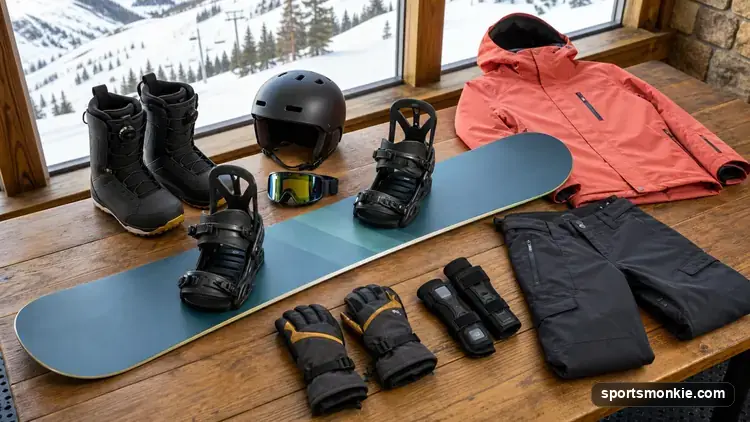
- Boots — snug but not painful; the priority buy, rented or owned.
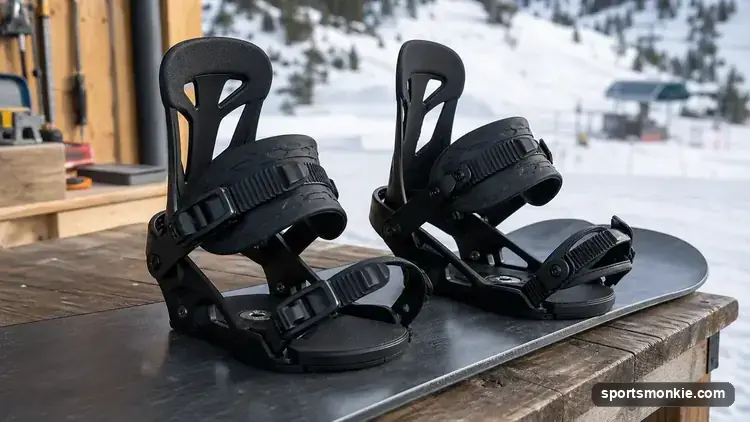
- Bindings — soft-flex, sized to your boots (usually about $120–$200 new).
- Helmet — non-negotiable; well-fitted head protection.
- Goggles — UV protection and anti-fog for changing light.
- Waterproof jacket and pants — breathable outer layers; dedicated snowboard jackets often start around $200 and pants around $150 at full price, with plenty cheaper on sale.
- Insulated gloves or mittens — mittens run warmer.
- Base layers and snowboard socks — moisture-wicking merino or synthetic; skip cotton, which stays wet and cold.
- Wrist guards (optional) — genuinely worth it for a first season, when wrist injuries from backward falls are most common.
Get the profile, flex, and size right, put your money into boots, and you’ll progress far faster than someone chasing a flashy graphic. For more first-season help across the mountain, browse the Winter Sports hub or, if you’re weighing two boards, our sister guide to snowboard bindings for beginners rounds out the setup.
Sources
- REI Expert Advice — How to Choose a Snowboard
- evo — How to Choose a Snowboard and Size Chart
- Burton — Rocker Snowboard Guide (Camber vs. Rocker vs. Flat)
- Tactics — Snowboard Camber Profiles Explained
If that interests you, Snowboard Tips for Beginners is a good next stop.
Frequently asked questions
What kind of snowboard should a beginner buy?+
Buy a soft-flexing all-mountain board with a hybrid-camber or rocker profile and a true-twin shape. Those traits keep the board catch-free and forgiving, so skidded turns and small mistakes do not throw you. Skip stiff, aggressive full-camber decks until you can link turns confidently on a green run.
What size snowboard do I need for my height and weight?+
Rider weight matters more than height. Match the board to your weight on the maker's size chart, then pick the shorter end of your range because a shorter board turns and stops more easily at slow speed. As a rough check, a board stood on its tail should reach somewhere between your chin and nose.
Is camber or rocker better for a beginner?+
A hybrid or rocker profile beats full camber for most learners. Full camber grips and pops well but catches edges and punishes mistakes. Rocker is very forgiving but feels loose at speed. Hybrid camber puts camber underfoot and rocker at the tip and tail, blending stability with a catch-free feel, which is why it is the common learner pick.
How much should I spend on a beginner snowboard?+
A solid new beginner board runs about $300 to $500 in the US as of 2026; a full setup with bindings and boots runs roughly $500 to $700 new. End-of-season sales cut 30 to 40 percent, and last-season or used decks can drop the board under $250. Boots are worth spending on; the board is not where you splurge.
Should I rent or buy a snowboard as a beginner?+
Rent for your first few days to try different profiles and sizes before committing. Once you know you will ride five or more days a season, buying pays off, since board-and-boot rentals run about $45 to $55 a day in the US. A $450 setup breaks even in nine or ten rental days, and keeps serving you as you progress.
What gear do I need to start snowboarding?+
Beyond the board you need boots, bindings, a helmet, goggles, a waterproof jacket and pants, insulated gloves or mittens, and moisture-wicking base layers and socks. Boots are the single most important buy because a poor fit ruins every run. Wrist guards are genuinely worth it for a first season, when backward falls are most common.
Sources
Play & tools
Free browser games and tools — no account, no download.
- Play today's Sports Connections — Today's Sports Connections — daily hints, answers, and play the grid.
- Play Guess the NFL Player — A new mystery NFL player every day. Eight guesses, with a clue on each — plus free unlimited mode.
- Explore all our games →
Related winter sports guides
View all →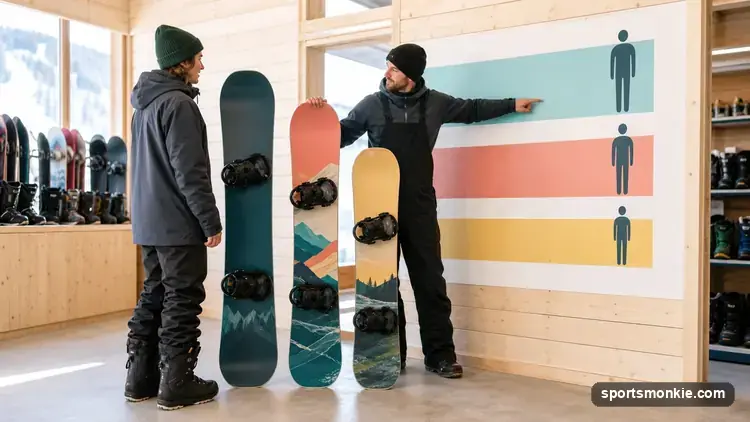
Snowboard Size Chart for Beginners: How to Size a Board
Snowboard size chart for beginners by weight, height, and boot width, plus how riding style shifts the number and the sizing mistakes that ruin a first season.
Snowboard Gear for Beginners: The Complete Checklist
The complete snowboard gear checklist for beginners, with real 2026 package prices and the rent-vs-buy math for a first season.
Snowboard Bindings for Beginners: Flex, Fit and Picks
The best snowboard bindings for beginners have soft-medium flex and easy entry. Strap vs rear-entry, sizing, and budget picks with real 2026 prices.
Recurve Bow for Beginners: How to Choose Your First Bow
A recurve bow is the best starting point for new archers and the Olympic target style. This guide covers draw weight, bow length, and what to look for.
Best Snowboards for Beginners in 2026
The best snowboard for beginners in 2026 is a soft, all-mountain board like the Burton Cultivator ($429.95). Compare Burton, women's, and budget picks.
Snowboard Lessons for Beginners: Cost and What to Expect
Snowboard lessons for beginners: 2026 group vs private prices in the US, UK and Australia, how many lessons to link turns, and why day one is hardest.