
How to Tape a Lacrosse Stick: Grips That Actually Help
On this page7
The two tape jobs that actually help are simple: a knob at the butt-end so your bottom hand never slides off, and a thin reference band a few inches up the shaft so your top hand lands in the same place every time. Use cloth athletic tape or hockey tape, keep it tight and thin, and add a full wrap only if you play in the wet. Everything else is preference, and most of it just adds weight.
Taping is not stringing. This is the quick, no-skill job you do to the shaft, not the involved work of tying a pocket.
Why tape a lacrosse stick at all?
Two reasons, and both are about your hands finding the shaft without looking. Under pressure, with gloves on, you cannot glance down to check your grip. A butt-end knob gives your bottom hand a physical stop, so it catches instead of sliding off the end when you throw a hard pass or take a check. A reference band gives your top hand a landmark, so your hands set at a consistent width shot after shot.
That consistency is the whole point. Coaches at Inside Lacrosse and Lax All Stars push the same idea: tape should make your grip repeatable, not decorate the stick.
How to tape the butt-end knob
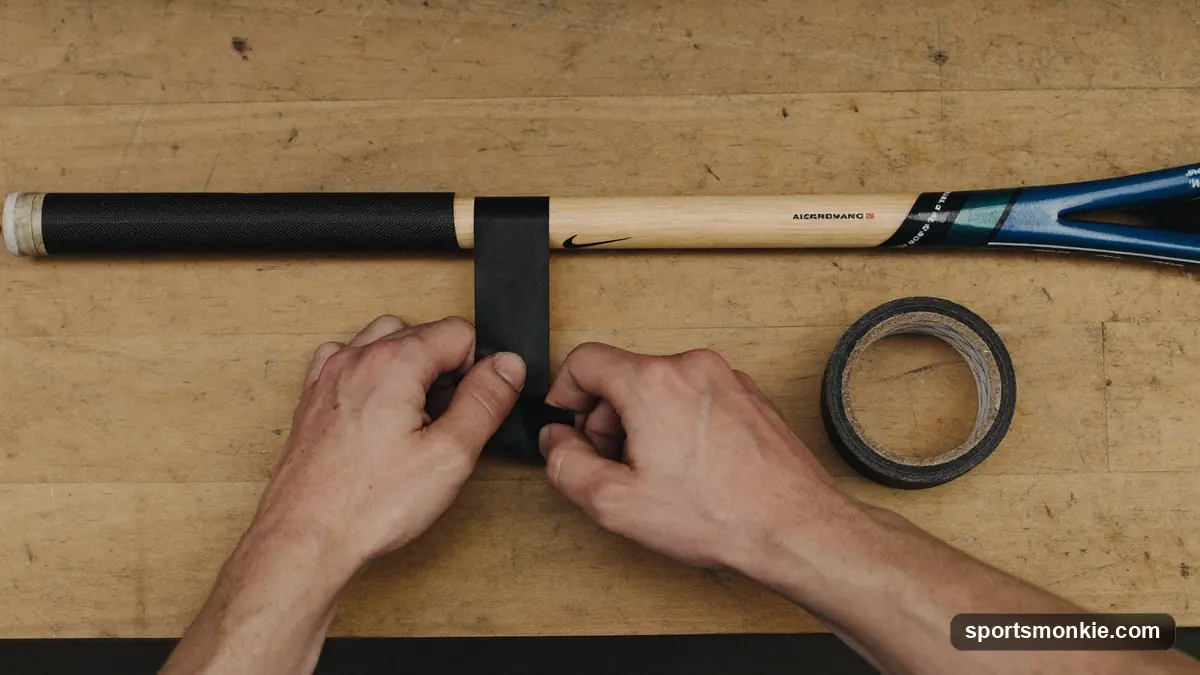
This is the one every player should do. Tear off a strip of cloth athletic tape and wrap tightly around the very bottom of the shaft, building up several layers into a raised ring. Aim for a knob thick enough that your gloved bottom hand clearly catches on it, but not so bulky it feels like a doorknob.
Wrap it tight. Loose tape slides down the shaft mid-game and the knob disappears exactly when you need it. Finish by pressing the end down firmly so it does not peel. A good knob lasts a few weeks of practice before it needs a refresh.
Adding a top-hand reference band
The second useful job is a thin band a few inches down from the top of the shaft, where your top hand naturally sits. One or two wraps is enough; you want a raised edge you can feel through your glove, not a thick grip. When your top hand finds that band, your hands are automatically the right distance apart for cradling and shooting.
This is the wrap most beginners skip and most consistent shooters keep. It costs ten seconds and it fixes the wandering top hand that makes passes fly high or wide.
Common lacrosse tape jobs, and when to use each
Not every wrap suits every player. Here is how the main tape jobs compare so you tape for your position, not for looks.
| Tape job | What it is | Best for | Watch out for |
|---|---|---|---|
| Butt-end knob | Built-up ring at the bottom | Every player | Wrap tight or it slides |
| Top-hand reference band | Thin raised band up the shaft | Shooters, feeders | Keep it thin; too thick hurts feel |
| Full-shaft wrap | Tape down most of the shaft | Wet weather, extra grip | Adds weight; kills bare-shaft feel |
| Goalie grip wrap | Tackier full or partial wrap | Goalies handling in traffic | Refresh often; wears fast |
| Head/scoop tape | Tape near the throat or plastic | Defenders wanting durability | Check it is rule-legal first |
For most field players, the knob plus the reference band is the entire kit. Add the full wrap only when rain or sweat makes a bare shaft slick. Before taping anywhere near the head, confirm it is legal under USA Lacrosse rules for your level, since covering certain areas can draw a check.
What tape should you actually use?
Cloth athletic tape is the default and it works. Hockey tape is nearly identical and popular for its grip, especially in the cold. Both hold a knob and grip through gloves. Lacrosse-branded grip tapes exist and add extra tack, which helps goalies and wet-weather players, but they are a nice-to-have, not a requirement.
Skip electrical tape and thin plastic tapes for the grip. They feel slick, they do not build a firm knob, and they unravel into a mess. Thin, tight cloth tape beats thick, sloppy plastic every time.
One more habit worth building: re-tape on a schedule, not after a failure. A knob that has flattened out or a band that has started to peel will let go at the worst moment, usually mid-check with the ball on your stick. Most players get a few weeks of hard use out of a fresh knob before the layers pack down and the grip goes slick. Peel it off, wipe the shaft, and rebuild it rather than adding a fresh layer over a dead one, since taping over old tape traps grit and never grips as well as bare cloth on clean metal.
Tape or restring?
Know the difference before you start pulling tape off the roll. Taping fixes the shaft and your grip. It does nothing for how the ball leaves the head. If your passes are inconsistent or your pocket has gone soft, the problem is the stringing, not the tape, and you want our guide to how to string a lacrosse head instead. Picking the right netting matters too; see our take on the best lacrosse mesh before you cut a single string.
Once the grip is dialed in, put it to work. Our lacrosse drills for beginners are the fastest way to feel whether your new knob and reference band are actually helping your throws land.
The bottom line
Tape the butt-end knob so your bottom hand never slips, add a thin reference band so your top hand finds home, and use cloth or hockey tape kept tight and thin. That covers 90 percent of players. Reach for a full wrap only in the wet, and never let decoration talk you into burying a light shaft under a roll of tape you do not need.
Freshness note: tape choices are stable, but rules on where you may tape the head vary by level and update periodically; confirm current USA Lacrosse equipment rules before taping near the head.
Frequently asked questions
How should you tape a lacrosse stick?+
Start with a butt-end knob: wrap several tight layers at the very bottom so your lower hand catches on it and never slips off. Then add a thin reference band a few inches up for your top hand. Keep both wraps tight and thin. Most players stop there; a full-shaft wrap is only for grip in wet conditions.
Is it easy to restring a lacrosse head?+
Taping and restringing are different jobs. Taping the shaft takes minutes and needs no skill. Restringing a head, tying the mesh, sidewall strings, and shooting strings, is more involved and takes practice to get the pocket right. If you want to restring rather than tape, that is a separate project covered in our stringing guide.
Is lacrosse tape the same as athletic tape?+
They overlap. Standard cloth athletic tape works fine on a lacrosse shaft and is what many players use. Hockey tape is similar and popular for its grip. There are lacrosse-branded tapes too, but they are not required. Avoid stretchy or plastic electrical tape for the grip; it slides and does not hold a knob.
What tape should I use on a lacrosse stick?+
Cloth athletic tape or hockey tape is the standard choice because it grips even through gloves and builds a firm knob. For wet-weather games, a tackier grip tape or an extra wrap helps. Skip electrical tape and thin plastic tapes; they feel slick and unravel. Thin, tight cloth tape beats thick, sloppy layers every time.
Sources
Play & tools
Free browser games and tools — no account, no download.
- Play today's Sports Connections — Today's Sports Connections — daily hints, answers, and play the grid.
- Play Guess the NFL Player — A new mystery NFL player every day. Eight guesses, with a clue on each — plus free unlimited mode.
- Explore all our games →
Related guides

Lacrosse Cleats vs Football Cleats: What's Actually Different
Lacrosse cleats vs football cleats: molded football cleats are usually legal for lacrosse, but metal spikes aren't. Here's the real difference and what to buy.

Parts of a Lacrosse Stick: Head, Shaft and Pocket Explained
The parts of a lacrosse stick: the head (scoop, sidewall, throat), the shaft, and the pocket (mesh, sidewall strings, shooting strings). A labeled anatomy guide.

Lacrosse Equipment List: Everything You Need to Play
The full lacrosse equipment list: a men's player needs a helmet, gloves, and pads; a girls' player needs eyewear, a mouthguard, and a stick. Checklist inside.
How to Break In a Lacrosse Pocket the Right Way
Break in a lacrosse pocket with wall ball, targeted stretching and small string adjustments — and stay inside the NCAA pocket-depth rule while you do it.
Best Lacrosse Mesh: Types, Brands and How to Choose
The best lacrosse mesh for most players is a semi-soft performance mesh. How the mesh types compare, the top brands, and how to pick the right pocket feel.

Faceoff Lacrosse Heads: What Makes Them Different
Faceoff lacrosse heads use flexible plastic and an aggressive scoop for the clamp. What separates them, the legal rules, and the top heads compared.