
What Is Warding in Lacrosse? The Rule Explained
On this page7
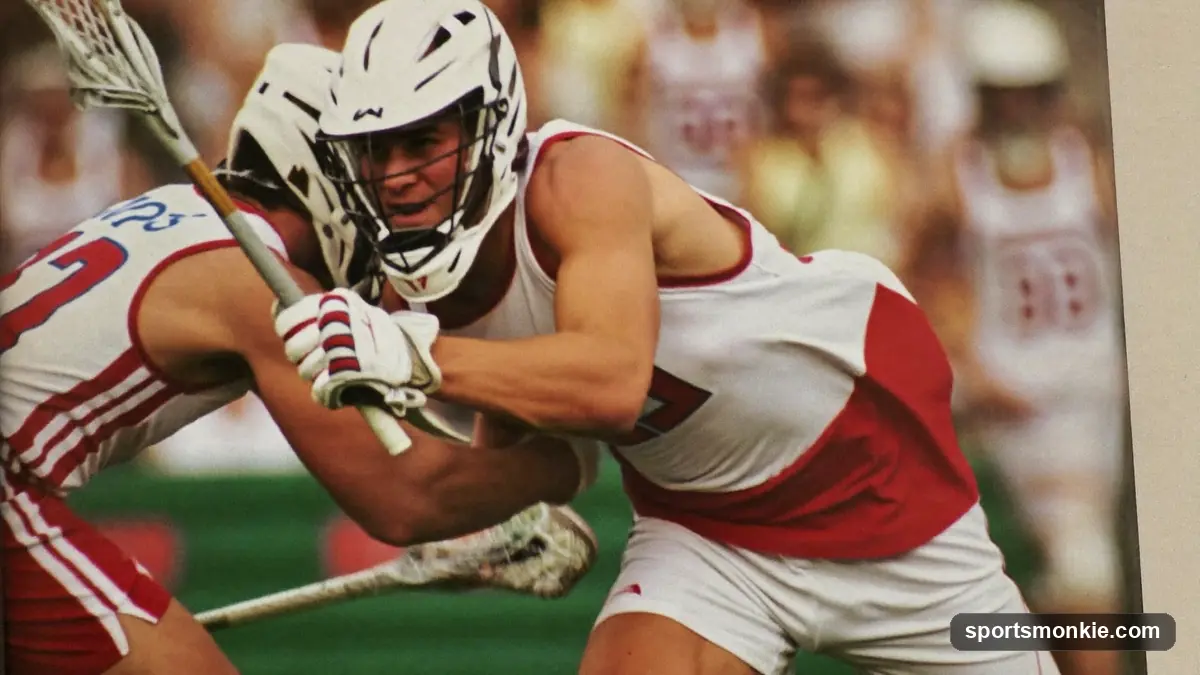
Warding in lacrosse means the ball carrier uses his free arm or hand to push away, hold, or fend off an opponent who is checking him. It is a technical foul under both the NCAA and NFHS rulebooks. The penalty is usually a turnover, because the player who wards is almost always the one holding the ball. You are allowed to protect your stick, but only with your body, never by extending your off arm to shove the defender’s stick or body away.
The short version: shield with your body, legal; stiff-arm the defender with your free hand, foul.
What warding actually is
Picture an attackman carrying the ball with one hand on the stick, cradling near his shoulder. A defender reaches in to poke or slap-check the stick. If the ball carrier throws out his free forearm to knock the check away, or to hold the defender’s stick down, that is warding off. The rule exists so the ball carrier cannot create separation with an illegal arm-bar the way a running back stiff-arms a tackler.
The NCAA and NFHS men’s rules describe it the same way: an offensive player in possession may not use his free hand or arm to hold, push, or control the direction of an opponent’s stick check. The moment your loose arm does the defending instead of your body, the whistle blows.
Warding vs legal protection
The confusion is understandable, because protecting your stick is completely legal, and it can look similar from the stands. The difference is what does the work: your torso and footwork, or your free arm.
| Action | Warding (foul) | Legal protection |
|---|---|---|
| Turning your back or shoulder to shield the stick | Legal | |
| Extending the free arm to push the check away | Foul | |
| Rolling the body between defender and stick | Legal | |
| Using the off hand to hold down a poke check | Foul | |
| Dropping the top hand and cradling one-handed away from pressure | Legal (if arm stays tucked) | |
| Chicken-winging the elbow out to bar the stick | Foul | |
| Keeping both hands on the shaft and driving through | Legal |
The clean test officials use: is the free arm active? If it swings out to meet the check, it is warding. If it stays tucked and the body does the shielding, it is protection.
What does warding cost you?
Warding is a technical foul, not a personal foul, so it does not send anyone to the box for a full minute the way a slash or a cross-check can. Under NCAA and NFHS rules, the penalty for a technical foul depends on possession. When the fouling team has the ball, which is nearly always the case with warding, it is a straight turnover: the ball goes to the other team. If somehow the defense wards while the attack already has possession, it is a 30-second time-serving penalty.
For the ball carrier, the practical stakes are simple. Ward off a check, and you have very likely just handed the ball to the other team. That is why coaches drill stick protection through body position, not the arm.
How to protect your stick without warding
The legal answer is footwork and body position. Keep both hands on the stick when you can and turn your near shoulder toward the defender so your body sits between his stick and yours. When you have to cradle one-handed to reach or dodge, keep the free arm tucked in against your chest, not extended. Rolling away from pressure, the roll dodge, uses your back and hips to shield the ball, which is exactly what the rule wants you to do.
If your instinct is to fight the check with your arm, retrain it. Our guide to how to cradle a lacrosse ball covers the one-handed cradle that lets you protect and carry without reaching out, and the ballwork in our lacrosse drills for beginners builds the habit under pressure.
Warding by position
The players who get called most for warding are ball-carrying attackmen and dodging midfielders, because they hold the ball in traffic. A midfielder driving from up top with a defender riding his hands is the classic warding situation: the elbow flares out to clear the check, and the whistle blows. On the other side, a defenseman with a long pole rarely wards, since he is usually the one checking, not carrying, but he can draw a warding call on a clear if he stiff-arms a rider.
Goalies get a small exception on clears in some interpretations when protecting the ball in the crease, but once a keeper carries out and becomes a field player, the same warding rule applies to him.
The two-hands question
A common point of confusion: can you ward with both hands on the stick? No, and it is worth understanding why. Warding is defined by the free arm doing the fending. If both hands stay on the shaft, there is no loose arm to push the defender, so warding is physically off the table. You can lean, drive, and shield with a two-handed grip all day. That is legal contact, not a ward. The foul only appears the instant one hand comes off and that arm goes to work on the defender.
New to the men’s game and trying to sort the legal contact from the fouls? Warding sits alongside the checking rules, and our explainer on cross-checking in lacrosse covers the most misunderstood defensive foul, so the two together cover most of what trips up first-year players.
The bottom line
Warding is one of the easiest fouls to avoid once you know the rule: never use your free arm to fend off a check. Protect the ball with your body, keep the loose arm tucked, and let footwork create the separation. Ward off a defender and you have almost certainly just turned the ball over, which is a costly way to learn a rule you can coach out in a single practice.
Freshness note: warding is a stable rule in the NCAA and NFHS men’s codes; re-check the exact technical-foul wording each season, as governing bodies occasionally reword penalty enforcement.
Frequently asked questions
What is warding off?+
Warding off is when the ball carrier uses his free arm or hand to push away, hold, or control an opponent's stick as it checks him. Both the NCAA and NFHS rulebooks list it as a technical foul. You may protect your stick with your body, but not by fending the defender off with your arm.
What is the penalty for warding in lacrosse?+
Warding is a technical foul. If the offending team has possession, the penalty is a turnover, awarding the ball to the other team. If the defense wards while the attacking team already has the ball, it is a 30-second penalty. NFHS and NCAA rules treat it the same way, since the ball carrier almost always wards while in possession, so it usually means losing the ball.
What is the hardest position in lacrosse?+
Most coaches point to goalie or the faceoff specialist as the hardest. The goalie must stop shots traveling 90-plus mph with limited padding, then direct the defense. The faceoff specialist wins or loses possession dozens of times a game in split-second clamps. Both are high-pressure, specialized roles that rarely get a break.
Can you ward with two hands on the stick?+
No, because warding requires a free arm. If both hands stay on the shaft, there is no free hand to push the defender away, so warding cannot happen. Using your body, shoulder, or a two-handed stick position to shield the ball is legal. The foul only exists when one hand comes off to fend off the check.
Is warding allowed in women's lacrosse?+
No. Women's lacrosse also bans warding, and the women's game is stricter about contact overall. A player may not guard her stick by covering it with her free arm or by hooking away a defender's stick. Officials call it as a foul, and repeated warding can lead to a card in the women's game.
Sources
Play & tools
Free browser games and tools — no account, no download.
- Play today's Sports Connections — Today's Sports Connections — daily hints, answers, and play the grid.
- Play Guess the NFL Player — A new mystery NFL player every day. Eight guesses, with a clue on each — plus free unlimited mode.
- Explore all our games →
Related guides
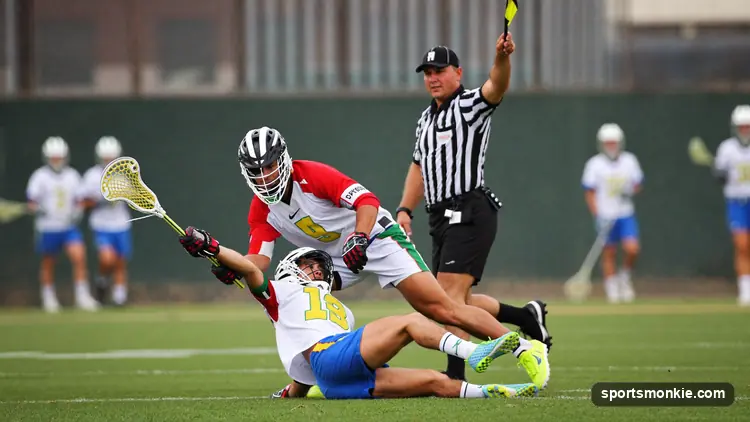
What Is a Slash in Lacrosse? The Penalty Explained
A slash in lacrosse is an illegal, uncontrolled stick swing at an opponent's body or head. It is a personal foul carrying a 1-to-3 minute penalty. Full rules here.
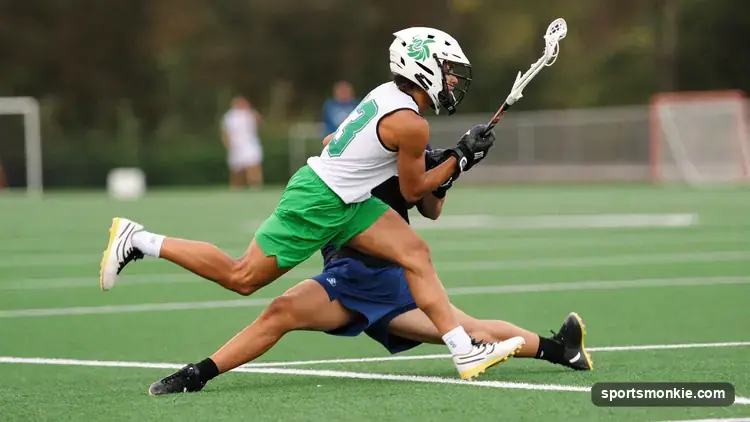
Cross-Checking in Lacrosse: Legal or Penalty?
Is cross-checking legal in lacrosse? It's a penalty in men's field but a core tool in box lacrosse. Learn the rule, penalty, and difference by version.
The Lacrosse Offsides Rule Explained Simply
The lacrosse offsides rule keeps four players on defense and three on offense at all times. Learn how it works, the penalty, and why it isn't soccer.

The 8-Meter Arc in Women's Lacrosse: Free Position Shots
The 8-meter arc in women's lacrosse is the fan in front of goal where a major defensive foul gives the attacker a free position shot. Rules and procedure inside.
Can You Kick the Ball in Lacrosse? The Rule Explained
Yes, you can kick the ball in men's lacrosse, and you can even score by kicking it. The women's game restricts it more. Here is exactly what the rules allow.

Lacrosse Equipment List: Everything You Need to Play
The full lacrosse equipment list: a men's player needs a helmet, gloves, and pads; a girls' player needs eyewear, a mouthguard, and a stick. Checklist inside.