
Cross-Checking in Lacrosse: Legal or Penalty?
On this page5
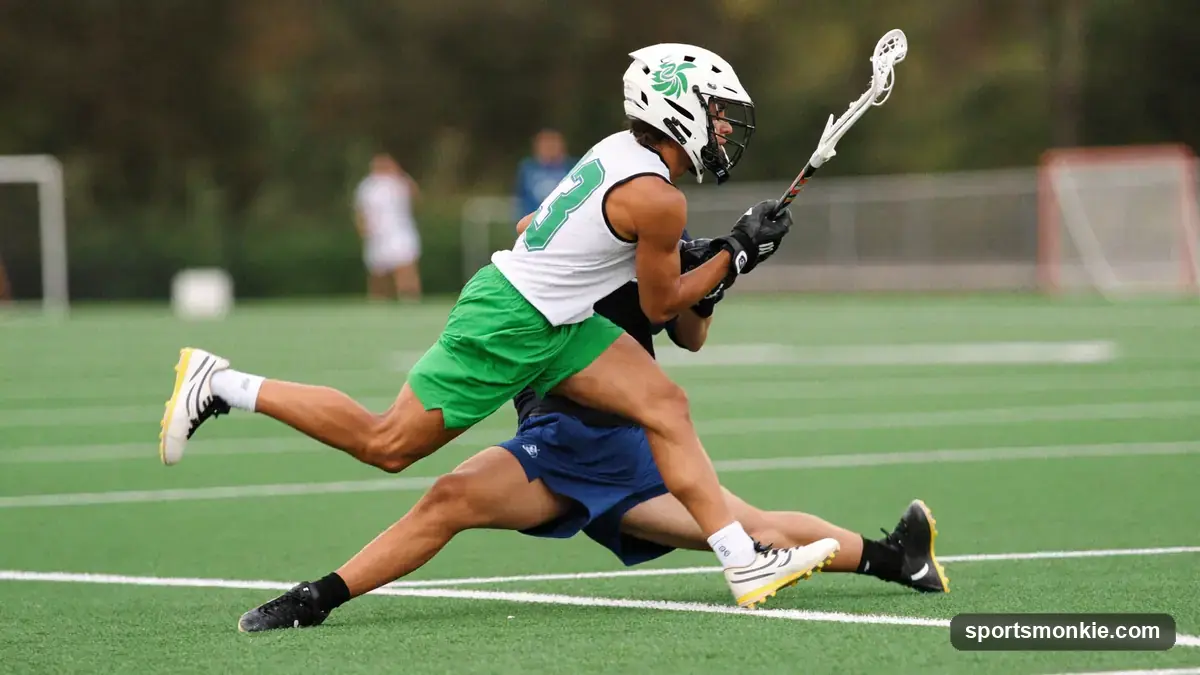
A cross-check in lacrosse means using the shaft of your stick, held between both hands, to push or hit an opponent. Whether it is legal depends entirely on which version you are playing. In men’s field lacrosse it is a penalty, usually a one-minute personal foul. In box (indoor) lacrosse it is legal and central to defense when delivered to the torso with hands together. Women’s lacrosse bans it outright.
So the honest answer to “is cross-checking legal?” is: it depends, and that ambiguity is exactly why field and box players argue about it.
What counts as a cross-check
The defining detail is the hands. In a cross-check, both hands are on the shaft and the middle of the stick, the part between the hands, is used to shove or strike the opponent. That is different from a legal body check, where the contact comes from your body or from the one-handed, controlled part of your stick.
| Contact type | How it’s delivered | Legal in men’s field? |
|---|---|---|
| Body check | Body or one-handed stick, to the chest of a ball carrier | Yes |
| Poke / slap check | One-handed jab or slap at the stick and gloves | Yes |
| Cross-check | Shaft between both hands, pushing the opponent | No |
Get the hands wrong and a defensive play a coach wanted becomes a penalty a referee calls.
Cross-checking in men’s field lacrosse
In the men’s field game, cross-checking is a personal foul at every level, from youth through the NCAA and pros. The standard punishment is a one-minute releasable penalty: the offender goes to the box and the team plays a man down until the minute expires or the other team scores.
The penalty scales with the danger. A cross-check to the head or neck, or one delivered with excessive force, can become a two-minute non-releasable penalty or an ejection. Enforcement also varies by level: youth referees call it tightly, while college and pro officials allow more incidental contact within the flow of play. It sits alongside slashing and tripping as one of the personal fouls that most often puts a defense a man down, unlike a positional foul such as the lacrosse offside rule, which is a shorter technical foul.
Why box lacrosse is the opposite
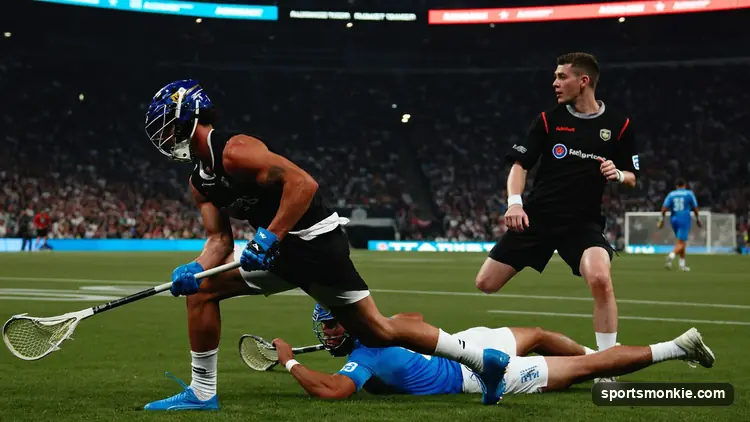
Box lacrosse flips the rule. Played indoors on a smaller floor, box is a contact-heavy game where a controlled cross-check is a fundamental defensive tool, according to the NLL. A defender keeps both hands on the shaft and pushes into the ball carrier’s torso to disrupt the shot or redirect momentum.
There are still limits. Cross-checks to the head, from behind, or with a follow-through draw a two-minute minor, and the NLL specifically outlaws cross-checking an opponent who does not have the ball, a rule some other box leagues do not share. But the baseline is reversed from the field game: in box, the cross-check is expected; in field, it is banned.
This split is why the same player develops different instincts depending on where they play, a distinction we return to in our lacrosse defenseman guide. If you mostly watch box highlights and someone tells you cross-checking is illegal, you are both right, about different codes.
Cross-checking by version, at a glance
| Version | Cross-check status | Typical penalty |
|---|---|---|
| Men’s field (NCAA / NFHS) | Illegal | 1 min (up to 2-3 min / ejection for head or neck) |
| Men’s field (PLL) | Illegal | Time-serving penalty; stricter for dangerous hits |
| Box lacrosse (NLL) | Legal to the torso | 2 min minor for illegal cross-checks |
| Women’s lacrosse | Illegal (no body contact) | Foul; free position for the opponent |
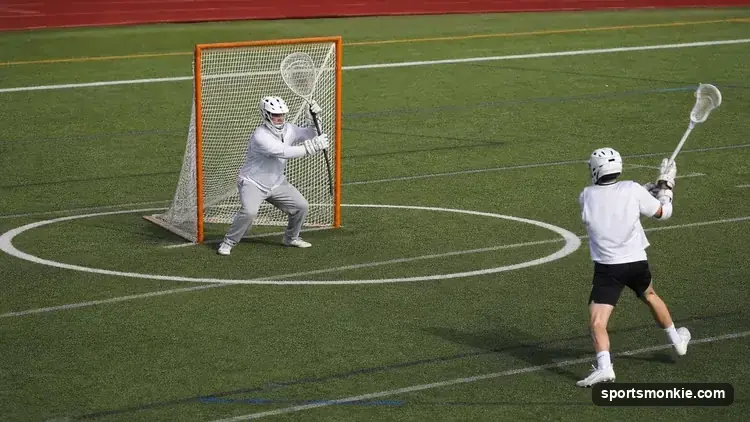
If you are learning the sport by watching, the crease and the checks are the two areas that most reward a little study. Our lacrosse crease explainer covers the protected space around the goal where much of this contact plays out.
The bottom line
One move, four different verdicts. Cross-checking is a foul in men’s field and women’s lacrosse, a legal staple in box lacrosse when kept to the torso with both hands on the shaft, and dangerous everywhere when aimed at the head. Learn which code you are in before you lean on it, because the exact same push is either smart defense or a minute in the box.
Freshness note: cross-check penalties and the box/field split are stable, but exact durations and the NLL’s off-ball rule can change; re-check the current rulebook for your league each season.
See also how this compares in Can You Kick the Ball in Lacrosse? The Rule Explained.
A natural follow-up read is Lacrosse vs Hockey.
Frequently asked questions
Is cross-checking illegal in lacrosse?+
In men's field lacrosse, yes. Using the shaft of the stick between your hands to push or hit an opponent is a personal foul, usually a one-minute penalty. It is not illegal everywhere, though: box (indoor) lacrosse allows controlled cross-checks to the torso, where it is a standard defensive tool.
Is cross-checking allowed in box lacrosse?+
Yes. Legal contact is a defining feature of box lacrosse, and a controlled cross-check to an opponent's torso, with both hands kept on the shaft, is a core defensive move. Cross-checks to the head or from behind are still penalized, usually a two-minute minor, and the NLL bans cross-checking players who do not have the ball.
What is the penalty for cross-checking in lacrosse?+
In the men's field game, a cross-check is typically a one-minute releasable penalty: the player sits, and the team plays a man down until the penalty expires or the opponent scores. Severe cross-checks, especially to the head or neck, can be two-minute non-releasable penalties or an ejection.
What is the difference between a cross-check and a body check?+
A legal body check uses your body, or the part of your stick with one hand on it, to hit an opposing ball carrier through the chest. A cross-check uses the shaft held between both hands as a battering tool. The first is legal in men's field lacrosse; the second is a foul.
Is cross-checking legal in women's lacrosse?+
No. Women's lacrosse is a limited-contact game that bars stick-to-body contact entirely, so cross-checking is never allowed. The women's rulebook restricts even stick checks to safe, controlled contact near the ball, making it the strictest of the lacrosse codes on physical play.
Sources
Play & tools
Free browser games and tools — no account, no download.
- Play today's Sports Connections — Today's Sports Connections — daily hints, answers, and play the grid.
- Play Guess the NFL Player — A new mystery NFL player every day. Eight guesses, with a clue on each — plus free unlimited mode.
- Explore all our games →
Related guides

Is Lacrosse a Contact Sport? Contact Rules by Version
Is lacrosse a contact sport? It depends which lacrosse. Body checking is legal in men's field and box, banned in the women's game. Rules and injury data compared.
What Is a Slash in Lacrosse? The Penalty Explained
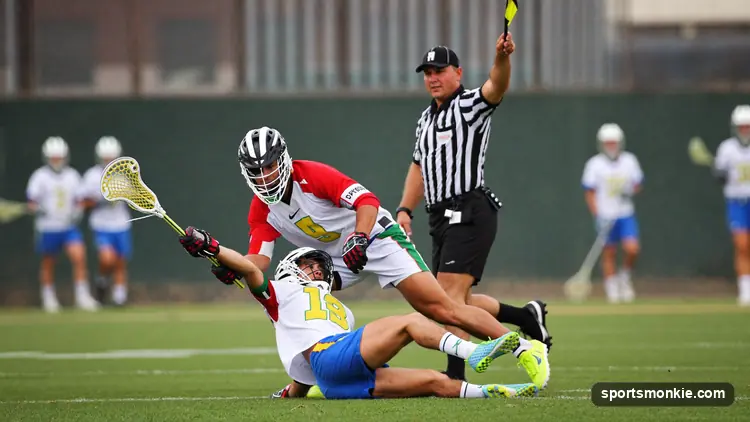
A slash in lacrosse is an illegal, uncontrolled stick swing at an opponent's body or head. It is a personal foul carrying a 1-to-3 minute penalty. Full rules here.
What Is Warding in Lacrosse? The Rule Explained
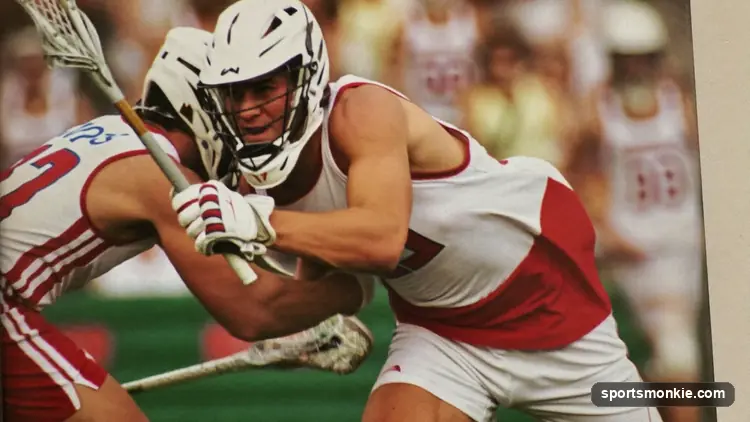
Warding in lacrosse is using your free arm to push away or fend off a defender's check. It is a technical foul. Learn the rule and the legal way to protect your stick.
The Lacrosse Offsides Rule Explained Simply
The lacrosse offsides rule keeps four players on defense and three on offense at all times. Learn how it works, the penalty, and why it isn't soccer.
The Lacrosse Crease Explained: Rules Around the Goal
The crease is the circle around a lacrosse goal that protects the goalie. Learn who can enter, what a crease violation is, and how rules differ by version.
Box Lacrosse vs Field Lacrosse
Box lacrosse is a fast 5-on-5 indoor game; field lacrosse is a 10-on-10 outdoor sport. Rules, field, gear and physicality compared.