
What Is a Slash in Lacrosse? The Penalty Explained
On this page5
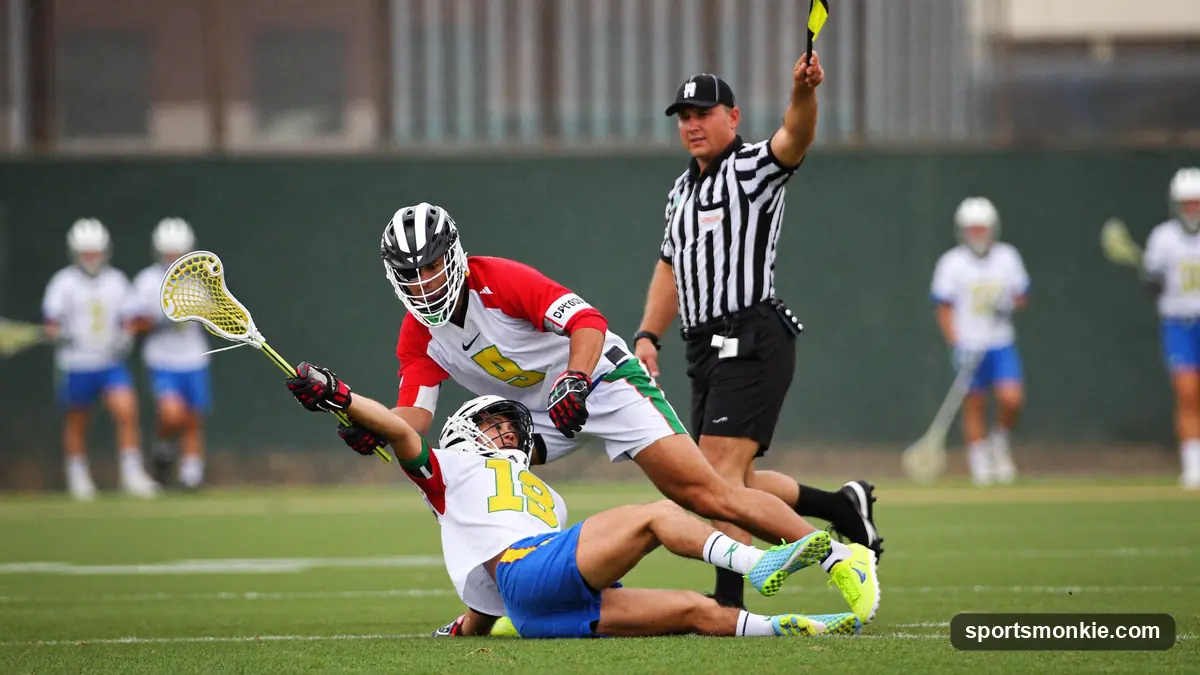
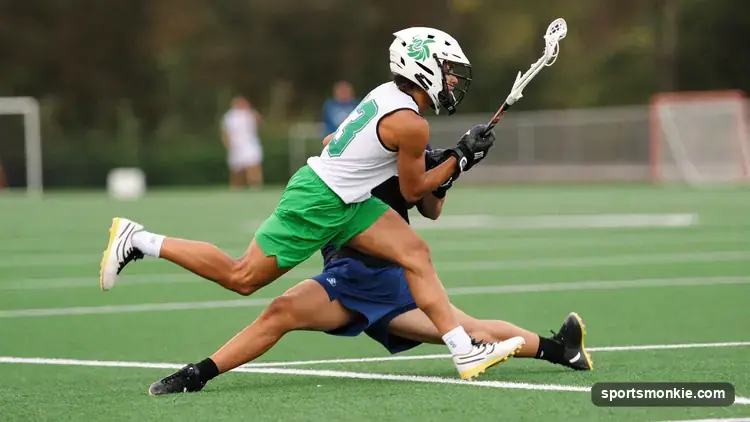
A slash in lacrosse is an illegal stick check: swinging the crosse at an opponent’s body or head, or making any reckless, uncontrolled, or one-handed swing, even one that misses. In the men’s field game it is a personal foul, which means the offending player serves a one-to-three-minute penalty in the box while his team plays a man down. Any stick contact to an opponent’s head or neck is an automatic and usually more severe slash.
Slashing is one of the most-called fouls in men’s lacrosse, and beginners are often unsure where a legal check ends and a slash begins. The line is about control, not just contact. Here is exactly what counts as slashing, how long the penalty lasts, and how a slash differs from a legal stick check.
What does slashing mean in lacrosse?
Under the NCAA and NFHS men’s rules, slashing is defined by two things: where the stick lands and how controlled the swing is. A check that strikes any part of the opponent’s body other than the gloved hands holding the stick is a slash. So is any swing judged reckless, vicious, or uncontrolled, including a one-handed check, even if it does not connect.
The key idea is that legal checking targets the opponent’s stick and the gloved hands gripping it. The moment the check lands on an arm, shoulder, back, leg, or head, or the moment the swing becomes a wild chop rather than a controlled tap, it is a slash. Contact to the head or neck is treated as the most serious category and is penalized automatically.
Is a slash a personal foul, and how long is the penalty?
A slash is a personal foul, not a lesser technical foul. That distinction matters, because personal fouls carry time-serving penalties and technical fouls usually cost only possession. The offending player goes to the penalty box and his team plays short-handed, giving the other side a man-up power play.
The penalty runs one to three minutes at the official’s discretion, scaled to how dangerous the check was.
| Slash severity | Typical penalty | Releasable? | Example |
|---|---|---|---|
| Standard slash to body/arm | 1 minute | Releasable | A late two-handed chop that lands on the ball carrier’s arm |
| Reckless or repeated slash | 1-2 minutes | Official’s discretion | A wild, uncontrolled swing endangering an opponent |
| Slash to the head or neck | 2-3 minutes | Often non-releasable | Any stick contact to the head, whether careless or deliberate |
| Excessively violent slash | 3 minutes + possible ejection | Non-releasable | A dangerous, deliberate strike; can carry an ejection foul |
“Releasable” means the penalty ends early if the opposing team scores during the power play. “Non-releasable” means the full time is served regardless of goals, so a non-releasable slash can be far more costly than the raw minutes suggest.
Slash vs a legal check: where the line is
The confusion for new players is that stick checking is a legal, central part of the men’s game. A defender is allowed to check the ball carrier’s crosse and gloved hands to dislodge the ball. The foul is not the check itself, it is a check that misses the legal target or loses control.
- Legal poke check: a controlled, one-handed jab at the opponent’s stick or gloves, guided back with the bottom hand. Legal.
- Legal wrap or slap check: a controlled tap on the crosse or gloved hands. Legal.
- Slash: a swing that lands on the body, arms, legs, or head, or any uncontrolled, reckless, or fully one-handed swing. Foul.
This is a different offense from cross-checking, where a player uses the shaft of the stick between his hands to push an opponent; we break that down separately in our guide to cross-checking in lacrosse. A slash is about a swinging check to an illegal target; a cross-check is about shoving with the shaft.
Does women’s lacrosse have slashing?
The women’s game does not use the term “slash,” but it polices dangerous stick contact even more tightly. Because women’s rules restrict checking to controlled taps away from the head, an illegal or reckless check is treated as a major foul rather than a slashing penalty. A dangerous check near goal typically results in a free position shot from the 8-meter arc rather than time in a penalty box, since the women’s game rewards the fouled attacker directly instead of sending the offender off.
So “slashing” as a named, box-serving penalty is specific to the men’s field and box game. The underlying principle, no uncontrolled swings and no contact to the head, applies across both games; only the punishment differs.
Why the slashing rule exists
The slashing rule is the main thing that keeps a contact sport played with metal-shafted sticks from becoming dangerous. Even in full pads, an uncontrolled swing to the arm hurts, and a swing to the head is a serious injury risk, which is why USA Lacrosse and the NFHS treat head contact as an automatic, escalated penalty across youth and high school play.
For a defender, the practical lesson is control. A crisp, one-handed poke that targets the stick and gloves is your bread and butter; a two-handed hack at a moving ball carrier is a penalty waiting to happen. New defenders drill the poke check until it is second nature precisely to stay out of the box, and our lacrosse drills for beginners guide includes controlled-checking work that builds the habit. Learn the poke, keep the check on the stick and gloves, and slashing calls take care of themselves.
Freshness note: slashing definitions and penalty ranges are set by NCAA, NFHS, and USA Lacrosse and reviewed each season, especially rules on head and neck contact; confirm current penalty wording before the season starts.
Frequently asked questions
What does slash mean in lacrosse?+
Slashing means swinging the stick at an opponent illegally, either striking any part of the body other than the gloved hands holding the stick, making contact with the head or neck, or using a reckless, uncontrolled, or one-handed swing. It is judged on control, not just contact, and it is one of the most common personal fouls in the men's game.
What counts as slashing in lacrosse?+
A check counts as slashing when it strikes the opponent's body, arms, legs, or head rather than the stick or gloved hands, or when the swing is uncontrolled, vicious, or one-handed. A controlled poke or a legal stick check on the crosse and gloves is fine; a wild two-handed chop or a check that lands on the arm is a slash under NCAA and NFHS rules.
Is a slash a personal foul in lacrosse?+
Yes. In men's field lacrosse a slash is a personal foul, not a technical foul, carrying a time-serving penalty of one to three minutes. The offending team plays short-handed while the penalty is served. Standard slashes are usually one minute and releasable; a slash to the head or a reckless swing can be non-releasable and longer.
How long is a slashing penalty in lacrosse?+
A slashing penalty runs one to three minutes at the official's discretion under NCAA and NFHS rules. A routine slash is typically one minute and releasable, meaning it ends if the other team scores. A dangerous, deliberate, or head-directed slash can be two or three minutes and non-releasable, so it is served in full regardless of goals.
Sources
Play & tools
Free browser games and tools — no account, no download.
- Play today's Sports Connections — Today's Sports Connections — daily hints, answers, and play the grid.
- Play Guess the NFL Player — A new mystery NFL player every day. Eight guesses, with a clue on each — plus free unlimited mode.
- Explore all our games →
Related guides

The 8-Meter Arc in Women's Lacrosse: Free Position Shots
The 8-meter arc in women's lacrosse is the fan in front of goal where a major defensive foul gives the attacker a free position shot. Rules and procedure inside.
Can You Kick the Ball in Lacrosse? The Rule Explained
Yes, you can kick the ball in men's lacrosse, and you can even score by kicking it. The women's game restricts it more. Here is exactly what the rules allow.
Men's vs Women's Lacrosse: Every Major Difference
Men's vs women's lacrosse differ in players, checking, equipment, field, and stick rules. Here's every major difference in one clear breakdown.
What Is Warding in Lacrosse? The Rule Explained
Warding in lacrosse is using your free arm to push away or fend off a defender's check. It is a technical foul. Learn the rule and the legal way to protect your stick.
Cross-Checking in Lacrosse: Legal or Penalty?
Is cross-checking legal in lacrosse? It's a penalty in men's field but a core tool in box lacrosse. Learn the rule, penalty, and difference by version.

Lacrosse Equipment List: Everything You Need to Play
The full lacrosse equipment list: a men's player needs a helmet, gloves, and pads; a girls' player needs eyewear, a mouthguard, and a stick. Checklist inside.