
Is Lacrosse a Contact Sport? Contact Rules by Version

On this page5
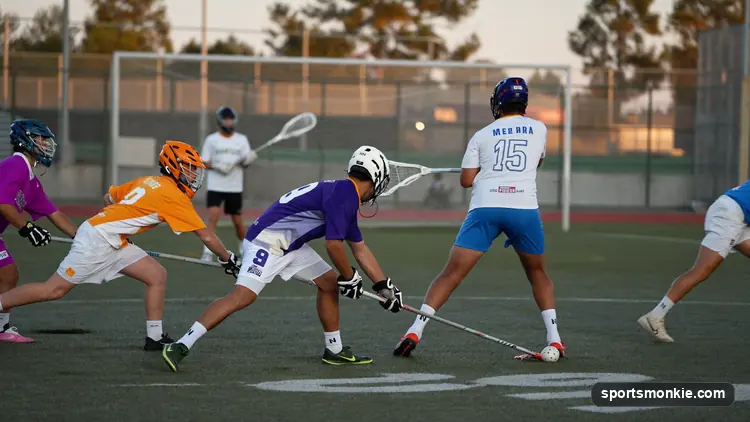
Lacrosse is a contact sport in three of its four common forms and a non-contact sport in the fourth. Men’s field lacrosse, box lacrosse and boys’ lacrosse from 14U upward all permit body checking within defined limits. Women’s and girls’ field lacrosse does not: deliberate body contact is a foul, and using the stick shaft to displace an opponent is a major foul.
So the honest answer to “is lacrosse a contact sport” is a question back: which lacrosse?
What each version actually permits
| Body checking | Stick checking | Cross-check to the body | |
|---|---|---|---|
| NCAA men’s field | Legal, below the neck, both hands on the crosse, on a ball carrier or within 5 yards of a loose ball | Legal on stick and gloved hands | Illegal — personal foul |
| NCAA women’s field | Illegal — charging and blocking are fouls | Legal but restricted to controlled checks away from the head | Illegal — major foul |
| NLL / box lacrosse | Legal from the front or side, above the waist and below the shoulder, on a ball carrier | Legal | Legal on the arms below the shoulders and above the waist, both hands on the stick |
| USA Lacrosse boys 10U/12U | Illegal — incidental contact only | Limited: lift, poke and checks below the shoulders | Illegal |
| USA Lacrosse boys 14U | Legal, but take-out checks banned | Full stick checking legal | Illegal |
| World Lacrosse sixes (LA28 format) | Illegal in any form, men and women | Legal | Illegal |
The single biggest divide in the sport sits in that third column. In NCAA men’s field lacrosse a cross-check is a personal foul. In the NLL rulebook it is a defined legal technique — a check on the arms below the shoulders and above the waist, both hands on the stick, against an opponent in possession. Two codes, opposite verdicts on the same action.
The limits on a legal hit in the men’s game
A legal body check in NCAA men’s lacrosse is narrower than casual viewers assume. The rulebook lists illegal body checking as contact on an opponent who is neither in possession nor within five yards of a loose ball; contact initiated from the rear or at or below the waist; contact above the shoulders; contact on a player who has any body part other than their feet on the ground; and blocking with the head.
The five-yard radius is the rule that shapes the whole game. It is why defenders shadow off-ball attackmen rather than hitting them, and why the scramble around a ground ball is where the heaviest contact happens. In the USA Lacrosse youth rulebook that radius shrinks to three yards, and “take-out” checks are outlawed at every youth age group.
There is also a timing rule people get wrong: initial contact decides legality, not what happens afterwards. If a player about to be checked turns their back or ducks and makes a legal hit look illegal, the rulebook explicitly puts no foul on the checker.
Women’s lacrosse is not a soft version of the men’s game
Calling it “non-contact” is accurate as a rules description and misleading as a description of what it feels like to play. The women’s game bans body contact, but it is played at speed, in tight space, with sticks working around each other constantly.
The 2026 NCAA women’s rulebook classes a cross-check — using the shaft to initiate stick-to-body contact to hit and displace an opponent — as a major foul, alongside blocking and illegal picks. Its dangerous-contact category goes further: no stick may hit or cause an opponent’s stick to hit their head or neck, no cross-check to the shoulders or back from behind, no sweeping check from behind that contacts the body.
The protective consequence is a different equipment standard. Eyewear and mouthguards are mandatory; headgear is optional and must meet ASTM F3137, a standard written for the women’s game rather than the hard-shell NOCSAE helmet used on the men’s side. Our comparison of men’s and women’s lacrosse works through the rest of the differences.
What the injury data says
Contact-sport status and injury risk are related, not identical.
For NCAA men’s lacrosse, the Journal of Athletic Training analysis of NCAA Injury Surveillance data from 2014-15 to 2018-19 reports an overall rate of 4.90 injuries per 1,000 athlete exposures, splitting into 9.95 in competition and 3.85 in practice. Concussion was the most frequent single diagnosis at 8.0% of injuries, ahead of ankle sprains at 7.7% and hamstring tears at 6.9%.
Two things stand out. First, the competition rate is roughly two and a half times the practice rate — the injuries follow the contact, not the volume of play. Second, sprains, strains and contusions together account for most of the total, which is what you would expect from a running sport with episodic collisions rather than continuous ones.
Published NCAA women’s lacrosse rates over the 2009-10 to 2014-15 window sit at a broadly similar overall figure, around 4.9 per 1,000 athlete exposures, despite the ban on body contact. The mechanism differs rather than the volume: in the women’s game, above-the-neck injuries in competition are driven mostly by contact from a stick, with the ball a distant second.
The practical read for a parent or a new player: the women’s game removes collisions but not head-injury risk, and the men’s game concentrates its risk into game day.
Where this matters when you are choosing
If contact is the appeal, box lacrosse gives you the most of it per minute — a smaller floor, boards, and legal cross-checking. Men’s field lacrosse gives you the biggest single hits and the most space to avoid them. If contact is the concern, the women’s game is genuinely different in kind, not merely in degree, and youth boys’ lacrosse keeps body checking out entirely until 14U.
One more option is arriving. The World Lacrosse sixes rulebook for 2026-28 makes body checking in any form a major foul for both men and women, allowing only incidental contact, legal holds and pushes for a loose ball. Sixes is the format going to the 2028 Olympics, which means the version of lacrosse most of the world is about to meet is the one without body checking.
Before you commit either way, it is worth understanding what a legal check looks like, because most of the fear around lacrosse contact is fear of the illegal version. Start with our explainers on cross-checking and what counts as a slash.
Frequently asked questions
Is lacrosse more contact than American football?+
Less, in volume. Football involves contact on essentially every snap for most positions, while lacrosse contact is episodic and legal only on the ball carrier or near a loose ball. Both are classed as collision sports for medical purposes, and published NCAA figures put football's concussion rate above men's lacrosse.
Do girls' lacrosse players wear helmets?+
Protective eyewear and a mouthguard are mandatory; headgear is optional and, where worn, must meet the ASTM F3137 standard. That standard was written specifically for the women's game and describes a soft-shell product, not the hard NOCSAE-certified helmet worn in the men's game.
Is box lacrosse rougher than field lacrosse?+
In density of contact, yes. The floor is smaller, there is nowhere to run to, and cross-checking the arms is a legal defensive tool rather than a penalty. Field lacrosse allows bigger open-field hits; box produces more contact per minute in a smaller space.
Is Olympic sixes lacrosse a contact sport?+
No. The World Lacrosse sixes rulebook for 2026-28 makes body checking in any form a major foul, for men and women alike. Incidental contact, legal holds and pushes for a loose ball remain. So the version of lacrosse the world will watch at LA28 is the non-checking one.
Can a defender hit a player who does not have the ball?+
Only in a narrow window. In NCAA men's play a body check on a player who is neither in possession nor within five yards of a loose ball is an illegal body check. USA Lacrosse youth rules tighten that radius to three yards, and the NLL applies a three-yard rule on the floor.
Sources
- NCAA – 2025 and 2026 Men's Lacrosse Rules Book (Rule 5-6, Illegal Body Check)
- NCAA – 2026 and 2027 Women's Lacrosse Rules Book (Rule 6, Major Fouls)
- NLL – 2025-26 Official Rules (Rules 63 and 70)
- USA Lacrosse – 2026 Boys Lacrosse Youth Rule Book
- World Lacrosse – 2026-2028 Sixes Official Playing Rules (Rule 8.3.1)
- Journal of Athletic Training – Epidemiology of NCAA Men's Lacrosse Injuries, 2014-15 to 2018-19
Play & tools
Free browser games and tools — no account, no download.
- Play today's Sports Connections — Today's Sports Connections — daily hints, answers, and play the grid.
- Play Guess the NFL Player — A new mystery NFL player every day. Eight guesses, with a clue on each — plus free unlimited mode.
- Explore all our games →
Related guides
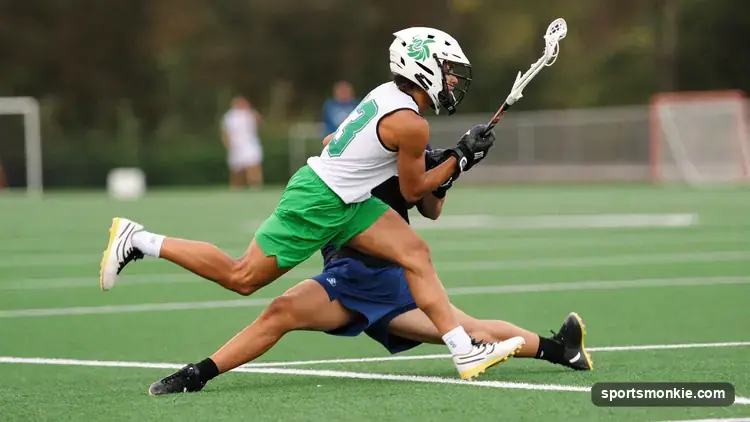
Cross-Checking in Lacrosse: Legal or Penalty?
Is cross-checking legal in lacrosse? It's a penalty in men's field but a core tool in box lacrosse. Learn the rule, penalty, and difference by version.
The Lacrosse Offsides Rule Explained Simply
The lacrosse offsides rule keeps four players on defense and three on offense at all times. Learn how it works, the penalty, and why it isn't soccer.
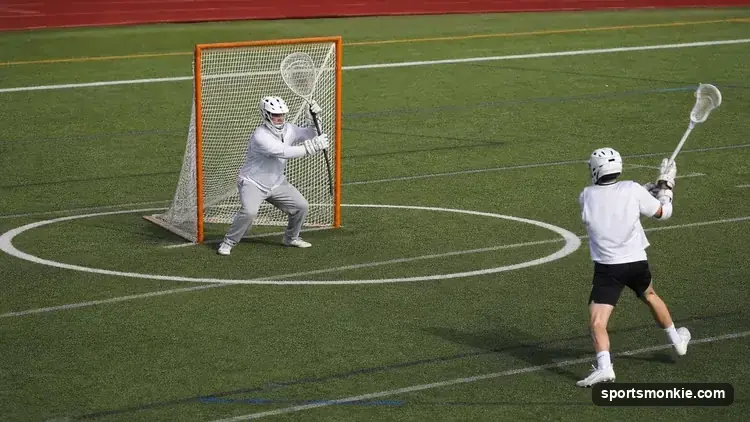
The Lacrosse Crease Explained: Rules Around the Goal
The crease is the circle around a lacrosse goal that protects the goalie. Learn who can enter, what a crease violation is, and how rules differ by version.
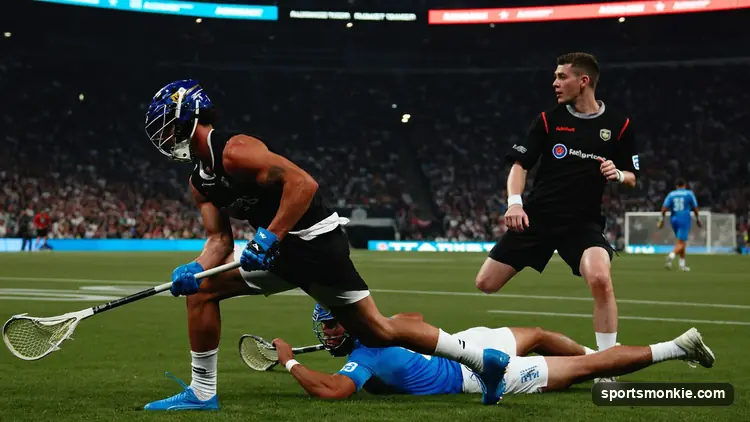
Box Lacrosse vs Field Lacrosse
Box lacrosse is a fast 5-on-5 indoor game; field lacrosse is a 10-on-10 outdoor sport. Rules, field, gear and physicality compared.

The 8-Meter Arc in Women's Lacrosse: Free Position Shots
The 8-meter arc in women's lacrosse is the fan in front of goal where a major defensive foul gives the attacker a free position shot. Rules and procedure inside.
Adult Lacrosse Leagues: How to Find One and What They Cost
Adult lacrosse leagues run roughly $100-250 a season. Here is how to find one near you, what the divisions mean, and whether it's too late to start.