
Ski Boot Flex Explained: How to Choose the Right Stiffness

On this page5
Ski boot flex is the resistance a skier feels when leaning forward into the cuff. Soft flex feels more forgiving; stiff flex gives a skilled skier a stronger platform for edging. The right choice depends on fit, ability, weight, terrain and temperature—not the flex number alone.
Soft, medium and stiff flex
Soft boots are easier to bend and often suit beginners, lighter skiers or people prioritising comfort. Medium flex is a common all-round choice. Stiff boots reward precise pressure and aggressive skiing but expose poor balance and a bad fit quickly.
Why the number is not universal
Manufacturers do not use one binding industry test for flex. Plastic, cuff design, liner thickness and temperature all change how a boot feels. A chart can narrow the search; it cannot replace trying the boot on.
Fit comes first
Your heel should stay planted while your toes can lightly touch the shell when standing upright. When flexed, the foot should settle back without pressure points. Our ski boot size guide covers length and volume, while the ski boot flex chart shows why weight is only one input.
Matching flex to terrain
Groomed runs and aggressive carving reward support. Variable snow and long beginner sessions may favour forgiveness. Touring boots also balance downhill stiffness against walking range, so alpine and touring flex labels should not be compared directly.
The practical rule
Choose the stiffest boot you can bend consistently without pain or delayed turns. A comfortable, well-fitted medium boot usually outperforms a nominally stiffer boot that restricts movement.
If you cross-train indoors, rowing-machine muscles are a useful conditioning comparison. For water-sport equipment context, read fly-rod weight and keelboat versus dinghy.
Frequently asked questions
What does ski boot flex mean?+
Flex is the boot's resistance to forward bending. It is a useful comparison, not a perfectly standard measurement shared across brands.
What flex is best for beginners?+
A softer to medium flex is usually easier to control, but fit and comfort matter more than chasing a particular number.
Are stiffer ski boots faster?+
Stiffer boots can transfer force efficiently for an experienced skier, but an overly stiff boot can reduce control and make turning harder.
Does body weight affect flex choice?+
Yes. Heavier or stronger skiers often compress a boot more easily, while lighter skiers may prefer a softer model at the same ability level.
Is ski boot flex a universal scale?+
No. A 100 flex from one brand can feel different from a 100 flex from another, so try the boot and use the number only as a starting point.
Should ski boots hurt?+
They should feel snug and secure, not painfully numb or sharply uncomfortable. A qualified boot fitter can adjust liners, shells and alignment.
Sources
Play & tools
Free browser games and tools — no account, no download.
- Play today's Sports Connections — Today's Sports Connections — daily hints, answers, and play the grid.
- Play Guess the NFL Player — A new mystery NFL player every day. Eight guesses, with a clue on each — plus free unlimited mode.
- Explore all our games →
Related winter sports guides
View all →
Ski Boot Flex Explained: Chart by Weight and Ability
Ski boot flex explained: what the number really measures, why it isn't standardized between brands, plus a flex chart by weight and ability level.
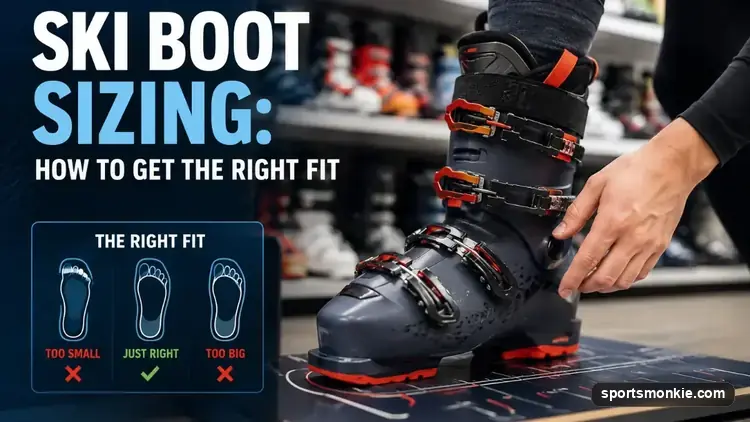
Ski Boot Sizing: How to Get the Right Fit
Ski boots are sized in Mondopoint (your foot length in cm). Learn to measure your Mondo size, pick flex and last width, and run the shell fit test.
All-Mountain vs Carving Skis: Which Should You Choose?
All-mountain skis handle varied snow and terrain, while carving skis focus on groomed pistes and clean edge turns. Compare width, shape, stability and skill level.
Fly Rod Weight Explained: Choosing the Right Line Class
Fly-rod weight is a line-class rating, not the rod's physical weight. Learn what 3-, 5-, 8- and 10-weight rods are built to cast and how to choose one.
Best Pickleball Paddle: How to Choose the Right One
How to pick the best pickleball paddle: control vs power vs all-court, materials, price tiers, and the new testing rules that decide what stays legal.
Snowboard Bindings for Beginners: Flex, Fit and Picks
The best snowboard bindings for beginners have soft-medium flex and easy entry. Strap vs rear-entry, sizing, and budget picks with real 2026 prices.