
Best Pickleball Paddle: How to Choose the Right One
On this page7
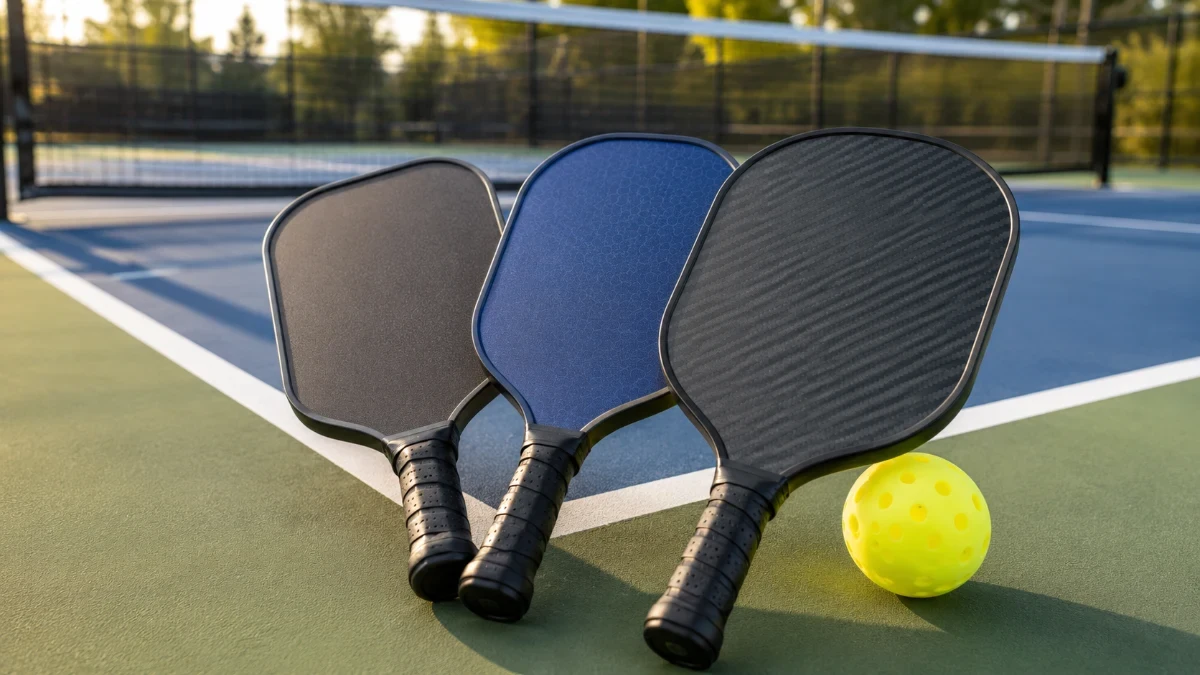
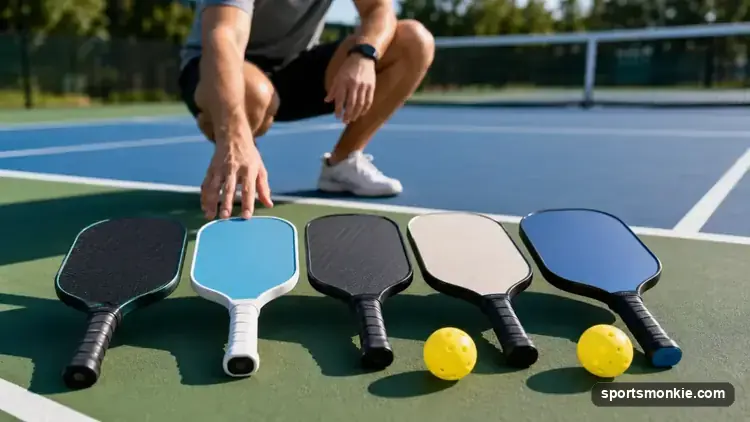
The best pickleball paddle is not a single model. It is the one matched to how you actually play. Control paddles reward touch and patience, power paddles reward attacking, and all-court paddles sit in between for everyone else. If you want the short answer, buy a raw carbon, 16mm, midweight all-court paddle in the $100 to $150 range and confirm it is on the USA Pickleball approved list. That covers most players better than any $300 flagship.
Pickleball is now the fastest-growing sport in the United States, with 24.3 million Americans playing in 2025 according to the Sports & Fitness Industry Association. The rush of new players has produced a rush of paddles, marketing claims, and price tags. Here is how to cut through it.
Control, power, or all-court: which paddle do you need?
Every paddle leans toward one of three jobs. Getting this right matters more than the brand on the face.
- Control paddles have a softer feel, a larger sweet spot, and more “dwell” — the ball sits on the face a fraction longer so you can place dinks, resets, and third-shot drops. You give up some put-away power.
- Power paddles are stiffer and springier, built to finish points with drives and net speed-ups. The trade-off is a smaller margin for error and less touch on soft shots.
- All-court paddles split the difference. They give you enough control to develop soft hands and enough pop to hit through the ball, without punishing you for imperfect contact.
The honest rule of thumb: if you can name your strength (you either grind out points or you attack), buy for it. If you cannot, buy all-court.
Paddle types compared
| Control | All-court | Power | |
|---|---|---|---|
| Best for | Dinkers, defenders, touch players | Beginners, intermediates, most people | Aggressive finishers, big hitters |
| Feel | Soft, forgiving | Balanced | Stiff, lively |
| Sweet spot | Largest | Large | Smaller |
| Main risk | Struggles to put balls away | Rarely wrong, rarely spectacular | Errors on soft shots |
| Typical core | 16mm | 16mm | 14mm |
What paddle should a beginner buy?
An all-court paddle, almost always. A pure control paddle feels safe at first but starts to limit you once your hands speed up, and a dedicated power paddle amplifies the wild errors every new player makes. An all-court hybrid gives you room to learn touch now and add offense as you improve.
Practical starter spec: a raw carbon face, a 16mm core, a midweight around 8 ounces, and a standard or elongated hybrid shape. Skip the ultra-cheap fiberglass paddles bundled with driveway nets — they smooth out fast and teach you bad habits about power. For a fuller breakdown, see our guide to the best pickleball paddle for beginners.
How much should you spend on a pickleball paddle?
Less than the flagships want you to think. The performance gap between a good $120 paddle and a $280 one has narrowed sharply, because the materials and factories behind premium paddles now trickle down almost immediately. A smart mid-priced paddle gets you roughly 90 to 95 percent of the way there.
Price tiers in 2026
| Tier | Price (USD) | Price (UK) | What you get | Who it suits |
|---|---|---|---|---|
| Budget | $45–$70 | £40–£60 | Fiberglass or basic carbon, softer grit that fades | First paddle, casual play |
| Mid-range | $100–$150 | £90–£130 | Raw carbon face, thermoformed or foam build, durable spin | Most players — the value sweet spot |
| Premium | $180–$220 | £150–£190 | Refined feel, specialized shapes, best sweet-spot consistency | Committed intermediate/advanced |
| Flagship | $250–$300 | £210–£260 | Pro-endorsed models, marginal gains, latest tech | Tournament players chasing every edge |
The one place cheap costs you is durability: budget faces lose their grit, and therefore their spin, within months. If you play more than twice a week, the mid-range tier pays for itself. Prices in the UK and Australia typically run 10 to 20 percent higher than US sticker after shipping and duty, so buying from a domestic retailer usually beats importing.
Does thickness and weight actually matter?
More than face material, honestly. Two numbers shape how a paddle plays:
Core thickness. A 16mm core is softer, more forgiving, and easier to control — the better default. A 14mm core is firmer and faster, favoring power and quick hands but shrinking the sweet spot. Most players are happier on 16mm.
Weight. Aim for a midweight around 7.8 to 8.3 ounces. Lighter means quicker hands and less arm strain, which matters if you have any elbow trouble. Heavier means more stability and drive but slower reactions and more fatigue. If you are between two paddles, the lighter one is the safer bet for your arm.
What materials matter: carbon, foam, and “Gen 4”
The face and the core do different jobs. On the face, raw carbon fiber is the current default: its fine texture grips the ball for spin and holds up longer than a thin graphite coating, while fiberglass trades touch for extra raw pop. Our carbon fiber pickleball paddle guide digs into that comparison.
The bigger shift is in the core. The market has moved from thermoformed honeycomb (“Gen 3”) toward full foam cores, the so-called “Gen 4” paddles, which spread the sweet spot across more of the face and deliver a more consistent, planted feel. Foam-core builds have driven a lot of the recent price inflation, but the technology is already reaching sub-$150 paddles, which is why you no longer need a flagship to get it.
Will your paddle stay legal?
This is the question the affiliate “top 10” lists skip, and it is the one that can waste your money. USA Pickleball introduced its PBCoR power test in late 2024 — a paddle-ball coefficient of restitution standard adapted from baseball bat testing that measures how much “trampoline” a paddle gives the ball. Paddles that exceed the limit lose certification, and the first wave of models, including paddles from Joola, Gearbox, and ProKennex, was decertified from sanctioned play on July 1, 2025.
In 2026, USA Pickleball and its testing partner also launched on-site paddle checks at tournaments that take under five minutes and cover friction, deflection, and weight. More hot-selling power paddles have already been de-listed since. The practical takeaways: if you play sanctioned events, check the exact model on the USA Pickleball approved equipment database before buying, and treat any paddle marketed purely on record-breaking power with suspicion — it is the most likely to be pulled.
The bottom line
Buy for the way you play, not the pro on the packaging. A raw carbon, 16mm, midweight all-court paddle in the $100 to $150 range is the right call for the large majority of players, upgrades to touch or power come later once you know your game, and legality is worth a two-minute check before any tournament purchase.
Ready to shortlist specific models? Start with our top-rated pickleball paddle picks, then browse the full racket sports hub for more gear and technique guides. And if you are still learning the rules that shape shot selection, our explainer on the kitchen in pickleball is the fastest way to stop losing points at the net.
Frequently asked questions
What is the best pickleball paddle for most players?+
For most recreational and improving players, an all-court paddle with a raw carbon face and a 16mm core is the safest pick. It blends spin, control, and enough pop to grow into. You can get a genuinely competitive one for $100 to $150, so you do not need a flagship.
How much should I spend on a pickleball paddle?+
Spend around $100 to $150 for your main paddle. That tier now delivers roughly 90 to 95 percent of flagship performance, with a raw carbon face and a durable build. Under $60 works for a first paddle but limits you fast; $250 to $300 flagships add refinement, not a different sport.
Is a 14mm or 16mm paddle better?+
A 16mm core plays softer, with a bigger sweet spot and more control, which suits dinking, resets, and most players learning touch. A 14mm core is firmer and faster for power and quick hands at the net. If you are unsure, choose 16mm — it is the more forgiving all-round thickness.
Does carbon fiber really make a difference?+
Yes, for spin and control. A raw carbon face has a fine texture that grips the ball, letting you brush topspin and roll volleys, and it holds up longer than a thin graphite coating. Fiberglass gives more raw power but less touch. Most quality paddles now use carbon or a carbon blend.
Could my new paddle get banned?+
It can. USA Pickleball's PBCoR power test, phased in since late 2024, has already decertified several models, and 2026 on-site tournament checks are now catching others in real time. Before buying for sanctioned play, confirm the exact model is on the USA Pickleball approved list, and be wary of paddles marketed on raw power alone.
What weight should my pickleball paddle be?+
Most players suit a midweight paddle around 7.8 to 8.3 ounces. Lighter paddles (under 7.8 oz) give quicker hands and less arm strain but less put-away power. Heavier paddles (over 8.3 oz) add stability and drive but can tire your arm and slow your reactions in fast net exchanges.
Sources
Play & tools
Free browser games and tools — no account, no download.
- Play today's Sports Connections — Today's Sports Connections — daily hints, answers, and play the grid.
- Play Guess the NFL Player — A new mystery NFL player every day. Eight guesses, with a clue on each — plus free unlimited mode.
- Explore all our games →
Related racket sports guides
View all →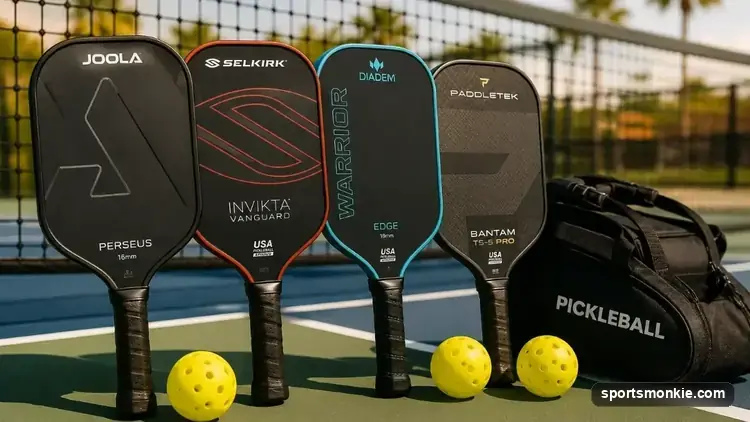
Top-Rated Pickleball Paddles: How to Pick the Right One
A spec-driven guide to the top rated pickleball paddle: core thickness, shape, weight, grip and price tiers, plus 2026 control and power picks.
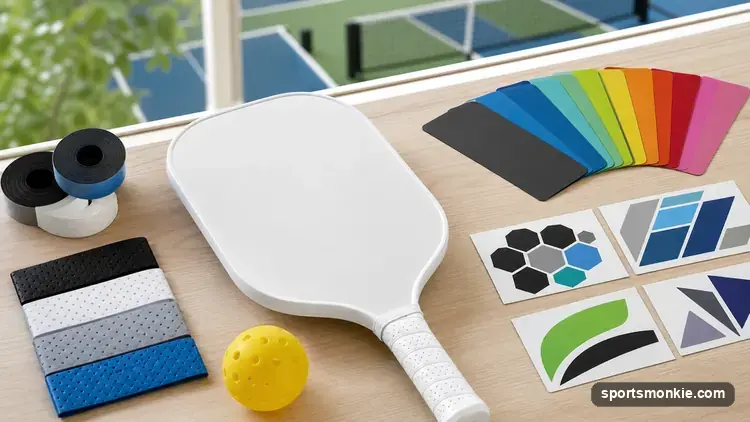
Customizable Pickleball Paddles: Cost and Where to Buy
Where to get a customizable pickleball paddle in 2026, what gets personalized, real prices from $10 to $325, and if custom paddles stay tournament-legal.
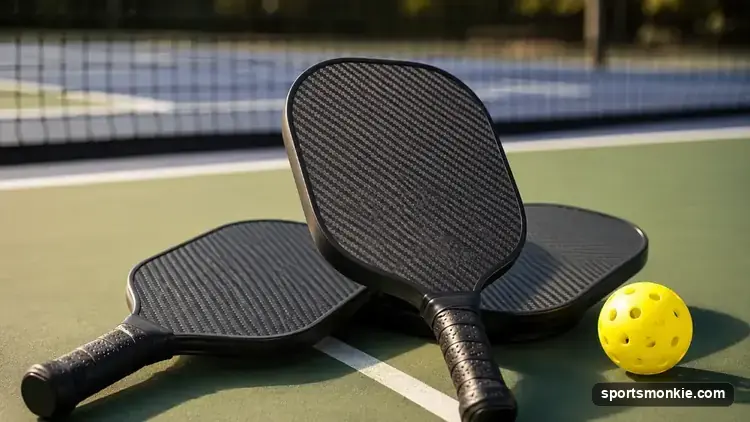
Carbon Fiber Pickleball Paddles: What Actually Matters
A carbon fiber pickleball paddle wins on spin and durability, but raw vs painted, T700 grades, and build method decide if it's worth the price.
Pickleball Paddle for Beginners: How to Pick Your First
Choosing a pickleball paddle for beginners comes down to weight, grip, and a 16mm core. Here are the specs to check and budget vs mid picks with real prices.
Pickleball Court Dimensions and Space Needed
Official pickleball court dimensions: 20 x 44 ft lines, 30 x 60 ft minimum playing surface, 34 x 64 ft preferred space, kitchen, net and layout.
Racquetball Rules: Serving, Scoring, Hinders
Racquetball rules made simple: how to serve legally, sideout scoring to 15, the tiebreaker to 11, and the difference between dead-ball and penalty hinders.