
Pickleball Paddle for Beginners: How to Pick Your First
On this page8
- 01What should a beginner look for in a paddle?
- 02What weight paddle should a beginner use?
- 03How thick should the core be, and what face material?
- 04What grip size do I need?
- 05Best beginner pickleball paddles: budget vs mid-range picks
- 06How much should you actually spend?
- 07Common beginner buying mistakes
- 08The short version
For your first pickleball paddle, buy a mid-weight (7.8 to 8.3 ounce) paddle with a thick 16mm core and a grip you can actually close your hand around. That combination gives the biggest sweet spot and the softest, most forgiving feel, which is exactly what a beginner needs while learning to control the ball. Skip the power paddles the pros use. Below I break down the three specs that matter, name budget and mid-range picks with current prices, and flag the buying mistakes that cost new players money.
Pickleball is the fastest-growing sport in the United States for a fifth straight year, with 24.3 million Americans playing in 2025 according to the SFIA. Most of them started by grabbing whatever paddle was nearest. You can do better in about five minutes.
What should a beginner look for in a paddle?
Three specs decide how a paddle feels in your hand: weight, core thickness, and grip size. Get those right and almost any reputable paddle will serve you well for your first year. Brand, colour, and the pros’ endorsement deals matter far less than the marketing suggests.
The fourth factor is intent. As a beginner you want control, not power. Control paddles help you put the same ball back over the net again and again, which is how points are actually won at recreational level. Power comes later, once your swing is repeatable.
What weight paddle should a beginner use?
Aim for a mid-weight paddle between 7.8 and 8.3 ounces. This is the range that balances stability and maneuverability, and it is what the Pickleball.com buying guide points most new players toward.
Here is the trade-off in plain terms:
- Light (under 7.5 oz): quick hands at the net, but you supply all the power and the paddle can feel twitchy on contact.
- Mid (7.8 to 8.3 oz): steady swing, forgiving on mishits, easy on the arm. The right home for most beginners.
- Heavy (over 8.5 oz): more plow-through on drives, but slower reactions and more elbow strain.
If you have any history of tennis elbow or wrist pain, drop toward the lighter end. A slightly lighter paddle you can swing all evening beats a heavy one that leaves your forearm aching after two games.
How thick should the core be, and what face material?
Choose a 16mm core. Nearly every modern paddle uses a polypropylene honeycomb core, and thickness sets its personality. A thicker 16mm core flexes less sharply, producing a soft, muted feel and a noticeably larger sweet spot. Thinner 13 to 14mm cores hit crisper and harder but punish off-centre contact, which is the last thing a beginner needs.
For the face, a raw carbon fiber surface (often Toray T700) is now standard even on budget paddles and grips the ball well for spin. Fiberglass faces flex more for a bit of free power but offer less control. If you want to go deeper on that trade-off, our guide to the carbon fiber pickleball paddle covers it. For a first paddle, either works, but a 16mm raw-carbon control paddle is the safest all-round pick.
What grip size do I need?
Most beginners land on a 4.0 to 4.25 inch grip circumference. When you fall between two sizes, always take the smaller one. You can wrap an overgrip around a small handle to build it up, but you can never shrink an oversized grip, and a grip that is too big is the hidden cause of many wrist injuries.
The quick fitting test: hold the paddle in your normal grip, then slide your other hand’s index finger into the gap between your fingertips and the base of your palm. If it fits snugly, the size is right. No finger room means too small; loose room means too big.
Best beginner pickleball paddles: budget vs mid-range picks
You do not need to spend much. A wave of direct-to-consumer brands now sells thermoformed carbon paddles near $100 that compete with models costing three times more. Here is how the tiers compare, with 2026 US prices.
| Tier | Example | Price (USD) | Weight | Core / Face | Best for |
|---|---|---|---|---|---|
| Starter set | Amazon/Franklin 2-paddle set | $35 to $50 | ~8 oz | Composite | Testing the sport before you commit |
| Best value | Vatic Pro V-Sol Pro | ~$109 (often $99 w/ code) | ~8.2 oz | 16mm foam, carbon face | Beginners who already know they are hooked |
| Brand-name control | Selkirk SLK Halo Control | ~$100 to $150 | ~8.0 oz | 16mm polymer, carbon face | Buyers who want a trusted name and warranty |
| Mid step-up | Joola or Gearbox control model | ~$120 to $170 | 7.8 to 8.4 oz | 16mm polymer, carbon face | Improvers ready for their second paddle |
UK and Australian buyers pay more once import and tax are added: budget carbon paddles that run $100 in the US typically land around £90 to £110 or A$180 to A$220. Starter sets are widely stocked locally, so a first-timer in London or Sydney can still get going for under £40 or A$70.
My recommendation: if you have played even three or four times and enjoyed it, skip the starter set and go straight to the Vatic Pro V-Sol Pro, which Pickleheads named its best budget paddle of the year. Around $100 buys a genuine 16mm raw-carbon control paddle that you will not outgrow for a year or more. That is better value than a $45 set you replace in a month.
How much should you actually spend?
Between $50 and $120 covers almost every beginner. The $40 starter set makes sense only if you are not yet sure the sport will stick. Once it does, a single $100 carbon paddle outperforms a bundle of cheap ones and lasts longer.
Spending above $150 as a beginner rarely pays off. Premium paddles are tuned for spin windows, swing weights, and feedback that a new player simply cannot feel yet. A well-cared-for paddle lasts one to two years of regular play before the core softens, so there is no rush to buy the flagship. Grow into it.
Common beginner buying mistakes
- Buying a power paddle first. Thin-core power paddles look exciting but shrink your margin for error. You will spray more balls and learn slower.
- Guessing grip size. Too-large grips are the most common and most painful mistake. Size down and add an overgrip.
- Overspending on day one. A $250 pro paddle will not fix a beginner’s technique. Put that money toward court time and coaching instead.
- Ignoring approval status. If you plan to enter a league or tournament, confirm the paddle is on the USA Pickleball approved list before you buy.
- Copying a friend’s paddle. Their grip size, weight preference, and playing style may be nothing like yours.
Once you have a paddle sorted, the next thing worth learning is the court itself. Our breakdown of the pickleball court size and lines will clear up the kitchen and service rules before your first real games.
If you are ready to compare specific models in more depth, see our roundup of the top-rated pickleball paddles, then browse the full racket sports hub for beginner guides across pickleball, tennis, and more.
The short version
Mid-weight, 16mm core, control-first, and a grip you can close your hand around. That describes a paddle in the $50 to $120 range that will carry you through your entire beginner phase. Buy on those four specs, not on brand hype, and you will spend your money on the right thing the first time.
See also how this compares in Customizable Pickleball Paddles.
If that interests you, JOOLA Ben Johns Perseus Pro IV vs Hyperion is a good next stop.
We dig into a related angle in Selkirk Pickleball Paddles.
Frequently asked questions
What is the best weight for a beginner pickleball paddle?+
A mid-weight paddle of roughly 7.8 to 8.3 ounces suits most beginners. It balances enough mass to steady your swing against light enough handling to react at the net. Go under 7.5 ounces if you have elbow or wrist trouble, and avoid anything over 8.5 ounces until your technique settles.
Should a beginner buy a control or a power paddle?+
Control, almost every time. A thicker 16mm core gives a bigger sweet spot and softer feel, so off-centre hits still land in play while you learn. Power paddles reward pace you have not developed yet and punish mistakes. You can chase power later once your dinks and resets are reliable.
How much should a beginner spend on a pickleball paddle?+
Between roughly $50 and $120 in 2026. A $40 starter set is fine for your first few sessions, but a $100 raw-carbon paddle like the Vatic Pro V-Sol Pro rivals models costing three times as much. Spending above $150 buys refinement most beginners cannot yet feel.
What grip size do I need as a beginner?+
Most beginners fit a 4.0 to 4.25 inch grip circumference. When you are between sizes, choose the smaller one: you can build it up with an overgrip, but you cannot shrink a grip that is too big. A quick test is fitting your index finger in the gap between fingertips and palm when you hold the handle.
Does a beginner paddle need to be USA Pickleball approved?+
For casual backyard play, no. For any sanctioned tournament or many organised league nights, yes. USA Pickleball caps combined length plus width at 24 inches and limits surface roughness for spin. Most reputable brands list approval on the product page, so check it if you plan to compete.
Can I learn pickleball with a cheap starter paddle?+
Yes. A $40 two-paddle set is perfectly playable for your first weeks and lets you confirm you enjoy the sport before investing. The catch is that composite starter paddles wear out fast and offer little spin, so most players upgrade to a carbon paddle within a month or two of playing regularly.
Sources
Play & tools
Free browser games and tools — no account, no download.
- Play today's Sports Connections — Today's Sports Connections — daily hints, answers, and play the grid.
- Play Guess the NFL Player — A new mystery NFL player every day. Eight guesses, with a clue on each — plus free unlimited mode.
- Explore all our games →
Related racket sports guides
View all →
Top-Rated Pickleball Paddles: How to Pick the Right One
A spec-driven guide to the top rated pickleball paddle: core thickness, shape, weight, grip and price tiers, plus 2026 control and power picks.
Best Pickleball Paddle: How to Choose the Right One
How to pick the best pickleball paddle: control vs power vs all-court, materials, price tiers, and the new testing rules that decide what stays legal.
Carbon Fiber Pickleball Paddles: What Actually Matters
A carbon fiber pickleball paddle wins on spin and durability, but raw vs painted, T700 grades, and build method decide if it's worth the price.
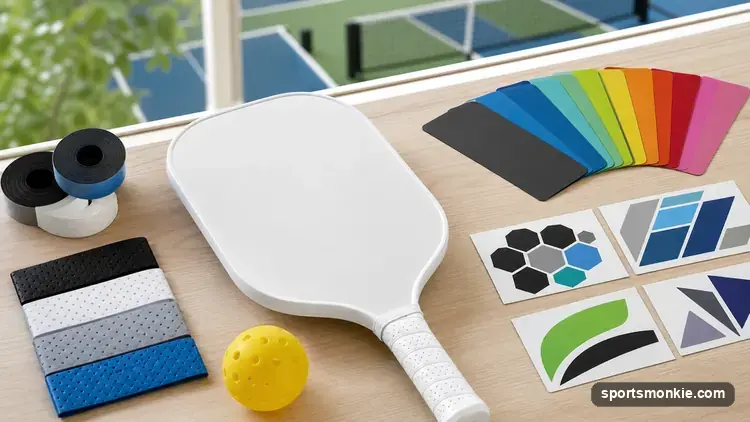
Customizable Pickleball Paddles: Cost and Where to Buy
Where to get a customizable pickleball paddle in 2026, what gets personalized, real prices from $10 to $325, and if custom paddles stay tournament-legal.
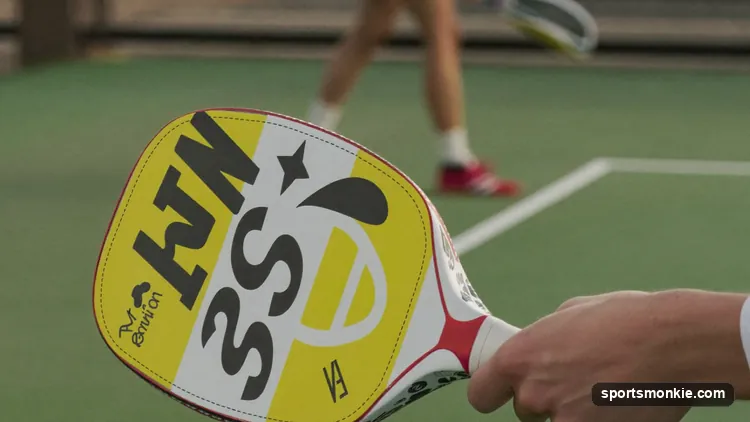
How to Hold a Pickleball Paddle: Grips and Grip Pressure
How to hold a pickleball paddle: the continental and eastern grips, the neutral ready grip, and how much grip pressure to use for control.
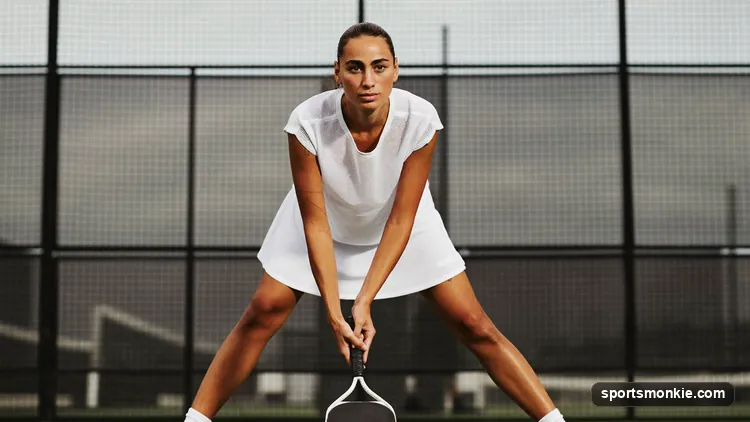
Pickleball Ready Position: Paddle Up, Balanced, Prepared
The pickleball ready position: paddle up in front, knees bent, weight forward. Why paddle height matters and how it speeds up your reactions.