
How to Throw a Knuckleball: Grip, Release, and Drills
On this page6
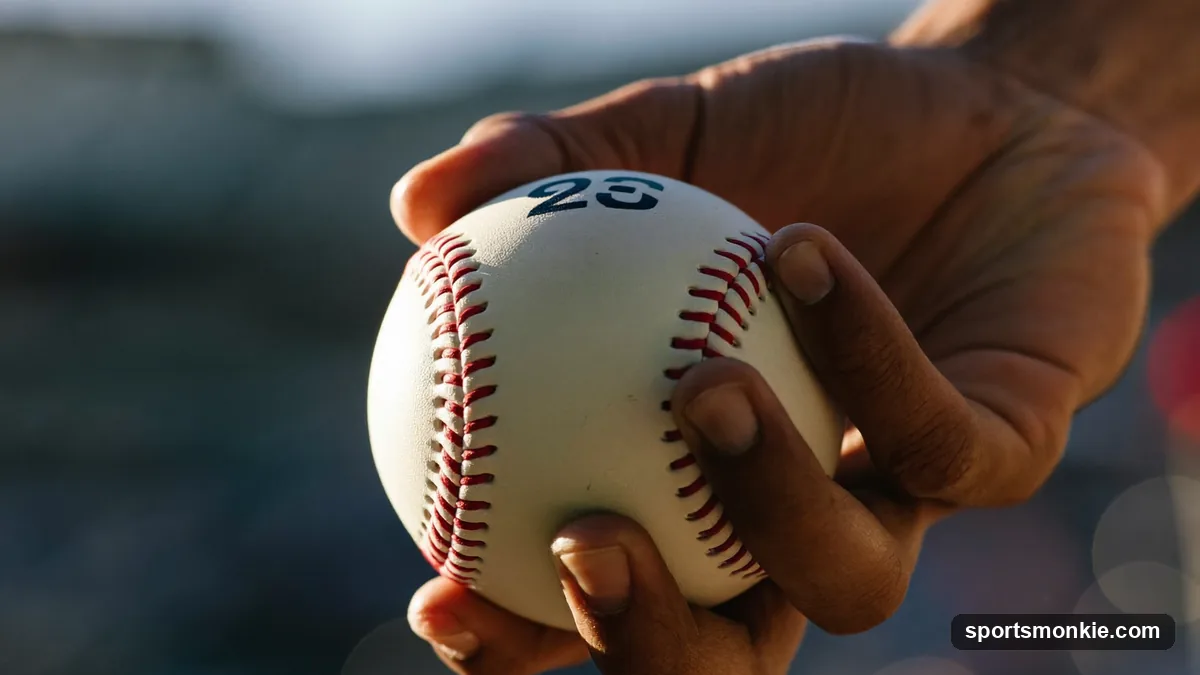
To throw a knuckleball, dig your fingertips and fingernails into the seams behind the ball’s horseshoe, lock your wrist stiff through the delivery, and push the ball out of your hand instead of snapping it, so it arrives at the plate with almost no spin. That lack of rotation, not extra velocity or arm speed, is the entire trick. Everything else about the pitch, from the grip to the drills below, exists to serve that one goal: kill the spin.
The Grip: Fingertips and Nails, Not Knuckles
The name is the biggest myth in the pitch’s own vocabulary. Early 20th-century pitchers really did brace the ball against bent knuckles, which is where the name comes from. Almost nobody does that anymore, because knuckles tend to catch the seam unevenly and impart rotation, the opposite of what you want.
Modern grips instead dig the fingertips or fingernails directly into the seams behind the ball’s horseshoe:
| Grip style | Fingers on seam | Stabilizers | Typical user |
|---|---|---|---|
| Two-finger | Index and middle, arched down | Ring finger, thumb | Most common modern grip |
| Three-finger | Index, middle, ring, arched down | Pinky, thumb | R.A. Dickey’s primary grip |
| Four-finger | All four fingers arched under the horseshoe | Thumb only | Rare, used for extra stability |
Start by seating the ball deep in your palm rather than out in your fingers, then curl your chosen fingers so the nails, not the pads, press into the seam. The thumb sits underneath for balance and comes off the ball first at release. There’s no single “correct” grip; pitchers from Hoyt Wilhelm to Tim Wakefield each settled on slightly different finger counts through trial and error, and coaches still recommend testing all three before committing to one.
The Release: The Motion That Kills Spin
A fastball, curveball, or slider all get their movement from spin, and pitchers are taught to snap the wrist and fingers through release to generate as much of it as possible. A knuckleball reverses that instruction completely.
Keep the wrist stiff and mostly locked through your delivery, arm speed close to a fastball so hitters can’t pick up the difference early. At release, extend the fingers and push the ball straight out rather than rolling it off the fingertips. The nails should be the last thing touching the ball, and it should feel like the ball is “ticking” or slipping off your fingertips rather than being thrown in the conventional sense. Many pitchers cue themselves to keep the ball’s label or logo facing the catcher throughout the pitch, a rough visual check that spin is minimal.
This is also where the knuckleball overlaps with other off-speed pitches in spirit, if not mechanics. If you’ve worked on how to throw a changeup or how to throw a splitter, you already understand the idea of disguising arm speed to deceive a hitter. The knuckleball takes that same deception principle and applies it to spin instead of velocity, which is why it belongs in any serious study of the types of pitches in baseball.
Why Near-Zero Spin Makes the Ball Flutter
Every other pitch moves in a predictable arc because spin creates a consistent pressure difference across the ball as it travels, the same principle that makes a curveball curve or a fastball “rise” relative to gravity. A knuckleball is thrown to eliminate that consistency.
Coaches and pitching labs generally aim for a ball that rotates somewhere between 0 and 100 RPM, or roughly 1.5 to 2 full rotations over 60 feet, 6 inches. With so little spin, the ball’s raised seams present a constantly shifting, uneven surface to the oncoming air instead of a smooth, spinning average. That creates small, shifting pockets of turbulence around the ball, and the pressure differences those pockets create push the ball in tiny, random directions in the final feet before the plate. The result is the pitch’s signature late, jerky “dance,” which is fundamentally different from the smooth break of a breaking ball because it isn’t predictable, not even to the pitcher who threw it.
Why It’s So Hard to Master and Catch
Hitters read spin in the first fraction of a second out of a pitcher’s hand to predict where a pitch will end up. A knuckleball denies them that cue almost entirely, and because its break can happen a foot or less from the plate, hitters often start a swing before the pitch has finished moving.
Catchers face the identical problem in reverse. There’s no spin to read for late break, so oversized mitts became a practical fix in the era of Wilhelm and Niekro, and some clubs carried a personal knuckleball catcher whose main job was simply not letting the pitch get past them for a passed ball. Pitchers struggle for a different reason: a knuckleball lives on fingertip feel, not arm strength, so a small change in grip pressure or release angle can turn a nasty pitch into a batting-practice fastball with no spin at all. That inconsistency is why very few pitchers ever throw the pitch as their primary weapon, and why the ones who master it tend to have unusually long careers, since the pitch doesn’t tax the arm the way sliders and curveballs do.
Famous Knuckleballers Who Made It Work
A short list of pitchers has proven the pitch can anchor an entire career at the highest level:
- Hoyt Wilhelm — Hall of Famer, pitched into his late 40s almost entirely on the knuckleball, one of the first relievers built around it.
- Phil Niekro — Hall of Famer, won 318 games throwing the pitch across 24 MLB seasons, among the most durable careers in baseball history.
- Tim Wakefield — threw it for 19 seasons with the Boston Red Sox, moving between starter and reliever thanks to the low strain the pitch put on his arm.
- R.A. Dickey — won the 2012 National League Cy Young Award, the only knuckleball pitcher to ever win the honor, after reinventing his career around the pitch in his mid-30s.
Each pitcher used a slightly different grip and arm slot, further proof that the pitch rewards feel over a single textbook technique.
Drills to Build Your Knuckleball
Because the pitch depends on touch rather than strength, most coaches recommend building it gradually rather than throwing it at full effort right away.
- Wall flicks — from a few feet away, push the ball into a wall with your chosen grip, focusing only on keeping the label steady and the wrist stiff, no windup involved.
- Short-toss reps — play catch from 20 to 30 feet, exaggerating the stiff-wrist push and checking with your partner whether the ball is spinning visibly.
- Grip rotation — spend separate sessions on the two, three, and four-finger grips rather than mixing them in one outing, so you can tell which one is genuinely killing your spin.
- Full-distance trust reps — once short-toss reps consistently show minimal rotation, move back to 60 feet, 6 inches and throw it with normal arm speed, trusting the grip rather than steering the ball.
- Video spin check — record release from behind the pitcher; a ball with sidespin or backspin visible on camera means the grip or release needs adjustment before adding distance.
Consistency, not power, is the whole game. Pitchers who eventually carry the pitch into competitive baseball and MLB play typically spend months on short-distance reps before ever trusting it in a real at-bat.
Frequently asked questions
How do you throw a knuckleball?+
Dig your fingertips or fingernails into the seams behind the ball's horseshoe, keep the wrist locked and stiff, and push the ball straight out of your hand at release instead of snapping your wrist. The goal is to strip away spin entirely, so the ball travels to the plate rotating less than twice.
Do you grip a knuckleball with your knuckles?+
No, despite the name, almost no modern pitcher actually uses bent knuckles against the ball. Most dig their fingertips or fingernails into the seams instead, because knuckles tend to add rotation, and rotation is the one thing a knuckleball can't have.
Why does a knuckleball move so unpredictably?+
A ball with almost no spin lets its raised seams interact unevenly with the air as it travels, creating shifting pockets of turbulence. Since the seam pattern facing the airflow keeps changing without spin to average it out, the pressure differences push the ball in small, random directions, producing the pitch's signature flutter.
Why is the knuckleball so hard to hit?+
Hitters time pitches by reading spin and trajectory in the first fraction of a second out of the hand. A knuckleball gives almost no visual spin cue and can dart in any direction in its final feet of flight, so hitters can't commit to a swing plane the way they can against a curveball or fastball.
Why is the knuckleball so hard to catch?+
Catchers rely on spin to predict late break, and a knuckleball has none to read. Its flutter can happen a foot or more from the plate, which is why some knuckleball catchers use oversized mitts and teams have occasionally kept a personal knuckleball catcher on the roster.
Who are the most famous knuckleball pitchers in MLB history?+
Phil Niekro and Hoyt Wilhelm are both Hall of Famers who built long careers almost entirely on the pitch. Tim Wakefield threw it for 19 seasons with the Red Sox, and R.A. Dickey won the 2012 NL Cy Young Award with it, the only knuckleballer ever to do so.
Can you throw a knuckleball with any grip?+
No single grip is universal. Most pitchers use a two, three, or four-finger version, digging fingernails into the seam while the thumb and any unused fingers stabilize the ball. Coaches generally recommend testing all three to find which one kills spin most consistently for your hand size.
How long does it take to learn a knuckleball?+
Most pitchers spend months, not days, before the pitch is consistent enough to trust in a game. Because feel and fingertip pressure matter more than arm strength, daily short-distance repetition against a wall or partner is the standard way coaches recommend building it.
Sources
Play & tools
Free browser games and tools — no account, no download.
- Play 162-0 — Draft nine and see if your roster can survive a flawless 162-game MLB season.
- Explore all our games →
- Analyze a trade — Compare both sides of a fantasy baseball trade before you accept.
- Run the MLB predictor — Simulate the MLB postseason bracket down to a World Series champion.
- Open the ERA calculator — Work out earned run average from earned runs and innings pitched — handles the .1/.2 thirds convention.
- Explore all our free sports tools →
Related baseball guides
View all →
How to Throw a Four-Seam Fastball: Grip, Mechanics, and Drills
How to throw a four-seam fastball: the horseshoe-seam grip, backspin mechanics, and drills for the fastest, straightest pitch in baseball.
How to Throw a Splitter: Grip, Mechanics and Elbow-Safety Tips
Learn how to throw a splitter: the wide index-middle finger grip, fastball arm action, why it drops late, and how it differs from a forkball or changeup.
How to Throw a Two-Seam Fastball: Grip, Movement & Drills
To throw a two-seam fastball, place your index and middle fingers along the narrow seams, thumb underneath, and add slight pressure with the index finger to create arm-side run and sink.
How to Throw a Curveball: Grip, Spin & Release
To throw a curveball, use a spike or standard grip with the middle finger on a seam, apply topspin by pulling down at release, and stay on top for a sharp downward break.
How to Throw a Cutter in Baseball: Grip & Release
To throw a cutter, use a four-seam grip shifted slightly off-center toward your fingers, apply a hint of pressure with the middle finger, and throw hard for late glove-side cut.
How to Throw a Slider: Grip, Spin & Release
To throw a slider, grip it slightly off-center like a two-seam, apply firm sidespin off the index finger, and stay on top with fastball arm speed for late lateral break.