
What Is a Chicane in F1? Corners That Slow Cars
On this page6
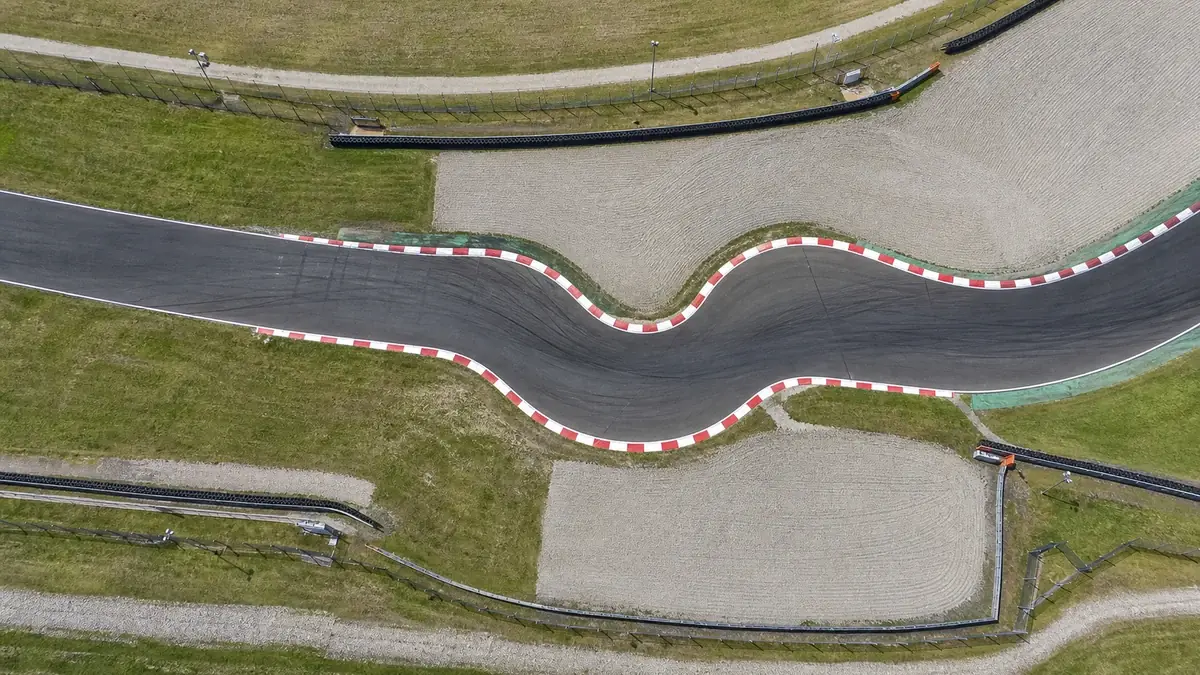
A chicane in F1 is a tight sequence of corners that turn in alternating directions, forming an S or Z shape, built to force cars to slow down. Instead of one straightforward bend, a chicane makes the driver flick left then right (or right then left) in quick succession, braking hard on the way in and getting the car straight before the next turn. Its main job is safety: chicanes scrub speed where a flat-out section would otherwise send cars into a corner, a wall, or a crowd area far too fast.
What is a chicane in F1?
Picture a fast straight ending in a wall or a slow corner. Left alone, cars would arrive at frightening speed. A chicane interrupts that straight with a short zig-zag, two or three corners in opposite directions, so drivers have to brake and thread the car through before continuing. The Formula 1 glossary describes it as exactly this kind of tight, artificial sequence.
The defining feature is the change of direction. A normal corner turns once. A chicane turns one way, then immediately back the other, which unsettles the car and forces the driver to reset the balance between the two apexes. That combination of heavy braking and rapid direction change is what makes chicanes technically demanding.
Most chicanes are deliberately added to a layout rather than being a natural part of the terrain. When a circuit needs to cut speed at a specific point, inserting a chicane is quicker and cheaper than redesigning a whole section.
Why do F1 tracks have chicanes?
Safety is the headline reason. Grand prix cars have grown steadily faster, and stretches that were once flat-out became too dangerous as speeds rose. Governing-body circuit safety standards push tracks to manage top speed into high-risk zones, and a chicane is the standard tool for it. Slow the car before the danger, and the run-off, barriers and braking distances all become manageable again.
But safety is not the only payoff. Chicanes tend to do three other useful things:
- Create overtaking. A hard braking zone at the end of a straight is a natural passing spot, as one car tries to out-brake another into the first apex.
- Add challenge. Threading two opposing corners cleanly, on the limit, separates the precise drivers from the merely fast ones.
- Shape the lap. A chicane lets designers tune where cars accelerate and brake without rebuilding the circuit, which matters for both racing and lap-time targets.
The trade-off is that some fans dislike chicanes for interrupting flow and killing a great corner’s rhythm. A few historic chicanes have been softened or removed over the years for exactly that reason, balancing safety against the character of the lap.
Chicane vs a normal corner: what’s the difference?
The two are easy to mix up, so here is the clean comparison. The key is direction changes and intent.
| Feature | Normal corner | Chicane |
|---|---|---|
| Direction | Turns once, one way | Alternates: left-right or right-left |
| Number of apexes | One | Two or three in quick succession |
| Main purpose | Route the track | Deliberately reduce speed |
| Typical location | Anywhere on the lap | End of a straight or a fast section |
| Driver demand | Line and exit speed | Balance through opposing turns |
A single tight hairpin slows cars too, but it is not a chicane, because it only turns one way. The alternating geometry is what earns the name.
What are the most famous chicanes in F1?
Two circuits own the reputation. Monza, the fastest permanent track on the calendar, relies on chicanes to keep its speeds in check. Its Variante del Rettifilo, the first-corner chicane, breaks up the long start straight and produces some of the season’s most dramatic opening-lap braking. Further round, the Variante Ascari is a flowing chicane complex that rewards commitment and rhythm, widely regarded as one of the best sequences in the sport.
Monaco offers the other classic. The Nouvelle Chicane sits right after the tunnel, where cars burst into daylight at high speed and must brake hard for a tight left-right. It is one of the few genuine overtaking spots on a circuit famous for being nearly impossible to pass on, and a misjudged lunge there has ended plenty of races in the barriers.
These examples show the two faces of the chicane: Monza’s exist to tame raw speed, Monaco’s to create a rare passing chance on a claustrophobic street layout.
How do drivers attack a chicane?
The technique is all about the exit. A driver brakes hard and early on entry, turns in for the first apex, then straightens the car enough to attack the second corner in the opposite direction. Riding the kerbs is often essential, cutting across them to shorten the path and carry more speed, though too much kerb unsettles the car or damages it.
The priority is a clean exit onto whatever follows, usually a straight. Exit speed compounds all the way down the next straight, so a driver will happily sacrifice a fraction on entry to get the car pointing straight and back on the power sooner. Getting greedy at the first apex and running wide at the second is the classic chicane mistake.
For a sense of just how much speed a chicane has to bleed off, our look at the fastest F1 cars shows the velocities these corners are designed to interrupt. And if you want the next piece of trackside vocabulary, DRS in F1 explains the overtaking aid that often works hand in hand with a chicane’s braking zone.
The bottom line on chicanes
A chicane is a purpose-built speed trap in the shape of an S: alternating corners that force drivers to brake, balance the car through two apexes, and prioritise a clean exit. They exist first for safety, but the best of them, from Monza to Monaco, have become defining features of their circuits and reliable sources of overtaking. Next time you watch a driver flick left-right at the end of a straight, you are watching a chicane do its job.
Frequently asked questions
What is a chicane in F1?+
A chicane is a tight sequence of two or three corners in alternating directions, forming an S or Z shape, designed to force cars to slow down. It breaks up a fast straight or a dangerous flat-out section, making drivers brake, change direction quickly, and place the car precisely before accelerating away.
Why do F1 tracks have chicanes?+
Chicanes exist mainly for safety, cutting speed where a straight would otherwise let cars reach dangerous velocities into a corner or crowd area. They also create braking zones that open up overtaking, add technical challenge, and let circuits adjust lap layout without rebuilding whole sections of track.
What is the difference between a chicane and a normal corner?+
A normal corner turns the track once, in a single direction. A chicane strings together corners that turn opposite ways in quick succession, so the car flicks left-then-right or right-then-left. The purpose differs too: chicanes are usually added specifically to scrub speed, not just to route the track.
What are the most famous chicanes in F1?+
Monza's Variante del Rettifilo and Variante Ascari, and Monaco's Nouvelle Chicane, are among the best known. Monza's chicanes slow one of the fastest circuits on the calendar, while Monaco's Nouvelle Chicane follows the tunnel and is a classic late-braking overtaking spot on the street layout.
How do drivers attack a chicane?+
Drivers brake hard on entry, turn in for the first apex, then get the car straight enough to attack the second in the opposite direction, often riding the kerbs to shorten the path. The aim is a clean exit onto the following straight, since exit speed matters more than a fast entry.
Are chicanes good for overtaking?+
Often yes. A chicane usually sits at the end of a straight and demands heavy braking, which creates a natural passing zone as one car out-brakes another into the first apex. But the tight, narrow geometry can also make side-by-side racing risky, so chicane passes reward precision over bravery.
Sources
Play & tools
Free browser games and tools — no account, no download.
- Play 24-0 — Draft an F1 chassis and two drivers, then chase a perfect 24-0 — win every race on the 24-round calendar.
- Explore all our games →
Related motorsport guides
View all →
Haas Picks 21-Year-Old Camara to Replace Ocon and Ends Up With the Grid's Youngest Lineup
Haas has signed F2 leader Rafael Camara, 21, to replace Esteban Ocon for 2027, pairing him with Oliver Bearman in the youngest confirmed lineup on the grid.
Keselowski Says Hocevar's Differentiator Is Intentional Accidents as Their Feud Stews On
Brad Keselowski told Kelly Crandall that what sets Carson Hocevar apart is a lot of intentional accidents, the latest turn in a feud running since Darlington.

Dale Earnhardt Jr. Asked Greensboro Police for a Speeding Discount and Got 107 mph Back
Greensboro police warned drivers that praising Dale is no excuse for speeding. Dale Earnhardt Jr. asked for a discount anyway, and the reply is the story.
Verstappen Gets a New Voice in Austin as Hart Takes Over From Lambiase at Three Races
Tom Hart will engineer Max Verstappen in Austin, Brazil and Las Vegas as Red Bull phases in Gianpiero Lambiase's successor before his move to McLaren.
NASCAR Gives McDowell and Stenhouse No Penalty for Their Charlotte Cool-Down Clash
NASCAR says the McDowell-Stenhouse cool-down lap clash at Charlotte was the closest thing to a penalty without being one, and explains where the line sits.

Norris Appears to Mock Stroll in a Nightclub Video Hours After His Singapore Apology
Lando Norris was filmed at a Singapore nightclub appearing to mock Lance Stroll hours after apologising to McLaren for his sprint collision with Piastri.