
Most Dominant F1 Season Ever: The Full Ranking by Win Rate
On this page7
- 01At a glance: the most dominant F1 seasons, ranked by win rate
- 02How this is ranked
- 03Verstappen’s 2023: the modern individual-driver record
- 04Ascari 1988, and the near-perfect seasons
- 05Schumacher, Clark and Vettel: the 70% club
- 06Driver dominance vs constructor dominance
- 07Why a perfect season hasn’t happened
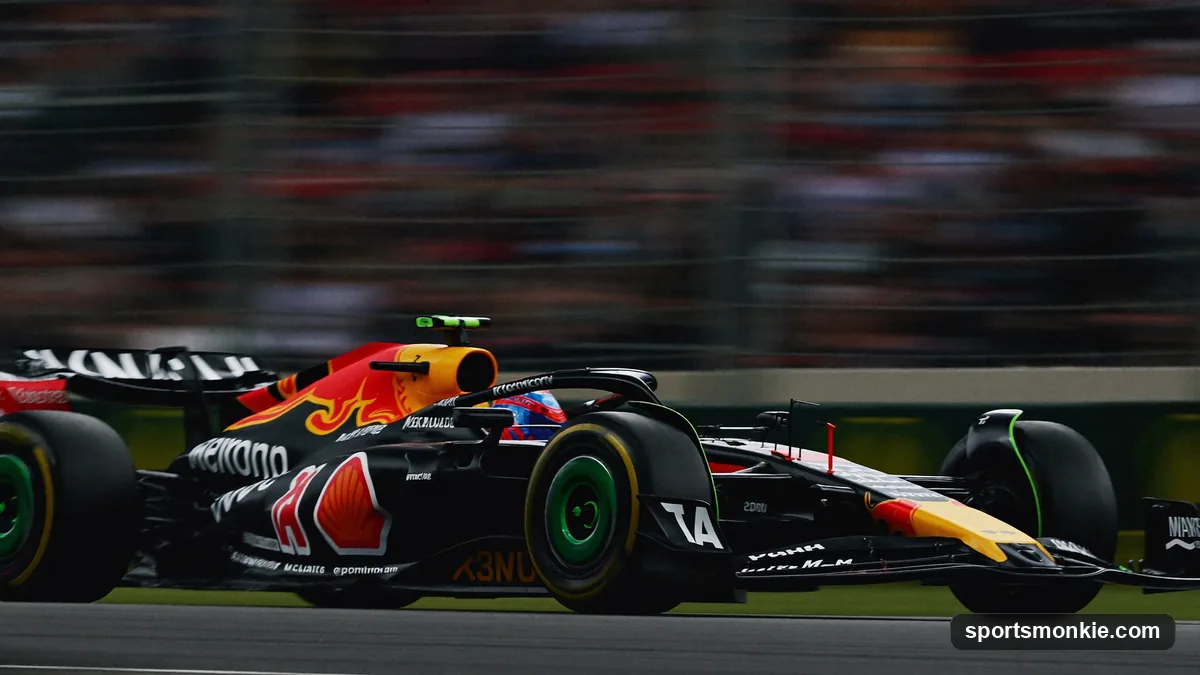
The most dominant F1 season ever, ranked strictly by win percentage, is McLaren’s 1988 campaign, when Ayrton Senna and Alain Prost combined to win 15 of 16 races (93.8%). Mercedes’ 2016 season (19 of 21, 90.5%) and Max Verstappen’s record 2023 title run (19 of 22, 86.4%) follow close behind. No driver has ever won every race on a full calendar, and Alberto Ascari’s 1952 season, in which he won every European round he started, remains the closest any individual has come.
Dominance in F1 gets measured two different ways, and they tell different stories. Raw win totals favor the modern era, because today’s drivers race 22 to 24 times a season versus the 7 to 10 rounds common in the 1950s and 1960s. Win percentage levels that gap and is the fairer way to compare Ascari’s Ferrari to Verstappen’s Red Bull. Here is the full leaderboard, how it’s built, and why a literally perfect season still hasn’t happened.
At a glance: the most dominant F1 seasons, ranked by win rate
| Rank | Team/Driver-Season | Wins | Races | Win Rate |
|---|---|---|---|---|
| 1 | McLaren (Senna/Prost), 1988 | 15 | 16 | 93.8% |
| 2 | Mercedes (Hamilton/Rosberg), 2016 | 19 | 21 | 90.5% |
| 3 | Max Verstappen, 2023 | 19 | 22 | 86.4% |
| 4 | Alberto Ascari, 1952 | 6 | 7 entered | 85.7% |
| 5 | Michael Schumacher, 2004 | 13 | 18 | 72.2% |
| 6 | Jim Clark, 1963 | 7 | 10 | 70.0% |
| 7 | Sebastian Vettel, 2013 | 13 | 19 | 68.4% |
| 8 | Max Verstappen, 2022 | 15 | 22 | 68.2% |
How this is ranked
This leaderboard ranks seasons by win percentage — races won divided by races the driver or team actually entered — rather than by the raw win count. That distinction matters because F1 calendars have grown from single digits in the 1950s to 22-24 rounds today, so counting wins alone always favors recent seasons regardless of how dominant they actually were. Constructor entries (McLaren 1988, Mercedes 2016) combine both cars’ wins, which is why teams can post higher rates than any single driver on the same grid. For the raw-count version of this record, see the most F1 wins in a season leaderboard.
Verstappen’s 2023: the modern individual-driver record
Max Verstappen’s 2023 season is the most dominant single-driver campaign since F1 moved to 20-plus-race calendars. He won 19 of 22 Grands Prix for Red Bull, a rate of roughly 86.4%, and along the way set the outright record for most consecutive F1 wins with 10 straight victories from Miami to Monza. No individual driver in the sport’s history has won more races in one season, and only three campaigns — two of them team totals, not one driver’s tally — rank above it by percentage.
Ascari 1988, and the near-perfect seasons
Alberto Ascari’s 1952 season is the closest thing F1 has to a perfect year for one driver. He skipped the season-opening Swiss Grand Prix to attempt the Indianapolis 500, then won every remaining European round he entered — six straight victories that clinched the title with two races still to run. McLaren’s 1988 season, by contrast, was near-perfect as a team effort: Senna took 8 wins to Prost’s 7, and the only round that got away was the Italian Grand Prix, where Ferrari’s Gerhard Berger won an emotional home race in the year Enzo Ferrari died.
Schumacher, Clark and Vettel: the 70% club
Michael Schumacher’s 2004 season (13 of 18, 72.2%) was long treated as F1’s gold standard for individual dominance before Verstappen’s era. Jim Clark’s 1963 campaign (7 of 10, 70%) set the win-total record of its day and clinched the title with three rounds to spare. Sebastian Vettel’s 2013 season (13 of 19, 68.4%) closed with his own nine-race winning streak, the longest in the sport until Verstappen broke it a decade later. All three sit well below the top tier by percentage, even though each was considered untouchable in its own era — a reminder of how much the calendar shapes these numbers. See the full career picture in our ranking of the greatest Formula 1 drivers.
Driver dominance vs constructor dominance
Individual win rate and team win rate answer different questions. Verstappen’s 86.4% measures one driver against the whole field; McLaren’s 93.8% and Mercedes’ 90.5% measure whether a single team, using two cars, could shut out the rest of the grid entirely. By that constructor standard, 1988 and 2016 remain the two most dominant seasons anyone has produced, and both teams also topped the most F1 championships leaderboard in their respective eras.
Why a perfect season hasn’t happened
A literal 100% season — winning every round on the calendar — has never occurred in F1’s world championship era, and it gets harder every year the schedule grows. Reliability failures, weather, safety cars, penalties and simply having a genuine second-fastest team on the grid all create openings that a 22-to-24-race season all but guarantees will be exploited at least once or twice. Ascari and 1988 McLaren came closest under shorter, more controllable calendars; Verstappen’s 2023 is the best a modern driver has managed against a far tougher, longer test. Track how a perfect run gets built, race by race, in the 24-0 Formula 1 challenge.
As of the 2026 season, no driver or team has come closer to winning every race than these eight campaigns, and the sport’s expanding calendar makes it a taller order every year.
Frequently asked questions
What is the most dominant F1 season ever?+
By win percentage, McLaren's 1988 season is the most dominant team campaign, winning 15 of 16 races (93.8%) with Ayrton Senna and Alain Prost. Among individual drivers, Max Verstappen's 2023 season (19 of 22 races, 86.4%) is the modern benchmark, though Alberto Ascari's 1952 season is close behind at 6 of 7 entered.
Has any driver ever won every race in an F1 season?+
No driver has won every race on a full-length calendar. The closest is Alberto Ascari in 1952, who won all six European rounds he started after skipping the season-opening Swiss Grand Prix to attempt the Indianapolis 500. Modern 22-to-24-race calendars make a literal 100% record almost impossible to sustain.
Was Max Verstappen's 2023 season the most dominant ever?+
It is the most dominant by total wins and the most dominant of the modern, 20-plus-race era, with 19 wins from 22 starts (86.4%) and a record 10 consecutive victories. By raw win percentage, though, McLaren's 1988 team and Ascari's 1952 season still edge it out.
How does Michael Schumacher's 2004 season compare?+
Schumacher won 13 of 18 races in 2004 for Ferrari, a win rate of about 72.2%. It was long considered F1's gold standard for a single-driver campaign until Verstappen's 2022 and 2023 seasons surpassed it in both wins and win percentage.
Why hasn't a modern driver won every race in a season?+
Modern seasons run 22 to 24 races across multiple continents, weather conditions and circuit types, which multiplies the chances for reliability failures, driver errors, safety cars and rival teams to steal a win. A shorter, more predictable calendar made near-perfect seasons like Ascari's 1952 or McLaren's 1988 more achievable.
What is the difference between driver dominance and constructor dominance?+
Driver dominance measures one driver's win rate against the full calendar, like Verstappen's 19 of 22 in 2023. Constructor dominance measures a team's combined win rate across both cars, like McLaren's 15 of 16 in 1988 or Mercedes' 19 of 21 in 2016, which can outrank any single driver's total.
How is 'most dominant F1 season' ranked in this article?+
Seasons are ranked by win percentage, races won divided by races entered or contested, rather than raw win totals. This lets eras with shorter calendars, like the 1950s and 1960s, be compared fairly against the 20-plus-race seasons common since 2010.
Sources
Play & tools
Free browser games and tools — no account, no download.
- Play 24-0 — Draft an F1 chassis and two drivers, then chase a perfect 24-0 — win every race on the 24-round calendar.
- Explore all our games →
Related motorsport guides
View all →
Most F1 Race Wins in a Season
Max Verstappen holds the record with 19 F1 race wins in 2023. The full leaderboard of the most wins in a single Formula 1 season, explained.
Youngest World Champion in F1 History
Sebastian Vettel is the youngest F1 World Champion, winning the 2010 title at 23 years and 134 days. Full leaderboard of the youngest champions, explained.
The Youngest F1 Drivers in History
Max Verstappen debuted at 17 years, 166 days in 2015, the youngest F1 driver in history. The full leaderboard of the youngest F1 debutants, explained.

Best NHL Season Ever: Ranking the Greatest Regular Seasons
No NHL team has ever finished undefeated, but the 2022-23 Boston Bruins came closest to perfection with a record 65-12-5, 135-point season. Here is the full ranked leaderboard.
Haas Picks 21-Year-Old Camara to Replace Ocon and Ends Up With the Grid's Youngest Lineup
Haas has signed F2 leader Rafael Camara, 21, to replace Esteban Ocon for 2027, pairing him with Oliver Bearman in the youngest confirmed lineup on the grid.
Keselowski Says Hocevar's Differentiator Is Intentional Accidents as Their Feud Stews On
Brad Keselowski told Kelly Crandall that what sets Carson Hocevar apart is a lot of intentional accidents, the latest turn in a feud running since Darlington.