
What Is Offside in Hockey?

On this page5
Offside in hockey means an attacking player crosses the offensive blue line ahead of the puck. The puck must lead the way into the attacking zone; if a player gets in first, play stops and a faceoff is held outside the zone. It keeps teams from camping in the offensive end and forces the attack to enter as a unit.
How offside works
The blue line is the boundary of the attacking zone. A player is onside as long as at least one skate is touching or behind the blue line when the puck crosses it. If both skates are fully into the zone before the puck arrives, it is offside. Being on the line keeps you onside, because the line counts as part of the boundary.
Delayed offside
If attackers enter ahead of the puck but do not touch it, the linesman raises an arm for a delayed offside rather than whistling immediately. The attacking team can “wash it out” by clearing every player back over the blue line, after which they may re-enter legally. Touch the puck while offside, and the whistle goes.
What happens next
Offside is a stoppage, not a penalty — no one goes to the box. Play restarts with a faceoff at a neutral-zone dot just outside the blue line, and the attacking team must re-enter the zone with the puck leading.
Offside vs. icing
| Offside | Icing | |
|---|---|---|
| The line | Offensive blue line | Opponent’s goal line |
| The issue | Player enters zone before puck | Puck shot the length untouched |
| Result | Faceoff outside the zone | Faceoff in offending team’s zone |
Both are stoppages; see our icing explainer for that rule. For a visual map of the blue line, goal line and faceoff spots used by both calls, open our hockey rink dimensions guide.
Video review
A goal can be challenged if the scoring play began with an offside entry. Officials check whether an attacker preceded the puck over the blue line; a failed challenge can cost a minor penalty, so coaches pick their moments. For more rules, see our ice hockey guides.
Frequently asked questions
What is offside in hockey?+
Offside is called when a member of the attacking team crosses the offensive blue line into the attacking zone before the puck crosses it. In simple terms, the puck must enter the zone first, or at the same time as the player. If an attacker gets in ahead of the puck, the play is offside, whistled dead, and restarted with a faceoff outside the zone.
How is offside determined in hockey?+
It comes down to skate position relative to the blue line. A player is onside as long as at least one skate is touching or behind the blue line when the puck crosses it. If both skates are fully over the line into the zone before the puck, it is offside. The blue line itself counts as part of the zone boundary, so being on the line keeps a player onside.
What is a delayed offside?+
A delayed offside happens when attackers enter the zone ahead of the puck but do not touch it. The linesman raises an arm instead of blowing the whistle, giving the attacking team a chance to clear the zone — have all players exit back over the blue line — which 'washes out' the offside and lets play continue. If they touch the puck first, the whistle goes and a faceoff follows.
What happens after an offside call?+
Play stops and a [faceoff](/what-is-a-faceoff-in-hockey/) is held at one of the neutral-zone faceoff dots just outside the blue line where the offside occurred. No penalty is assessed — offside is a stoppage, not an infraction that sends anyone to the box. It simply resets the play so the attacking team must re-enter the zone legally, with the puck leading the way.
What is the difference between offside and icing?+
Both are stoppages that reset play with a faceoff, but they involve different lines and situations. Offside is about attackers entering the offensive zone ahead of the puck at the blue line. [Icing](/icing-in-hockey-rules-explained/) is about shooting the puck from your own half all the way across the opponent's goal line untouched. Offside governs entering the zone; icing governs dumping the puck the length of the ice.
Can offside be reviewed by video?+
Yes. In the NHL, a team can challenge a goal on the grounds that the scoring play began with an offside zone entry. Officials review video to check whether an attacker preceded the puck over the blue line on the entry that led to the goal. A successful challenge wipes out the goal; an unsuccessful one can result in a minor penalty, so coaches use it carefully.
Why does the offside rule exist?+
It exists to keep the game flowing and fair by preventing 'cherry-picking' — an attacker loitering in the offensive zone waiting for a long pass. By requiring the puck to enter the zone first, offside forces teams to carry or pass the puck into the attacking zone as a unit, which is central to how hockey's zones and strategy work.
Sources
Play & tools
Free browser games and tools — no account, no download.
- Play 98-0 — Draft a 12-player all-time NHL roster and chase a perfect 98-0 — 82 regular-season wins plus a swept Cup.
- Explore all our games →
Related ice hockey guides
View all →
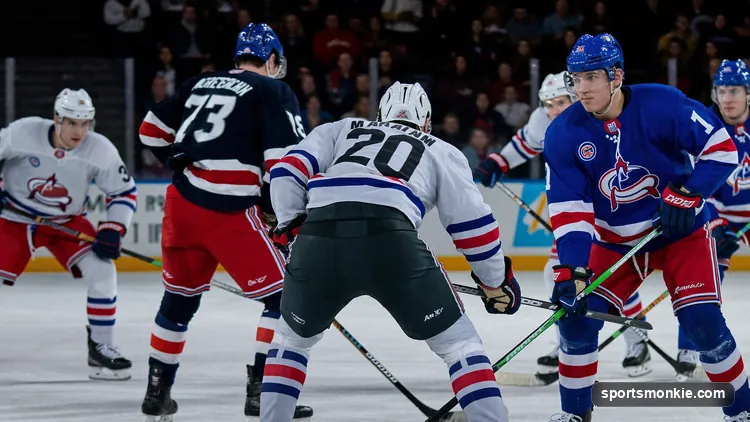
What Is a Faceoff in Hockey?
A faceoff starts and restarts play in hockey: an official drops the puck between two opposing players at one of nine faceoff dots, and they battle to win possession.
What Is a Penalty Kill in Hockey?
A penalty kill is when a short-handed team defends against the opponent's power play after taking a penalty, trying to survive the two minutes without conceding.
What Is a Shootout in Hockey?
A hockey shootout decides a tied NHL regular-season game after overtime: teams alternate penalty-shot attempts, best of three, then sudden death, for one standings point.

NHL Pulls 'Hot for Hockey' Romance Audio Series From Spotify Less Than a Week After Launch
The NHL has removed its 'Hot for Hockey' romance-style audio stories from Spotify and will make no more, less than a week after launching the series.
First Saturday Without Hockey Night in Canada on CBC Since 1952 Leaves Fans Fuming
Sportsnet's Saturday Night Hockey debuted on October 3 as CBC aired no NHL game on a Saturday for the first time since 1952, and fans refused the new name.
How Do the NHL Playoffs Work?
The NHL playoffs are a 16-team, best-of-seven bracket: three division-based rounds plus wild cards lead to the conference finals and the Stanley Cup Final.