
What Is a Shootout in Hockey?
On this page5
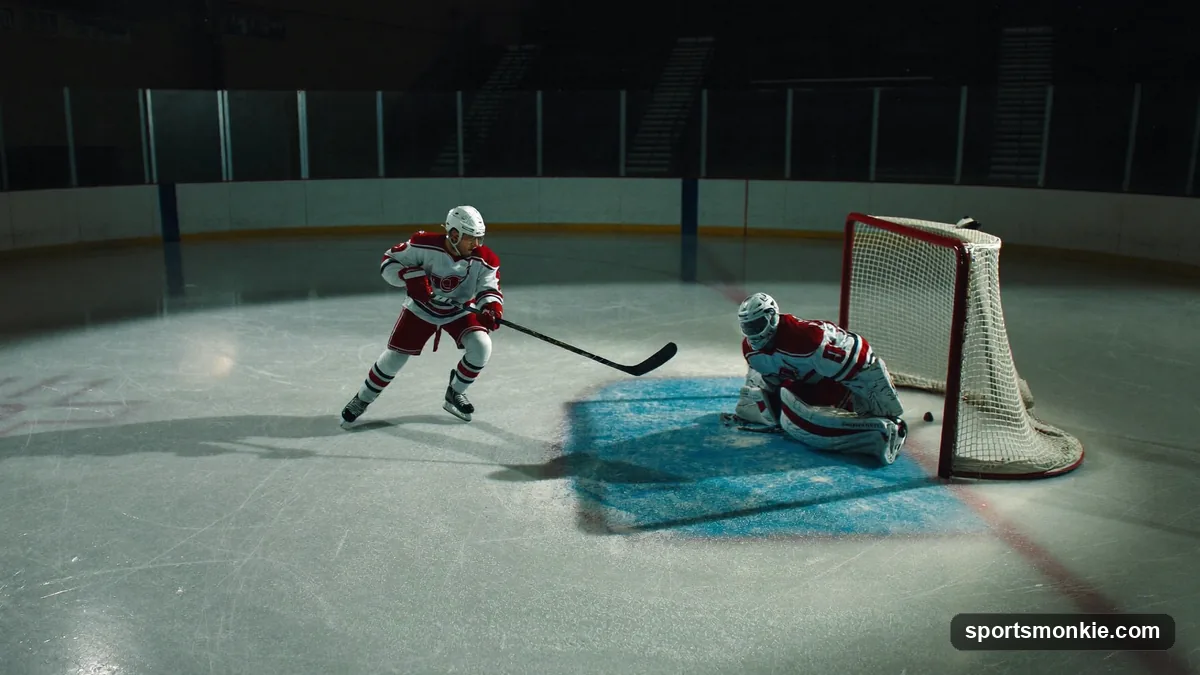
A hockey shootout is the tiebreaker that decides an NHL regular-season game still level after overtime. Each team picks three shooters who alternate penalty-shot attempts against the opposing goalie; more goals wins, then sudden death if tied. Shootouts are used only in the regular season and decide the extra standings point.
How the shootout works
Once a game survives regulation and a scoreless five-minute overtime, each side names three shooters. They take turns on a breakaway-style penalty shot — one skater alone against the goalie. Whoever scores more across the three rounds wins.
If it’s tied after three rounds
The shootout goes to sudden death: teams keep sending out one shooter each round, and the game ends when one scores and the other misses in the same round. Teams can begin reusing shooters after the first pool is exhausted, so stars may get multiple attempts in a long shootout.
The rules of an attempt
| Rule | Detail |
|---|---|
| Start | Puck at center ice, skate in alone |
| Motion | Puck must move continuously forward |
| One shot | No rebounds or second attempts |
| Result | Goal, save, or miss ends the attempt |
It is effectively a penalty shot, governed by the same restrictions.
Regular season only
Shootouts never appear in the playoffs, where tied games go to continuous five-on-five sudden death instead. The regular-season shootout exists mainly to avoid marathon games across an 82-game schedule. A shootout goal decides the game but does not count toward a player’s season goal totals or a hat trick.
Loved and loathed
Fans are split: some love the one-on-one drama and inventive dekes, while purists dislike settling a team game with a skills contest. The 2015 move to three-on-three overtime was partly meant to reduce how often games even reach a shootout. For more hockey rules, see our ice hockey guides.
Frequently asked questions
How does a hockey shootout work?+
After a tied game and a scoreless five-minute overtime, each team selects three shooters. They alternate taking penalty shots — a one-on-one breakaway from center ice against the goalie — and the team with more goals after three rounds each wins. If still tied, the shootout continues in sudden-death rounds until one team scores and the other misses in the same round.
How many shooters are in a shootout?+
Each team uses three shooters in the initial rounds. If the score is level after those three rounds each, the shootout moves to sudden death, where teams keep sending out shooters one at a time. After the first pool of skaters is used, teams can start reusing players, so a long shootout can see stars take multiple attempts.
When is a shootout used in hockey?+
Only in the NHL regular season, and only after a game is tied following the five-minute three-on-three [overtime](/overtime-rules-in-the-nhl/). It decides which team gets the second standings point. Shootouts are not used in the playoffs, where tied games go to continuous sudden-death overtime instead. Some other leagues and international tournaments use shootouts in their own formats.
Does a shootout goal count in the score?+
The shootout decides the game, but shootout goals do not count toward players' individual goal totals or the game's official score in the usual sense — the final score is recorded as one goal higher for the winning team. Individual shootout attempts are tracked as their own statistic. So a hat trick in a shootout, for example, does not count as a [hat trick](/what-is-a-hat-trick-in-hockey/) in a player's season totals.
Why don't NHL playoffs have shootouts?+
The league considers a shootout too arbitrary a way to settle high-stakes playoff games, so the postseason uses continuous five-on-five sudden-death overtime until a goal is scored. The regular season uses shootouts mainly to avoid marathon games during an 82-game schedule. The contrast is deliberate: entertainment and schedule management in the regular season, pure hockey in the playoffs.
What are the rules for a shootout attempt?+
A shooter starts with the puck at center ice and skates in alone on the goalie, and must keep the puck moving forward — no stopping and backing up. Once the puck is shot and the play is dead, the attempt is over. It is essentially a penalty shot, and the same restrictions apply: no second shots on a rebound, and the shot must be a continuous forward motion toward the net.
Are shootouts popular with fans?+
They are divisive. Many fans love the one-on-one drama and the creativity of the moves shooters attempt, while purists dislike settling a team game with an individual skills contest. The move to three-on-three overtime in 2015 was partly a response to that criticism, reducing how often games reach a shootout by making the overtime period itself more likely to produce a winner.
Sources
Play & tools
Free browser games and tools — no account, no download.
- Play 98-0 — Draft a 12-player all-time NHL roster and chase a perfect 98-0 — 82 regular-season wins plus a swept Cup.
- Explore all our games →
Related ice hockey guides
View all →
What Is a Faceoff in Hockey?
A faceoff starts and restarts play in hockey: an official drops the puck between two opposing players at one of nine faceoff dots, and they battle to win possession.
What Is a Penalty Kill in Hockey?
A penalty kill is when a short-handed team defends against the opponent's power play after taking a penalty, trying to survive the two minutes without conceding.
What Is Offside in Hockey?
Offside in hockey means an attacking player crosses the offensive blue line ahead of the puck. Play stops and a faceoff is held outside the zone.
NHL Pulls 'Hot for Hockey' Romance Audio Series From Spotify Less Than a Week After Launch
The NHL has removed its 'Hot for Hockey' romance-style audio stories from Spotify and will make no more, less than a week after launching the series.
First Saturday Without Hockey Night in Canada on CBC Since 1952 Leaves Fans Fuming
Sportsnet's Saturday Night Hockey debuted on October 3 as CBC aired no NHL game on a Saturday for the first time since 1952, and fans refused the new name.
How Do the NHL Playoffs Work?
The NHL playoffs are a 16-team, best-of-seven bracket: three division-based rounds plus wild cards lead to the conference finals and the Stanley Cup Final.