
Overtime Rules in the NHL: How OT Works (2026)
On this page5
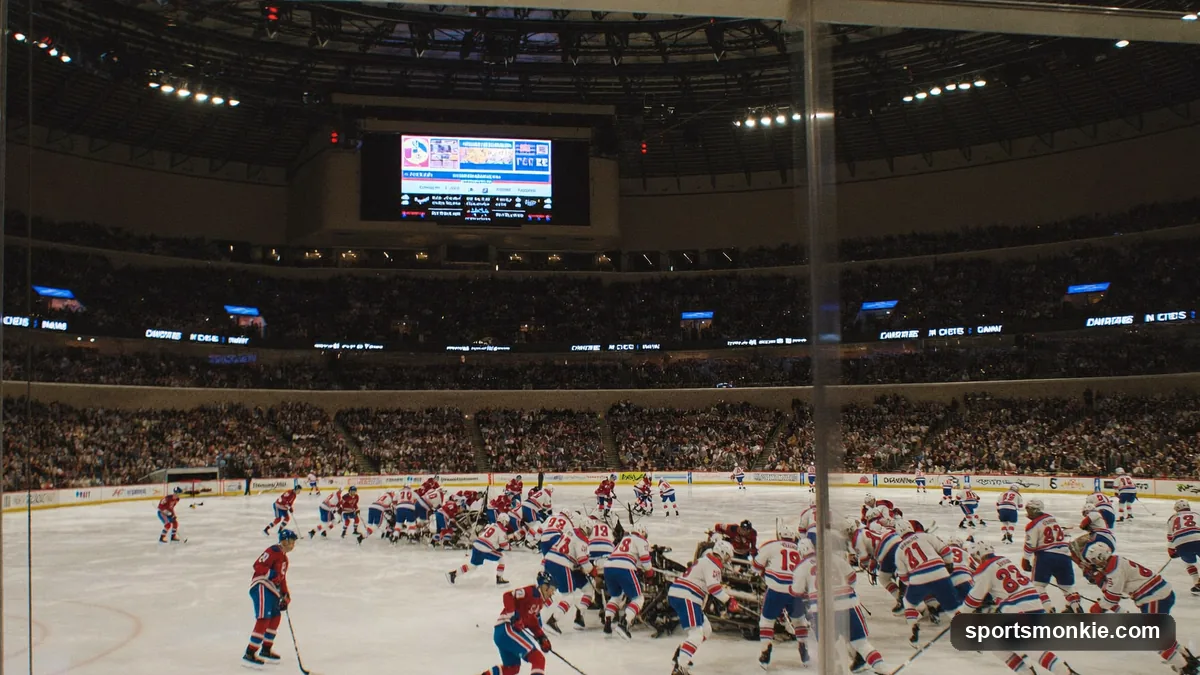
NHL regular-season overtime is a single five-minute, three-on-three sudden-death period — first goal wins. If it stays tied, the game is decided by a shootout. Playoff overtime is completely different: full five-on-five, 20-minute sudden-death periods played until someone scores, with no shootout. The open three-on-three format makes regular-season OT some of the most exciting hockey there is.
Regular-season overtime: 3-on-3
If a game is level after 60 minutes, teams play five minutes of sudden death with just three skaters each (plus goalies). The first goal ends it. All that open ice produces breakaways and end-to-end chances, which is exactly why the NHL adopted three-on-three in 2015 — to decide more games in OT and rely less on the shootout.
If it’s still tied: the shootout
When no one scores in the five-minute period, a shootout decides the winner and the extra standings point. It is a regular-season-only tiebreaker; the format and rules are covered in our shootout guide.
Playoff overtime: no shootout
The postseason throws out the short format entirely.
| Regular season | Playoffs | |
|---|---|---|
| Length | One 5-minute period | 20-minute periods, unlimited |
| Skaters | 3-on-3 | 5-on-5 |
| Decided by | OT goal or shootout | OT goal only — no shootout |
| Can end tied | No (shootout settles it) | No (plays until a goal) |
Playoff games have gone to multiple overtimes, making them among the longest and most dramatic in sport.
The ‘loser point’
A team that loses in overtime or a shootout still earns one standings point, while the winner gets two. So an overtime game awards three total points, versus two for a game decided in regulation. That extra point heavily shapes playoff races and is why teams play cautiously to at least reach OT.
How it compares to other sports
NHL overtime is short and open in the regular season but relentless in the playoffs. That contrasts with NFL overtime’s possession-based system. Both reject playoff ties, just in very different ways. For more on how the game works, see our ice hockey guides.
Frequently asked questions
How does overtime work in the NHL?+
In the regular season, if a game is tied after 60 minutes, teams play a five-minute sudden-death overtime at three skaters per side (plus goalies). The first goal wins. If neither team scores in those five minutes, the game goes to a shootout to decide the winner. The winning team gets two standings points and the loser gets one for reaching overtime.
Why is NHL overtime 3-on-3?+
The NHL switched regular-season overtime to three-on-three in 2015 to create more open ice and more goals, so fewer games would need a shootout. With only three skaters per side, there is far more space, leading to end-to-end rushes and frequent scoring. It has been a popular change, resolving many more games in the OT period itself rather than a shootout.
How is NHL playoff overtime different?+
Playoff overtime is played five-on-five, like regulation, in full 20-minute sudden-death periods with normal intermissions between them. There is no shootout — teams keep playing additional periods until someone scores, no matter how long it takes. Some playoff games have gone to multiple overtimes, becoming among the longest and most dramatic in the sport.
Is there a shootout in NHL playoffs?+
No. Shootouts are used only in the regular season. In the playoffs, a tied game after regulation is settled by continuous five-on-five sudden-death overtime periods until a goal is scored. This is why playoff overtime can last far longer than regulation itself, and why it is considered the most intense format in hockey. See our [shootout](/what-is-a-shootout-in-hockey/) guide for the regular-season tiebreaker.
How many points do teams get for an overtime loss?+
A team that loses in overtime or a shootout still earns one standings point, while the winner gets two. A regulation win is worth two points and a regulation loss zero. This 'loser point' means games that reach overtime award three total points (2 to the winner, 1 to the loser), which shapes the standings and playoff races across the season.
Can a team pull the goalie in 3-on-3 overtime?+
Teams generally keep their goalie in during three-on-three overtime because the ice is already so open that pulling him would be extremely risky. Goalie pulling is far more common late in regulation when trailing. In the wide-open three-on-three format, defensive structure and line changes matter more than adding a skater, since a turnover often leads straight to a breakaway.
How does overtime compare to the NFL?+
The formats are very different. NHL regular-season OT is short, three-on-three, and can end in a shootout, while [NFL overtime](/overtime-rules-in-the-nfl/) is a timed period where both teams are now guaranteed a possession. Both playoff formats reject ties, but hockey does it with continuous sudden death and football with a possession-based system. Each reflects how its sport scores and flows.
Sources
Play & tools
Free browser games and tools — no account, no download.
- Play 98-0 — Draft a 12-player all-time NHL roster and chase a perfect 98-0 — 82 regular-season wins plus a swept Cup.
- Explore all our games →
Related ice hockey guides
View all →
How Do the NHL Playoffs Work?
The NHL playoffs are a 16-team, best-of-seven bracket: three division-based rounds plus wild cards lead to the conference finals and the Stanley Cup Final.

NHL Pulls 'Hot for Hockey' Romance Audio Series From Spotify Less Than a Week After Launch
The NHL has removed its 'Hot for Hockey' romance-style audio stories from Spotify and will make no more, less than a week after launching the series.
Alex Ovechkin Says 2026-27 Will Be His Final NHL Season After 22 Years in Washington
Alex Ovechkin told his Capitals teammates on Monday that the 2026-27 season will be his last in the NHL. The all-time goals leader starts his farewell year on 929 goals.
Overtime Rules in the NFL: How OT Works (2026)
NFL overtime is a 10-minute period where both teams now get a possession. Regular-season OT can end in a tie; playoff OT plays until someone wins.
What Is a Faceoff in Hockey?
A faceoff starts and restarts play in hockey: an official drops the puck between two opposing players at one of nine faceoff dots, and they battle to win possession.
What Is a Penalty Kill in Hockey?
A penalty kill is when a short-handed team defends against the opponent's power play after taking a penalty, trying to survive the two minutes without conceding.