
What Are Lacrosse Balls Made Of? Material, Size and Weight
On this page7
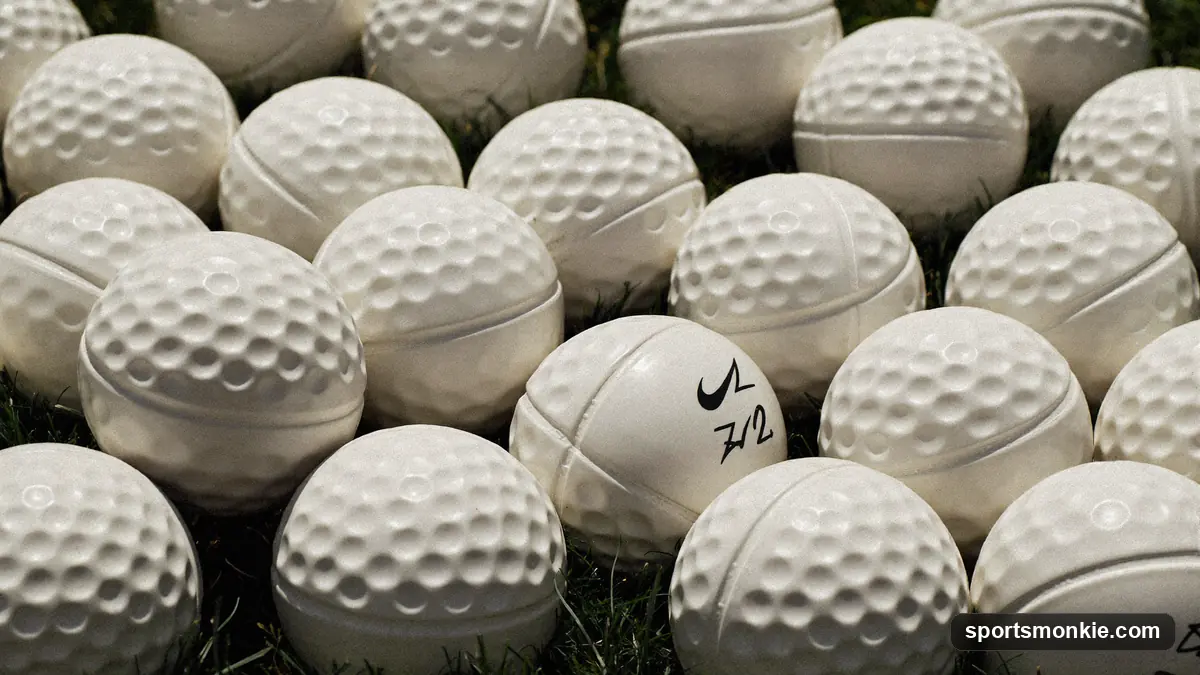
A lacrosse ball is a single piece of solid vulcanized rubber, not hollow and not wound around a core. Under the governing-body spec it weighs 5 to 5.25 ounces, measures 7.75 to 8 inches in circumference (about 2.5 inches across), and must pass the NOCSAE ND-049 standard for lacrosse balls. That dense rubber is the whole story behind why the ball feels so hard and so heavy for its size.
If you only remember one thing: it is solid rubber, all the way through.
What material is a lacrosse ball made of?
Lacrosse balls are molded from vulcanized rubber, the same basic material family as a hockey puck. Vulcanization heats raw rubber with sulfur so the polymer chains cross-link, turning a soft, tacky compound into a firm, resilient solid that holds its shape and bounce. The ball is cured as one continuous mass, which is why cutting one open reveals uniform rubber rather than a separate center.
Most balls use standard rubber. Some manufacturers sell a smoother, longer-lasting compound designed to resist the oily surface bloom that older cheap balls develop, but the core material and the regulation dimensions do not change. The World Lacrosse rulebook and USA Lacrosse both point to the NOCSAE spec rather than to a single brand, so any certified ball, regardless of maker, meets the same size, weight, and rebound requirements.
Lacrosse ball specifications
Here is the full regulation spec in one place. These figures are set by the governing bodies and the NOCSAE standard, and they are the same for men’s and women’s play at the sanctioned level.
| Spec | Regulation figure |
|---|---|
| Material | Solid vulcanized rubber |
| Construction | One solid piece, not hollow |
| Weight | 5 to 5.25 oz (142 to 149 g) |
| Circumference | 7.75 to 8 in (19.7 to 20.3 cm) |
| Diameter | ~2.5 in (6.3 cm) |
| Standard | NOCSAE ND-049, SEI certified |
| Colors | White, yellow, or orange |
| Rebound | Standardized drop-bounce height under NOCSAE |
The certification matters more than the brand. A ball stamped as NOCSAE and SEI certified has passed size, weight, and rebound testing, which is what leagues check. Practice balls sold without that stamp may look identical but are not legal for sanctioned games.
Are lacrosse balls hard, and why so heavy?
Yes, they are genuinely hard, and the reason is density rather than size. A lacrosse ball is smaller than a baseball but packs solid rubber into that volume, so it carries real mass. That weight is a feature: it lets the ball hold its pace on long clears and feeds, and it is why elite shots can be radar-clocked north of 100 mph.
The hardness is also why protective gear is non-negotiable. Field players wear padded gloves, and goalies add a helmet, throat guard, and chest protector precisely because a solid rubber ball at speed does not forgive. If you are new to the sport, the ball is the single most important reason to respect the safety equipment from day one.
Why lacrosse balls are used for muscle recovery
Away from the field, the same firmness that makes the ball punishing on a shot makes it a favorite recovery tool. A lacrosse ball is the standard pick for self-myofascial release: you pin it between a tight muscle and the floor or a wall and roll slowly to work a trigger point. Because it is small and rigid, it reaches spots a bulky foam roller rolls right over, like the glutes, the arch of the foot, and the upper back near the shoulder blade.
Does it break up scar tissue? That specific claim is oversold. What a lacrosse ball reliably does is apply firm, targeted pressure that can ease tightness and improve how a muscle moves. Treat it as a mobility aid, not a medical treatment, and back off if a spot is sharply painful rather than just tender. We walk through the technique in our guide to using a lacrosse ball for muscle massage.
From deer hide to rubber
The solid rubber ball is a modern standard, not the original. The game comes from the Haudenosaunee (Iroquois) peoples, and early balls were made from natural materials such as wood, and later small stuffed deerskin balls, thrown with wooden sticks strung in leather and gut. As the sport formalized, those handmade balls gave way to manufactured rubber, which could be produced to a consistent size, weight, and bounce.
Vulcanized rubber won out because it solved the two problems handmade balls could not: consistency and durability. A modern certified ball plays the same from one to the next and survives thousands of shots and wall-ball reps, which is exactly what standardized competition needs. The trade-off is the hardness that defines the ball today.
How the ball works with the stick
The ball’s weight and grip also shape how it plays in the pocket of a stick. A well-strung head channels a solid ball predictably on release, which is why pocket setup gets so much attention. Softer, broken-in netting cradles the dense ball and grips it through a check, while a fresh, tight pocket can throw high until it settles. If you are dialing in a stick, our rundowns of the best lacrosse mesh and how to string a lacrosse head cover how the netting interacts with a regulation ball.
Buying and replacing lacrosse balls
Certified match balls run roughly $2 to $4 each, and bulk practice packs of a dozen or more bring the per-ball price down further. Cheap uncertified balls are fine for wall ball and backyard reps but should not be trusted for games, and they tend to go slick and greasy faster. When a ball’s surface turns oily or its color has worn dull enough to be hard to track, retire it to practice duty and rotate a fresh one into games.
For a first stick-and-ball setup, buy a couple of certified match balls plus a bag of practice balls. The certified ones stay clean for game and tryout use; the practice bag takes the abuse of wall ball, where volume matters more than the stamp. Either way you are buying the same thing underneath: solid vulcanized rubber, cured in one piece, built to the same spec the pros use.
Freshness note: material, weight, and circumference are stable governing-body figures. Re-check the NOCSAE ND-049 revision date and confirm current ball pricing each season, as certified-ball costs drift with rubber prices.
Frequently asked questions
Are lacrosse balls soft or hard?+
Lacrosse balls are hard. They are molded from solid vulcanized rubber with no cushioning core, so the surface barely gives under pressure. A regulation ball can leave a bruise on an unpadded shot, which is why field players wear gloves and goalies wear full chest protection and a helmet.
Are lacrosse balls solid or hollow?+
Solid. Unlike a tennis or field hockey ball, a lacrosse ball is one continuous piece of rubber all the way through, with no air pocket or separate core. That solid construction is what gives it a consistent bounce and its dense 5 to 5.25 ounce weight.
Why are lacrosse balls so heavy?+
The weight comes from density, not size. At roughly 2.5 inches across the ball is smaller than a baseball, but it is packed with solid rubber rather than being hollow or wound around a light core. That mass lets it hold pace on long passes and shots that can top 100 mph at the elite level.
Can a lacrosse ball break up scar tissue?+
A lacrosse ball is widely used for self-myofascial release to ease muscle tightness and trigger points, and its firmness lets you target small areas a foam roller misses. It can help mobilize tissue, but claims that it physically breaks up scar tissue are not well established. Treat it as a mobility and recovery tool, not a medical device.
What color are official lacrosse balls?+
Regulation balls come in white, yellow, and orange, and a match is played with one agreed color that contrasts with the field. Yellow and white are the most common at the college and pro level. Older or cheaper balls can develop a greasy surface bloom, so match balls are wiped or replaced when they get slick.
Sources
Play & tools
Free browser games and tools — no account, no download.
- Play today's Sports Connections — Today's Sports Connections — daily hints, answers, and play the grid.
- Play Guess the NFL Player — A new mystery NFL player every day. Eight guesses, with a clue on each — plus free unlimited mode.
- Explore all our games →
Related guides

Lacrosse Equipment List: Everything You Need to Play
The full lacrosse equipment list: a men's player needs a helmet, gloves, and pads; a girls' player needs eyewear, a mouthguard, and a stick. Checklist inside.

Lacrosse Gloves vs Hockey Gloves: Can You Swap Them?
Lacrosse gloves vs hockey gloves: you shouldn't swap them. Here's why cuff length, mobility, and protection make each glove wrong for the other sport.

Lacrosse Helmet Sizing: How to Get the Right Fit
Lacrosse helmet sizing starts with measuring head circumference above the brow, then matching it to the maker's chart. Here is how to size and fit a helmet right.

Men's vs Women's Lacrosse: Every Major Difference
Men's vs women's lacrosse differ in players, checking, equipment, field, and stick rules. Here's every major difference in one clear breakdown.

The Top Lacrosse Gear Brands
A guide to the established lacrosse brands, from STX, Warrior and Maverik to Nike, ECD and Cascade, and what each is best known for making.
Lacrosse Goal Size: Official Dimensions for Every Level
A lacrosse goal is 6 feet wide by 6 feet high at every field level, from youth to NCAA. Here are the official dimensions, pipe specs, and box differences.