
Proper Golf Grip: What a Correct Grip Looks Like and Why It Matters
On this page7
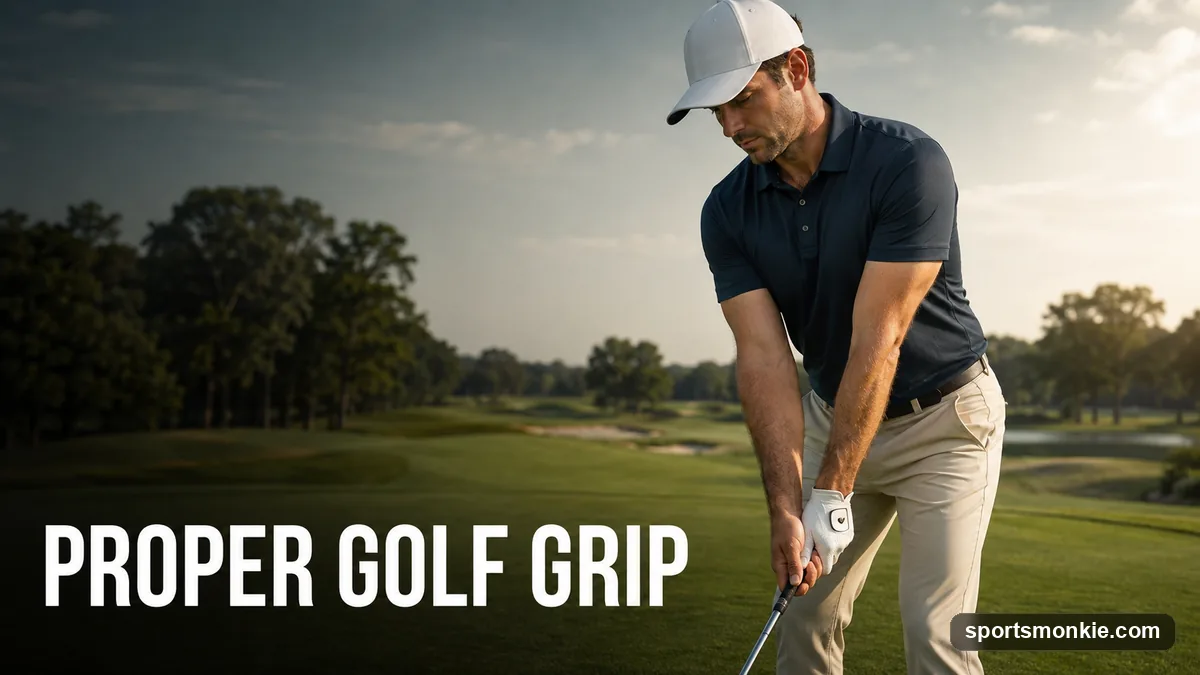
A proper golf grip is neutral: about two knuckles visible on your lead hand at address, both V’s between thumb and forefinger pointing toward your trail shoulder, light pressure around a 4 out of 10, and the hands working as a single connected unit rather than two separate holds. Get those four things right and the clubface has the best chance of arriving square at impact without any compensation elsewhere in your swing.
Grip is the only physical connection between you and the club, which is why every credible teaching source treats it as fundamental number one. This guide covers exactly what “correct” looks like, why it matters, and how to build it into a repeatable habit.
What a proper grip actually looks like
Look down at address with your lead hand on the club (left hand for a right-handed golfer). A neutral, proper grip shows:
- Two knuckles visible on the back of your lead hand. Not zero, not three or four.
- The V between your lead thumb and forefinger pointing at your trail shoulder or the middle of your chest.
- The trail hand’s V pointing the same direction, roughly parallel to the lead hand’s V.
- The trail palm facing the target, with the lifeline of your trail palm resting over your lead thumb, not off to the side of it.
This is neutral because it neither closes the face pre-set (a strong grip) nor opens it (a weak grip). It’s the default position taught to beginners before any deliberate adjustment for shot shape. For the full mechanics of building this hold from scratch, see our companion guide on how to grip a golf club.
Why grip matters more than most golfers think
Clubface angle at impact accounts for most of a shot’s starting direction and curve, according to launch-monitor research used throughout modern teaching. Your hands are the only thing controlling that angle, so a flawed grip forces your body into compensating moves elsewhere in the swing just to square the face back up. Those compensations are exactly what produce inconsistent ball-striking: some days the timing works, some days it doesn’t.
A proper grip removes the need for that compensation. It’s the cheapest, fastest fix in golf, costs nothing, and can be corrected in seconds at the range or at home in front of a mirror. To groove it into a habit, work through a short set of golf grip drills that rebuild your hands rep by rep.
Step-by-step: building a proper grip
- Set the club in your lead-hand fingers first. Let the shaft run diagonally from the base of your pinky finger to the middle joint of your index finger, a finger grip, not a palm grip.
- Close your lead hand and check the V. It should point at your trail shoulder. Count knuckles: you want to see two.
- Bring the trail hand on from below. The palm should face the target and fit snugly against the lead thumb, with no gap between them.
- Check the trail-hand V. It should point the same direction as the lead hand’s. Mismatched V’s are the single most common flaw amateurs carry.
- Choose overlap, interlock, or ten-finger to link the hands. All three are legitimate; pick whichever feels most unified. See our interlock vs overlap grip comparison for which suits your hand size.
- Set pressure at a 4 out of 10. Firm enough to control the club, light enough that your forearms stay soft.
- Waggle the club before you swing. A couple of soft wrist wiggles confirms the grip feels connected before you commit to the takeaway.
Grip pressure: the part everyone gets wrong
Pressure gets less attention than hand position, but it matters just as much. A death grip, tight enough to whiten your knuckles, locks up your wrists and forearms and kills the natural wrist hinge that generates clubhead speed. It also steepens the swing and adds tension throughout the whole motion.
Too loose is also a problem: an overly soft grip lets the club twist open in your hands during the swing, which reopens the face you worked to set neutral. The target is consistent light pressure, most teachers describe it as holding a tube of toothpaste without squeezing any out, held evenly through the swing, not gripped harder at the top or through impact.
Common grip mistakes and how to fix them
- Palming the club instead of fingering it. Fix: reset with the shaft running diagonally across the fingers, not flat across the palm. A finger grip preserves wrist hinge; a palm grip restricts it.
- Mismatched V’s (one strong, one weak). Fix: check both V’s point to the trail shoulder before every shot until it becomes automatic.
- Death grip pressure. Fix: regrip at a 4 out of 10 and take a few practice swings feeling for tension in your forearms. If you feel it, back off.
- Grip too far in the palm of the trail hand, which disconnects the hands. Fix: make sure the trail palm’s lifeline sits directly over the lead thumb, no gap.
- Ignoring grip size. A handle that’s the wrong size for your hand mimics these faults regardless of technique, undersized grips promote hooks, oversized grips promote slices. Confirm fit before troubleshooting technique.
If your grip already checks out neutral but you’re still fighting a slice or hook, the fix may be intentional rather than accidental. See our breakdown of strong vs. weak grip for how shifting hand position on purpose corrects ball flight.
A short practice plan to lock it in
Grip is a habit, and habits need repetition away from live-ball pressure:
- Week 1: Spend two minutes daily gripping and regripping a club at home, no ball, checking knuckle count and V direction until it feels automatic.
- Week 2: At the range, check your grip before every shot for one full bucket. Slow down; don’t let habit override the checklist.
- Week 3 and beyond: Spot-check every 8 to 10 shots. Grip drifts back toward old habits under fatigue, so periodic checks catch it before it undoes your progress.
Once the grip is second nature, it becomes the stable foundation the rest of your swing relies on. From there, the next building block is turning that connected setup into motion, covered in our guide to how to swing a golf club.
The bottom line
A proper golf grip is neutral hands, matching V’s toward the trail shoulder, light pressure, and two hands acting as one unit. It’s the single fundamental every other part of the swing depends on, and it’s also the fastest one to fix. Spend a few focused minutes rebuilding it correctly and you remove one of the most common root causes of inconsistent ball-striking before you ever address the ball.
Frequently asked questions
What does a proper golf grip look like?+
A proper (neutral) golf grip shows about two knuckles on your lead hand when you look down at address, with both V's between thumb and forefinger pointing at your trail shoulder. The trail hand's palm faces the target and its lifeline sits over the lead thumb, so the hands work as one connected unit rather than two independent grips.
How do I know if my golf grip is correct?+
Check three things at address: knuckle count (about two on your lead hand), V direction (both point to your trail shoulder), and pressure (light, around a 4 out of 10, with no whitening in your knuckles). If all three check out and the clubface returns square at impact more often than not, your grip is correct for you.
How tight should your golf grip be?+
Light. Most teachers rate it a 4 on a 10-point scale, roughly the pressure you'd use holding a tube of toothpaste without squeezing paste out. A grip that tight-feeling white knuckles and a rigid forearm-kills wrist hinge and clubhead speed. A grip that's too loose lets the club twist open in your hands during the swing.
Where should the golf club sit in your hands?+
In the fingers, not the palm. For the lead hand, the grip runs diagonally from the base of the pinky finger across to the middle joint of the index finger. Palming the club turns it into a wristless, restricted hold that kills hinge and power; a finger-based grip lets the wrists hinge freely and the clubface release naturally through impact.
Do both hands need to match on the golf grip?+
Yes. The single most common flaw in amateur grips is hands that fight each other-one strong, one weak-which twists the clubface open or closed independent of the swing itself. Both V's should point to the same spot, generally your trail shoulder, so the hands move and rotate together as a single unit through the swing.
Why does grip matter so much in golf?+
Your hands are the only part of your body touching the club, so grip is the sole connection that controls clubface angle-the single biggest factor in where the ball starts and how much it curves. A flawed grip forces compensations elsewhere in the swing just to square the face at impact, which is why teaching pros treat grip as fundamental number one.
Can a bad golf grip cause a slice?+
Yes, it's one of the most common causes. A weak grip, where you see only one knuckle or none on your lead hand and the V's point toward your chin, leaves the clubface open through impact by default. That open face is precisely what turns a normal swing path into a slice, regardless of how sound the rest of your mechanics are.
Sources
Play & tools
Free browser games and tools — no account, no download.
- Play today's Sports Connections — Today's Sports Connections — daily hints, answers, and play the grid.
- Play Guess the NFL Player — A new mystery NFL player every day. Eight guesses, with a clue on each — plus free unlimited mode.
- Explore all our games →
Related golf guides
View all →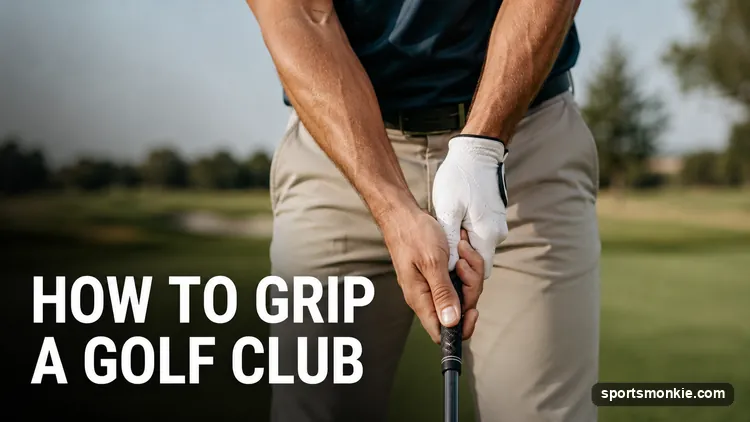
How to Grip a Golf Club: The Correct Grip in 5 Steps
To grip a golf club correctly, rest it diagonally across your lead-hand fingers, close the hand so the V points at your trail shoulder, then set your trail hand so both palms face each other. Here is the full 5-step setup, pressure scale, and fixes for the grip faults that cause slices and hooks.
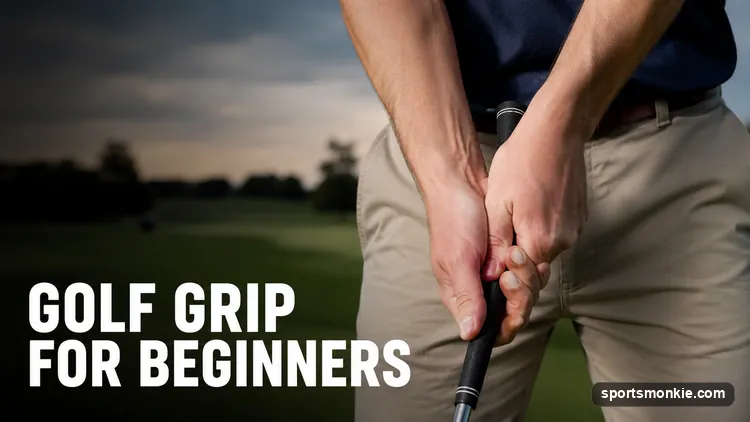
Golf Grip for Beginners: How to Hold the Club Correctly
A beginner's golf grip starts with the lead hand: place the club in your fingers, not your palm, so you see two knuckles at address. Here is the step-by-step method, grip styles, and the faults to avoid.
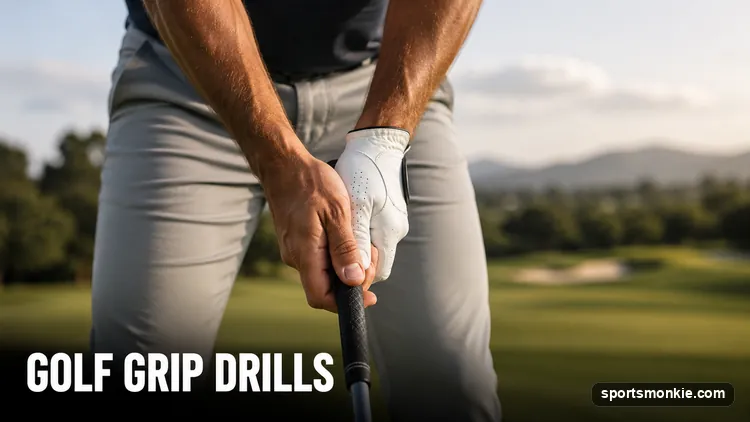
8 Golf Grip Drills to Fix Your Hands and Stop the Slice
Eight golf grip drills ranked by the fault each one repairs, from a weak slice-causing grip to a death grip that kills speed. Fix your hands before you swing.
Golf Swing Tips for Beginners: 9 Fixes That Cut Strokes Fast
The best golf swing tips for beginners start with grip, setup, and a slower takeaway — nine checkpoints that fix slices, chunks, and tops in one range session.

How to Swing a Golf Club: The Complete Step-by-Step Guide
How to swing a golf club starts with a solid grip and setup, then a one-piece takeaway, a controlled backswing, and a downswing led by the hips. Here is the full sequence.

Interlock vs Overlap Grip: Which Should You Use?
Interlock locks the pinky and index finger together; overlap rests the pinky on top. Interlock suits smaller hands, overlap suits most players. Here is how to choose.