
Golf Grip for Beginners: How to Hold the Club Correctly
On this page8
- 01Why the Grip Matters More Than Anything Else
- 02How to Grip a Golf Club, Step by Step
- 03The Three Grip Styles: Overlap vs Interlock vs Ten-Finger
- 04How Tight Should You Hold It? Grip Pressure Explained
- 05Neutral, Strong, or Weak: What Grip Position Means
- 06Common Beginner Grip Mistakes (and How to Fix Them)
- 07A Simple Drill to Groove Your Grip at Home
- 08When to Adjust Your Grip
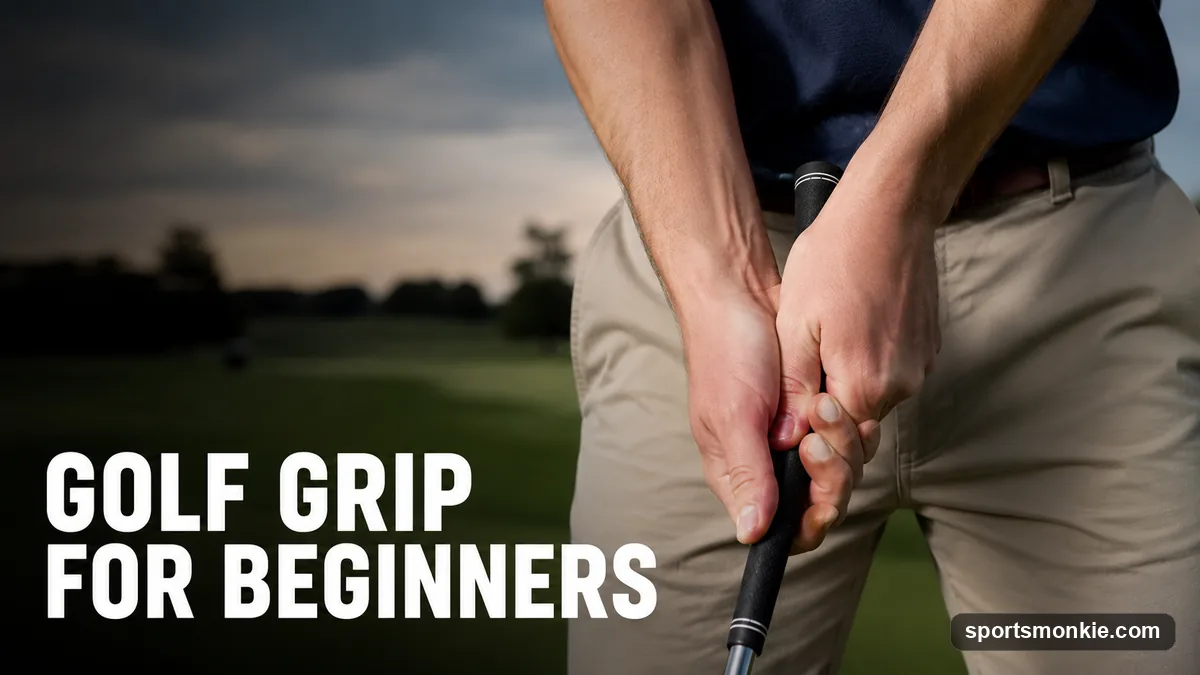
A correct beginner golf grip runs the club through the fingers of your lead hand, not the palm, so you can see two knuckles when you look down at address. Your trail hand slots underneath, its lifeline covering your lead thumb, and both hands squeeze at roughly a 4 or 5 on a 1-to-10 scale. Get those three things right and you have a neutral grip, the single biggest fix for a slice and the foundation every other part of the swing is built on.
Why the Grip Matters More Than Anything Else
Your hands are the only contact you have with the club, so the grip controls the one thing that decides ball flight: where the clubface points at impact. A face that is open sends the ball right, a face that is closed sends it left, and no amount of good body motion overrides a grip that keeps the face aimed the wrong way. That is why teachers fix the grip before they touch how to swing a golf club at all. Nail this first and the rest of your practice actually sticks.
How to Grip a Golf Club, Step by Step
Take it in order, lead hand first (the left hand for a right-handed golfer, the right hand for a lefty). Rushing straight to a two-handed grip is the most common way beginners bake in a fault.
- Set the club in your lead-hand fingers. Hold the club out in front of you and lay the handle diagonally across the base of your fingers, from the first joint of your index finger to just under the pad of your pinky. Not the palm, the fingers.
- Close the hand and check for two knuckles. Wrap your fingers, then rest the fleshy pad at the top of your palm over the handle. Look down: you should see the first two knuckles of that hand. The V made by your thumb and index finger should point at your trail shoulder.
- Run the lead thumb slightly down the handle. It should sit just right of center on the grip (for a right-hander), a little short of fully extended, so the trail hand has a home.
- Add the trail hand. Bring it in from the side so the lifeline of that palm sits directly on top of your lead thumb, hiding it. The trail-hand fingers hold in the fingers too, and its V again points roughly at your trail shoulder so the hands match.
- Join the hands with an overlap, interlock, or ten-finger link (below), and settle your pressure.
If you want this broken down with more visuals and drills, our full guide to how to grip a golf club walks through each checkpoint in detail.
The Three Grip Styles: Overlap vs Interlock vs Ten-Finger
There is no single “right” way to join your hands; the correct style is the one that keeps your hands working as a unit for your hand size. Here is how the three compare.
| Grip style | How the hands join | Best for | Notable users |
|---|---|---|---|
| Overlap (Vardon) | Trail pinky rests on the gap between lead index and middle finger | Larger hands, most adult men | Tiger Woods (later career), most tour pros |
| Interlock | Trail pinky links with lead index finger | Smaller hands, weaker grip strength | Jack Nicklaus, Rory McIlroy |
| Ten-finger (baseball) | All ten fingers on the club, no link | Juniors, seniors, players with weak wrists or arthritis | Many beginners and high-handicappers |
Beginners with smaller hands usually feel more connected with the interlock, while the ten-finger grip gives the most leverage and is the friendliest starting point if you lack hand strength. Try each for a bucket of balls before committing.
How Tight Should You Hold It? Grip Pressure Explained
Hold the club at about a 4 or 5 on a 1-to-10 scale, firm enough to control it but soft enough that your wrists stay free to hinge. The classic cue from Sam Snead was to hold the club like a small bird: tight enough that it cannot escape, gentle enough that you never crush it. A death grip is one of the most common beginner faults, because it tenses your forearms, slows the clubhead, and blocks the natural release that squares the face. If your knuckles go white or your forearms burn, you are squeezing too hard.
Neutral, Strong, or Weak: What Grip Position Means
Grip “strength” has nothing to do with pressure; it describes how far your hands are rotated on the handle. A neutral grip shows two knuckles on the lead hand with both Vs pointing at your trail shoulder, and it is where every beginner should start because it squares the face most reliably. A strong grip rotates both hands away from the target so you see three knuckles; it helps players who slice by closing the face through impact. A weak grip rotates the hands toward the target, shows one knuckle, and tends to leave the face open, which is why it usually makes a slice worse. If you battle a slice, nudge toward a slightly stronger grip before you change anything else, a principle we cover in more depth in our golf swing tips for beginners.
Common Beginner Grip Mistakes (and How to Fix Them)
Gripping in the palm. The number-one error. A handle buried in the palm locks your wrists and produces early blisters. Fix: re-seat the club in the base of your fingers and re-check for two knuckles.
Hands not matching. If one V points at your chin and the other at your shoulder, the hands fight each other. Fix: set the lead hand, then place the trail hand so both Vs aim at the same point near your trail shoulder.
Death grip. Squeezing at an 8 or 9 kills speed. Fix: consciously ease to a 4 or 5 and keep it constant from takeaway to finish.
Re-gripping mid-swing. Loosening at the top and regripping on the way down opens the face. Fix: settle your pressure at address and leave it alone.
Ignoring grip size. A handle too thin encourages overactive hands; too thick deadens them. Fix: if your fingertips dig into your palm at address, the grip is likely too small and worth a re-grip at any golf shop.
A Simple Drill to Groove Your Grip at Home
You do not need a ball or a range to build a repeatable grip. Take your setup in front of a mirror, form the grip one hand at a time, and check your two knuckles and matching Vs. Then take the grip, lift the club, set it back down, and re-form it from scratch, ten times a night for two weeks. This “re-grip repetition” trains your hands to find the neutral position automatically, so it holds up once you add a swing. Pair it with the movements in our golf swing drills and you will carry a sound grip from the living room to the first tee. From there, a solid hold is what lets everything from a wedge to how to hit a driver start behaving predictably.
When to Adjust Your Grip
Once your neutral grip feels natural, resist fiddling with it for the sake of it; grip changes feel strange for days before they help, so give any adjustment two weeks before you judge it. Move toward a stronger grip only if a slice persists after your path and setup are sound, and toward a weaker grip only if you start hooking the ball hard left. For everything in between, trust the neutral two-knuckle hold, keep your pressure at a steady 4 or 5, and let the grip quietly do its job while you work on the bigger pieces of your swing.
Frequently asked questions
How should a beginner hold a golf club?+
Set the club in the fingers of your lead hand so it runs from the base of your pinky to the middle of your index finger, then close your hand so you see two knuckles. Add the trail hand below it, with the lifeline of that palm sitting on top of your lead thumb. Hold firmly but light, around 4 or 5 on a 1-to-10 scale.
What is the correct golf grip for beginners, overlap or interlock?+
Both are correct, so pick by hand size and comfort. The overlap (Vardon) grip rests the trail pinky on top of the gap between the lead index and middle fingers and suits larger hands. The interlock links that pinky with the lead index finger and helps smaller hands or weaker grips feel connected. Beginners with small hands often start with interlock.
Should a beginner use a strong or neutral golf grip?+
Start neutral, showing two knuckles on the lead hand, because it squares the face most reliably once your swing is sound. If you fight a persistent slice, a slightly stronger grip, rotating both hands away from the target until you see two and a half or three knuckles, helps the face close through impact. Avoid a weak grip, which opens the face and worsens a slice.
How tight should you grip a golf club?+
Grip at about 4 or 5 on a 1-to-10 scale, firm enough to control the club but loose enough that your wrists can hinge freely. Sam Snead's classic image was holding the club like a small bird: tight enough that it cannot fly away, gentle enough that you do not crush it. A death grip tenses your forearms and kills clubhead speed.
Why do my hands hurt when I grip a golf club?+
Sore hands or early blisters usually mean the club sits in your palm instead of your fingers, or that you are squeezing far too hard. A palm grip forces the small muscles to fight the club and rubs the skin. Move the handle into the base of your fingers, ease your pressure to a 4 or 5, and wear a glove on your lead hand.
How do I know if my golf grip is too strong or too weak?+
Take your normal grip, then look down. Seeing three or more knuckles on your lead hand and Vs pointing outside your trail shoulder means the grip is too strong and will hook shots left. Seeing one knuckle or less, with the lead hand rotated on top, means it is too weak and will slice right. Two knuckles with the Vs pointing at your trail shoulder is neutral.
Sources
Play & tools
Free browser games and tools — no account, no download.
- Play today's Sports Connections — Today's Sports Connections — daily hints, answers, and play the grid.
- Play Guess the NFL Player — A new mystery NFL player every day. Eight guesses, with a clue on each — plus free unlimited mode.
- Explore all our games →
Related golf guides
View all →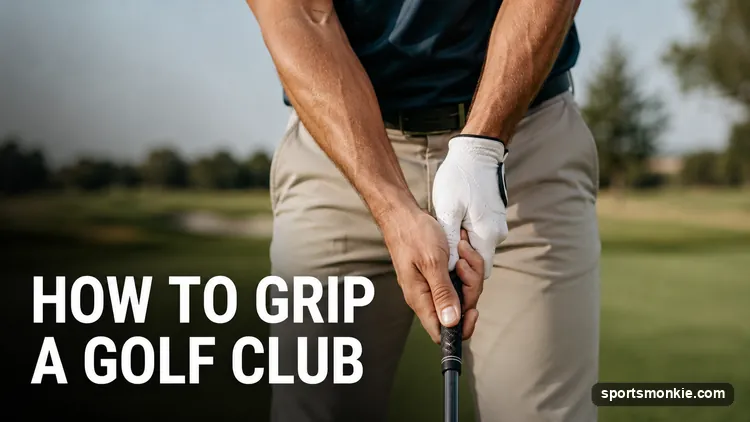
How to Grip a Golf Club: The Correct Grip in 5 Steps
To grip a golf club correctly, rest it diagonally across your lead-hand fingers, close the hand so the V points at your trail shoulder, then set your trail hand so both palms face each other. Here is the full 5-step setup, pressure scale, and fixes for the grip faults that cause slices and hooks.
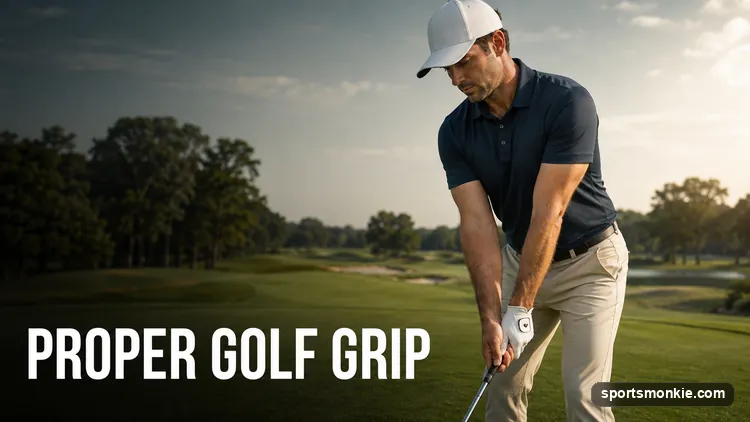
Proper Golf Grip: What a Correct Grip Looks Like and Why It Matters
A proper golf grip has neutral hands, matching V's pointing at your trail shoulder, light pressure, and unified hands acting as one unit through impact.
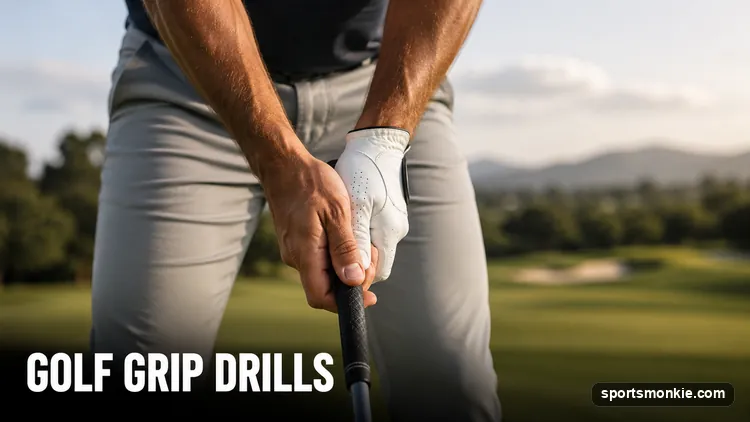
8 Golf Grip Drills to Fix Your Hands and Stop the Slice
Eight golf grip drills ranked by the fault each one repairs, from a weak slice-causing grip to a death grip that kills speed. Fix your hands before you swing.
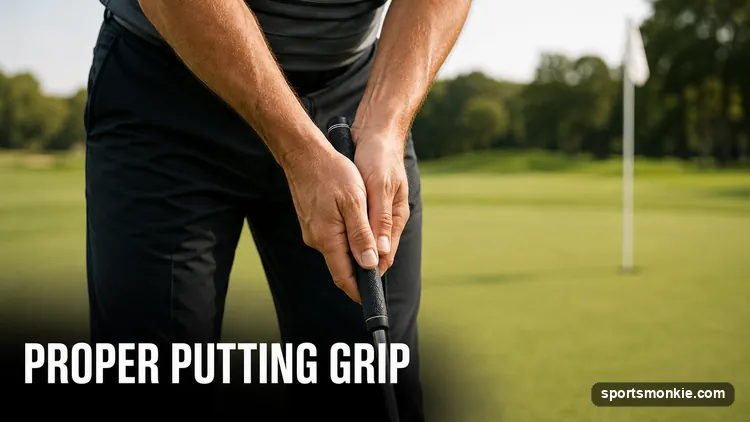
Proper Golf Putting Grip: How to Hold the Putter for a Steadier Stroke
A proper golf putting grip runs the handle up the lifelines of both palms, keeps both thumbs flat down the top, and unifies the hands so the wrists stay quiet. Here is how to grip a putter, plus when to switch to cross-hand, claw, or pencil.
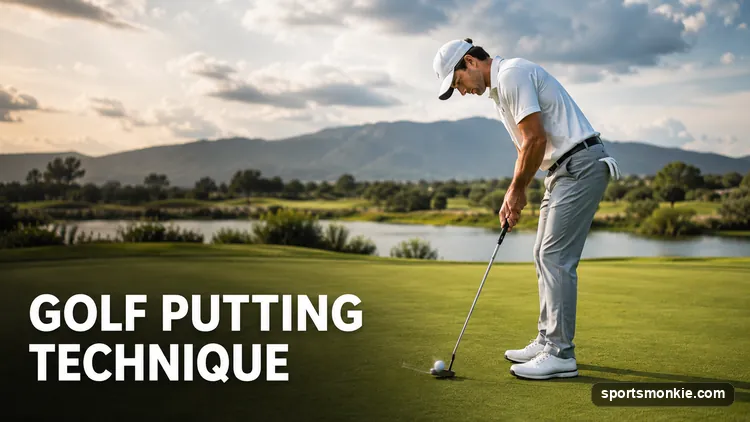
Golf Putting Technique: How to Grip, Aim, and Stroke It Pure
Good golf putting technique comes down to four things: a light square grip, eyes over the ball, a shoulder-driven stroke, and a face that returns square. Here is how to build each one.
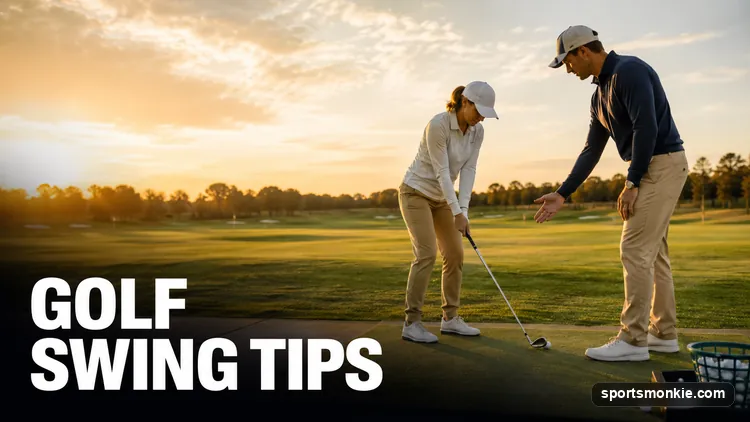
Golf Swing Tips for Beginners: 9 Fixes That Cut Strokes Fast
The best golf swing tips for beginners start with grip, setup, and a slower takeaway — nine checkpoints that fix slices, chunks, and tops in one range session.