
Golf Putting Technique: How to Grip, Aim, and Stroke It Pure
On this page8
- 01The Four Fundamentals of Putting Technique
- 02Putting Grip Styles and Pressure
- 03Setup: Posture, Eye Line, and Ball Position
- 04The Stroke: Straight vs Arc, and Tempo
- 05Aiming and Reading the Green
- 06Distance Control: The Real Score-Saver
- 07Common Putting Mistakes and Their Fixes
- 08A 15-Minute Technique Practice Plan
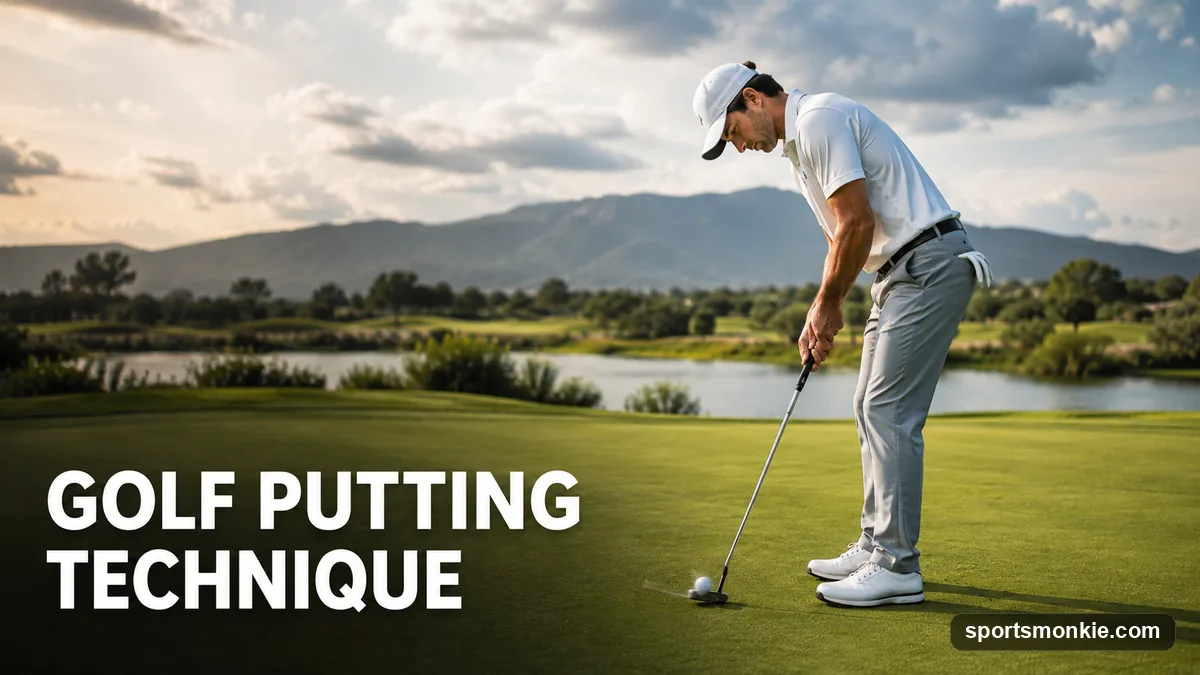
Good golf putting technique comes down to four fundamentals done consistently: a light, square grip that quiets your hands, an eyes-over-the-ball setup, a stroke powered by your shoulders instead of your wrists, and a face that returns square at impact. Nail those and distance control and start line take care of themselves. This guide breaks each one down with the exact checkpoints and cues tour players use, plus the common mistakes that leak strokes on the greens.
The Four Fundamentals of Putting Technique
Everything below is a variation on the same short list, so keep it in mind: grip light so the hands stay passive, set your eyes over the ball so you aim where you look, rock the shoulders so the stroke repeats, and return the face square so the ball starts on line. Putting divides cleanly into line and speed — the face controls line, the length of your stroke controls speed. Almost every miss traces back to one of those four fundamentals breaking down, which is why practicing them in isolation with focused golf putting drills beats mindlessly rolling balls at a hole. If you are starting from scratch, our primer on how to putt in golf walks through the same ideas at a slower pace.
Putting Grip Styles and Pressure
The grip’s only job is to keep the hands passive and the palms opposing so the face does not twist. Grip pressure should be light — about a 4 out of 10 — because a tight grip recruits the small muscles that flip the face at impact. There is no single correct style, and the USGA permits almost any grip on the green, but four dominate:
- Reverse-overlap — the standard. The lead index finger lays over the fingers of the trail hand, quieting the wrists while keeping a full-hand feel. Start here if you are unsure.
- Left-hand-low (cross-handed) — the lead hand sits below the trail hand. It levels the shoulders and stops the lead wrist from breaking down, so it is the go-to fix for golfers who pull or push short putts.
- The claw — the trail hand holds the grip like a pencil, removing its power. Ideal if a dominant trail hand shoves putts or you battle the yips.
- Arm-lock — the grip is pinned against the lead forearm to fix the wrist angle. Legal but requires a longer, specific putter.
Whichever you use, set the palms facing each other and the thumbs down the flat top of the grip. That symmetry is what returns the face square without conscious manipulation.
Setup: Posture, Eye Line, and Ball Position
Stance width is roughly shoulder-width, weight balanced or very slightly favoring the lead side, and you should tilt from the hips so your arms hang naturally under your shoulders. The single most important setup checkpoint is eye line: your eyes should sit directly over the ball or just fractionally inside your target line. Set up, then drop a spare ball from the bridge of your nose — it should land on or just inside your ball. Eyes too far inside make you aim out to the right; eyes outside the line pull you left.
Position the ball slightly forward of center, roughly under your lead eye, so the putter contacts it a hair past the low point and imparts a smooth forward roll rather than a skid. Let your arms and the putter form a connected triangle with your shoulders — the shape you will rock as a single unit. Quiet hands and a stable, connected setup are the same principles that underpin solid golf chipping technique from just off the green, so time spent here pays off across your short game.
The Stroke: Straight vs Arc, and Tempo
The best strokes are driven by the shoulders rocking like a pendulum while the wrists stay firm and the lower body stays still. Do not steer with the hands or add a hit at the ball — let the stroke swing through. There are two valid stroke shapes, and the right one is dictated by your putter and eye position:
- Straight-back-straight-through suits a face-balanced mallet and eyes directly over the ball. The putter head tracks the target line with minimal arc.
- Slight arc (inside-to-square-to-inside) suits a toe-hang blade and eyes just inside the line. The face naturally opens slightly going back and squares at impact.
Fighting your putter’s built-in tendency is a hidden cause of misses, so match the stroke to the equipment rather than forcing a style. Tempo should be smooth and rhythmic with the backstroke and through-stroke roughly equal in length and time — think of a metronome, not a jab. A useful cue is a 1:2 tempo: the through-stroke takes about twice as long as the backstroke feels, which keeps the putter accelerating gently through impact instead of decelerating. That same rhythm-first mindset shows up throughout a repeatable full golf swing technique, where tempo, not force, produces consistency.
Aiming and Reading the Green
Aim starts with the putter face, not the body. Pick an intermediate target — an old pitch mark or a discolored blade of grass a few inches ahead of the ball on your intended line — and aim the face over that near spot; rolling a ball over a target a foot away is far easier than aiming at a cup 20 feet off. Only after the face is set do you build your stance parallel to that start line.
For the read, crouch behind the ball to judge the overall slope, then factor speed: a firmer putt takes less break, a dying putt takes more. Play enough break that the ball is still turning as it reaches the hole rather than aiming straight and hoping. The goal is to have the ball rolling at a pace that would carry it 12 to 18 inches past on a miss — that speed holds its line best and still drops if it catches an edge.
Distance Control: The Real Score-Saver
Three-putts are almost always a speed problem, not a line problem, and lag putting from outside 15 feet is where most amateurs bleed strokes. Control distance with the length of your stroke, not by hitting harder — a longer, symmetrical stroke at the same smooth tempo simply rolls the ball farther. Build a mental library of stroke lengths for 20, 30, and 40 feet by rolling putts and judging only whether the first putt finishes inside a three-foot circle. If your full swing leaves you long approach putts because you keep missing greens, tightening up how you stop slicing the golf ball off the tee will hand you shorter, easier first putts. Dialing in speed is the fastest way to erase three-putts and lower your number.
Common Putting Mistakes and Their Fixes
Deceleration on short putts. Slowing the putter into the ball is the number-one cause of missed four-footers. Make your through-stroke at least as long as your backstroke so the head is still accelerating at impact.
Gripping too tightly. A stranglehold activates the small muscles and twists the face. Soften to a 4/10 and feel the putter head swing on its own weight.
Eyes inside the line. This makes you aim right and push putts, then compensate by pulling. Use the drop-a-ball-from-your-nose check every practice session.
Flipping the wrists. Adding a wrist hit at the ball spikes both face angle and speed. Keep the wrists firm and let the shoulders rock the triangle.
Leaving lag putts short. Consistently short leaves a knee-knocker every time; commit to rolling the ball 12 to 18 inches past. The same connected, quiet-hands feel that fixes putting also shows up in good golf swing drills for the rest of the bag.
A 15-Minute Technique Practice Plan
Minutes 0-4 — Face and start line. From three feet, set a two-tee gate just wider than the putter head and roll balls through it without a clip, checking your grip pressure stays light.
Minutes 4-9 — Stroke and tempo. From six to eight feet, make strokes with equal back-and-through length, counting a smooth 1:2 tempo. Feel the shoulders, not the hands, doing the work.
Minutes 9-13 — Distance control. Lag to 20, 30, and 40 feet, judging only whether each first putt finishes inside a three-foot circle. This block saves the most strokes.
Minutes 13-15 — Pressure. Hole six putts in a row from four feet, restarting on any miss, to end on the confidence of made putts. Consistent technique here is the same discipline that carries a repeatable how to swing a golf club motion from the range to the course.
Build these four fundamentals in order — grip, setup, stroke, aim — and putting stops being a guessing game. Because putting is roughly 40% of the shots in a round, a technically sound stroke is the single fastest way to shoot lower scores without adding a yard of distance.
Frequently asked questions
What is the correct putting technique in golf?+
Correct putting technique uses a light grip that neutralizes the hands, eyes positioned directly over or just inside the ball, and a stroke driven by rocking the shoulders rather than the wrists. The putter face should return square to your start line at impact, and stroke length, not a hit, should control distance.
Where should your eyes be when putting?+
Your eyes should sit directly over the ball or just slightly inside your target line. Set up, then drop a second ball from the bridge of your nose; it should land on or just inside your ball. Eyes too far inside make you aim right and push putts, while eyes outside the line tend to pull them left.
Should you use your wrists when putting?+
No. The most reliable putting strokes are powered by the shoulders rocking like a pendulum, with the wrists and hands staying quiet. Flipping or breaking the wrists at impact twists the face and ruins distance control. Keep your grip light, your wrists firm but not tense, and let the bigger muscles do the work.
What is the best putting grip?+
There is no single best grip, but the reverse-overlap is the most common because it quiets the hands and keeps the palms opposing. Left-hand-low helps golfers who pull short putts, and the claw reduces a dominant trail hand. All good grips share light pressure and palms that face each other so the face stays square.
How do you control distance when putting?+
Control distance with the length of your stroke, not by hitting the ball harder. A longer backstroke and matching through-stroke roll the ball farther at the same smooth tempo. Practice rolling putts to finish 12 to 18 inches past the hole, and train pace from long range where most three-putts come from.
Straight-back-straight-through or an arc putting stroke?+
Both work; the right one depends on your putter and eye position. A face-balanced mallet with eyes over the ball suits a straighter stroke, while a toe-hang blade naturally swings on a slight inside-to-square-to-inside arc. Fighting your putter's built-in tendency causes misses, so match the stroke to the equipment.
Sources
Play & tools
Free browser games and tools — no account, no download.
- Play today's Sports Connections — Today's Sports Connections — daily hints, answers, and play the grid.
- Play Guess the NFL Player — A new mystery NFL player every day. Eight guesses, with a clue on each — plus free unlimited mode.
- Explore all our games →
Related golf guides
View all →
How to Putt in Golf: A Step-by-Step Guide to Sink More Putts
Learn how to putt in golf the right way: a light grip, eyes over the ball, a shoulder-rocked pendulum stroke, and speed control that reads the green. A step-by-step guide for lower scores.
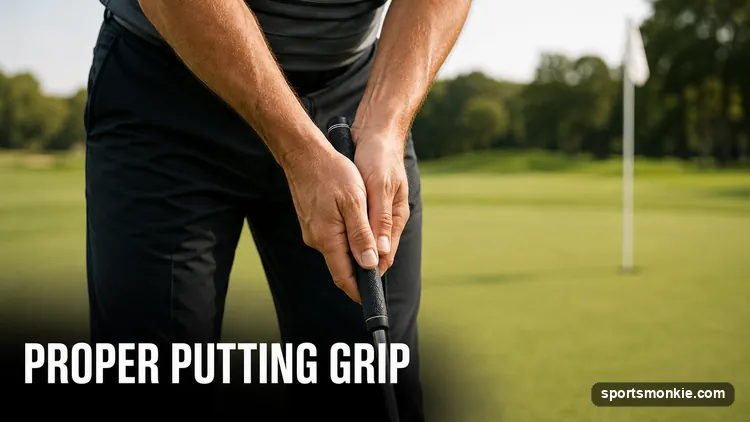
Proper Golf Putting Grip: How to Hold the Putter for a Steadier Stroke
A proper golf putting grip runs the handle up the lifelines of both palms, keeps both thumbs flat down the top, and unifies the hands so the wrists stay quiet. Here is how to grip a putter, plus when to switch to cross-hand, claw, or pencil.
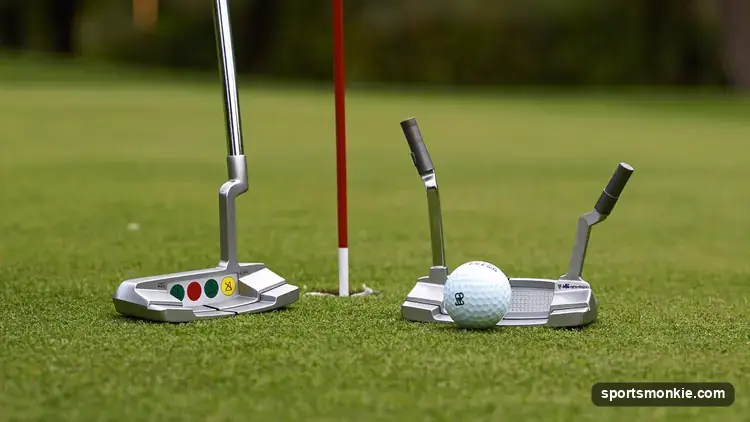
Blade vs Mallet Putter: Which Suits Your Stroke?
Blade vs mallet putter: mallets add forgiveness for a straight stroke, blades reward an arc. See the data and which one suits your stroke.
Golf Chipping Technique: How to Chip Crisply Every Time
Solid golf chipping technique comes from a narrow stance, ball back, weight forward, and a putting-style stroke with no wrist flip. Here is the exact setup and motion.
Golf Grip for Beginners: How to Hold the Club Correctly
A beginner's golf grip starts with the lead hand: place the club in your fingers, not your palm, so you see two knuckles at address. Here is the step-by-step method, grip styles, and the faults to avoid.

9 Best Golf Putting Drills to Sink More Putts and Kill 3-Putts
The best golf putting drills fix one thing at a time: the gate drill fixes your start line, the ladder drill fixes distance control, and the clock drill builds short-putt confidence. Here are 9 drills that lower your putts per round.