
Blade vs Mallet Putter: Which Suits Your Stroke?
On this page5
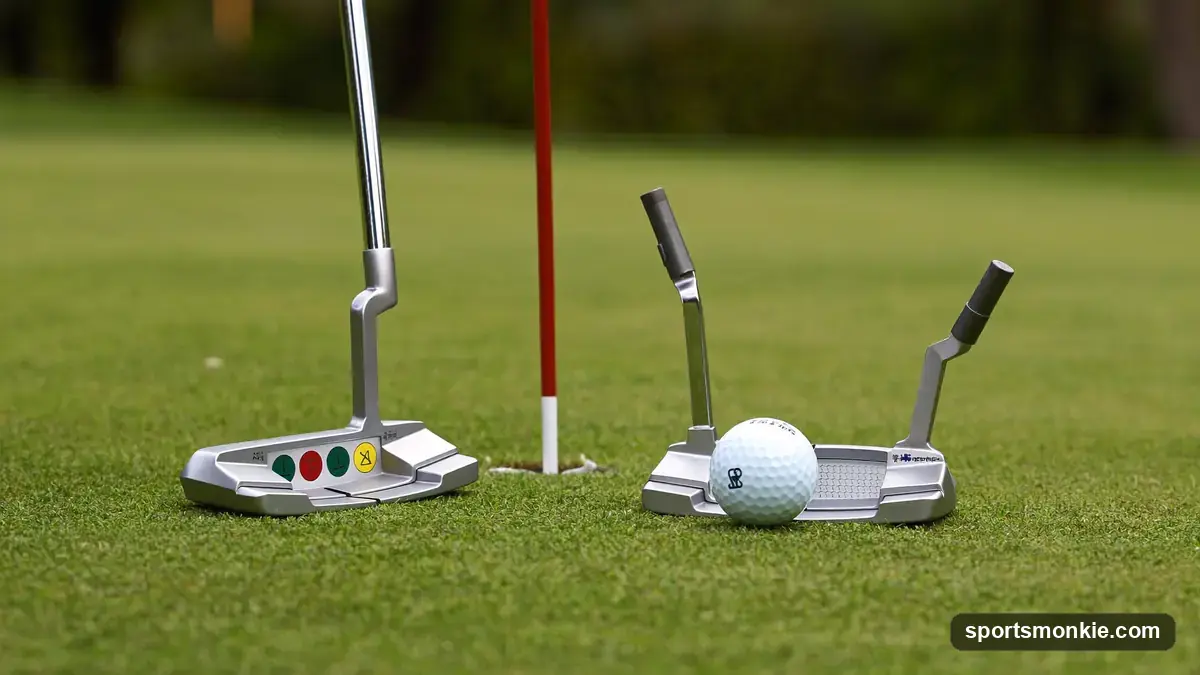
Choose a mallet if your stroke moves straight back and through and you want maximum forgiveness on off-centre hits; choose a blade if your stroke arcs and you strike the ball consistently. The difference is MOI: mallets spread weight to the perimeter so the face resists twisting, while blades concentrate it in the heel and toe for feel and feedback. For most amateurs, the mallet is the smarter default — but only the blade suits a genuine arc stroke.
The putter is a third of your shots. Getting the head shape wrong makes every one of them a fight against the club.
The real difference: MOI and stroke shape
Two things separate the styles, and looks are the least important of them.
The first is moment of inertia, or MOI — resistance to twisting on a mishit. A mallet moves mass out to the edges and back of a larger head, so a putt struck off the toe or heel stays online better. A blade keeps its weight in a compact heel-toe design, which lowers MOI but sharpens the feedback you get from a pure strike.
The second is the stroke the head is built for. Most mallets are face-balanced, which suits a straight-back, straight-through motion. Most blades have toe hang — the toe drops when you balance the shaft — which suits a stroke that arcs gently inside, square, then inside again. Fight your putter’s design and you add face rotation you then have to time.
Blade vs mallet putter compared
| Factor | Blade | Mallet |
|---|---|---|
| Weighting | Heel-toe, compact head | Perimeter, larger head |
| MOI / forgiveness | Lower — punishes mishits | Higher — holds line on off-centre hits |
| Balance | Toe hang | Usually face-balanced |
| Stroke it suits | Arc (inside-square-inside) | Straight-back, straight-through |
| Feel and feedback | Sharper, more feel | Softer, more muted |
| Alignment aids | Minimal | Large, easy to aim |
| Best for | Consistent strikers, arc strokes, better players | Higher handicaps, straight strokes, forgiveness seekers |
What the data actually says
Player-tracking figures cut through the debate. Shot Scope data, drawn from millions of recorded putts, shows mallet users holing 82% from six feet and in, against 75% for blade users, and averaging fewer three-putts per round — 2.3 versus 2.6. The mallet edge is biggest in the 10-to-20 handicap band, where strikes are least repeatable.
But the same data adds a twist: blade users posted slightly better lag proximity on long putts, 7.3 feet from the hole against 7.7 for mallets, and among the top 10% of putters both styles appear. Read together, that says a mallet forgives the short ones for the average golfer, while a grooved stroke can score with either. Skill closes the gap; forgiveness only matters until you build it.
A 30-second stroke self-test
Before you spend anything, find out which stroke you actually have. Balance the putter shaft across one finger and watch the head. If the face points at the sky, it is face-balanced — pair it with a mallet. If the toe swings down toward the floor, it has toe hang — pair it with a blade. Then make a few practice strokes and notice whether the head travels dead straight or curves gently inside the line. The club should match what your hands already do, not the other way round.
If you are still assembling a set, our golf clubs for beginners guide covers where the putter sits among your other spending priorities, and the grip size golf chart matters here too — an oversized putter grip quiets the hands and can steady a jumpy stroke as much as the head shape does.
Which should you buy?
For most club golfers between 10 and 20 handicap, buy the mallet. The forgiveness is real, the alignment aids help you start putts online, and the data backs it on the short putts that decide scores. Pick a blade only if you have a natural arc, you strike the centre of the face reliably, and you want the crisper feedback a compact head gives — that is a better player’s want, not a beginner’s.
Whichever you choose, get fitted for length and lie before you fret over head shape; a putter that is the wrong length undoes any forgiveness the head was going to give you. And while you are auditing the bag, the 3 wood vs 5 wood question is the other easy one to get wrong at the top end of your set.
Frequently asked questions
How do I know if I need a blade or mallet putter?+
Match the putter to your stroke shape. Balance the putter shaft on your finger: if the face points to the sky it is face-balanced and suits a straight-back, straight-through stroke, which pairs with a mallet. If the toe drops toward the ground it has toe hang and suits an arcing stroke, which pairs with a blade. Your natural stroke, not looks, should decide.
Should a high handicapper use a blade putter?+
Usually not. Higher handicappers benefit most from a mallet's forgiveness, because its higher MOI holds the face steadier on off-centre strikes. Shot Scope player data shows the mallet advantage is largest in the 10-to-20 handicap range. A blade rewards a repeatable stroke and a consistent strike that most improving players have not built yet.
Do more pros use a mallet or blade putter?+
It is roughly split, and mallets have grown steadily as high-MOI designs improved. Plenty of elite putters still gamer a blade, so tour usage is not a clean verdict either way. Among the very best putters in tracked amateur data, both styles appear, which tells you skill matters more than the head shape once your stroke is grooved.
Do any PGA pros use a blade putter?+
Yes, and some of the most famous putters in history have. The classic heel-toe weighted blade, such as the Scotty Cameron Newport that Tiger Woods has used for most of his career, remains common on tour. Players with a pronounced arc and elite strike often prefer the feel and feedback a blade gives on a pure roll.
Sources
Play & tools
Free browser games and tools — no account, no download.
- Play today's Sports Connections — Today's Sports Connections — daily hints, answers, and play the grid.
- Play Guess the NFL Player — A new mystery NFL player every day. Eight guesses, with a clue on each — plus free unlimited mode.
- Explore all our games →
Related golf guides
View all →
3 Wood vs 5 Wood: Which Fairway Wood Do You Actually Need?
3 wood vs 5 wood: the 5 wood's extra loft makes it easier to hit off the deck, and most amateurs get similar distance. Here is the data.
Graphite vs Steel Iron Shafts: Which to Play?
Graphite vs steel iron shafts compared: weight, feel, distance, control and cost, with a table showing which shaft suits your swing speed and game.
Why Do Golfers Wear One Glove? (And Which Hand)
Why do golfers wear one glove? It goes on the lead hand for grip and protection. Here is which hand it fits, why only one, and when pros wear none.

Golf Putting Technique: How to Grip, Aim, and Stroke It Pure
Good golf putting technique comes down to four things: a light square grip, eyes over the ball, a shoulder-driven stroke, and a face that returns square. Here is how to build each one.

Golf Ball Compression Chart by Swing Speed
A golf ball compression chart rating Pro V1, TP5, Chrome Soft, Supersoft and more from ~35 to 100, matched to the driver swing speed each ball suits.
Wedge Bounce Explained: Pick the Right Bounce
What is bounce on a wedge? It is the angle on the sole that stops the club digging. Here is how to pick low, mid or high bounce for your turf and swing.