
Golf Ball Compression Chart by Swing Speed
On this page5
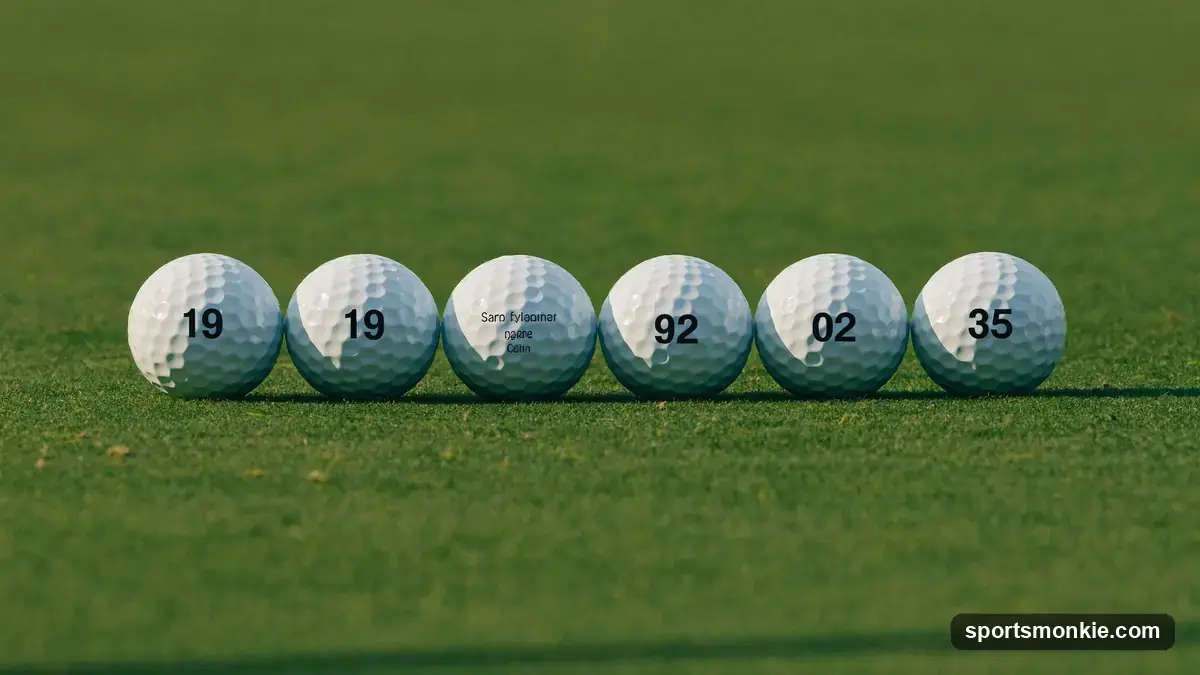
Golf ball compression runs from about 35 (very soft) to 100 (very firm). As a starting point, match it to your driver swing speed: under 85 mph suits a 35–55 ball like the Callaway Supersoft, 85–100 mph suits a 60–90 ball like the Titleist Tour Soft or Pro V1, and 100 mph and up suits a firm 90–100 ball like the Pro V1x or TP5x. The chart below rates the balls most people actually buy.
One caveat worth stating up front: most manufacturers do not publish official compression numbers. The figures here come from independent robot testing, where every ball is pressed on the same machine, so treat them as a reliable ranking rather than an exact spec.
Golf ball compression chart
| Golf ball | Compression (approx.) | Feel | Best driver swing speed |
|---|---|---|---|
| Wilson Duo Soft+ | 35 | Very soft | Under 85 mph |
| Callaway Supersoft | 38 | Very soft | Under 85 mph |
| Bridgestone e6 Soft | 45 | Soft | 80–90 mph |
| Titleist Tour Soft | 65 | Soft | 85–95 mph |
| Bridgestone e12 Contact | 70 | Mid-soft | 85–95 mph |
| Callaway Chrome Soft | 72 | Mid | 90–100 mph |
| Vice Pro | 80 | Mid-firm | 95–105 mph |
| TaylorMade TP5 | 85 | Firm | 95–105 mph |
| Titleist Pro V1 | 88 | Firm | 95–110 mph |
| Kirkland Signature (v3+) | 90 | Firm | 95–110 mph |
| TaylorMade TP5x | 97 | Very firm | 105+ mph |
| Titleist Pro V1x | 100 | Very firm | 105+ mph |
What golf ball compression actually measures
Compression is how much the ball deforms when it is struck. A low number means the core squashes easily; a high number means it resists. The rating comes from pressing the ball under a fixed load and measuring how far it gives.
The point of matching it to your swing is energy transfer. A fast swing delivers enough force to compress a firm ball fully, snapping it back off the face for maximum ball speed. A slower swing cannot load a firm core the same way, so a softer ball that compresses more easily returns more of that energy. Get the pairing wrong and you leave speed on the table.
How to pick compression by swing speed
Most golfers do not know their driver speed, and that is fine. A launch monitor at any fitting bay or golf store will tell you in one swing, and it is the single most useful number for buying a ball or a shaft.
- Under 85 mph: Play a 35–55 compression ball (Supersoft, Duo Soft+, e6 Soft). These are the majority of recreational golfers and most players who carry a driver 200 yards or less.
- 85–100 mph: You have the widest choice. A mid ball (Tour Soft, Chrome Soft, e12) balances distance and feel; a firm tour ball (Pro V1, TP5) rewards a cleaner strike with more greenside control.
- 100 mph and up: A firm 90–100 ball (Pro V1x, TP5x) holds up to the speed without spinning out of control. This is roughly the LPGA and low-handicap range and above.
If you are between two categories, choose on feel. Compression barely changes distance at the margins for most amateurs, but it changes how the ball sounds and feels on chips and putts, and that feedback matters more to scoring than a yard or two off the tee.
Does compression change distance for average golfers?
Less than the marketing implies. Independent robot testing consistently shows that for swing speeds in the normal amateur band, the distance gap between a soft and firm ball is small, often within a few yards. Where compression earns its keep is feel and short-game spin: firmer urethane balls (Pro V1, TP5, Chrome Soft) spin more around the greens, while softer ionomer balls feel plush but check up less.
So the honest advice is to buy the ball whose greenside behaviour and feel you like, within the compression band your speed suggests, and stop chasing phantom driver yards. If you are still building a bag, our guide to golf clubs for beginners covers where your money actually moves the needle.
Once you have a ball you trust, the next fitting variable is the shaft. Your driver speed also sets your golf shaft flex, and the two decisions use the same number.
The soft-ball myth
“Softer goes further” gets repeated because it is true for exactly one group: slow swingers who could never compress a firm ball. For everyone with speed, a too-soft ball can actually lose distance and spin more into trouble. Compression is not a distance dial you turn up or down at will. It is a fit, and the fit depends entirely on how fast you swing.
It is worth pairing this with our guide to Low Compression Golf Balls.
Frequently asked questions
What compression golf ball should I use for my swing speed?+
As a rough guide, match compression to driver swing speed: under 85 mph suits a 35–55 compression ball, 85–100 mph suits 60–90, and over 100 mph suits 90–100. These are starting points, not rules. Tempo, launch and feel preference all shift the answer, so a fitting or on-course test beats any chart.
Is a lower compression golf ball better for slower swings?+
Usually, yes. A slower swing struggles to fully compress a firm tour ball, so a softer ball (35–50 compression) deforms more easily and can hold or add a little distance while feeling softer off the face. The trade-off is slightly less control and spin around the greens than a firmer urethane ball.
What is the compression of a Titleist Pro V1?+
Independent robot testing puts the Pro V1 at roughly 88 compression and the firmer Pro V1x near 100. Titleist does not publish official compression figures, so these are measured values that vary a few points by tester and model year. Both are firm, tour-level balls built for swing speeds above about 95 mph.
Does a softer golf ball go further?+
Not automatically. A softer, low-compression ball can go further for a slow swing that cannot compress a firm ball, but a fast swing usually gets more distance and control from a firmer ball. Above roughly 100 mph, a too-soft ball can spin excessively and lose yardage. Speed decides which way it falls.
Do golf ball manufacturers publish compression ratings?+
Most do not. Titleist, TaylorMade and Callaway rarely list an official number, so the figures in charts come from independent labs that press each ball on the same machine. Expect a few points of variance between sources, and treat compression as a relative ranking rather than an exact spec.
Sources
Play & tools
Free browser games and tools — no account, no download.
- Play today's Sports Connections — Today's Sports Connections — daily hints, answers, and play the grid.
- Play Guess the NFL Player — A new mystery NFL player every day. Eight guesses, with a clue on each — plus free unlimited mode.
- Explore all our games →
Related golf guides
View all →
Golf Shaft Flex Chart: Regular, Stiff or Senior
A golf shaft flex chart matching driver swing speed to flex: ladies, senior, regular, stiff or extra stiff, plus how to find your speed.
Low Compression Golf Balls: Who Should Play Them and Why
Low compression golf balls (roughly 70 and under) suit slower swing speeds, seniors and beginners with a softer feel. See who should play them and top models.

3 Wood vs 5 Wood: Which Fairway Wood Do You Actually Need?
3 wood vs 5 wood: the 5 wood's extra loft makes it easier to hit off the deck, and most amateurs get similar distance. Here is the data.
Blade vs Mallet Putter: Which Suits Your Stroke?
Blade vs mallet putter: mallets add forgiveness for a straight stroke, blades reward an arc. See the data and which one suits your stroke.
Graphite vs Steel Iron Shafts: Which to Play?
Graphite vs steel iron shafts compared: weight, feel, distance, control and cost, with a table showing which shaft suits your swing speed and game.
Wedge Bounce Explained: Pick the Right Bounce
What is bounce on a wedge? It is the angle on the sole that stops the club digging. Here is how to pick low, mid or high bounce for your turf and swing.