
Golf Shaft Flex Chart: Regular, Stiff or Senior
On this page5
Match shaft flex to your driver swing speed: under 60 mph is ladies (L), 60–75 mph is senior (A), 75–95 mph is regular (R), 95–110 mph is stiff (S), and over 110 mph is extra stiff (X). The average male amateur swings around 93 mph, which lands most players in regular or the soft end of stiff. The chart below gives the full ranges and the carry distance that goes with each.
Flex is not a difficulty rating or a badge. It is a fit to your speed, and playing a flex that is too stiff is one of the most common self-inflicted equipment mistakes in club golf.
Golf shaft flex chart
| Flex | Marking | Driver swing speed | Typical driver carry |
|---|---|---|---|
| Ladies | L | Under 60 mph | Under 150 yards |
| Senior | A / M | 60–75 mph | 150–180 yards |
| Regular | R | 75–95 mph | 180–220 yards |
| Stiff | S | 95–110 mph | 220–260 yards |
| Extra Stiff | X | Over 110 mph | Over 260 yards |
Carry figures are typical, not guaranteed. Launch, spin and strike quality move real distance around these averages, so use speed as the primary guide and distance as a sanity check.
Why flex has to match your speed
The shaft flexes and unloads through the downswing, delivering the head to the ball. If it is too stiff for your speed, you never load it fully; it stays passive, launch drops and you leak distance. If it is too flexible for your speed, it loads too much and unloads unpredictably, so the face timing wanders and your dispersion widens.
The right flex loads and returns in sync with your swing, which makes a square, solid strike easier to repeat. That repeatability, not a few yards, is the real prize.
How to find your swing speed
Guessing is where people go wrong, usually by picking a flex that is too stiff because it sounds better. Measure instead. A launch monitor at any golf store, fitting studio or simulator reads your driver speed in a single swing, and TrackMan’s driver data is the reference most fitters use for how speed maps to distance.
No launch monitor handy? Your carry distance is a decent proxy: a driver that flies about 220 yards in the air suggests roughly 95 mph, right on the regular-to-stiff border. But if you are buying a club, take the ten minutes to get measured properly.
Tempo matters as much as the number
Two golfers at the same speed can need different flexes. A smooth, gradual transition loads the shaft gently and can suit a slightly softer flex; a fast, aggressive transition spikes the load and can demand a stiffer one even at the same top speed. This is exactly why a chart gets you close and a fitting gets you right.
If you sit on a boundary, favour the softer flex. Most amateurs benefit more from the easier launch and feel of a marginally softer shaft than from a stiff one they cannot load.
Flex, weight and the rest of the fit
Flex is one of three shaft variables that move together: flex, weight and material. Your swing speed also informs whether you belong in graphite or steel iron shafts, and the same speed number sets your ball choice in the golf ball compression chart. One good launch-monitor session settles all three at once.
Getting fitted is the highest-value hour in golf for the money, more than any single new club. Book it, hit a few flexes back to back, and buy the one your numbers like. If you are still learning where equipment fits into improvement, our explainer on the golf handicap puts gear in perspective against the practice that actually lowers scores.
Frequently asked questions
What shaft flex do I need for my swing speed?+
As a starting point by driver swing speed: under 60 mph suits ladies (L), 60–75 mph suits senior (A), 75–95 mph suits regular (R), 95–110 mph suits stiff (S), and over 110 mph suits extra stiff (X). Most male amateurs fall in the regular-to-stiff range. Tempo and transition shift this, so treat it as a guide, not a rule.
Should I use regular or stiff flex?+
If your driver swing speed is roughly 75–95 mph, use regular; if it is about 95–110 mph, use stiff. The average male amateur is near 93 mph, which puts most players in regular or the low end of stiff. A shaft too stiff for your speed feels harsh and can drop launch; too flexible can cost accuracy for a fast swing.
How do I know my swing speed?+
The reliable way is a launch monitor, available at most golf stores, fitting studios and simulators, which reads your speed in one swing. As a rough proxy, your carry distance hints at it: a driver that carries about 220 yards suggests roughly 95 mph. Measuring beats estimating, and it takes one shot.
Is senior flex the same as regular flex?+
No. Senior flex (marked A or M) is more flexible than regular and suits swing speeds around 60–75 mph. The name is misleading, since it is a speed category, not an age. Plenty of players who swing under 75 mph benefit from senior flex regardless of age, and it helps launch the ball higher for slower swings.
What happens if my shaft flex is wrong?+
A shaft too stiff for your speed tends to feel boardy, launch lower and lose distance because you cannot load it. A shaft too flexible for your speed can feel whippy and inconsistent, hurting accuracy and dispersion. Neither ruins your game outright, but the right flex makes solid strikes easier to repeat.
Sources
Play & tools
Free browser games and tools — no account, no download.
- Play today's Sports Connections — Today's Sports Connections — daily hints, answers, and play the grid.
- Play Guess the NFL Player — A new mystery NFL player every day. Eight guesses, with a clue on each — plus free unlimited mode.
- Explore all our games →
Related golf guides
View all →
Graphite vs Steel Iron Shafts: Which to Play?
Graphite vs steel iron shafts compared: weight, feel, distance, control and cost, with a table showing which shaft suits your swing speed and game.

Golf Ball Compression Chart by Swing Speed
A golf ball compression chart rating Pro V1, TP5, Chrome Soft, Supersoft and more from ~35 to 100, matched to the driver swing speed each ball suits.
How Much Does a Golf Club Fitting Cost?
How much a golf club fitting costs: free retailer fittings, paid studio sessions, full-bag vs single-club, and whether it's worth it. 2026 ranges.
What Is Offset in Golf Clubs?
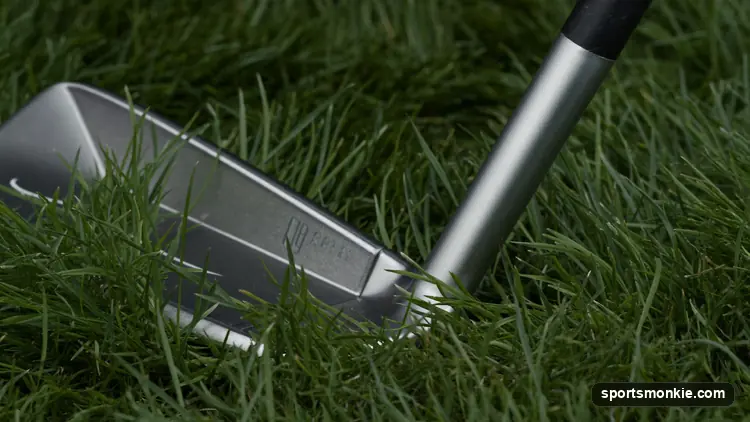
Offset sets the clubface slightly behind the hosel, giving you a split-second longer to square the face. It helps fight a slice and launch the ball higher. Here's how it works.
Golf Grip Size Chart: How to Find Your Correct Size
Measure wrist crease to middle fingertip, check it against glove size, then use this golf grip size chart to find undersize, standard, midsize, or jumbo.
Golf Club Lofts Chart: Standard Lofts for Every Club
A full golf club lofts chart: standard degrees for driver, woods, hybrids, irons and wedges, plus how modern 'strong' lofts changed the numbers.