
What Is Offset in Golf Clubs?
On this page5
Offset is the design feature that sets the leading edge of the clubface slightly behind the hosel — the neck where the shaft meets the head. That small setback gives your hands a fraction of a second longer to rotate the face square before impact, which helps fight a slice and launch the ball higher. It is one of the most common forgiveness features in modern irons, and one of the least understood.
If you slice the ball or struggle to get it airborne, offset is quietly working in your favor. Here is exactly what it does and how much you actually want.
What offset actually is
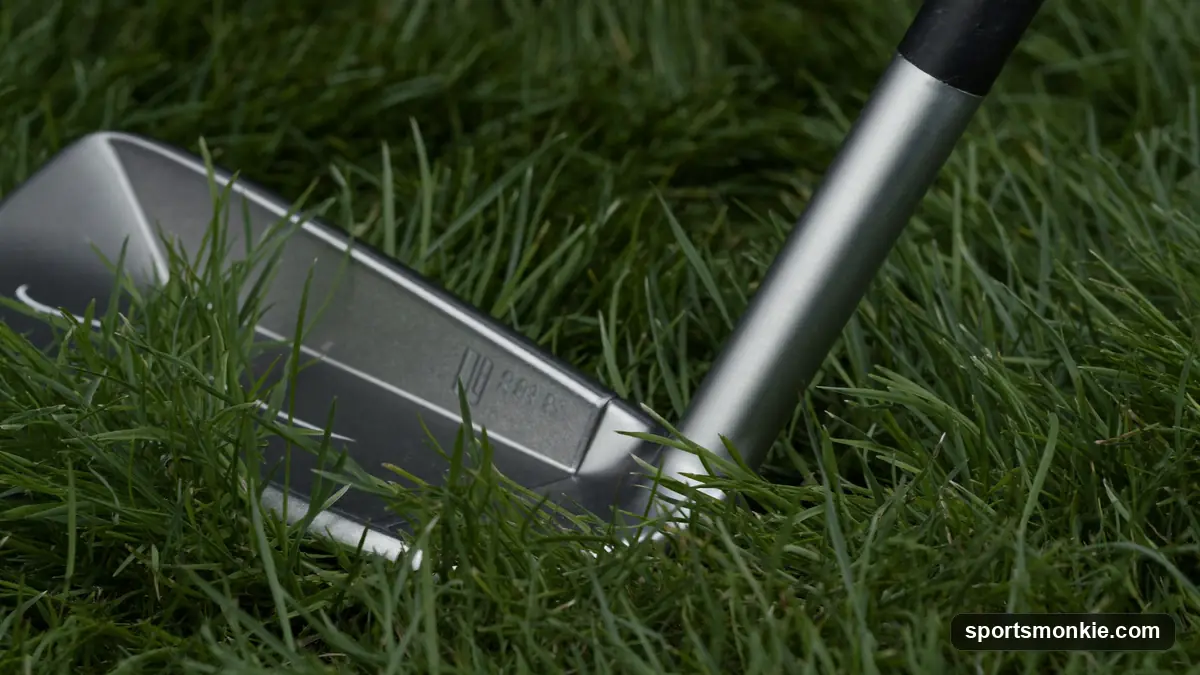
Picture an iron at address. Draw an imaginary vertical line down the front of the hosel. On an offset club, the leading edge of the face sits behind that line rather than flush with it. The clubhead is, in effect, hung slightly back from the shaft.
That geometry does two things. It moves your hands marginally ahead of the clubface at address and impact, and it delays the face’s arrival at the ball by a tiny margin — enough time, PING and other designers note, for a face that would otherwise be open to rotate closer to square. The effect is small per club but real across a round.
What offset does for your shot
Three practical benefits, and one trade-off:
- Fights the slice. More time to square the face means fewer open-faced shots leaking right (for a right-hander). This is offset’s headline job.
- Launches the ball higher. Hands-forward positioning and a slightly rearward center of gravity help get the ball up, which suits slower swing speeds.
- Adds forgiveness on mishits. Offset usually pairs with wider soles and perimeter weighting in game-improvement irons.
- The trade-off: more offset reduces your ability to work the ball and can make the club look “clunky” behind the ball. Better players often dislike both.
As Golf Digest puts it in its explainer, offset is help for the shot most amateurs actually hit — the weak, open-faced miss to the right.
How much offset by club type
Offset is progressive: it decreases as you move from long irons to short irons, because long irons are harder to square and launch. It also varies sharply by iron category. The table below shows typical ranges — exact numbers differ by model, so treat these as ballpark.
| Club / category | Typical offset | Who it suits |
|---|---|---|
| Game-improvement long iron (4-iron) | ~5–7 mm | High handicappers, slicers, slower speeds |
| Game-improvement 7-iron | ~3–5 mm | The average amateur set |
| Players’ distance 7-iron | ~2–3 mm | Mid handicappers wanting some help |
| Players’ iron / cavity blade | ~1–2 mm | Low handicappers, shot-shapers |
| Muscleback blade | ~0–1 mm | Elite ball-strikers |
| Wedges | Minimal to none | All players — precision over launch help |
The pattern is consistent: the more a club is built for forgiveness, the more offset it carries. Blades sit near zero because the players using them square the face themselves and want a clean, workable look.
More offset or less — which should you choose?
Match it to your miss, not your ego. If your bad shot is a slice or a push, or you fight to get the ball airborne, more offset is genuinely helping you and you should not fight it. That is most club golfers, and there is no shame in it — the goal is a straighter, higher ball.
If you already square the face reliably, shape shots on purpose, and prefer a lower, more controllable flight, less offset gives you that freedom. The catch is that low-offset blades punish an open face without mercy, so they suit a narrow band of skilled players. If you are unsure which camp you are in, honest data on what is a good golf score is a decent proxy: consistent scores in the low 80s or better usually mean you can handle less offset.
How to check offset on a club you own
Set the club on a flat surface in its address position and look straight down from behind. Line up the front edge of the hosel with the leading edge of the face. A visible gap — face set back — is offset; the bigger the step, the more there is. Do the same across your set and you will see the progressive design in action, with the most offset in the long irons and the least in the wedges.
Offset is one of several fitting variables — shaft, lie angle, and set makeup all interact with it — which is why a proper fitting beats guessing. Before you buy, it also helps to know how many clubs are allowed in a golf bag so you build a set that fits the 14-club limit around the offset profile that actually suits your swing.
Frequently asked questions
What is the point of offset?+
Offset sets the leading edge of the clubface slightly behind the hosel, which gives your hands a fraction of a second longer to rotate the face square before impact. In practice that helps square a face that would otherwise arrive open, reducing slices and pushes, and it positions your hands ahead of the ball to launch it higher.
How can you tell if a club is offset?+
Set the club down in its normal address position and look at where the leading edge of the face sits relative to the front of the hosel. If the face is set back behind the hosel, the club has offset. Game-improvement irons show an obvious step; blades and players' irons show little or none.
Is more or less offset better?+
Neither is universally better — it depends on your swing. More offset helps players who slice, need higher launch, or want more forgiveness, which is most amateurs. Less offset suits better players who square the face on their own and want to shape shots and control trajectory. Fitting to your miss matters more than the number itself.
What is 7-iron offset?+
Offset is progressive through a set, so a 7-iron sits in the middle. A game-improvement 7-iron typically has around 3–5 mm of offset, while a players' iron may have 2 mm or less, and a blade close to zero. Long irons carry the most offset in a set and short irons and wedges the least.
Sources
Play & tools
Free browser games and tools — no account, no download.
- Play today's Sports Connections — Today's Sports Connections — daily hints, answers, and play the grid.
- Play Guess the NFL Player — A new mystery NFL player every day. Eight guesses, with a clue on each — plus free unlimited mode.
- Explore all our games →
Related golf guides
View all →
How Much Does a Golf Club Fitting Cost?
How much a golf club fitting costs: free retailer fittings, paid studio sessions, full-bag vs single-club, and whether it's worth it. 2026 ranges.

Blades vs Cavity Back Irons Explained
Blades reward pure ball strikers with feel and shot control; cavity back irons add forgiveness for everyone else. Here is how the two designs compare.
Golf Shaft Flex Chart: Regular, Stiff or Senior
A golf shaft flex chart matching driver swing speed to flex: ladies, senior, regular, stiff or extra stiff, plus how to find your speed.

The Most Exclusive Golf Clubs
The world's most exclusive golf clubs, from Augusta National to Cypress Point. What makes a club exclusive and why money alone can't get you in.
Graphite vs Steel Iron Shafts: Which to Play?
Graphite vs steel iron shafts compared: weight, feel, distance, control and cost, with a table showing which shaft suits your swing speed and game.
What Is a Hole-in-One in Golf?
A hole-in-one is a score of one stroke on a par-three, par-four or par-five hole, although the hole's official par and format still matter.