
Blades vs Cavity Back Irons Explained
On this page6
Blades reward pure ball strikers with sharp feedback and the ability to shape shots, while cavity back irons move weight to the perimeter to add forgiveness on off-center hits. That trade-off is the whole story: a blade tells you the truth about your strike and lets you work the ball, and a cavity back protects your distance and line when you miss the middle. For the large majority of golfers, the cavity back is the smarter buy.
Here is how the two designs actually differ, who each suits, and why even tour pros increasingly blend the two.
Blades vs cavity backs at a glance
The engineering difference is where the mass sits. A blade, also called a muscle back, keeps weight concentrated behind the impact area. A cavity back hollows out the back and pushes that weight to the perimeter, which raises the moment of inertia (MOI) and resists twisting on mishits.
| Feature | Blade (muscle back) | Cavity back |
|---|---|---|
| Forgiveness (MOI) | Low; small effective sweet spot | High; perimeter weighting resists twist |
| Workability | High; easy to shape draws and fades | Moderate; harder to curve on demand |
| Feel and feedback | Sharp and precise, punishing on misses | Softer and more muted |
| Distance help | Minimal; traditional lofts | More; often stronger lofts and faster faces |
| Look at address | Thin top line, minimal offset, compact | Thicker top line, more offset, larger head |
| Best suited to | Low single-digit ball strikers | Mid and high handicaps, most golfers |
Forgiveness: the real dividing line
On a center strike, a good blade and a good cavity back send the ball a very similar distance with a similar flight. The gap opens on the miss. Because a cavity back has a higher MOI, a strike toward the toe or heel keeps more ball speed and stays closer to the target line. The same miss with a blade loses more yardage and drifts further offline.
That matters because amateurs mishit far more often than they admit. Manufacturers such as Titleist and Mizuno build their game-improvement and players’-distance cavity backs specifically around protecting the bad strike, which is why those irons dominate amateur bags. The forgiveness is not a marketing nicety; it is the difference between a green in regulation and a bunker on your off swings.
Workability and feel: what blades give back
Blades earn their place through control and feedback. The compact head and center mass let a skilled player flight the ball down, hold it up, and shape it either way with small changes in face and path. Just as important, a blade transmits a clear sense of exactly where on the face you made contact, which good players use to self-correct.
That feedback cuts both ways. The same club that rewards a flush strike with a sweet, pure sensation stings on a thin one and comes up visibly short on a toe hit. For a player who does not consistently find the center, that information is punishment without benefit. This is why blades remain the choice of tour pros and low single-digit amateurs, and rarely anyone else.
Why Rory and the pros still use blades, and combos
Elite ball strikers accept a blade’s tiny margin for error because they almost never miss the center, and they prize the control it gives them. Rory McIlroy plays a muscle-back blade, the TaylorMade Rors Proto, for exactly those reasons: feedback he trusts and turf interaction he can rely on under pressure.
The modern twist is the combo set. Many tour players and low handicappers now pair blade short irons, where precision and spin control matter most, with slightly more forgiving players’ cavity backs in the long irons, where the extra MOI helps launch and hold greens. It is a reminder that the choice is not strictly one or the other, and that even the best players want help in the harder-to-hit clubs. If you are weighing your longest irons, our hybrid vs iron guide covers the case for replacing them entirely.
Players’ distance irons: the middle ground
The old binary of blade versus cavity back has softened, because manufacturers now build a whole category between them: the players’ distance iron. These clubs keep a compact, blade-like shape at address but hide a hollow body, tungsten weighting, or a thin flexing face inside to add ball speed and forgiveness. Titleist’s T-series, Mizuno’s Pro 243-style models, and their rivals all live in this space.
The appeal is obvious for a good-but-not-elite player: the clean look and feel of a players’ iron with more help on the miss and a little more distance. The trade-off is that stronger lofts and springy faces make these clubs longer and sometimes harder to control for spin and stopping power on approach. If you like the idea of a blade but honestly mishit too often to play one, a players’ distance or players’ cavity back is usually the right answer rather than a true muscle back.
Which should you play?
Match the iron to your strike, not your ego. The honest test is how often you find the center of the face:
- Low single-digit handicap, consistent striker: blades or a blade-heavy combo set are a legitimate choice if you value feel and workability and accept the smaller margin.
- Mid handicap (roughly 10 to 20): a players’ cavity back gives you feedback close to a blade with meaningfully more forgiveness. This is the sweet spot for most improving golfers.
- High handicap or newer player: a game-improvement cavity back, every time. The forgiveness and easier launch will save you more shots than any feel benefit a blade could offer.
Two other factors round out the decision. Lofts have crept stronger on distance-oriented cavity backs, which affects your gapping, so check the numbers against our golf club lofts chart before you build a set. And the shaft matters as much as the head for many amateurs; our graphite vs steel iron shafts guide covers that side.
Try both back to back on a launch monitor and watch the misses, not the flush ones. The pured shots will look similar; the dispersion on your off-center hits will tell you which head belongs in your bag.
Frequently asked questions
Do pros use blades or cavity backs?+
Most tour pros use blades, or muscle-back irons, in their scoring clubs for feedback and shot control. Many now build combo sets, pairing blade short irons with slightly more forgiving players' cavity backs in the long irons. Elite ball strikers can afford blades because they find the center of the face consistently.
Why did Rory McIlroy switch back to a blade?+
Rory McIlroy plays a muscle-back blade, the TaylorMade Rors Proto, because it gives him the feedback and turf interaction he trusts. Elite strikers value how a blade tells them exactly where they hit the face and how it lets them work the ball, benefits that matter more to them than forgiveness.
Are blades really harder to hit?+
Yes. A blade concentrates mass behind the center, giving a lower moment of inertia, so off-center strikes lose more ball speed and twist more. On a mishit that means shorter, more crooked shots than a cavity back would produce. On a pure strike the difference in result is small; the difference in margin for error is large.
What handicap should play cavity backs?+
Most golfers above roughly a 5 to 8 handicap are better served by cavity backs, and mid-to-high handicappers clearly so. The forgiveness protects distance and accuracy on the off-center hits that make up most amateur rounds. Blades only start to pay off for consistent single-digit ball strikers.
Sources
Play & tools
Free browser games and tools — no account, no download.
- Play today's Sports Connections — Today's Sports Connections — daily hints, answers, and play the grid.
- Play Guess the NFL Player — A new mystery NFL player every day. Eight guesses, with a clue on each — plus free unlimited mode.
- Explore all our games →
Related golf guides
View all →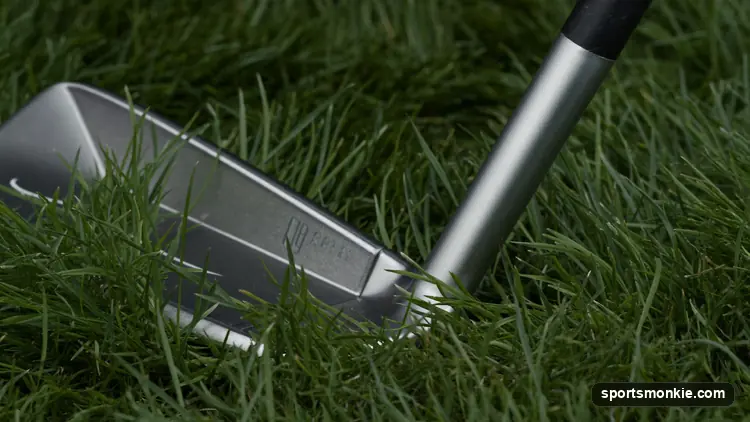
What Is Offset in Golf Clubs?
Offset sets the clubface slightly behind the hosel, giving you a split-second longer to square the face. It helps fight a slice and launch the ball higher. Here's how it works.
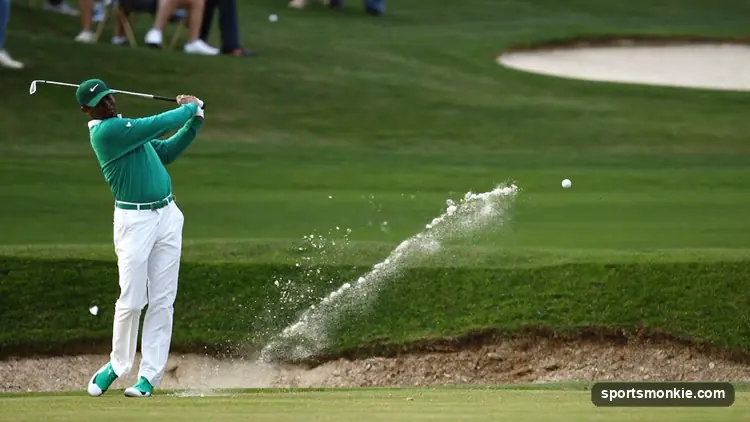
Forged vs Cast Irons: Does the Difference Matter?
Forged irons are pressed from soft carbon steel for feel; cast irons are moulded for forgiveness and value. Here is which one actually suits your game.
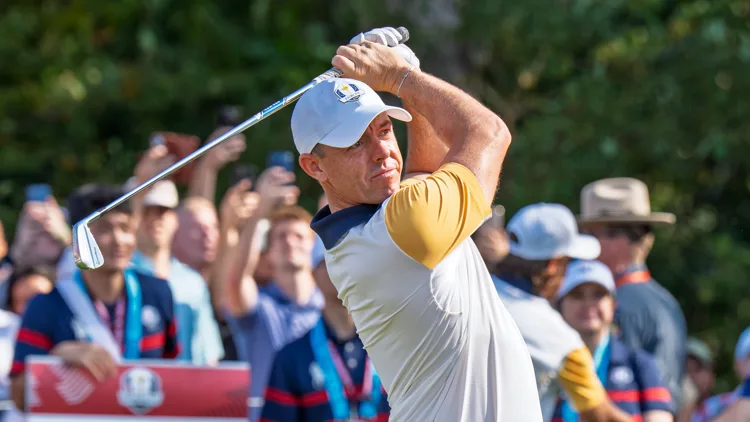
McIlroy Says Yes to LIV Players Coming Back to the PGA Tour
Rory McIlroy, LIV's loudest critic since 2022, told a New Delhi forum he would vote to welcome its players back, called LIV half a good idea and said the threat is over.
McCumber Calls a Two-Shot Penalty on Himself That the Cameras Could Not Prove
Tyler McCumber was unsure he had replaced his ball marker at the WA PGA Championship, the footage was inconclusive, and he took a two-stroke penalty anyway while tied for second.

Wind Blows Zang's Missed Putt Back Into the Hole at St Andrews
Penn senior Madeleine Zang watched her missed bogey putt stop past the hole at St Andrews, then saw a gust roll it back in for the strangest five of the week.

DP World Tour Tells LIV 2.0 Players to Choose: No 2027 Membership, No Ryder Cup
The DP World Tour will deny 2027 membership to anyone who plays LIV 2.0, ending their Ryder Cup eligibility and forcing a choice before two deadlines collide.