
Wedge Bounce Explained: Pick the Right Bounce
On this page5
Bounce is the angle between a wedge’s leading edge and the lowest point of its sole. It lifts the sharp front edge off the ground so the sole skids through turf and sand instead of digging. Pick it by your turf and swing: low bounce (4–6 degrees) for firm ground and shallow swings, high bounce (10–14) for soft ground and steep, divot-taking swings, and mid bounce (7–10) for everyone else. That middle band is the safest choice if you are unsure.
Bounce is the one wedge spec most golfers ignore and then blame their technique for the fat and thin shots it would have fixed.
What bounce is, in one image
Set a wedge flat on the ground and look at it side-on. The leading edge sits slightly up in the air, and the trailing part of the sole touches down. That gap, measured in degrees, is the bounce. According to Titleist Vokey’s bounce explainer, it is what keeps the sole, rather than the sharp leading edge, as the first thing to meet the turf.
More bounce means more forgiveness against digging. Less bounce means the leading edge sits closer to the ground, which helps on tight lies but punishes a steep, ground-first strike.
Wedge bounce chart by turf and swing
| Bounce | Degrees | Best turf and sand | Best swing type |
|---|---|---|---|
| Low | 4–6° | Firm, dry turf; tight lies; wet or coarse sand | Shallow, sweeping; minimal divot |
| Mid | 7–10° | Normal to firm turf; average sand | Neutral; moderate divot |
| High | 10–14° | Soft, lush turf; fluffy bunker sand | Steep; deep divots |
How to read your own game
Two questions decide your bounce, and neither is about your handicap.
What are your courses like? If you play firm, links-style or dry summer turf, a lower-bounce sole slides under the ball on tight lies. If you play soft, well-watered parkland or wet UK and Irish winters, a higher-bounce sole stops the club burying itself.
How do you swing a wedge? Take a divot after impact and you have a steep attack angle; you want more bounce to keep the club from digging. Pick the ball cleanly with little or no divot and you have a shallow, sweeping angle; you want less bounce, because a wide, high-bounce sole will bounce off firm ground and send the leading edge into the ball’s middle for a thin.
When your turf and your swing point different ways, split the difference toward mid bounce. It is the most versatile setting and the reason most stock wedges ship around 8 to 10 degrees.
Bounce across a wedge set
You do not need the same bounce in every wedge. A common fitted setup runs mid bounce through the pitching and gap wedges for full-swing consistency, then a higher-bounce sand wedge for bunkers and soft lies, and sometimes a low-bounce lob wedge for opening the face on delicate shots around firm greens.
If you only own one specialty wedge, make it a 56-degree with around 10 to 12 degrees of bounce. It covers the widest range of bunker and turf conditions a club golfer meets. When you are ready to build a proper short-game set, a wedge fitting is genuinely worth the hour, and our beginner’s wedge guide covers which lofts to buy first.
Bounce and grind
One more term you will see on the sole: grind. Where bounce is the base angle, grind is how the heel, toe and trailing edge are shaped, letting you open or square the face without changing the effective bounce. Grind is the fine-tuning; bounce is the decision that matters first. Get the bounce right for your turf and your divots, and the ball starts coming off the sole the way it is meant to.
Wedge feel also depends on the ball you play. Firmer urethane balls in our golf ball compression chart spin more off the grooves, which is why short-game feel and ball choice are worth pairing.
Frequently asked questions
What is bounce on a wedge?+
Bounce is the angle between the leading edge and the lowest point of the sole when the wedge sits flat. It lifts the leading edge off the ground so the sole, not the edge, contacts the turf first. That stops the club digging and helps it glide through grass and sand. Bounce is measured in degrees, typically 4 to 14.
What bounce should I get on my wedge?+
Match it to your turf and attack angle. Firm turf, tight lies and a shallow, sweeping swing suit low bounce (4–6 degrees). Soft turf, fluffy lies and a steep, divot-taking swing suit high bounce (10–14). Most golfers on normal conditions are best with mid bounce (7–10), which is the most forgiving all-round choice.
Is high or low bounce better for bunkers?+
High bounce is better for most bunkers, especially soft, fluffy sand, because the wider sole skids through instead of digging in and leaving the ball short. Low bounce suits firm, wet or coarse sand where a wide sole would skip off the surface and lead to thin, bladed shots across the green.
What does the bounce number mean on a wedge?+
It is the loft-to-sole angle in degrees, usually stamped near the loft (for example 56.10 means 56 degrees loft, 10 degrees bounce). A higher number means the leading edge sits higher off the ground and the club resists digging more. It says nothing about loft or distance, only how the sole interacts with the ground.
Do I need different bounce for different wedges?+
Often, yes. Many players use lower bounce on a lob or gap wedge for versatility and tight lies, and higher bounce on a sand wedge for bunkers and soft turf. A common fitted set pairs a mid-bounce pitching and gap wedge with a higher-bounce sand wedge, tuned to the courses you play most.
Sources
Play & tools
Free browser games and tools — no account, no download.
- Play today's Sports Connections — Today's Sports Connections — daily hints, answers, and play the grid.
- Play Guess the NFL Player — A new mystery NFL player every day. Eight guesses, with a clue on each — plus free unlimited mode.
- Explore all our games →
Related golf guides
View all →
What Is a Texas Wedge? Putting From Off the Green
A Texas wedge is a putter used from off the green. Named for windy, hard-baked Texas courses, it is the safe, low-risk play on firm ground. Here is exactly when to use it.

3 Wood vs 5 Wood: Which Fairway Wood Do You Actually Need?
3 wood vs 5 wood: the 5 wood's extra loft makes it easier to hit off the deck, and most amateurs get similar distance. Here is the data.
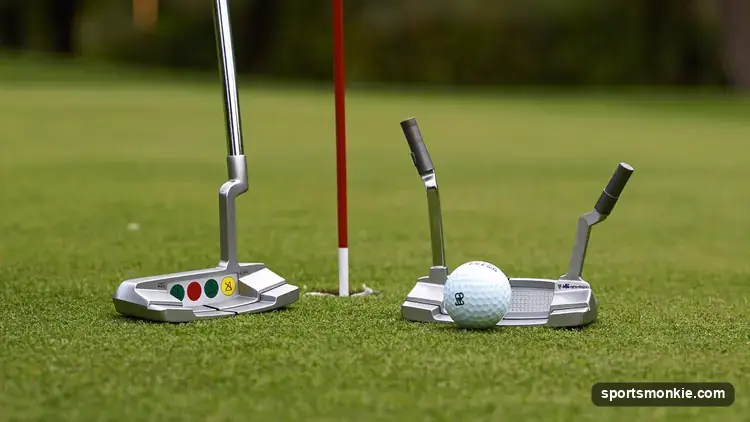
Blade vs Mallet Putter: Which Suits Your Stroke?
Blade vs mallet putter: mallets add forgiveness for a straight stroke, blades reward an arc. See the data and which one suits your stroke.

Golf Ball Compression Chart by Swing Speed
A golf ball compression chart rating Pro V1, TP5, Chrome Soft, Supersoft and more from ~35 to 100, matched to the driver swing speed each ball suits.
Graphite vs Steel Iron Shafts: Which to Play?
Graphite vs steel iron shafts compared: weight, feel, distance, control and cost, with a table showing which shaft suits your swing speed and game.
Why Do Golfers Wear One Glove? (And Which Hand)
Why do golfers wear one glove? It goes on the lead hand for grip and protection. Here is which hand it fits, why only one, and when pros wear none.