
How to Grip a Golf Club: The Correct Grip in 5 Steps
On this page8
- 01Step 1: Set the club in your lead hand first
- 02Step 2: Close the hand and check the V
- 03Step 3: Add the trail hand
- 04Step 4: Choose how to join your hands
- 05Step 5: Set your grip pressure
- 06Grip checkpoints before every swing
- 07Common grip mistakes and how to fix them
- 08A short practice plan to lock it in
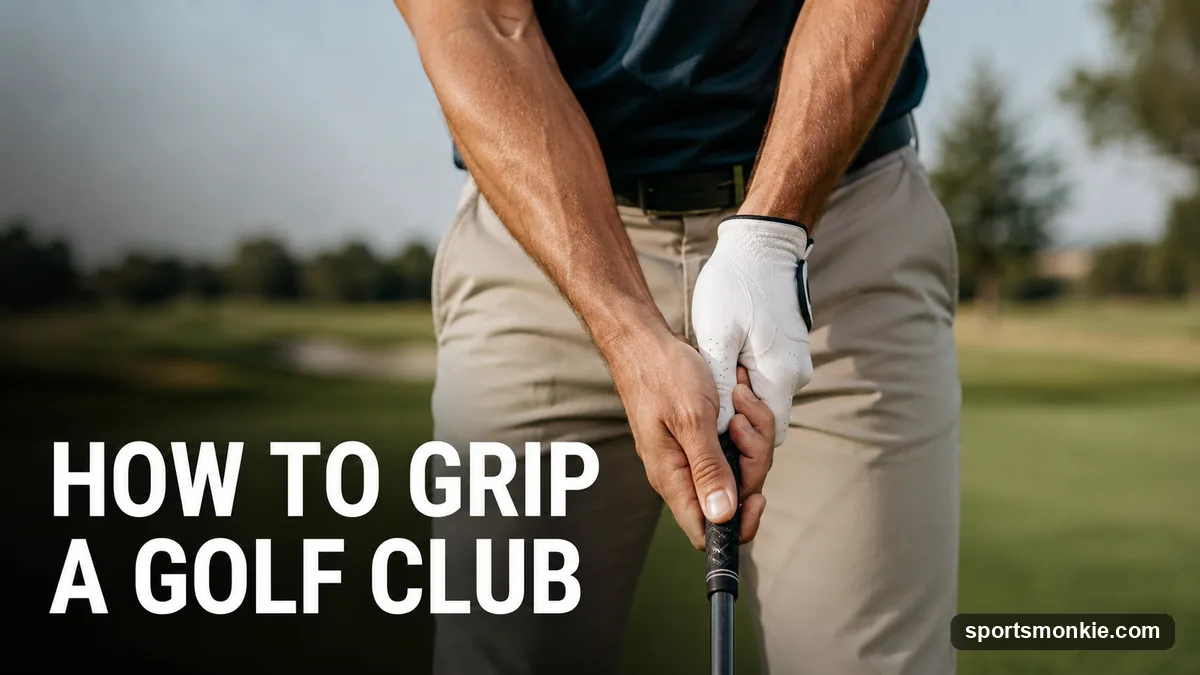
To grip a golf club correctly, rest it diagonally across the base of your lead-hand fingers, close that hand so the V between thumb and forefinger points toward your trail shoulder, then set your trail hand below it so both palms face each other, joined by an overlap, interlock, or ten-finger connection. Hold it at roughly a 4 out of 10 on the pressure scale — firm enough to control the club, loose enough to let your wrists hinge and release.
Grip is the only part of the swing where your hands touch the club, so most downstream faults — a slice, a hook, weak contact, a scoopy chip — trace back to how the hands are set. Get this right before you ever start swinging and half of your ball-striking problems disappear on their own.
Step 1: Set the club in your lead hand first
Hold the club out with your trail hand, shaft roughly parallel to the ground. Lay the grip diagonally across your lead hand — from the base of the pinky to the middle of the index finger, not straight up the palm — and let the butt end sit just under the heel pad. This diagonal placement is what keeps the club in the fingers instead of jammed into the palm, the detail most self-taught golfers get backwards.
Step 2: Close the hand and check the V
Fold your fingers around the grip, then close your thumb down the top-right of the shaft (for a right-handed golfer). Look down: you should see two to three knuckles on the back of your lead hand, and the V formed by your thumb and forefinger should point somewhere between your chin and your trail shoulder. That V position is the single fastest way to diagnose a grip — see our full breakdown of what happens when it points too far either way in strong vs. weak golf grip.
Step 3: Add the trail hand
Bring your trail hand to the club from underneath, palm facing the target, so the lifeline of the trail palm sits over your lead thumb. This hand should feel almost like it’s shaking hands with the grip — fingers wrapping in, not the palm slapping flat against the shaft. The trail-hand V should point roughly parallel to the lead-hand V, both aimed at your trail shoulder.
Step 4: Choose how to join your hands
Once both hands are on, you connect them one of three ways:
- Overlap (Vardon grip): the trail pinky rests on top of, or in the groove between, the lead index and middle fingers. The most common grip among tour players and a solid default for average-to-large hands.
- Interlock: the trail pinky and lead index finger hook together instead of overlapping. Favored by golfers with smaller hands or shorter fingers — Tiger Woods and Jack Nicklaus both interlock.
- Ten-finger (baseball) grip: all ten fingers stay on the club with no overlap or interlock. Common for juniors, beginners, and golfers with weaker hands or grip-related joint pain.
None is objectively better — hand size and comfort decide it. For the trade-offs in more depth, see interlock vs. overlap golf grip and our proper golf grip checklist.
Step 5: Set your grip pressure
Rate your grip pressure on a 1-to-10 scale, where 1 is barely holding the club and 10 is squeezing as hard as you can. Aim for a 4. Any tighter and tension creeps into your forearms and shoulders, shortening the backswing and slowing the release — the single most common pressure fault among amateurs. Any looser and you risk losing control of the clubface during transition. Useful check: waggle the club before you swing — tight forearms mean you’re gripping too hard.
Grip checkpoints before every swing
Run this five-second checklist at address, every time, not just when your ball-striking goes sideways:
- Club running diagonally across the base of the fingers, not the palm.
- Two to three knuckles visible on the lead hand.
- Both V’s pointing between your chin and trail shoulder, roughly parallel to each other.
- Trail-hand palm facing the target, fitting snugly against the lead thumb.
- Pressure around a 4 out of 10, hands and forearms relaxed.
Common grip mistakes and how to fix them
- Gripping in the palm instead of the fingers. Shows up as a rigid, wristless-looking swing with little clubhead speed. Fix: re-grip from Step 1, deliberately laying the club diagonally across the fingers before closing the hand.
- Grip pressure too tight. Tension travels straight into the forearms and shoulders, restricting the backswing. Fix: re-grip at address and consciously soften to a 4 out of 10 before you start.
- Trail hand rotated too far underneath the shaft. Closes the clubface and is a common cause of a hook or low, hooking pull. Fix: reset the trail hand so the palm faces the target, not the sky.
- V’s pointing outside the trail shoulder or at the chin. Either extreme is a strong or weak grip, and both force compensations later in the swing to square the face back up. Fix: rebuild from Step 2 and check the V’s before every shot until it’s automatic.
- Grip size mismatched to hand size. A too-thin grip lets the hands over-rotate; a too-thick grip restricts hand action. If a fault persists after fixing hand placement, get checked by a fitter — see our golf grip size chart for standard sizing by hand measurement.
A short practice plan to lock it in
Grip habits change fastest with short, frequent reps rather than one long session:
- Days 1–3, five minutes each: build the grip from Step 1 to Step 5 twenty times without hitting a ball, saying the checkpoints out loud.
- Days 4–7: rebuild the grip from scratch before every ball on the range, even when it feels slow.
- Week 2 onward: fold the checkpoints into your pre-shot routine and move on to how to swing a golf club — a correct grip is the foundation the rest of that motion is built on. Our golf swing technique guide covers what comes next.
The grip is the one fundamental you fully control before the club ever moves. Nail these five steps, check them every time, and the rest of your swing has a real foundation to build on.
Frequently asked questions
What is the correct way to grip a golf club?+
Lay the grip diagonally across the base of your lead-hand fingers, close the hand so you can see two to three knuckles and the V points toward your trail shoulder, then add the trail hand below it with the palms facing each other. Join the hands with an overlap, interlock, or ten-finger connection and hold at light-to-moderate pressure.
Should you grip a golf club in your fingers or your palm?+
Mostly in the fingers, not the palm. Gripping in the palm turns the club into a rigid extension of your arm and kills wrist hinge, which costs clubhead speed and control. The club should run diagonally across the base of the fingers on both hands, with only light palm contact from the lead hand's heel pad.
How firm should your golf grip pressure be?+
On a 1-to-10 scale, hold the club around a 4. Grip pressure that hard enough to control the club through impact but soft enough that your forearms stay relaxed and the wrists can hinge and release freely. Squeezing above a 6 is the single most common amateur grip fault and it tightens the forearms, closing off speed and feel.
Which golf grip is best for beginners: overlap, interlock, or ten-finger?+
There is no single best grip; hand size decides it. Overlap (Vardon) suits average-to-large hands and is the most common tour grip. Interlock suits smaller hands or shorter fingers and is what Tiger Woods and Jack Nicklaus both use. Ten-finger (baseball) grip suits juniors, beginners, or golfers with weaker hands or arthritis.
Where should the V's point in a proper golf grip?+
With both hands set, the V's formed by each thumb and forefinger should point somewhere between your chin and your trail shoulder. Both V's should point in roughly the same direction. If they point outside your trail shoulder the grip is too strong; if they point at your chin or lead shoulder it is too weak.
Does golf club grip size affect your golf grip?+
Yes. A grip that is too thin lets the hands over-rotate and encourages a hook; a grip that is too thick restricts hand action and encourages a slice or weak fade. Standard-size grips fit most adult hands, but golfers with larger hands, or anyone fighting a specific miss, should get sized by a fitter rather than guessing.
How do you know if your golf grip is too strong or too weak?+
Check the V's and knuckles at address. Seeing three or more knuckles on your lead hand and V's pointing past your trail shoulder means a strong grip, which tends to close the clubface and produce a hook. Seeing one knuckle or fewer with V's pointing at your chin means a weak grip, which tends to leave the face open and produce a slice.
How often should you check your golf grip?+
Every single time you set up to a shot, not just when you're struggling. Grip habits drift under pressure — hands creep into the palm, pressure climbs, the trail hand rotates underneath the club. Rebuilding the grip from square one before each shot, using the checkpoints, is a five-second habit that prevents most compensations later in the swing.
Sources
Play & tools
Free browser games and tools — no account, no download.
- Play today's Sports Connections — Today's Sports Connections — daily hints, answers, and play the grid.
- Play Guess the NFL Player — A new mystery NFL player every day. Eight guesses, with a clue on each — plus free unlimited mode.
- Explore all our games →
Related golf guides
View all →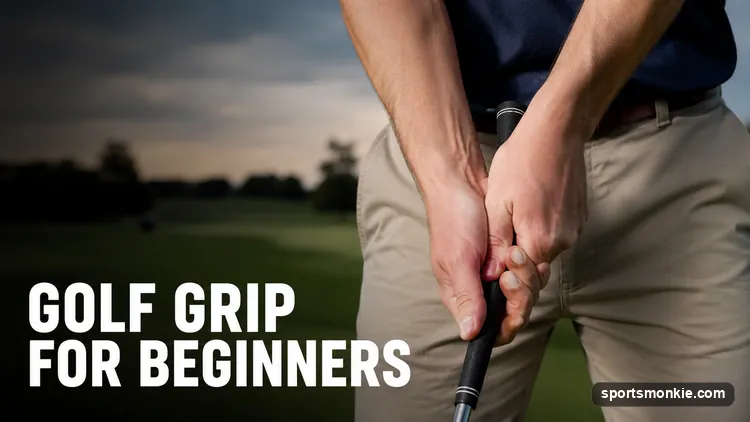
Golf Grip for Beginners: How to Hold the Club Correctly
A beginner's golf grip starts with the lead hand: place the club in your fingers, not your palm, so you see two knuckles at address. Here is the step-by-step method, grip styles, and the faults to avoid.
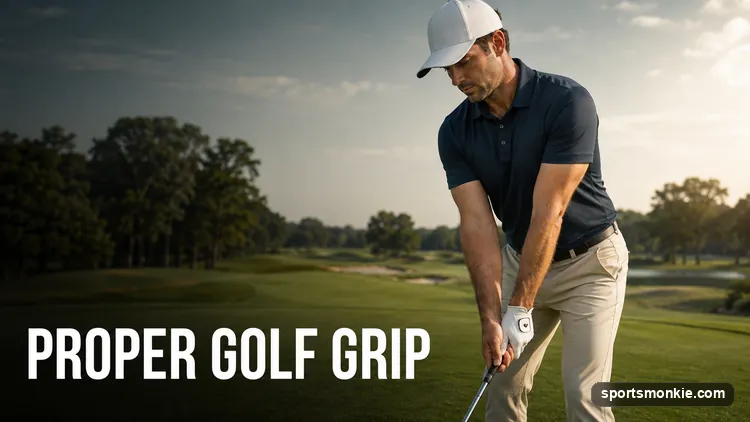
Proper Golf Grip: What a Correct Grip Looks Like and Why It Matters
A proper golf grip has neutral hands, matching V's pointing at your trail shoulder, light pressure, and unified hands acting as one unit through impact.
Interlock vs Overlap Grip: Which Should You Use?
Interlock locks the pinky and index finger together; overlap rests the pinky on top. Interlock suits smaller hands, overlap suits most players. Here is how to choose.

How to Swing a Golf Club: The Complete Step-by-Step Guide
How to swing a golf club starts with a solid grip and setup, then a one-piece takeaway, a controlled backswing, and a downswing led by the hips. Here is the full sequence.
Strong vs Weak Golf Grip: What Each Does to Ball Flight
Strong vs weak golf grip: a strong grip closes the face for a draw, a weak grip opens it for a fade. What each does to ball flight, and which to use.
8 Golf Grip Drills to Fix Your Hands and Stop the Slice
Eight golf grip drills ranked by the fault each one repairs, from a weak slice-causing grip to a death grip that kills speed. Fix your hands before you swing.