
Most Popular Sports in Russia: Football, Hockey, and Athletics
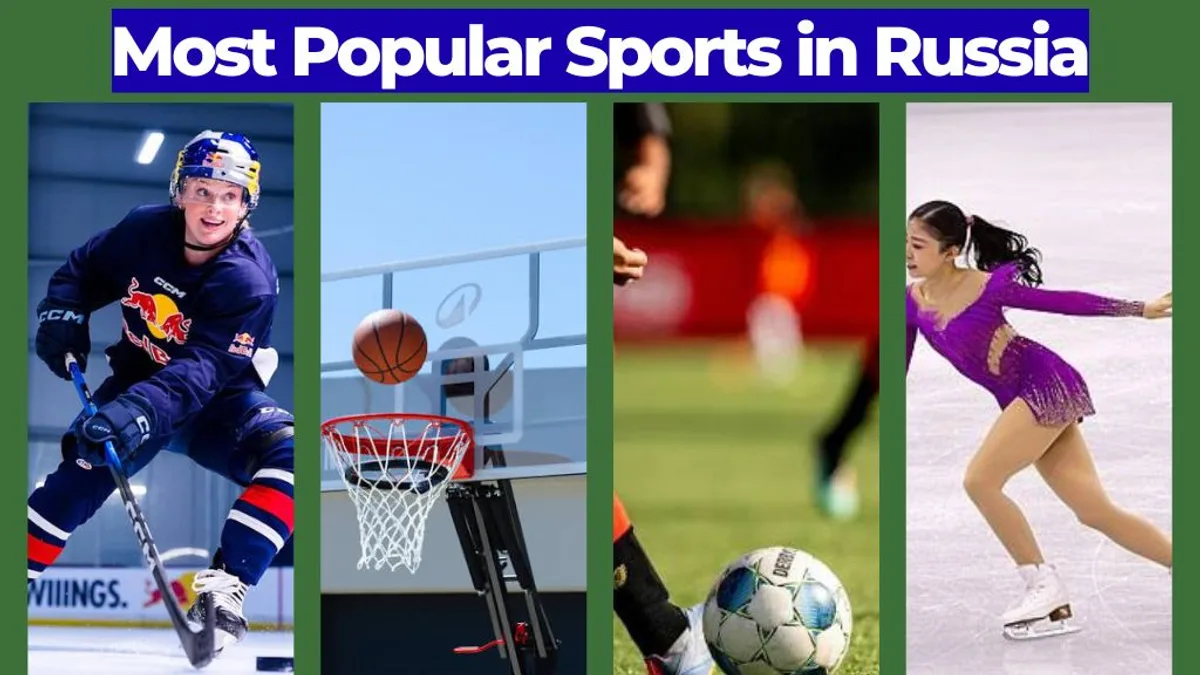
On this page12
- 01Russia's most popular sports at a glance
- 02Football (Soccer)
- 03Ice Hockey
- 04Figure Skating
- 05Combat Sports (Sambo, Wrestling, Judo)
- 06Basketball
- 07Biathlon & Cross-Country Skiing
- 08Athletics & Artistic Gymnastics
- 09How we ranked these sports
- 10How international bans reshaped Russian sport
- 11The Soviet system’s long shadow
- 12Sport popularity at a glance
We ranked each sport by three weighted signals: total audience and grassroots participation (about 40%), intensity of fan devotion (30%), and international or Olympic pedigree (30%). Where two sports were close, broad mass-market reach broke the tie over niche prestige.
Russia's most popular sports at a glance
| Rank | Sport | Main popularity signal |
|---|---|---|
| 1 | Football | Largest mass-market audience |
| 2 | Ice hockey | KHL and deep national tradition |
| 3 | Figure skating | Prime-time appeal and technical strength |
| 4 | Combat sports | Sambo roots and Olympic success |
| 5 | Basketball | VTB league and CSKA following |
| 6 | Biathlon and cross-country skiing | Devoted winter audience |
| 7 | Athletics and gymnastics | Olympic and world-medal history |
- Biggest audience
Football (Soccer)
Football takes the top spot on raw reach: it pulls the largest television audiences, the widest grassroots participation, and the biggest live crowds of any sport in the country. The Russian Premier League anchors that base, and the Moscow derbies between Spartak, CSKA, Dynamo, and Lokomotiv carry rivalries that predate the Soviet Union. It ranks above ice hockey here purely on breadth of following, even though hockey often wins on intensity.
The domestic ceiling keeps rising. FC Krasnodar took the 2024-25 Russian Premier League title on the final matchday of May 2025 with a club-record 67 points, one clear of Zenit St. Petersburg and their first major trophy. The nationwide response to hosting the 2018 FIFA World Cup, where Russia reached the quarterfinals, is still the high-water mark for most popular sports engagement in the country.
Top competition: Russian Premier League · 2018 World Cup: Quarterfinals (host) · 2024-25 champion: FC Krasnodar (first title)
- Deepest passion
Ice Hockey
Hockey loses the audience-size race to football but wins on devotion, which is why it sits at No. 2 rather than lower. The Kontinental Hockey League is the strongest professional circuit outside the NHL, and the national program's medal record at the Olympics and World Championships stretches back to the Soviet "Red Machine" era of Vladislav Tretiak and Valeri Kharlamov.
The KHL still produces title races with real weight. Lokomotiv Yaroslavl won its first Gagarin Cup in May 2025, beating Traktor Chelyabinsk 4-1 in the final, and swept the regular-season and playoff crowns in one year. The league remains a primary development route for talent that later reaches the greatest NHL players conversation.
Top competition: KHL (founded 2008) · 2025 Gagarin Cup: Lokomotiv Yaroslavl · Icons: Tretiak, Kharlamov
- Winter showpiece
Figure Skating
Figure skating is the winter sport Russians follow most closely, and it edges the combat disciplines below it because of mainstream broadcast pull rather than participation numbers. Prime-time national championships and Grand Prix events draw audiences that most Olympic sports cannot match, and Russian skaters have repeatedly set the technical pace in jumps and combinations.
That depth is why the sport carries outsized cultural prestige: coverage of figure skating jumps and the athletes performing them reaches well beyond hardcore fans. The lineage of dominant Russian women, profiled among the greatest female figure skaters, keeps the discipline central to the country's winter identity.
Top stage: World & European Championships · Draw: Prime-time TV · Strength: Technical jumps, women's singles
- Mat dominance
Combat Sports (Sambo, Wrestling, Judo)
Combat sports rank fourth on international pedigree more than home viewership. Sambo, a grappling art developed in the Soviet Union, is a genuine Russian specialty, and Russian competitors routinely top the sport's world championships. Freestyle and Greco-Roman wrestling add a deep Olympic medal history across multiple generations.
Judo rounds out the trio and has enjoyed high-profile domestic backing. The combined mat-sports base is broad enough that Russia fields elite contenders in several disciplines at once, which is what separates it from the more single-league following of basketball just below.
Signature sport: Sambo (Soviet origin) · Olympic strength: Wrestling, judo · Reach: World-championship regulars
- Club-driven
Basketball
Basketball has a real, club-anchored following rather than the mass base of the sports above it, which places it fifth. The VTB United League is the domestic top tier, and CSKA Moscow built a European pedigree with multiple EuroLeague titles before recent competition bans.
The national teams were historically competitive at European Championships, and Russia has exported players to prominent international careers. Its ceiling is lower than the combat sports on global honors, but its steady arena crowds and league structure keep it firmly ahead of the endurance winter sports.
Top competition: VTB United League · Flagship club: CSKA Moscow · Level: Significant, club-led following
- Winter endurance
Biathlon & Cross-Country Skiing
Biathlon and cross-country skiing rank sixth on the strength of climate, geography, and a devoted television audience for the IBU World Cup circuit. Long winters make Nordic disciplines a natural fit, and Russian squads have historically posted consistent elite results.
These sports sit below figure skating because their following is passionate but narrower, concentrated among winter-sport fans rather than the general public. They still outrank most other Olympic disciplines in domestic attention, especially during the World Cup season.
Top circuit: IBU World Cup · Strength: Cold-climate depth · Following: Devoted winter-sport audience
- Soviet pedigree
Athletics & Artistic Gymnastics
Athletics and artistic gymnastics close the ranking on historic prestige rather than current mass appeal. Both built some of the Soviet Union's most recognizable sporting reputations, with Russian gymnasts long ranking among the world's most decorated and the track program spanning sprints, field events, and distance running.
Athletics sits this low partly because it has operated under international restrictions since a wave of doping sanctions in the 2010s, which thinned its competitive exposure abroad. Gymnastics retains stronger prestige, but neither commands the week-to-week domestic audience of the sports ranked above them.
Stage: World Championships, Olympics · Strength: Gymnastics medals · Caveat: Athletics under doping restrictions since the 2010s
Reader interaction
Build your ranking
Drag the entries into the order you think is right — or use the arrows — then submit to see how your list compares with everyone else's.
- Football (Soccer)
- Ice Hockey
- Figure Skating
- Combat Sports (Sambo, Wrestling, Judo)
- Basketball
- Biathlon & Cross-Country Skiing
- Athletics & Artistic Gymnastics
Audience ranking
How everyone ranked them
Built from reader rankings using position-based points.
Russia fields world-class talent across football, hockey, wrestling, gymnastics, and figure skating at the same time, a spread that few countries match. The ranking above orders those sports by how they actually land at home; the sections below explain the method, the bans reshaping access, and the system that built the talent base.
How we ranked these sports
Popularity is not one number. We scored each sport on three signals and weighted them: total audience and participation counted for roughly 40%, intensity of fan devotion for 30%, and international or Olympic pedigree for the remaining 30%. That formula is why football leads on breadth while hockey, which wins on passion and league strength, sits a close second. It also explains why figure skating outranks the combat and endurance disciplines: its mainstream broadcast pull reaches far beyond dedicated fans, even though fewer people practice it. Niche prestige alone was never enough to move a sport up when a rival had wider reach.
How international bans reshaped Russian sport
The domestic scene stayed active while international access narrowed sharply. UEFA and FIFA suspended Russian club and national teams in 2022, and the IOC suspended the Russian Olympic Committee in October 2023. For the Milano-Cortina 2026 Winter Games, only a small group of athletes was cleared as Individual Neutral Athletes, with no flag, anthem, or country medal count, while national teams stayed excluded. The practical result is that most Russian sport in 2026 is a largely domestic affair, with limited neutral-status appearances abroad. This backdrop matters to the ranking because it freezes several sports at their home-market value rather than their global one.
The Soviet system’s long shadow
Much of this sporting identity traces to the Soviet development model, which funneled state resources into elite pipelines across dozens of disciplines. The coaching methods, junior academies, and heavy emphasis on international results still shape how these sports operate. That inheritance is why one country can stock the top ranks of football, hockey, mat sports, gymnastics, and figure skating simultaneously, and why sporting success stays tightly bound to national identity in Russia. For a wider view of how national sporting cultures differ, compare the picture in Canada, where hockey dominates almost unchallenged.
Sport popularity at a glance
| Sport | Top competition | What drives its rank |
|---|---|---|
| Football (Soccer) | Russian Premier League | Largest audience and participation |
| Ice Hockey | KHL, World Championships | Deepest passion, strongest league |
| Figure Skating | World & European Championships | Mainstream winter broadcast appeal |
| Combat Sports | World Championships, Olympics | International mat-sports pedigree |
| Basketball | VTB United League | Club-anchored following |
| Biathlon / Cross-Country | IBU World Cup | Cold-climate endurance depth |
| Athletics / Gymnastics | World Championships, Olympics | Historic Soviet prestige |
Frequently asked questions
What is the single most popular sport in Russia?+
Association football is the most popular sport in Russia when you measure total audience, grassroots participation, and live attendance. The Russian Premier League draws the widest broadcast reach and the biggest crowds. Ice hockey is the close runner-up and is often called the country's most passionately followed sport, so the answer depends on whether you weight breadth of following or intensity of devotion most heavily.
Is ice hockey or football bigger in Russia?+
It depends on the metric. Football has the larger overall audience, more participants, and higher stadium attendance, so it leads on sheer numbers. Ice hockey wins on intensity, historic international standing, and the strength of its top league. Many Russians name hockey as their favorite even though football reaches more people. In this ranking football takes the top spot because breadth of following broke the tie.
Why is Russian sport so restricted internationally right now?+
Following the 2022 invasion of Ukraine, UEFA and FIFA suspended Russian club and national teams, and the IOC suspended the Russian Olympic Committee in October 2023. Earlier doping scandals had already limited Russian athletics and Olympic participation for years. The combined effect is that most Russian teams cannot enter major international competitions, and individual athletes can appear abroad only under neutral status where a governing body permits it.
Can Russians compete at the Milano-Cortina 2026 Winter Olympics?+
A small number can, but only as Individual Neutral Athletes (AIN) who qualified on the field of play and pass an eligibility review. They compete with no Russian flag, anthem, or country medal count, and are excluded from the Parade of Nations and the official team medal table. Russian national teams remain banned. The IOC confirmed the same neutral conditions used at Paris 2024 would apply for the 2026 Winter Games.
What is sambo and why is it linked to Russia?+
Sambo is a grappling martial art developed in the Soviet Union in the early 20th century, blending judo, wrestling, and regional folk styles. Russia treats it as a national discipline and regularly tops its world championships. It is not yet a permanent Olympic sport, which is one reason it stays behind football and hockey domestically, but it remains the combat sport most closely associated with Russian identity.
How strong is the KHL compared to the NHL?+
The Kontinental Hockey League, founded in 2008, is widely regarded as the strongest professional hockey league outside the NHL. It offers a lower overall talent ceiling than the NHL but competitive salaries that keep or attract high-end players. It serves as a major development and export route, and many KHL alumni move on to NHL careers, which reinforces its standing as hockey's number-two league globally.
Sources
Play & tools
Free browser games and tools — no account, no download.
- Play today's Sports Connections — Today's Sports Connections — daily hints, answers, and play the grid.
- Play Guess the NFL Player — A new mystery NFL player every day. Eight guesses, with a clue on each — plus free unlimited mode.
- Explore all our games →
Related records & rankings guides
View all →
Greatest Female Figure Skaters of All Time
The greatest female figure skaters in history, from Sonja Henie to Yuna Kim, who redefined the sport with artistry, mastery, and Olympic gold.
Most Popular Sports in Canada: Hockey, Football, and Beyond
Ice hockey is Canada's national sport, but basketball, soccer, and CFL football also draw huge crowds. See the most popular sports in Canada, ranked.

Most Popular Sports in England: Football, Cricket & More
Football is England's most popular sport, ahead of cricket, rugby union, tennis, and golf. See the top sports ranked by participation and spectator following.

US Figure Skaters Who Never Won an Olympic Medal
National and world champions who defined American figure skating yet left the Olympics without a medal, from Todd Eldredge to Gracie Gold. Their stories.
How Does Figure Skating Scoring Work?
Figure skating scoring adds a technical element score and a program components score. Base values, GOE, deductions and how a total skate score is built, explained.
Most Popular Sports in India, Ranked
Cricket leads by a mile, but kabaddi, field hockey, football, badminton, wrestling, and more all draw huge followings. Here are India's 10 most popular sports, ranked and named.