
Most Successful Football Managers of All Time
On this page7
- 01How to Measure a Manager’s Career
- 02The Managers Most Often Named Among the Greatest
- 03Sir Alex Ferguson: 27 Years at One Club
- 04Pep Guardiola: Changing How the Game Is Played
- 05Carlo Ancelotti: Builds Around the Squad He Has
- 06José Mourinho: Built for Knockout Football
- 07Names That Don’t Always Make the Trophy Count
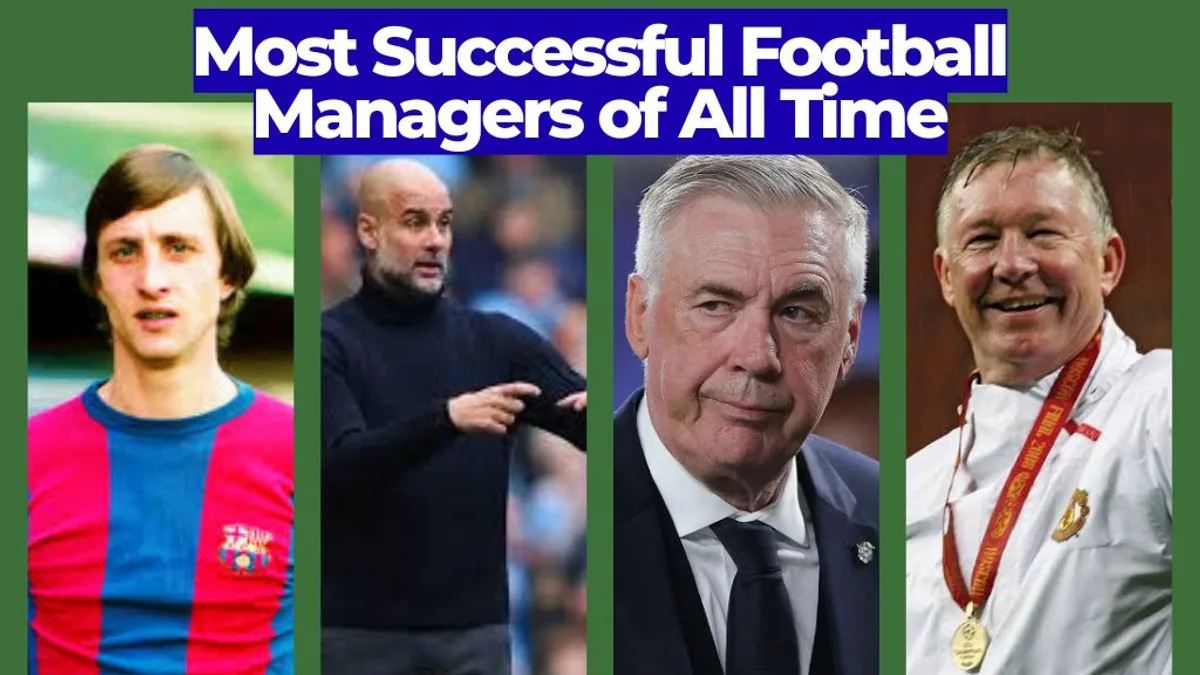
Sir Alex Ferguson took charge of Manchester United in 1986 and didn’t win the league until 1993. Seven years is a long time to keep a job at any big club today, let alone build the foundation for 13 titles. That patience, from both Ferguson and United’s board, is part of why his run stands apart from almost everyone else on this list. Guardiola, Ancelotti, and Mourinho all built their reputations differently, but they share a habit of winning across different clubs and different footballing cultures rather than riding one talented squad.
Management jobs at the top level rarely last. Clubs sack managers mid-season over a bad run of form, so the people who manage to win consistently, across years and across clubs, are worth studying for how they did it.
How to Measure a Manager’s Career
- Winning at more than one club (not just inheriting a dynasty)
- Sustained performance over multiple seasons, not one-off campaigns
- Competing and succeeding in European competition
- Tactical influence that outlasts their time at any given club
The Managers Most Often Named Among the Greatest
| Manager | Most Notable Club(s) | Era |
|---|---|---|
| Sir Alex Ferguson | Manchester United | 1986–2013 |
| Pep Guardiola | Barcelona, Bayern Munich, Man City | 2008–present |
| Carlo Ancelotti | AC Milan, Real Madrid, others | 1995–present |
| José Mourinho | Porto, Chelsea, Inter Milan, Real Madrid | 2002–present |
| Arrigo Sacchi | AC Milan | 1987–1991 |
| Johan Cruyff | Ajax, Barcelona | 1985–1996 |
| Brian Clough | Nottingham Forest | 1975–1993 |
| Bob Paisley | Liverpool | 1974–1983 |
Sir Alex Ferguson: 27 Years at One Club
No manager in the modern era has matched what Ferguson did at Manchester United. Over 27 years at Old Trafford, he won multiple league titles, domestic cups, and two Champions League trophies. He rebuilt the squad several times, from the teams of the late 1980s through to the ones he handed over in 2013, adjusting to new generations of players and new tactical trends each time. Staying at one club that long, and staying good, is the part nobody has repeated since.
Pep Guardiola: Changing How the Game Is Played
Guardiola has changed how football gets played at every club he has managed. His Barcelona side from 2008 to 2012 is still cited as one of the best club teams ever assembled, built around Xavi, Iniesta, and Messi. What separates him from a coach who got lucky with one golden generation is that he then won league titles in Germany and England with different players and different squads, proving the possession-and-pressing approach travels. Most coaches under 40 now copy some version of it.
Carlo Ancelotti: Builds Around the Squad He Has
Where Guardiola imposes a system on a squad, Ancelotti tends to work out what his players do well and organizes around that. It’s a less flashy approach, but it has won him major honours in Italy, England, France, Spain, and Germany. Few managers have lifted the Champions League with more than one club; Ancelotti has done it with two, which puts him in a very short list.
José Mourinho: Built for Knockout Football
Mourinho’s reputation rests on defensive organisation and a knack for winning the moments that matter in a one-off game. His 2009-10 Inter Milan side won Serie A, the Coppa Italia, and the Champions League in the same season, beating Guardiola’s Barcelona along the way. It remains one of the great single-season runs by any European club side.
Names That Don’t Always Make the Trophy Count
Some managers shaped the sport without piling up the biggest prizes. Arrigo Sacchi’s AC Milan side of the late 1980s and Johan Cruyff’s Barcelona side from 1988 to 1996 changed how coaches thought about pressing and positioning, influence that outlasted their actual trophy hauls. Bob Paisley won three European Cups in nine years at Liverpool, a record no English manager has come near since. And Brian Clough took Nottingham Forest, a club with no European pedigree at all, to back-to-back European Cup wins in 1979 and 1980.
Frequently asked questions
Who is considered the greatest football manager of all time?+
Sir Alex Ferguson is most widely regarded as the greatest manager in football history, having won 13 Premier League titles and 2 UEFA Champions League trophies across 27 years at Manchester United.
Which manager has won the most Champions League titles?+
Carlo Ancelotti holds the record with five Champions League titles as a manager — two with AC Milan and three with Real Madrid. Pep Guardiola, Zinedine Zidane, and Bob Paisley are also among the most decorated in Europe's premier club competition.
What makes a football manager truly great?+
Greatness is judged across several dimensions: sustained trophy-winning over many seasons, success at more than one club, tactical innovation, and the ability to develop players and build winning cultures.
How many trophies did Sir Alex Ferguson win?+
Sir Alex Ferguson won around 49 trophies as a manager, the vast majority during his 27 years at Manchester United. His United haul included 13 Premier League titles, two Champions Leagues, and multiple FA Cups, making him the most decorated manager in English football history.
Which manager has won league titles in the most countries?+
Carlo Ancelotti has won domestic league titles in all of Europe's top five leagues — Italy, England, France, Germany, and Spain — a feat no other manager has matched. It reflects both his longevity and his ability to succeed in very different footballing cultures.
Do great managers need to have been great players?+
No. Some of the greatest managers, including Sir Alex Ferguson and José Mourinho, had modest playing careers, while others like Pep Guardiola and Johan Cruyff were elite players first. Coaching ability, tactical insight, and leadership matter far more than a manager's own playing record.
Play & tools
Free browser games and tools — no account, no download.
- Play 38-0 — Sign a 4-4-2 of all-time football legends and chase a perfect 38-0 league season — perfect, not just unbeaten.
- Explore all our games →
Related football guides
View all →
Most Successful Goalkeepers in Football History, Ranked
Lev Yashin, Gianluigi Buffon, Iker Casillas, Manuel Neuer and 8 more of the most decorated goalkeepers ever, ranked by trophies, longevity and big-match pedigree.

The Worst Transfers in Football History, Ranked
Ousmane Dembele, Philippe Coutinho, Antoine Griezmann, Paul Pogba and more — the biggest-money football transfer flops ever, with the fees and the reasons they failed.
Lisandro Martinez Says He Spoke Out of Anger After Questioning United's Ambition in Madrid
Lisandro Martinez used an Instagram statement to take the heat out of his Madrid outburst, saying he spoke out of anger while keeping the ambition demand.
Most Successful Football Teams in the World
The most successful football clubs and nations, ranked by European Cups, league titles, and lasting dominance — from Real Madrid and AC Milan to Brazil's five World Cups.
Most Popular Football Goals of All Time, Ranked
Maradona's 1986 run, Zidane's 2002 volley, Roberto Carlos's impossible free kick, Bale's overhead kick and more: the 10 football goals fans never stop rewatching, ranked.
Richest Football Clubs in the World: The Full 2026 Ranking
Real Madrid leads the Deloitte Football Money League with over €1.1 billion in revenue, ahead of Barcelona, Bayern Munich, PSG, and Liverpool. Here are the 12 richest clubs, ranked.