
How Heptathlon Scoring Works: Formula, Tables and Examples

On this page8
- 01What is the basic heptathlon scoring formula?
- 02What are the heptathlon event coefficients?
- 03What marks are worth about 1,000 points?
- 04How do event wins affect the final score?
- 05What is a good heptathlon score?
- 06Why can one weak event change everything?
- 07Are heptathlon scoring tables changing?
- 08Common heptathlon scoring mistakes
Heptathlon scoring turns seven different performances into one points total. Times, heights and distances are converted through World Athletics combined-events formulas, each event score is rounded down to a whole point, and the athlete with the highest total wins.
That is the part that makes the heptathlon different from a simple “win the most events” contest. A heptathlete can win the 100m hurdles and still lose the competition if her shot put, javelin or 800m score drops too far behind. The table rewards the full two-day athlete.
What is the basic heptathlon scoring formula?
The heptathlon uses three formula families: one for track events, one for jumps and one for throws. The constants are different for each event, but the idea stays the same.
| Event type | Formula idea | Events |
|---|---|---|
| Running | Faster time scores more | 100m hurdles, 200m, 800m |
| Jumping | Higher or longer mark scores more | High jump, long jump |
| Throwing | Longer distance scores more | Shot put, javelin throw |
For track races, the performance is a time in seconds. For jumps, the performance is measured in centimetres. For throws, the performance is measured in metres. The calculated score is then rounded down to the nearest whole point before the seven event scores are added.
What are the heptathlon event coefficients?
Each event has its own A, B and C constants. These constants are why a 1.82m high jump and a 13.85-second 100m hurdles can both land around the same 1,000-point level even though they look nothing alike.
| Event | A | B | C | Input unit |
|---|---|---|---|---|
| 100m hurdles | 9.23076 | 26.7 | 1.835 | seconds |
| High jump | 1.84523 | 75.0 | 1.348 | centimetres |
| Shot put | 56.0211 | 1.50 | 1.05 | metres |
| 200m | 4.99087 | 42.5 | 1.81 | seconds |
| Long jump | 0.188807 | 210 | 1.41 | centimetres |
| Javelin throw | 15.9803 | 3.80 | 1.04 | metres |
| 800m | 0.11193 | 254 | 1.88 | seconds |
You do not need to calculate these by hand to follow a competition. But knowing the formula explains why the scoreboard can swing so hard after one event. A small change in a high-value event can be worth dozens of points.
What marks are worth about 1,000 points?
World Athletics gives a useful benchmark: the approximate mark in each event that scores around 1,000 points.
| Event | About 1,000 points |
|---|---|
| 100m hurdles | 13.85 seconds |
| High jump | 1.82 m |
| Shot put | 17.07 m |
| 200m | 23.80 seconds |
| Long jump | 6.48 m |
| Javelin throw | 57.18 m |
| 800m | 2:07.63 |
The benchmark is not a minimum target. It is a scale marker. A world-class heptathlete might score above 1,000 in the hurdles and high jump, lose ground in the throws, then claw points back in the 800m.
How do event wins affect the final score?
Event wins do not carry a bonus. The mark itself is what matters. If Athlete A wins the javelin by a small margin, she gains only the point difference between the two throws. If Athlete B destroys the field in the 800m, she can gain a much bigger chunk of points in one race.
That is why heptathlon strategy is less about collecting event wins and more about protecting the total. A safe third attempt in the long jump can be smarter than chasing a huge foul. A controlled javelin can matter more than an all-or-nothing throw. The scoreboard rewards banked points.
What is a good heptathlon score?
At the global level, 6,800 points is a championship-winning range and 7,000 points is rare. Nafissatou Thiam won Paris 2024 with 6,880 points. Anna Hall won the 2025 World Championships in Tokyo with 6,888 points, while her 7,032 at Götzis earlier in 2025 tied Carolina Klüft’s best-by-athlete mark behind Jackie Joyner-Kersee.
| Level | Rough meaning |
|---|---|
| 7,000+ | Historic, all-time list territory |
| 6,800-6,999 | Major championship gold-medal range |
| 6,500-6,799 | International medal and finalist range |
| 6,000-6,499 | Strong national or developing elite level |
Those bands are not qualifying standards. They are context for reading a scoreboard. Conditions, competition level and athlete development stage all matter.
Why can one weak event change everything?
The heptathlon gives seven chances to score, but it also gives seven ways to leak points. A weak event hurts because the other six scores must cover the gap.
For example, losing 120 points in the shot put is not the same as losing one place. It means the athlete might need a significantly faster 800m, a cleaner hurdles race, or a much bigger high jump to get back to the same total. That is why combined-events athletes spend so much time making weak events “safe” before they chase a spectacular mark.
Are heptathlon scoring tables changing?
World Athletics updated its general scoring tables in 2025, but it also stated that the combined-events scoring system remained unchanged. That distinction matters. The heptathlon uses the combined-events scoring system, not the general World Athletics ranking-score tables.
So if you see news about World Athletics scoring-table updates, check whether it refers to general event comparison tables or the combined-events formulas. For heptathlon totals, the combined-events formulas are the relevant system.
Common heptathlon scoring mistakes
The most common mistake is reading the standings as if they are a medal table. They are not. Winning three events does not guarantee the overall lead.
Another mistake is comparing raw marks across events. A 6.40m long jump is not “better” or “worse” than a 2:05 800m until both are converted into points. The points table is the shared language.
Finally, remember that every event score is rounded down. You cannot round up a near-1,000 score just because the formula result is close. That small detail can matter in a tight finish.
Frequently asked questions
How is heptathlon scored?+
Each heptathlon mark is converted into points using combined-events formulas. The 100m hurdles, 200m and 800m use running formulas, high jump and long jump use jump formulas, and shot put and javelin use throw formulas. The seven whole-number event scores are added together.
Does winning an event give bonus points in heptathlon?+
No. There is no direct bonus for winning one heptathlon event. A winner's mark usually scores well because the performance is strong, but the points come from the time, height or distance, not the placing.
Are heptathlon points rounded?+
Yes. Combined-events calculations are rounded down to the nearest whole point for each event. That means an event score of 999.9 counts as 999 points, not 1,000.
What is a good heptathlon score?+
At elite level, 6,800 points is world-class and 7,000 points is rare. Recent Olympic and World Championship winning scores include Nafissatou Thiam's 6,880 at Paris 2024 and Anna Hall's 6,888 at Tokyo 2025.
What mark is worth 1,000 heptathlon points?+
World Athletics lists approximate 1,000-point benchmarks including 13.85 seconds for 100m hurdles, 1.82m for high jump, 17.07m for shot put, 23.80 seconds for 200m, 6.48m for long jump, 57.18m for javelin and 2:07.63 for 800m.
Can someone win heptathlon without winning any event?+
Yes. A consistent athlete can win the total without winning a single individual event. The scoring system rewards the total point package, so avoiding a very weak event often matters more than one spectacular mark.
Are World Athletics scoring tables and combined-events scoring the same thing?+
Not exactly. World Athletics updated its general scoring tables in 2025, but stated that the combined-events scoring system remained unchanged. Heptathlon uses the combined-events system.
Sources
Play & tools
Free browser games and tools — no account, no download.
- Play today's Sports Connections — Today's Sports Connections — daily hints, answers, and play the grid.
- Play Guess the NFL Player — A new mystery NFL player every day. Eight guesses, with a clue on each — plus free unlimited mode.
- Explore all our games →
Related guides
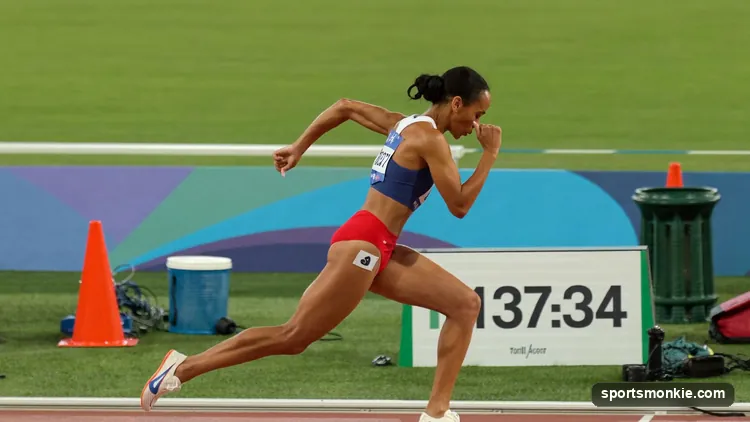
Heptathlon Events Explained: Order, Rules and Scoring
The heptathlon has seven events over two days. See the event order, scoring, false-start rules, tie rule, records and beginner training notes.
Discus Throw Explained: Rules, Technique, Dimensions & Records
Discus throw explained: the 2 kg/1 kg discus, 2.5m circle, 1.5-turn rotational technique, cage rules, and current world records (2026).
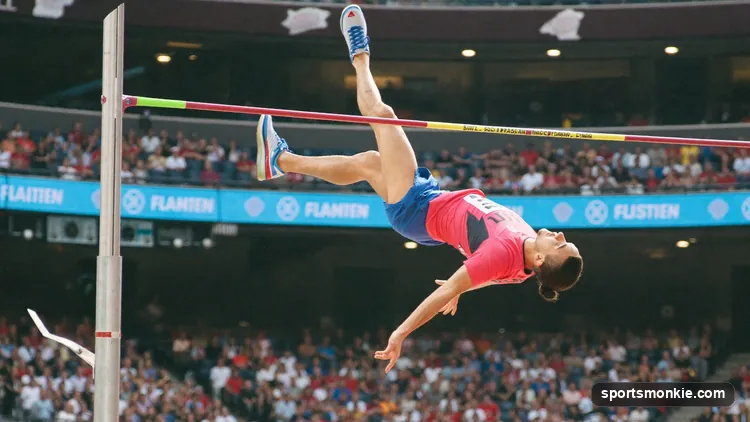
High Jump Explained: Rules, Technique, and World Records
High jump explained: the J-shaped approach, Fosbury Flop technique, three-attempt rules, countback ties, and the current men's and women's world records.
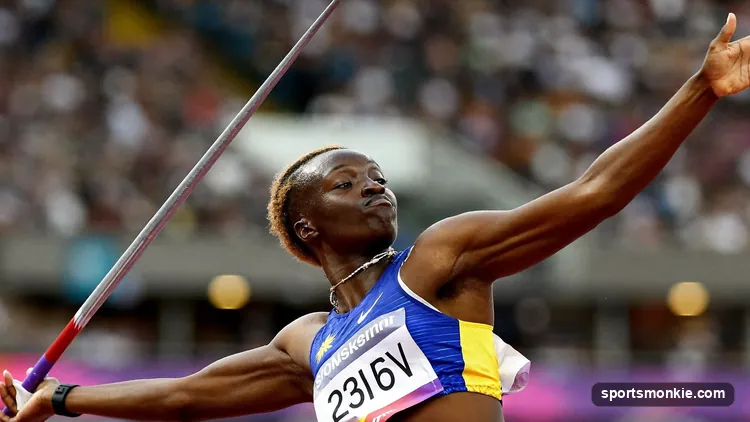
Javelin Throw Explained: Rules, Technique & World Records
Javelin throw explained: weight, runway rules, throwing technique, the 1986 redesign, and world records — men's 98.48m, women's 72.28m, as of 2026.
Long Jump Explained: Rules, Technique & World Records
Long jump explained: the 40m runway, plasticine take-off board, how jumps are measured, hang vs hitch-kick technique, fouls, and the world records.
Pole Vault Explained: Rules, Technique, Equipment and World Records
Pole vault explained: how the runway, pole and box work, the six phases of a vault, scoring rules, and current world records as of 2026.