
10 Best Football Jerseys of All Time, Ranked (2026)
On this page11
- 01How We Ranked These Jerseys
- 02The 10 Best Football Jerseys, Ranked
- 03Brazil 1970: The Gold Standard
- 04Netherlands 1988: A Trophy Instead of a Runner-Up Story
- 05Nigeria 2018: The Modern Sales Record
- 06Arsenal 1991–93: From Ridiculed to Reissued
- 07Argentina 1986: One Tournament, Two Legendary Moments
- 08Cameroon 2002: Banned for Being Too Bold
- 09Mexico 1998: The Aztec Warrior Shirt
- 10Juventus, AC Milan, and Barcelona: Club Identity Over a Single Season
- 11Where These Jerseys Stand in 2026
Brazil’s 1970 World Cup home shirt is the most iconic football jersey ever made. It is the shirt every “greatest kits” list from ESPN to FourFourTwo puts at or near number one, the one strangers wear who’ve never kicked a ball competitively, and the shirt every other entry on this list gets measured against. Below are the 10 jerseys that make the cut, ranked, with the year, the moment, and why each one outlasted its own team.
How We Ranked These Jerseys
This is an opinion-led category, so criteria matter more than usual. Each jersey was scored against four factors, weighted in this order:
- Design distinctiveness — identifiable from across a stadium, stripped of any badge or crest?
- Trophy or moment attached — permanently tied to a specific title, goal, or tournament run?
- Longevity of demand — still reissued, resold, or referenced decades later, not just its launch season?
- Cross-list consensus — does it repeat across independent expert rankings (ESPN, FourFourTwo, GiveMeSport, Cult Kits) rather than being one outlet’s pick?
Where sources disagreed, we cross-checked club and federation history against at least two independent references. Disputed calls, like manufacturer credits, are flagged below rather than smoothed over.
The 10 Best Football Jerseys, Ranked
| Rank | Jersey | Year | Why It’s Iconic |
|---|---|---|---|
| 1 | Brazil home | 1970 | Third World Cup title, Pelé-era canary yellow, most copied design in the sport |
| 2 | Netherlands home | 1988 | Only major men’s title (Euro ‘88), Van Basten’s final-winning volley |
| 3 | Nigeria home | 2018 | ~3 million Nike pre-orders, sold out in minutes worldwide |
| 4 | Arsenal away (“Bruised Banana”) | 1991–93 | Mocked on release, now a cult classic reissued for 2026-27 |
| 5 | Argentina home | 1986 | Maradona’s “Hand of God” and “Goal of the Century” World Cup |
| 6 | Cameroon home (sleeveless) | 2002 | Won AFCON in it, then FIFA banned it from the World Cup |
| 7 | Mexico home (“Aztec”) | 1998 | Sublimated Aztec warrior print, still Mexico’s most referenced shirt |
| 8 | Juventus home | 1903–present | Black-and-white stripes borrowed from Notts County, unbroken since 1903 |
| 9 | AC Milan home | 1899–present | Rossoneri red and black, chosen to evoke fire and fear |
| 10 | Barcelona home (blaugrana) | 1899–present | Blue-and-garnet identity, debated origins, never seriously altered |
Brazil 1970: The Gold Standard
Brazil’s canary yellow with green trim, worn to a third World Cup title in Mexico, is probably the most copied football shirt on the planet. Pelé, and later Ronaldo and Ronaldinho, all attached themselves to that shade of yellow. At this point the colour alone signals attacking, expressive football before anyone even sees a badge — the same reason Brazil’s record five World Cup titles keep getting cited alongside the shirt itself.
Netherlands 1988: A Trophy Instead of a Runner-Up Story
Unlike the more famous 1974 orange from Rinus Michels and Johan Cruyff’s Total Football side — which never actually won a tournament — the 1988 kit did. Its diagonal-fade geometric pattern, made by Adidas, was on Marco van Basten’s back when he scored one of the best goals in tournament history in a 2-0 win over the Soviet Union in the final. A losing legacy versus a winning one is why this shirt ranks above the more nostalgic ‘74 strip.
Nigeria 2018: The Modern Sales Record
Nigeria’s lime-green, black-and-white chevron kit for the 2018 World Cup broke pre-order records for any national team, club included, when Nike logged around 3 million requests before release. Stock sold out online within roughly three minutes. It is the clearest modern proof that a kit’s cultural reach can now outrun a team’s actual tournament results — Nigeria didn’t escape the group stage.
Arsenal 1991–93: From Ridiculed to Reissued
Adidas’s yellow-and-black zig-zag away shirt, nicknamed the “Bruised Banana,” broke every convention of English kit design and was widely disliked at launch. It aged into one of the most requested retro jerseys in football, worn during Arsenal’s domestic cup double era by players like Ian Wright and Tony Adams. Arsenal brought the design back for their 2026-27 away kit, the clearest sign yet that the shirt’s second life has outgrown its first.
Argentina 1986: One Tournament, Two Legendary Moments
Argentina’s sky-blue-and-white stripes, supplied by Le Coq Sportif rather than Adidas (a detail several retrospectives get wrong), were on Diego Maradona for both the “Hand of God” and the “Goal of the Century” against England, then the World Cup final win over West Germany. Maradona’s actual match-worn shirt from that England game sold at auction in 2022 for more than £7 million, the highest price ever paid for a piece of sports memorabilia at the time.
Cameroon 2002: Banned for Being Too Bold
Puma’s sleeveless design for the Indomitable Lions won the 2002 Africa Cup of Nations outright. FIFA then ruled it illegal for that year’s World Cup, arguing the mandatory tournament sleeve patches had nowhere to go. Puma pushed back publicly, and Cameroon compromised with stitched-on black sleeves rather than scrap the shirt. Few kits in history have generated a genuine governing-body dispute; that alone keeps it on every serious ranking.
Mexico 1998: The Aztec Warrior Shirt
Made by ABA Sport rather than the team’s usual Umbro deal, Mexico’s 1998 home shirt sublimated an Aztec warrior head across the front and back in tone-on-tone green. It remains the shirt collectors and Mexican fans point to first when asked for the country’s best-ever design, decades before “cultural heritage” kits became a routine marketing angle for national federations.
Juventus, AC Milan, and Barcelona: Club Identity Over a Single Season
These three break the “one great year” pattern. Juventus adopted black-and-white stripes in 1903 after replacement shirts arrived from an English Notts County supporter — over 120 years of continuous use since. AC Milan’s red and black, chosen in 1899 by founder Herbert Kilpin to suggest fire and fear, gave the club its “Rossoneri” nickname. Barcelona’s blue-and-garnet blaugrana, also settled in 1899, has disputed origins (a Joan Gamper link to FC Basel is most cited) but has barely changed in over 125 years. None needed one tournament to become iconic; they needed a century of never blinking.
Where These Jerseys Stand in 2026
Retro reissue demand hasn’t slowed. Arsenal reviving the Bruised Banana for 2026-27 shows a shirt once considered a joke can become a brand asset a generation later, and Nigeria’s 2018 kit has been restocked by Nike more than once since its original run, still reselling above retail. With the 2026 World Cup in the US, Mexico, and Canada now finished (Spain beat Argentina 1-0 in the July final), the usual post-tournament comparisons to this list are already circulating — historically only a handful of new designs per cycle earn a permanent spot, and jersey number choices, covered in our guide to football’s most popular jersey numbers, still shape which shirts fans actually buy.
Frequently asked questions
What is the single most iconic football jersey ever made?+
Brazil's 1970 World Cup home shirt tops nearly every credible ranking. The canary-yellow shirt with green trim, worn by Pelé's squad to a third World Cup title in Mexico, set the template every 'greatest kit' list still measures against today.
Why is the Netherlands' 1988 kit considered so iconic despite not winning a World Cup?+
It won the European Championship instead, the country's only major men's title. Its diagonal-fade orange pattern framed Marco van Basten's volley in the final, and that single design-plus-moment pairing has kept the shirt on best-kits lists for over 35 years.
What was Arsenal's 'Bruised Banana' kit and why is it still famous?+
It was Arsenal's 1991-93 Adidas away shirt: a yellow base with a jagged black zig-zag, widely mocked on release. Fans re-evaluated it over time, and Arsenal reused the design again for 2026-27, cementing it as one of English football's most cited retro kits.
Which football jersey sold the most units in modern history?+
Nigeria's 2018 World Cup home kit set records rather than raw sales totals: Nike logged roughly 3 million pre-orders, and stock sold out within minutes online and about an hour in Nike's flagship London store when it launched.
Why was Cameroon's 2002 kit banned by FIFA?+
Puma's sleeveless design, worn to the 2002 Africa Cup of Nations title, was ruled illegal for that year's World Cup because FIFA required shirts to carry sleeves for tournament patches. Puma disputed the ban, and Cameroon compromised with stitched-on black sleeves.
What makes a football jersey iconic rather than just popular?+
Iconic status needs three things together: a visually distinctive design, a link to a trophy or unforgettable moment, and staying power measured in decades of reissues and resale demand, not one good sales year.
Are club jerseys or national team jerseys more iconic overall?+
National team kits tend to dominate 'most iconic' lists because a single tournament run creates a permanent story, while club identities like Juventus' stripes or Barcelona's blaugrana earn their status through more than a century of unbroken visual continuity instead.
Which retro football shirts are most sought after by collectors in 2026?+
Arsenal's Bruised Banana, the Netherlands' 1988 Euro shirt, and Cameroon's 2002 sleeveless kit remain the most searched vintage jerseys, with Nigeria's 2018 kit joining them as one of the fastest-appreciating modern shirts on the resale market.
Sources
Play & tools
Free browser games and tools — no account, no download.
- Play 38-0 — Sign a 4-4-2 of all-time football legends and chase a perfect 38-0 league season — perfect, not just unbeaten.
- Explore all our games →
Related football guides
View all →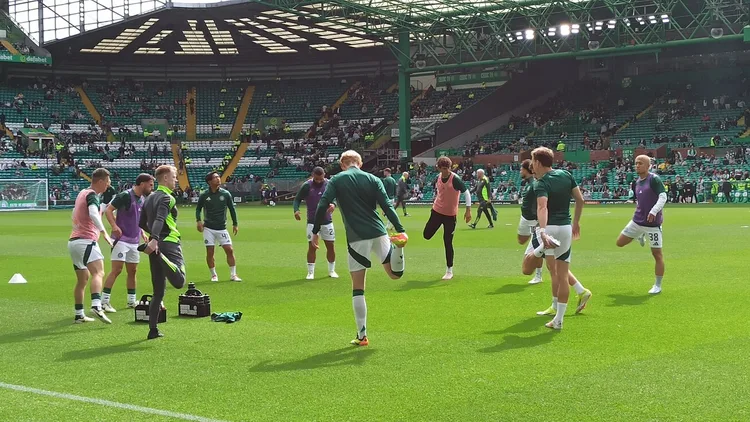
Callum Osmand Scores Twice in Two Minutes on First Start as Celtic Beat Hearts 7-1
Callum Osmand scored twice in two minutes on his first Celtic start in a 7-1 win over Hearts, then came off at half-time with a hamstring precaution.
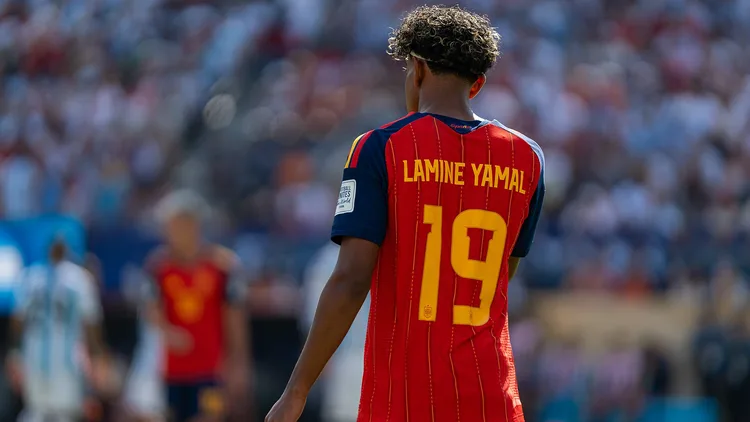
Bernal Headbutts Yamal Twice and Faces a 12-Match Ban as Barcelona Beat Betis 5-2
Facundo Bernal was sent off for headbutting Lamine Yamal twice in Barcelona's 5-2 win at Real Betis, and the referee's report puts him under a 4-to-12 match tariff.
Madueke's Deflected Strike Gives Arsenal a 1-0 Win at Forest With Their Only Shot on Target
Noni Madueke's deflected 80th-minute strike gave Arsenal a 1-0 win at Nottingham Forest with their only shot on target, sending Forest into the relegation zone.
Mbappe Scores Twice as Real Madrid Beat Sevilla 4-1, Including a Turn Goal and a Panenka
Kylian Mbappe turned clear of two defenders and rounded the keeper for one goal and chipped a Panenka penalty for another as Real Madrid beat Sevilla 4-1.

Botman Escapes a Red Card at Newcastle as Jackson Says He Nearly Broke His Leg
Sven Botman stayed on after a VAR check for serious foul play against Aston Villa, with the referee's own published words calling the challenge reckless.
Real Madrid Demand Tebas Resign After He Compares the Club's Media Methods to Goebbels
La Liga president Javier Tebas compared Real Madrid TV's methods to Goebbels' propaganda techniques on Friday. Madrid called it morally repugnant and demanded he quit both of his posts.