
How Should Soccer Cleats Fit? The Complete Sizing Guide
On this page6
A striker who buys cleats a half-size too big loses something that never shows up on a stat sheet: the split-second feel for where the ball actually is on his foot. Too much room in the toe box and the touch goes soft, mistimed, slightly wrong. Too little room and the same player is limping off at halftime with a blackened toenail. Fit is not a comfort question. It changes how the boot performs.
The Thumb’s-Width Rule
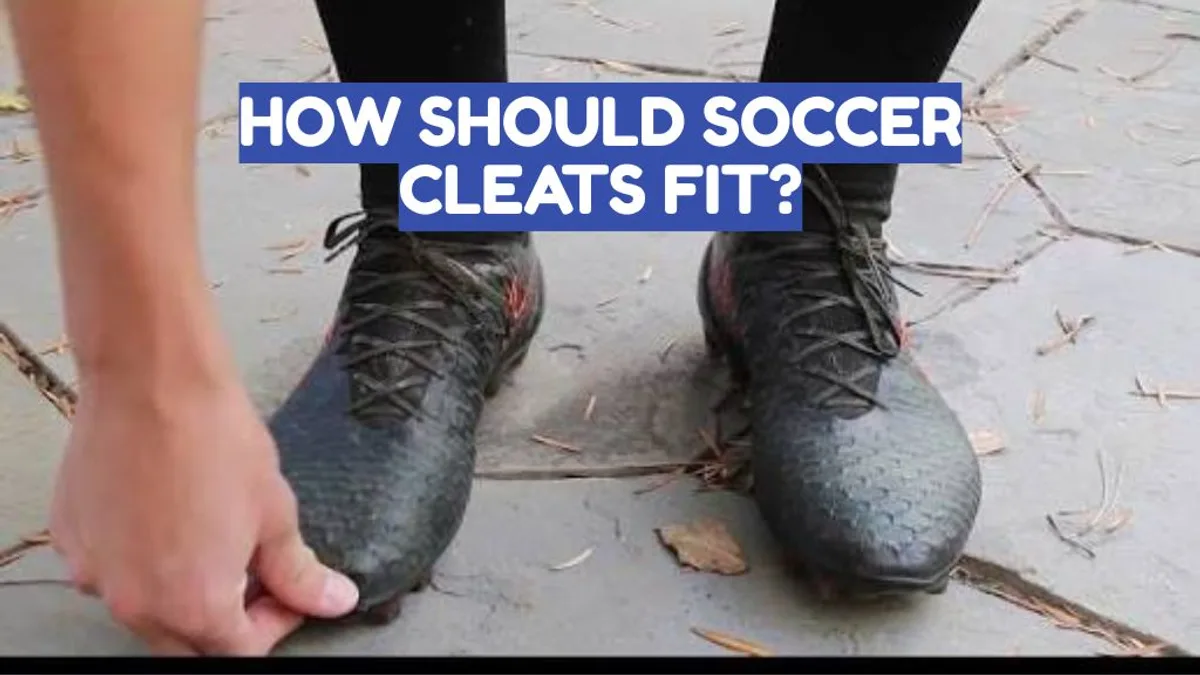
Stand up and push your foot forward into the boot. You should be able to slide a thumb between your heel and the back of the boot while your toes just graze the front. Can’t fit a thumbnail in there? Too small. Two fingers slide in easily? Too big.
Width Matters as Much as Length
A boot can be the right length and still fit badly if the width is off. Watch for:
- Pinching or pain along the sides of the foot
- Black toenails from horizontal compression
- The upper creasing or bulging at the widest part of the foot
Several brands sell wide-fit versions of their popular boots. Players with wider feet do better shopping those models directly rather than sizing up in a standard last.
Cleat Fit by Upper Material
The upper material changes how a boot fits after a few sessions, not just on day one.
| Upper Material | Stretch Potential | Break-In Period | Fit Advice |
|---|---|---|---|
| Kangaroo leather | High | Short | Can size true, leather molds to the foot |
| Synthetic leather | Low to moderate | Moderate | Size as labelled; minimal change |
| Knit / sock upper | High | Very short | Snug at purchase; adapts quickly |
| Firm synthetic | Very low | Long | Err slightly larger; little give |
Heel Lock: A Critical Checkpoint
The heel shouldn’t lift when you walk or run. Slip at the heel causes blisters and bleeds power out of every strike. If you feel lift, try a heel-lock lacing pattern through the top eyelets before assuming you need a smaller size.
Trying Cleats On Correctly
- Wear the socks you actually play in, not thick casual socks
- Try boots on in the afternoon, when feet are already slightly swollen the way they are mid-match
- Wear them at least 10 minutes and mimic running and cutting movements
- Check for pressure points along the whole foot, not just toe-to-heel length
When to Replace Cleats
A cleat that fit perfectly on day one still wears out. Watch for:
- The upper separating from the sole
- Studs worn flat or snapped off
- A boot that’s lost its shape and lets the foot move inside it
- Pain that vanishes the moment you switch to a different pair
Frequently asked questions
Should soccer cleats be tight or loose?+
Cleats should be snug but not painful. You want a close fit with minimal dead space — roughly a thumbnail's width at the toe — so the boot moves with your foot rather than sliding around.
Should I size up or down in soccer cleats?+
Most players size down half a size from their regular shoe size because cleats are designed for a tighter, more precise fit. However, this varies by brand and boot model, so always try them on when possible.
How do I know if my soccer cleats are too small?+
If your toes are pressing against the end of the boot, you feel numbness or significant pain after 15–20 minutes of wear, or you develop persistent blisters on your toes, the cleats are likely too small.
Sources
Play & tools
Free browser games and tools — no account, no download.
- Play 38-0 — Sign a 4-4-2 of all-time football legends and chase a perfect 38-0 league season — perfect, not just unbeaten.
- Explore all our games →
Related football guides
View all →
Best Soccer Socks: What to Look for and Top Options
The best soccer socks deliver cushioning, grip, and a secure fit that holds shin guards in place and prevents blisters. Here is what to look for.
Climbing Shoes for Beginners: What to Buy and How They Should Fit
The best climbing shoes for beginners are flat, neutral, and snug, not painful. Here's how to size them, rent vs buy, and 5 real 2026 models with prices.
Hybrid Bike Fit Guide: Sizing Chart and How to Check It
Find your hybrid bike size by height, check standover clearance, and set saddle and handlebar position for the upright hybrid riding stance.
Callum Osmand Scores Twice in Two Minutes on First Start as Celtic Beat Hearts 7-1
Callum Osmand scored twice in two minutes on his first Celtic start in a 7-1 win over Hearts, then came off at half-time with a hamstring precaution.
Bernal Headbutts Yamal Twice and Faces a 12-Match Ban as Barcelona Beat Betis 5-2
Facundo Bernal was sent off for headbutting Lamine Yamal twice in Barcelona's 5-2 win at Real Betis, and the referee's report puts him under a 4-to-12 match tariff.
Madueke's Deflected Strike Gives Arsenal a 1-0 Win at Forest With Their Only Shot on Target
Noni Madueke's deflected 80th-minute strike gave Arsenal a 1-0 win at Nottingham Forest with their only shot on target, sending Forest into the relegation zone.