
Best Electric Bikes: What Actually Matters Before You Buy
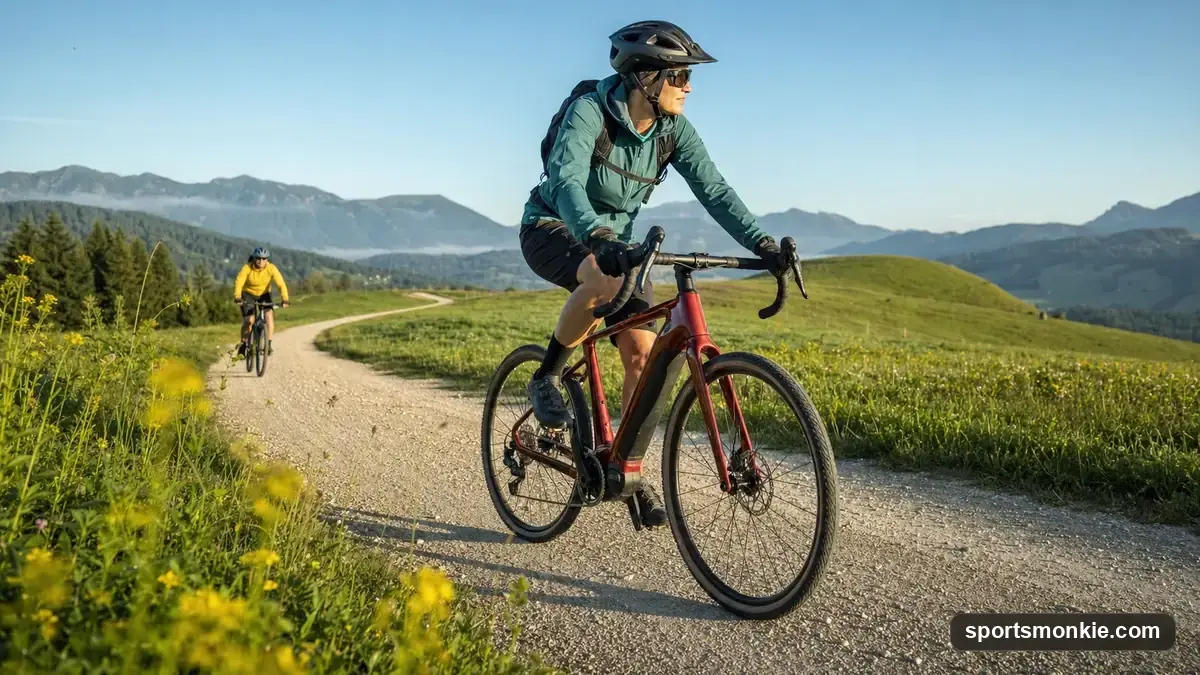
On this page8
- 01What are the main types of electric bikes?
- 02Hub motor or mid-drive: which one actually matters?
- 03How far will an e-bike really go on one charge?
- 04What class of e-bike is legal in the US?
- 05Are e-bikes legal in the UK, Australia, and Canada?
- 06Which electric bike should you actually buy right now?
- 07What do most electric bike guides get wrong?
- 08The bottom line on buying an electric bike
The best electric bike for you is decided by three things, in this order: how much motor assistance you’re legally allowed where you live, how far you actually need to go on one charge, and whether the motor type matches your terrain. Model names change every few months; those three constraints don’t. A commuter needs a hub motor and 20-30 real miles. A cargo bike needs mid-drive torque and a legal class that allows the weight. A mountain e-bike needs a mid-drive motor built for sustained climbing, not top speed. Get those three right first, then pick a brand.
What are the main types of electric bikes?
E-bikes split into four practical categories, and the split matters more than any single spec, because it decides which motor, range, and price tier actually make sense for you.
| Category | Motor type | Real-world range | Price tier (2026, USD) | Best for |
|---|---|---|---|---|
| Commuter | Hub or mid-drive | 25-45 mi | $900-$2,200 | Daily pavement riding, lowest upkeep |
| Cargo | Mid-drive or dual hub | 20-40 mi loaded | $2,000-$4,500 | Hauling kids or groceries, replacing short car trips |
| Mountain (eMTB) | Mid-drive | 15-30 mi, trail-dependent | $3,000-$8,600+ | Technical singletrack and sustained climbing |
| Folding | Hub (front or rear) | 15-25 mi | $700-$1,500 | Small apartments, train or bus-combined commutes |
Commuters and folders overlap in price because they’re often the same bike in a different frame. Cargo and mountain e-bikes cost more because both need mid-drive motors and beefier frames to handle load or abuse. If you’re not sure which category you are, count your typical trip: under 10 miles on pavement is a commuter or folder, hauling kids or shopping is cargo, off-road climbing is an eMTB.
Hub motor or mid-drive: which one actually matters?
This is the single spec that predicts how a bike rides more reliably than horsepower, battery size, or brand. A hub motor sits inside the front or rear wheel and pushes the bike directly, which makes it cheap, simple, and low-maintenance, but it can’t use the bike’s gears to multiply torque on a climb. A mid-drive motor sits at the pedals and pushes through the drivetrain, so it climbs efficiently and feels closer to your own pedaling effort, at the cost of more drivetrain wear and a higher price.
For flat commuting, a hub motor is the right choice and the money you save is better spent on a bigger battery or better brakes. For cargo bikes and mountain e-bikes, mid-drive is worth the premium; a cargo bike with a hub motor and a loaded rear rack will struggle on any real hill, and Specialized’s Turbo Levo builds its entire eMTB reputation around motor, firmware, and frame tuned as one system for exactly that kind of climbing.
How far will an e-bike really go on one charge?
Less than the box says, and by a predictable margin. Manufacturers test range with a light rider, flat ground, ideal temperature, and the lowest assist setting, conditions almost nobody rides in. Add hills, cargo weight, cold weather, or a higher assist level, and real range typically lands at 50 to 70 percent of the advertised “up to” number.
That means a bike marketed at 60 miles delivers something closer to 30-40 miles once you’re commuting through actual traffic and weather. The safest planning rule: take the advertised figure, cut it roughly in half, and treat that as your usable range. If your commute is 12 miles round trip, a 60-mile advertised bike gives you real margin; a 30-mile advertised bike does not.
What class of e-bike is legal in the US?
This is where most buying guides go vague, and it’s the single most important spec for American buyers. Federal law defines a “low-speed electric bicycle” as a two- or three-wheeled vehicle with operable pedals and a motor under 750 watts that can’t exceed 20 mph on level ground with a 170-pound rider, per 15 U.S.C. § 2085. That federal rule keeps a compliant e-bike classified as a consumer product, not a motor vehicle, so it doesn’t need registration or insurance nationally.
Where you can actually ride it is a separate, state-by-state question. Most states have adopted the three-class model law promoted by PeopleForBikes: Class 1 assists only while pedaling and cuts off at 20 mph; Class 2 adds a throttle up to the same 20 mph; Class 3 assists while pedaling up to 28 mph and is often restricted from bike paths or requires a minimum age and helmet. A handful of states haven’t adopted the model law at all, and access rules for bike paths, e-bike-restricted trails, and e-scooter lanes still vary block by block. Buy the class your state actually allows before you buy the class with the biggest number.
Are e-bikes legal in the UK, Australia, and Canada?
Yes, but the wattage and speed caps are lower than most American shoppers expect, and none of the three countries use the US class system.
In the UK, a legal EAPC (Electrically Assisted Pedal Cycle) is capped at 250 watts continuous power, with assistance cutting out at 15.5 mph, per the UK government’s EAPC rules. Throttles are allowed only up to walking pace; anything faster needs full moped-style type approval and registration. Riders must be at least 14, but no license or insurance is required for a compliant EAPC.
Australia runs the same 250-watt, 25 km/h cap under the European EN 15194 pedelec standard, and Transport for NSW confirms throttle use is limited to a 6 km/h walk-assist speed. Late-2025 changes reinstated stricter 250W import requirements nationally, so a US-spec Class 3 bike bought online will not be road-legal in Australia.
Canada sets a different national baseline: 500 watts continuous power and a 32 km/h (20 mph) assisted top speed for a power-assisted bicycle, under the federal Motor Vehicle Safety Regulations. That’s higher than the UK or Australia but lower than a US Class 3 bike, and “750W” bikes sold into the Canadian market are almost always listing peak power, with continuous output at or under the legal 500W line.
The takeaway: never assume a bike bought for one country’s market is legal in another. Check continuous wattage, not peak wattage, and check your specific country’s cap before you import or ship an e-bike across a border.
Which electric bike should you actually buy right now?
As of mid-2026, a few models consistently earn their reputation across independent testers, though prices and configurations shift often enough that you should verify current pricing before buying:
- Best commuter for most riders: A Class 1 or Class 2 hub-motor commuter around $900-$1,400, with a torque sensor (smoother power delivery than a basic cadence sensor) and hydraulic disc brakes.
- Best budget entry: Sub-$1,000 folding commuters with a 48V system, useful for riders testing whether an e-bike fits their routine before spending more.
- Best cargo: Long-tail cargo bikes in the $1,900-$2,500 range with a torque-sensing rear hub or mid-drive motor and a payload rating over 300 lbs, worth it once you’re carrying kids or replacing short car trips.
- Best mountain e-bike: Mid-drive eMTBs from $4,500 up to $8,600+ for flagship models, where the motor, battery, and frame are tuned together for sustained climbing, not just top-end power.
If none of those categories fit, you probably haven’t picked your category yet. Go back to the table above before you go shopping by brand name.
Riding a motor doesn’t replace training, and if you’d rather build fitness the traditional way, our rundown of the greatest cyclists of all time is a reminder of what pure leg power can still do. And if 20-28 mph of pedal assist genuinely isn’t enough, the fully motorized end of two wheels is covered in our guide to the best sports bikes.
What do most electric bike guides get wrong?
They lead with a top-10 model list and bury the legal classification two-thirds down the page, or skip it entirely. That’s backwards. A $3,000 Class 3 e-bike that can’t legally use your city’s bike paths, or a “750W” import that’s illegal to ride on a Canadian road, is a worse buy than a cheaper bike that actually matches your local rules. Wattage and top speed are marketing numbers first and legal categories second; buyers who chase the bigger number without checking the law end up with a bike they can’t insure, can’t register, or can’t legally ride where they planned to.
The fix is simple: decide your category (commuter, cargo, mountain, folding) from how you’ll actually use the bike, confirm the legal class or wattage cap for your country or state, then shop motor type and range within that box. Every other spec, paint color, app connectivity, integrated lights, is a genuine nice-to-have, not a reason to override the first two.
The bottom line on buying an electric bike
Match your bike to your riding, not the spec sheet. Hub motors and 20-45 real miles of range cover almost every commuter. Mid-drive motors earn their price on cargo bikes and mountain e-bikes. Real-world range is roughly half the advertised figure, so plan around that, not the box. And the legal ceiling on power and speed is not the same in the US, UK, Australia, and Canada, so check your own country’s rules before you buy, not after.
Frequently asked questions
What class of e-bike can I ride without a license in the US?+
Class 1 and Class 2 e-bikes are legal in most states without a license, registration, or insurance, under the model law most states have adopted. Class 1 assists only while pedaling, up to 20 mph; Class 2 adds a throttle at the same cap. Class 3 (28 mph) often needs a helmet and minimum age, so check your state.
Do I need a license for an e-bike in the UK?+
No, as long as it qualifies as an EAPC: a motor rated at 250 watts or less continuous power, assistance that cuts out at 15.5 mph, and pedal-assist only above walking pace. A compliant EAPC needs no license, registration, insurance, or road tax, and riders must be at least 14. Anything more powerful legally counts as a moped or motorcycle.
Is a hub motor or mid-drive motor better for an e-bike?+
Neither wins outright; they suit different riding. Hub motors are simpler, cheaper, and easier to service, which is fine for flat commuting. Mid-drive motors use the bike's own gears, so they climb hills more efficiently and feel more like natural pedaling, which matters more on cargo bikes and mountain e-bikes than the wattage number does.
How much real-world range does an electric bike actually get?+
Expect roughly 50 to 70 percent of the advertised 'up to' figure once hills, cargo weight, cold weather, and higher assist levels enter the picture, since manufacturers test with light riders on flat ground at minimum assist. A bike advertised at 60 miles realistically delivers 30 to 40 miles in mixed commuting conditions.
Are 750W electric bikes legal in Canada?+
Not on public roads under federal rules. Canada caps power-assisted bicycles at 500 watts continuous output and 32 km/h (20 mph) assisted top speed nationwide. Bikes marketed as '750W' for the Canadian market usually list peak, not continuous, wattage, so check the continuous rating before buying, since provinces enforce the 500W baseline on roads and bike lanes.
What's the best electric bike for a beginner commuter?+
A Class 1 or Class 2 hub-motor commuter priced around $900 to $2,000 covers most beginners well, since it is legal almost everywhere, simple to maintain, and light enough to carry upstairs. Skip cargo and mountain e-bikes until you know you need the extra weight and cost; a plain commuter shows you what you actually use.
Sources
- PeopleForBikes – E-Bike Policies and Laws (US Class 1/2/3 model law)
- Cornell Law School, Legal Information Institute – 15 U.S. Code § 2085 (federal low-speed electric bicycle definition)
- UK Government – Electrically Assisted Pedal Cycles (EAPCs) information sheet
- Transport for NSW – E-bikes (Australian state regulator on the 250W/25km/h pedelec standard)
- Justice Laws Website, Government of Canada – Motor Vehicle Safety Regulations, C.R.C., c. 1038
- Specialized – Turbo Levo (manufacturer motor and battery specs)
Play & tools
Free browser games and tools — no account, no download.
- Play today's Sports Connections — Today's Sports Connections — daily hints, answers, and play the grid.
- Play Guess the NFL Player — A new mystery NFL player every day. Eight guesses, with a clue on each — plus free unlimited mode.
- Explore all our games →
Related guides

Best track spikes for heptathlon: what to buy first
Best track spikes for heptathlon athletes, from a one-pair beginner setup to specialist sprint, jump, distance and replacement-pin options.

Lacrosse Rebounders: Are They Worth It and Which to Buy
A lacrosse rebounder returns your passes for solo stick-skills practice. Whether one is worth it, how the top models compare, and the free alternative.
Beginner Scuba Gear: What to Buy and What to Rent
Beginner scuba gear cost, broken down by what to buy first, what to rent, what to skip, and the Amazon-ready starter kit that makes sense for new divers.
Climbing Shoes for Beginners: What to Buy and How They Should Fit
The best climbing shoes for beginners are flat, neutral, and snug, not painful. Here's how to size them, rent vs buy, and 5 real 2026 models with prices.
Fly Fishing Gear for Beginners: What You Actually Need
Fly fishing gear for beginners beyond the rod: waders, boots, tools, and a 4-fly starter kit, with real combo prices for the US, UK, AU, and CA.
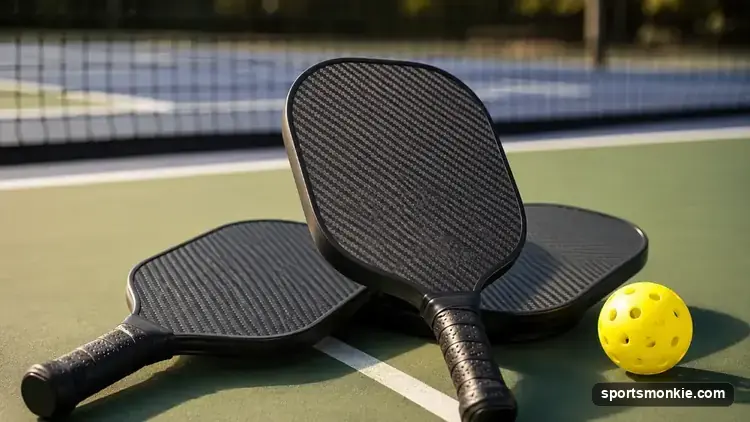
Carbon Fiber Pickleball Paddles: What Actually Matters
A carbon fiber pickleball paddle wins on spin and durability, but raw vs painted, T700 grades, and build method decide if it's worth the price.