
What Is a Yard Sale in Lacrosse? The Slang, Explained
On this page4
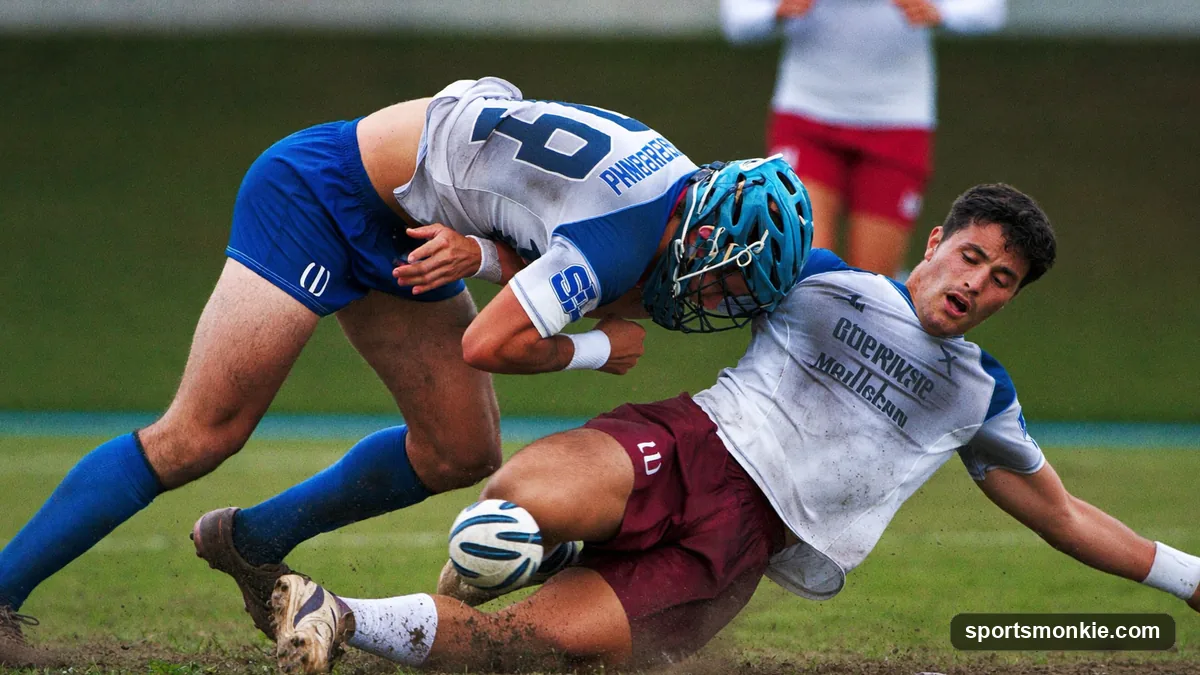
A “yard sale” in lacrosse is a hit so hard the player loses their equipment — usually the stick, sometimes the gloves or even the helmet — leaving gear strewn across the field like items laid out at a garage sale. It is slang, not a rulebook term. The image is the whole joke: after a huge check, the turf looks like someone set up a Saturday-morning yard sale where the player used to be standing.
Where the term comes from
The phrase is lifted straight from skiing and snowboarding. There, a “yard sale” is a spectacular wipeout that flings your skis, poles and goggles down the mountain — everything spread out as if it were for sale. Lacrosse players borrowed it for the same visual: a collision that scatters a player’s kit across the field. Like most of the sport’s vocabulary, it spread through sidelines and highlight clips rather than any official glossary.
What actually happens in a yard sale
A defender lands a big body check on a ball-carrier. The force jars the stick out of the player’s hands, and often a glove pops loose or the helmet shifts. For a second or two the player is standing there with nothing, gear scattered around them, out of the play until they scramble to recover it. That gap is the real cost — a player without a stick can’t catch, pass, or defend.
The scattered equipment is what earns the name. A crushing hit that leaves the player still holding their stick is just a big hit. The stick and gloves on the ground are what make it a yard sale.
Is it a penalty?
Not by default. This is the part people get wrong: whether the hit is legal has nothing to do with how much gear flew. It comes down to whether the check itself followed the rules.
| The check is legal if… | The check is a penalty if… |
|---|---|
| Delivered to a player with the ball (or loose ball nearby) | Player didn’t have the ball / was defenseless |
| From the front or side | From behind |
| Contact above the waist, below the neck | Hit to the head or neck |
| Shoulder or gloved-hands body check | Cross-check with the shaft (in field lacrosse) |
Knocking a ball-carrier’s stick loose with a clean, legal check is good defense — it’s supposed to happen. A slash or a cross-check that causes the same scatter is a foul, but because the check broke a rule, not because gear ended up on the ground.
Why it matters in the game
A yard sale is a momentum play. The ball-carrier is suddenly stickless and useless, so the defense often scoops the loose ball and pushes the other way while the player scrambles to recover their gear. In a scoring area, that lost second or two can turn straight into a goal against. That is why a legal, gear-scattering check draws the loudest sideline reaction — it is punishing and it can flip the possession in one hit.
Body checking like this is legal in men’s field lacrosse and even more common in the physical box game, but it is not part of the women’s field game, where stick and body contact are far more restricted. If you want the wider picture on contact, our explainer on whether lacrosse is a contact sport lays out what is allowed at each level, and for more of the sport’s vocabulary, the lacrosse slang terms glossary is the fun rabbit hole.
Frequently asked questions
Where does the term yard sale come from in lacrosse?+
It is borrowed from skiing and snowboarding, where a crash that scatters your skis, poles and goggles down the slope is called a yard sale — everything laid out like items for sale. Lacrosse adopted it for a hit that knocks a player's stick and gear loose across the turf. It is pure locker-room slang, not an official term.
Is a yard sale hit legal in lacrosse?+
It can be. Legality depends on whether the check followed the rules, not on how much gear flew. A clean, legal body check delivered to a player in possession, from the front or side and above the waist, is legal even if it knocks the stick loose. If it was late, from behind, or to the head, it is a penalty regardless.
What is the difference between a yard sale and a big hit?+
Every yard sale is a big hit, but not every big hit is a yard sale. The label is specifically about the aftermath — the player losing their stick or gear so it scatters on the field. A crushing check that leaves the player holding their stick is just a big hit; the scattered equipment is what earns the yard-sale name.
Do you get penalized for making a player drop their stick?+
No, not for that alone. Knocking the ball or stick loose with a legal check is a normal, encouraged part of defense. The penalty comes only if the check itself broke a rule — cross-check, a hit to the head or neck, a late hit, or a check on a player who did not have the ball or was defenseless.
Does the player have to get their stick back?+
Yes, quickly. A player who loses their stick is effectively out of the play until they recover it, since you cannot do much without it. Teammates often cover while the player scrambles back to grab the stick. Losing it in a scoring area can directly lead to a goal against, which is why a yard sale can swing a possession.
Is a yard sale the same as a hit in the NLL or box lacrosse?+
The slang travels across field and box lacrosse, but box play is more physical and cross-checking with the shaft is legal there, so heavy contact and dislodged sticks are more common indoors. The term still just describes gear scattering after a hit, whichever code you are watching.
Sources
Play & tools
Free browser games and tools — no account, no download.
- Play today's Sports Connections — Today's Sports Connections — daily hints, answers, and play the grid.
- Play Guess the NFL Player — A new mystery NFL player every day. Eight guesses, with a clue on each — plus free unlimited mode.
- Explore all our games →
Related guides

Lacrosse Slang Dictionary: Flow, Cheese, Twig and More
Lacrosse slang decoded: flow, cheese, twig, laxbro, muffin, sauce, celly and more. A full glossary of lacrosse lingo so you can follow the game and the culture.
What Does Bar Down Mean? The Perfect Shot Explained
Bar down means a shot that hits the underside of the crossbar and drops into the goal. Here's why it's the perfect shot, plus the rest of the slang.
Athletes Unlimited Lacrosse: The No-Teams Format Explained
Athletes Unlimited Lacrosse was a US pro women's league (2021–2024) where players earned individual points and top scorers redrafted teams each week.

The Behind-the-Back Lacrosse Shot: When and How to Use It
A behind-the-back lacrosse shot fires the ball around your body to fool the goalie. Learn when it works, why players use it, and how to practice it safely.

How to Shoot a Lacrosse Ball Faster: A Technique Guide
Shoot a lacrosse ball faster by generating torque with your hips and shoulders, driving the top hand and snapping the bottom. Here's the full technique.

Is Lacrosse Growing? What the Trends Actually Show
Yes — lacrosse has been among the fastest-growing US team sports for over a decade, is returning to the 2028 Olympics, and has expanding pro leagues.