
What Is a Two-Way Contract in the NBA?
On this page7
A two-way contract is a special NBA deal that lets a player split time between an NBA team and that team’s G League affiliate, without occupying one of the club’s standard 15-man roster spots. It gives teams a cheap, flexible way to develop young or fringe players while keeping them on call for the NBA, and it pays far less than a standard NBA contract.
The two-way contract has become one of the most important tools in modern roster building, yet its rules confuse a lot of fans. Here is exactly how it works under the NBA’s Collective Bargaining Agreement (CBA).
What “two-way” actually means
The name comes from the fact that the player can go both ways: up to the NBA and down to the G League, over the course of a season. Instead of being locked to one league, a two-way player is shared between the parent NBA club and its minor-league affiliate.
For the team, the appeal is roster flexibility. A club can keep prospects and depth pieces close at hand, developing them with real playing time in the G League, and call them up when injuries or matchups demand, all without spending a full standard roster spot or a large salary.
The key rules
The CBA sets clear limits on two-way contracts. The most important ones:
| Rule | Two-way contract |
|---|---|
| Two-way players allowed per team | Up to 3 |
| NBA games a player can be active | Capped at 50 in a season |
| Salary | Fixed at 50% of the rookie minimum |
| Contract length | Typically one or two seasons |
| Playoff eligibility | Not eligible unless converted to a standard deal |
| Counts against the 15-man roster? | No (separate designation) |
The 50-game active limit is the headline restriction: a two-way player can suit up for NBA games, but only up to that cap in a regular season. Beyond it, or for the playoffs, the team must convert the player to a standard contract to keep using them.
How much do two-way players earn?
Two-way salary is a fixed figure set by the CBA at 50% of the rookie minimum salary for that season. Every two-way player earns the same amount, and it rises modestly each year as the salary cap grows.
That number sits in a deliberate middle ground: far more than a typical G League salary, but well below even the standard NBA minimum. It is the price of the arrangement, more money and NBA exposure than a pure G League deal, without the security or size of a guaranteed NBA contract.
Who signs two-way deals?
Two-way contracts are overwhelmingly used for second-round draft picks, undrafted free agents and fringe professionals, exactly the players a team wants to develop without a big commitment. A strong two-way season can be a springboard: impress enough, and the club may promote you to a standard contract, sometimes mid-season.
Because they are aimed at the edges of an NBA roster, two-way deals live in the same world as other short-term and specialised contracts. If you want the wider picture of how NBA rosters and money are managed, our explainers on the 10-day contract and Bird rights cover two more pieces of the puzzle, while a glance at the league’s highest earners shows just how far the pay scale stretches above a two-way deal.
A short history of the two-way deal
Two-way contracts are a relatively recent invention. They were introduced in the 2017 Collective Bargaining Agreement as a way to strengthen the link between NBA clubs and the G League, giving teams a formal mechanism to develop players who were not quite ready for a standard roster spot. Initially teams could carry two such players, and the arrangement was governed by a limit on how many days a player could spend with the NBA club.
The 2023 CBA expanded and simplified the system. Teams can now carry up to three two-way players, and the old day-counting rules were replaced by a cleaner cap of 50 active NBA games per season. Those changes made two-way deals a bigger and more strategic part of roster construction, and today almost every team fills all three of its two-way slots, treating them as a crucial development and depth pipeline rather than an afterthought.
Two-way vs standard contract
The simplest way to understand a two-way deal is to contrast it with a standard NBA contract:
- Standard contract: occupies a spot on the 15-man roster, no G League-shuttling restriction, full NBA salary, and full playoff eligibility.
- Two-way contract: separate designation, movement between NBA and G League, capped NBA game participation, fixed reduced salary, and no playoff eligibility unless converted.
This is why a breakout two-way player becoming “converted” to a standard deal is treated as a real milestone: it means the player has earned a permanent place, playoff availability and full pay.
The bottom line
A two-way contract is the NBA’s development bridge: it lets a team keep a promising or useful player between the NBA and the G League on a fixed, modest salary, with a cap on NBA games and no playoff role until they are promoted. For young players trying to break in, it is often the crucial first foothold, and for teams, it is one of the smartest low-cost tools in the CBA. For any specific player’s current contract type, always check an up-to-date tracker, since deals change throughout the season.
Frequently asked questions
How much is a NBA 2-Way contract worth?+
A two-way salary is a fixed amount set by the Collective Bargaining Agreement at 50% of the rookie minimum salary for that season, the same figure for every two-way player regardless of experience. That is a fraction of a standard NBA minimum salary, though it is still well above a normal G League salary, which is the trade-off: more money and NBA exposure than a pure G League deal, but far less than a guaranteed NBA contract. The exact dollar figure rises slightly each season as the salary cap grows.
What's a two-way contract for the NBA?+
It is a contract that ties a player to both an NBA team and that team's G League affiliate, letting them play in either league during the season. It gives clubs a flexible, low-cost way to develop prospects and keep depth on call without occupying one of their standard roster spots. The player gets NBA-level pay and the chance to earn call-ups, while the team retains their rights and can promote them to a standard deal if they impress.
Is Bronny James on a two-way contract?+
No. Bronny James was drafted by the Los Angeles Lakers in 2024 and signed a standard NBA contract, not a two-way deal, though he has spent development time with the Lakers' G League affiliate. Standard contracts and two-way contracts are different mechanisms; two-way deals are typically used for second-round picks and undrafted players, whereas Bronny signed a multi-year standard rookie contract. For the current status of any individual player, an up-to-date contracts tracker is the best source.
What is the 2-Way contract NBA draft connection?+
Two-way contracts are closely tied to the later stages of the draft and its aftermath. Teams frequently sign their second-round picks and undrafted free agents to two-way deals because it lets them stash and develop those players in the G League cheaply while keeping standard roster spots for established talent. So while you cannot be 'drafted to a two-way contract' directly, the two-way deal is the most common landing spot for players picked late or not at all.
Sources
Play & tools
Free browser games and tools — no account, no download.
- Play 82-0 — Draft five, one per position, and see if your lineup can go a flawless NBA season.
- Play Era Ball — Draft an all-time NBA roster from a single era, then simulate a season and chase a perfect run.
- Play 32-0 — Draft five college basketball legends, one per position, and chase a perfect 32-0 national title.
- Explore all our games →
- Get the printable bracket — Download and print a blank tournament bracket to fill out by hand.
- Open the TS% calculator — Calculate TS% from points, field goal attempts and free throw attempts — scoring efficiency in one number.
- Explore all our free sports tools →
Related basketball guides
View all →
What Is a 10-Day Contract in the NBA?
A 10-day contract is a short NBA deal covering up to 10 days or three games. How the pay works, the two-contract limit and why teams use them, explained.

NBA Players Fear Wearable Tech Data Could Be Used Against Them in Contract Talks
Adam Silver says the NBA and the Players Association have no agreement on wearable tech in games, because players fear their own data could be used in bargaining.
Bird Rights in the NBA, Explained
Bird rights let an NBA team re-sign its own free agent even while over the salary cap. How the Larry Bird exception works, the 3-year rule and trades.
Zaragoza Says Mara Is Still Under Contract, the Thunder Say He Needs No Clearance
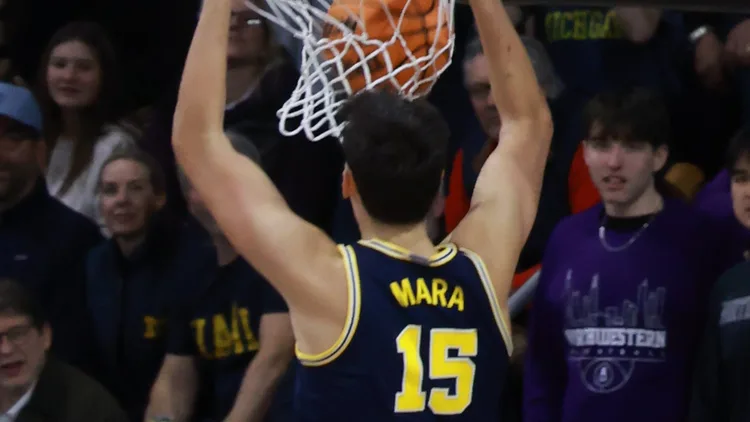
Basket Zaragoza says Aday Mara cannot play in the NBA without its clearance. Oklahoma City says his three NCAA seasons mean none is required.
Silver's Smart Ball Puts a One-Gram Chip Inside the NBA's Ball, and Fans Smell a Magnet
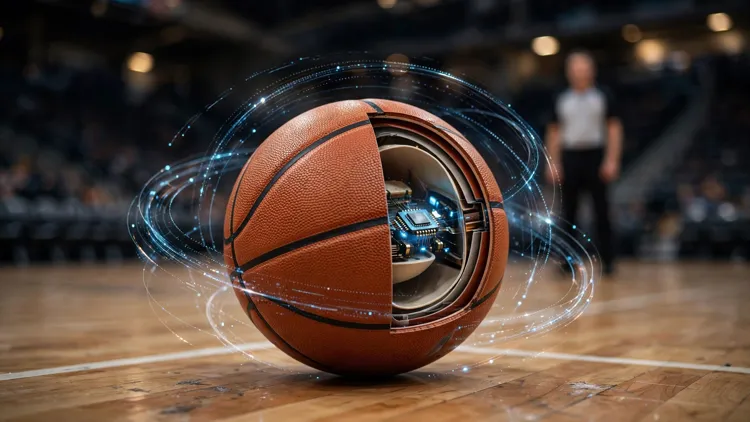
Adam Silver says the NBA is testing a Wilson smart ball with a one-gram chip that tracks spin and trajectory, could help officials as soon as next year, and has fans joking about magnet balls.
Scottie Barnes Gets First Push-Off Call as NBA's New Emphasis Debuts in Preseason Opener
Scottie Barnes was whistled for an off-arm push-off inside two minutes of the Raptors' preseason opener, the first call under the NBA's new point of emphasis.