
JJ Redick Calls Out NBA Flopping Calls After Lakers' Collapse Against Warriors
On this page7
JJ Redick waited until the collapse was complete before turning on the whistle. The Los Angeles Lakers had led the Golden State Warriors by 25 points on Friday night and lost 112-95 in their NBA Cup opener, and when Redick reached the postgame microphone, his complaint was not about one call. It was about a rule he says nobody is calling the same way twice.
What did Redick say?
He said the flopping rule has a consistency problem, and he said it plainly. “I tend to agree with what Chris said the other day,” Redick said, backing Minnesota coach Chris Finch, who had raised the same issue earlier in the week. “We were all in Chicago and we all spoke about this. We all recognize that the fans want the offensive players to stop flopping. But all of our flopping fouls have been defensively. The reality for the officials is each crew is so different and what they interpret is so different. I think the consistency is the issue.”
That last line is the one that will follow the Lakers. Redick did not accuse any official of bias, and he did not name one. He said the standard moves from crew to crew, and that a team cannot adjust to a rule that changes shape every night. It was a coach’s complaint, not a conspiracy claim, and it landed because the Lakers keep collecting the same kind of whistle.
What was the Podziemski play?
The play Redick kept coming back to, a moment in which Warriors guard Brandin Podziemski threw himself backward and escaped any flopping penalty. Redick said the explanation he received from the officials was that there had been contact on the play, and he treated that explanation as the whole problem.
“The explanation I got for the Podziemski play was that there was contact,” Redick said. “But if you look at our flopping fouls that we’ve been called for defensively, there’s been contact. Whether or not there’s contact is irrelevant. We’re looking for something theatrical and extra. But that’s not a foul, right? Throwing yourself back, I would assume that would be, I don’t know, kind of the definition of flopping.”
The logic is hard to dodge once it is laid out that way. If contact excuses a theatrical fall at one end, it should excuse one at the other. Redick’s point is that it does not, and that the difference is not written anywhere in the rule. It lives in each crew’s judgment, which is why he keeps returning to the word consistency rather than any single official’s name.
What happened to Jarred Vanderbilt?
He became the latest Lakers player to be whistled for a flop that looked, on replay, like an accident. Sports Illustrated reports that Al Horford drove on Vanderbilt and unintentionally stepped on his foot, which caused Vanderbilt to fall on his back. Horford missed the shot, the rebound was secured, and referee Tony Brothers then called a technical foul on Vanderbilt for flopping.
HITC adds the detail that makes the call sting: Vanderbilt did not dive, he stepped onto Horford’s foot and lost his balance. That is the kind of play the flopping rule was not written for, and it is the kind of play that has now happened to the Lakers repeatedly in the first weeks of the season. Redick’s frustration on Friday was not really about Vanderbilt alone. It was about a pattern in which his players keep getting punished for falling down, while opponents throwing themselves backward do not.
Why does the Williams fine keep coming up?
Because it is the cleanest comparison Redick has, and he used it twice. Lakers forward Ziaire Williams was fined $2,000 for flopping in Sunday’s 132-123 comeback win over Utah, when Keyonte George pushed off with his off hand and Williams was judged to have exaggerated the contact, drawing an offensive foul on George. Williams was then called for another flopping technical against Portland earlier in the week, before the Vanderbilt call on Friday.
Redick pointed back to the Utah play on Friday night to show the contradiction. “Again, the explanation I got was that there was contact,” he said. “But again, there’s contact on a push-off when Ziaire moves his hands back because they called it an offensive foul. So there was contact. But I guess the consistency, we’re still searching for it.” The Williams case is covered in the Lakers flopping fine story, and it is the anchor for everything Redick said on Friday: same team, same rule, same week, opposite outcomes depending on which way the contact ran. The flopping discourse has followed the Lakers all week: Doncic answered a “flopper” jab from Jaxson Hayes with 52 points against Utah, covered in the Doncic Hayes flopper story.
Is Redick just deflecting from a blown lead?
No, and he was careful not to. Redick acknowledged the Lakers’ own failings before he got to the officials, noting a couple of illegal screens and saying he would save his broader rant on the other people involved in the game for another time. EssentiallySports reports he also said the Lakers lacked problem solving and connectivity during the collapse, and he gave Golden State credit for hitting shots. The Lakers shot 40.2 percent from the field, committed 22 turnovers that Golden State turned into 27 points, and never recovered after the Warriors won the second quarter 38-15 to erase the lead by halftime.
That context is what makes the complaint credible rather than convenient. The loss itself was about the collapse, and Redick said so. The officiating complaint was separate, and it was about a trend across several games, not a single whistle in this one. The game that started the week for the Lakers is covered in the Curry ankle-breaker story, where the 25-point comeback, not the officiating, was the story. Friday’s story is what happened after that comeback, when the coach decided the rulebook needed as much attention as the scoreboard.
What does Finch’s backing change?
It turns a Lakers complaint into a coaches’ complaint, and that is the part the league will notice. Redick said the coaches discussed flopping together in Chicago, and that they agree fans want offensive players to stop flopping. When two head coaches in different conferences make the same point in the same week, it stops being a team grievance and starts being a rule problem. The NBA’s flopping crackdown is still young, and its early weeks have produced exactly the confusion Redick described: defensive players punished, offensive theatrics excused, and no clear line between contact and exaggeration.
The other coach who has already been through this in public is Steve Kerr, whose own row over a waved-off Curry three against Memphis is covered in the Kerr flopping row story. Kerr’s complaint was about a different call, but the shape is the same: a coach who believes the officials are deciding games on interpretations that shift from night to night. Redick has now joined that conversation with a specific demand, even if he did not phrase it as one: a standard every crew applies the same way.
What happens next?
Sunday against Toronto, for a start, where the Lakers will try to avoid a fourth flopping technical in five games. After that, the markers are public. Any fine for Redick over his comments would confirm the league heard him and did not like the tone. Any clarification of the rule would confirm it heard him and agreed with the substance. And any further Lakers flopping call will be read through the lens Redick created on Friday night, which is precisely why coaches make these speeches: to change how the next whistle sounds.
Redick left one threat in reserve. He said he would save his rant on the other people involved in the game for another time, which means Friday’s version was the restrained one. If the calls keep going the way they have gone this week, the unrestrained version is coming, and the league knows it. The flopping rule was introduced to stop players from acting. On Friday night, it produced the most honest acting review of the season from a coach who has had enough of the inconsistency.
Frequently asked questions
What did JJ Redick actually say about the flopping calls?+
He said the problem is consistency, not any single call. Redick said he tends to agree with Minnesota coach Chris Finch, who raised the same issue earlier in the week, and noted that the Lakers' flopping fouls have all come on the defensive end. He added that each officiating crew is different in what it interprets, and summed it up by saying the consistency is something the Lakers are still searching for.
What was the Podziemski play Redick pointed to?+
A play in which Warriors guard Brandin Podziemski threw himself backward and was not penalised for flopping. Redick said the explanation he received was that there had been contact on the play. He rejected that reasoning, arguing that the Lakers' defensive flopping fouls also involved contact, and that throwing yourself backward is, in his words, kind of the definition of flopping.
What happened with Jarred Vanderbilt?+
Vanderbilt was called for a flopping technical during the Warriors game after Al Horford drove on him and unintentionally stepped on his foot, causing Vanderbilt to fall on his back. Sports Illustrated reports that referee Tony Brothers called the technical after the rebound was secured, even though Horford missed the shot attempt. It was the Lakers' latest flopping technical in a run that has become an early-season trend.
Why did Redick bring up Ziaire Williams?+
Because Williams is the clearest example of the double standard Redick sees. Williams was fined $2,000 for flopping in Sunday's win over Utah, when Keyonte George pushed off and Williams was judged to have exaggerated the contact, and he was called for another flopping technical against Portland earlier in the week. Redick pointed to the Utah play again on Friday, noting that George's push-off involved contact too, yet it drew an offensive foul rather than a flopping call.
Did Redick blame the officials for the loss?+
No, and that distinction matters. Redick acknowledged the Lakers' own failings, including a couple of illegal screens and 22 turnovers, and said the team lacked problem solving and connectivity during the collapse. He also gave Golden State credit for hitting shots. His complaint was narrower: that the flopping rule is being applied differently depending on which crew is working and which end of the floor the play happens on.
What is the NBA's flopping rule?+
It penalises players who exaggerate contact to deceive officials, with an in-game technical foul and postgame fines on league review. The rule is meant to target theatrical embellishment rather than incidental contact, which is exactly the line Redick says officials are drawing inconsistently. The Lakers have now been hit with flopping technicals in several games early this season, including the Williams fine against Utah and the Vanderbilt call against Golden State.
Could Redick be fined for criticising the officials?+
It is possible, though nothing had been announced as of Saturday. The NBA routinely fines coaches and players for public criticism of officiating, and Redick's comments were pointed even by that standard, since he questioned the competence of the rule's application rather than one call. Any league response would be the next marker in this story, along with the Lakers' next game, against Toronto on Sunday.
What happens next for the Lakers?+
They face Toronto on Sunday, looking to avoid a fourth flopping technical in five games. Beyond that, the question is whether the league clarifies the rule or whether another coach joins Redick and Finch in public. Redick saved his broader rant on the officials for another time, saying he would keep it for later, which leaves the door open for a second round if the calls keep going against Los Angeles.
Sources
- Sports Illustrated: Lakers' JJ Redick points out major problem with NBA's flopping rule (Redick's quotes, the Vanderbilt technical from Tony Brothers, the Williams $2,000 fine, the Sunday game against Toronto)
- Pro Football Network: JJ Redick calls out NBA referees' questionable flopping calls (the Podziemski explanation, the Williams-George play, the illegal screens, the 40.2 percent shooting)
- HITC: JJ Redick calls out a flaw in the NBA's new flopping rule (the Finch backing, the Chicago coaches meeting, the Vanderbilt foot-step detail)
- EssentiallySports: JJ Redick makes feelings clear on NBA referees' controversial decisions (Redick's problem-solving and connectivity remarks, credit to Golden State, the 22 turnovers)
Play & tools
Free browser games and tools — no account, no download.
- Play 82-0 — Draft five, one per position, and see if your lineup can go a flawless NBA season.
- Play Era Ball — Draft an all-time NBA roster from a single era, then simulate a season and chase a perfect run.
- Play 32-0 — Draft five college basketball legends, one per position, and chase a perfect 32-0 national title.
- Explore all our games →
- Get the printable bracket — Download and print a blank tournament bracket to fill out by hand.
- Open the TS% calculator — Calculate TS% from points, field goal attempts and free throw attempts — scoring efficiency in one number.
- Explore all our free sports tools →
Related basketball guides
View all →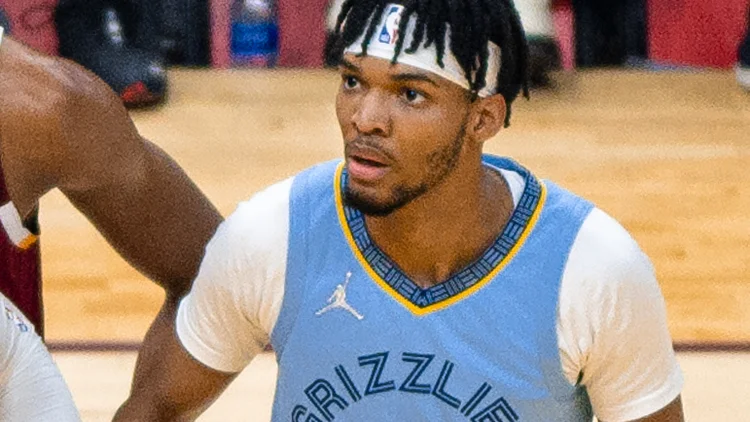
Lakers' Ziaire Williams Fined $2,000 for Flopping in Jazz Win
The NBA fined Lakers forward Ziaire Williams $2,000 for exaggerating contact from Keyonte George late in Sunday's 132-123 comeback win over Utah, the league's latest flopping penalty in its first week.
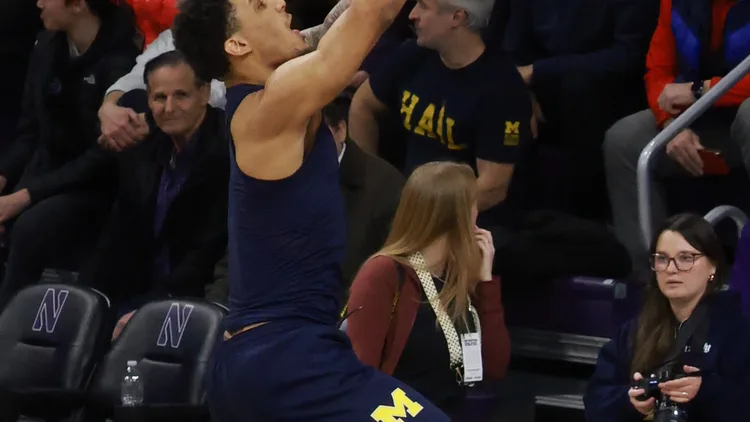
Warriors Rookie Lendeborg Was 'Spooked' to Guard Doncic, Then Doncic Sat Out
Warriors rookie Yaxel Lendeborg was told he would guard Luka Doncic, admitted he was spooked, then Doncic rested and he guarded Walker Kessler instead.
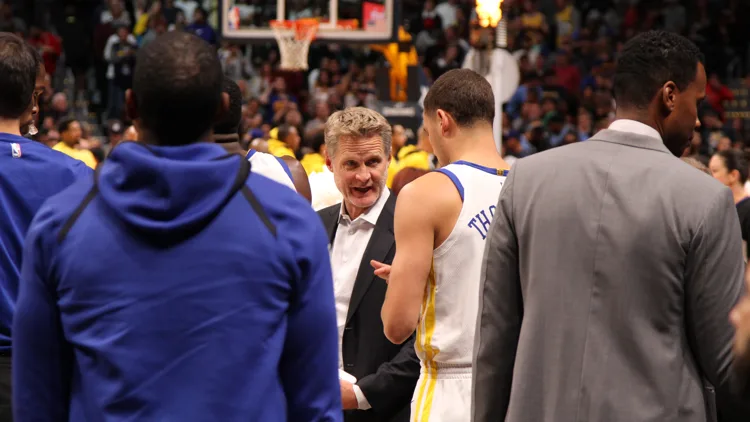
Kerr Blasts 'Flopping' After Waved-Off Curry Three Seals Warriors' Collapse
Steve Kerr accused the Grizzlies of flopping and called the illegal-screen call on Draymond Green shocking after Curry's late three was waved off in a 111-108 loss.
Steve Kerr's Lookalike Is Back: Steve Gillis Stops the Warriors Coach Cold in Las Vegas
Steve Kerr froze for five seconds when his lookalike Steve Gillis took a seat behind the Warriors bench in Las Vegas. The Las Vegas teacher first went viral in 2024.
Redick Says Bronny James Has Not Played Well, and Points at the Group Around Him
JJ Redick gave Bronny James an honest preseason verdict, then blamed the lineups around him. Fans heard a coach throwing the bench under the bus.
Longest Winning Streak in NBA History
The longest winning streak in NBA history is the 1971-72 Lakers' 33 straight. The full list, plus how single-season streaks differ from cross-season runs.