
NBA Players Fear Wearable Tech Data Could Be Used Against Them in Contract Talks
On this page5
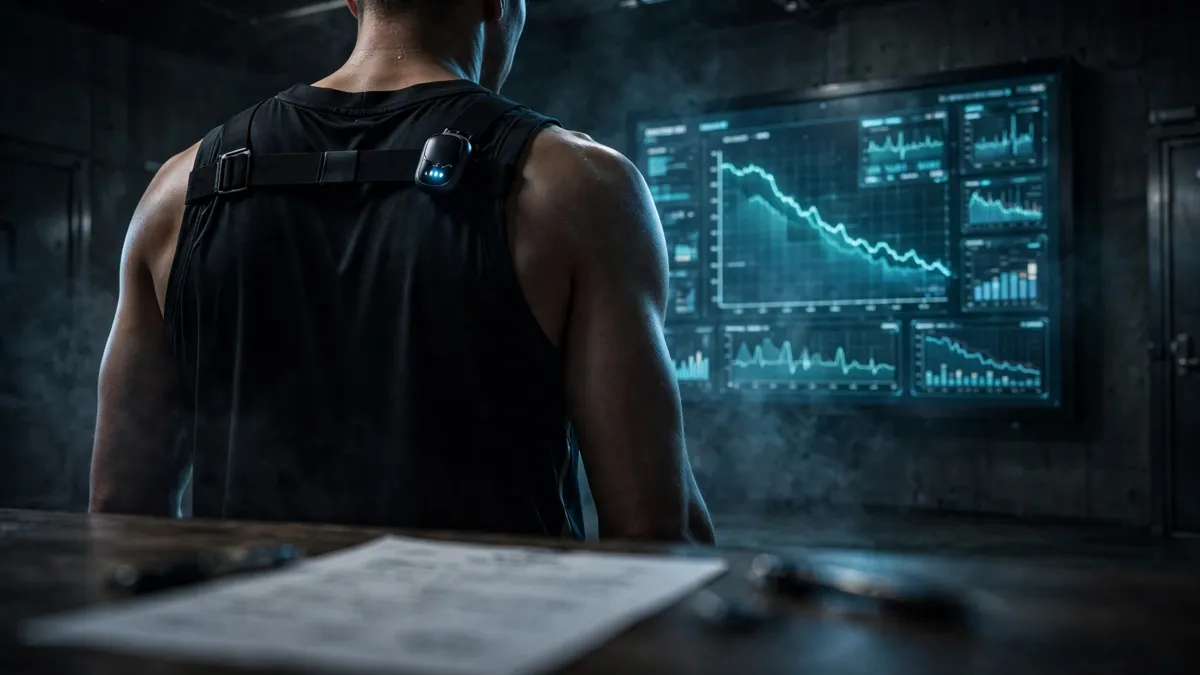
NBA players wear a sensor almost everywhere. The one place they will not wear it is the place the league wants it most: in a game. Commissioner Adam Silver told CNBC in Macao, ahead of Game 2 of the NBA China Games, that the league and the Players Association have not agreed on in-game wearables, because players fear their own performance data could be used against them when contracts are negotiated, Sportskeeda and Fadeaway World report.
What exactly did Silver say in Macao?
That the negotiation is open and the obstacle is trust in how the data would be used. Silver said wearable use in games has been an ongoing discussion with the Players Association, that no agreement has been reached, and that there is real sensitivity, particularly from the union, about how the information might be used, Fadeaway World reports. He did not dismiss the concern. He summarised it in the players’ own terms: a team that could see a player slowing down could use that in bargaining, and he said he understood that worry.
The setting matters. Silver was in Macao for the China Games, the same trip on which Naji Marshall broke a rim and a chair at the Mavericks’ first practice, selling the league’s most technology-forward version of itself to its biggest international market. The wearable row is the domestic argument running underneath that tour.
Why do players fear their own data?
Because a number is harder to negotiate against than an opinion. A front office can already argue that a player looks slower; a wearable file turns that impression into a measurement, recorded during games, owned by the league, and available at exactly the moment a contract is priced. Fadeaway World’s summary of the concern puts the stakes plainly: even a small measured decline could be used as leverage, and the difference it makes can run to millions of dollars across a deal.
That is the same anxiety that sits underneath every modern extension standoff, including Karl-Anthony Towns telling the Knicks his extension talks did not look good: players and teams already argue about future value from film and counting stats. Wearables would add a private, physical dataset to that argument, one the player cannot see being collected any more than he can control who reads it.
What is the 22-hour oddity Silver pointed to?
That the ban covers the smallest part of a player’s day. Silver noted that players already have a device on them in warm-ups, in daily life and to monitor sleep, and put it at roughly 22 hours a day, Sportskeeda reports. The only time the device comes off is during the game itself, which, in his framing, makes little sense for a league trying to understand performance and officiating at the highest level.
The union’s answer is built into that same fact. Warm-up and sleep data belongs, in practice, to the player’s own routine. Game data would be produced in the employer’s arena, in the employer’s competition, and the fight is over whether it becomes the employer’s evidence. A player chasing a roster spot on an Exhibit 10 deal, playing 43 preseason minutes to be noticed, and a star protecting a maximum contract, have opposite reasons to care about the same strap, and the union has to bargain for both.
What does the league want the data for?
Officiating is the use Silver’s wider technology push keeps returning to. Fadeaway World reports he has discussed wearables alongside AI support for officials, with technology taking objective calls and humans keeping the subjective contact judgments that wearables might one day help assess. A sensor that registers contact could, in theory, support a referee in the way replay now supports a boundary call.
The problem for the players is scope. A device justified by officiating still records speed, load and decline, and nothing in the current discussion limits it to whistle support. The neighbouring league shows where an agreement can land: Sports Business Journal reports the G League’s collective bargaining deal allows players to be required to use approved wearables, in sharp contrast to the NBA agreement, which prohibits game use and lets players decline even practice requests. The NBA’s own committee structure for validating devices exists; the missing piece is consent for games.
What happens next in the wearable row?
An agreement about use, or no devices, on Silver’s own terms. He said the sides have to settle how the information may be used, and predicted they would work something out, Sportskeeda reports. The shape of any deal is easy to sketch and hard to sign: the league gets its officiating and performance data, the players get a firewall between that data and the bargaining table, and both sides argue about where the wall sits.
Until then, the most measured league in the world keeps its biggest games unmeasured. The preseason continues this week with storylines the sensors cannot capture anyway, from Joel Embiid’s fall into Jaylen Brown on the 76ers’ lineup debut night to the China Games themselves, and the strap stays where the players have kept it: on for 22 hours, off for the two that pay for everything else.
Frequently asked questions
What has Adam Silver said about wearable tech in NBA games?+
That there is no deal. Silver told CNBC in Macao that wearable use is an ongoing negotiation with the Players Association, that no agreement exists for games, and that the sensitivity is about how the data might be used, Sportskeeda and Fadeaway World report. He said he expects the sides to work something out.
Why are NBA players against wearing sensors in games?+
Because of who could use the numbers, and when. Silver summarised the union's fear himself: if the data showed a player slowing down, a team could use it in bargaining, Fadeaway World reports. A measurable decline, recorded by the league's own device, is harder to argue with than a scout's opinion.
Do NBA players already wear wearable devices?+
Yes, almost everywhere except games. Silver pointed out that players wear devices in warm-ups, in training and to monitor sleep, and put their wearable time at roughly 22 hours a day, Sportskeeda reports. Games are the one window in which the devices come off, which is the gap the league wants to close.
What does the NBA want wearable data for?+
Officiating is one stated use. Fadeaway World reports Silver has discussed wearables as part of a wider technology push that could help assess contact, alongside AI support for objective calls such as out-of-bounds and two-versus-three-point decisions. The league has not published a single agreed purpose, which is part of the union's problem.
Can teams already require players to wear devices in practice?+
Not freely. The current NBA collective bargaining framework prohibits wearable use in games and lets players decline team requests even for practice use, with a joint league and union wearables committee validating devices first, Sports Business Journal reports in its summary of the contrasting G League deal, whose players can be required to use approved wearables.
What happens next in the wearable dispute?+
More negotiation, on Silver's own account. He said the sides have to agree how the information may be used before anything is worn in a game, Sportskeeda reports. Until that agreement exists, the devices stay in warm-ups and the data argument stays theoretical, which is exactly where the players want it.
Sources
- Sportskeeda: NBA world reacts to players rejecting Adam Silver's proposal to put wearable tech in games (Silver's CNBC comments and fan reaction)
- Fadeaway World: Adam Silver — NBA players fear wearable tech could be misused and cost them millions (full CNBC remarks and officiating context)
- CNBC (YouTube): NBA Commissioner Adam Silver on the 2026 China Games, NBA Europe plans and prediction markets (the primary interview)
- Sports Business Journal: New NBA G League CBA could require athletes to use wearables (the contrasting G League provision and the NBA CBA prohibition)
Play & tools
Free browser games and tools — no account, no download.
- Play 82-0 — Draft five, one per position, and see if your lineup can go a flawless NBA season.
- Play Era Ball — Draft an all-time NBA roster from a single era, then simulate a season and chase a perfect run.
- Play 32-0 — Draft five college basketball legends, one per position, and chase a perfect 32-0 national title.
- Explore all our games →
- Get the printable bracket — Download and print a blank tournament bracket to fill out by hand.
- Open the TS% calculator — Calculate TS% from points, field goal attempts and free throw attempts — scoring efficiency in one number.
- Explore all our free sports tools →
Related basketball guides
View all →
Kyrie Irving Scores 17 in His First Game in 586 Days as Dallas Win in Macao
Kyrie Irving returned after 586 days out with a torn ACL, scoring 17 points in 22 minutes in Dallas's 132-115 preseason win over Houston in Macao.
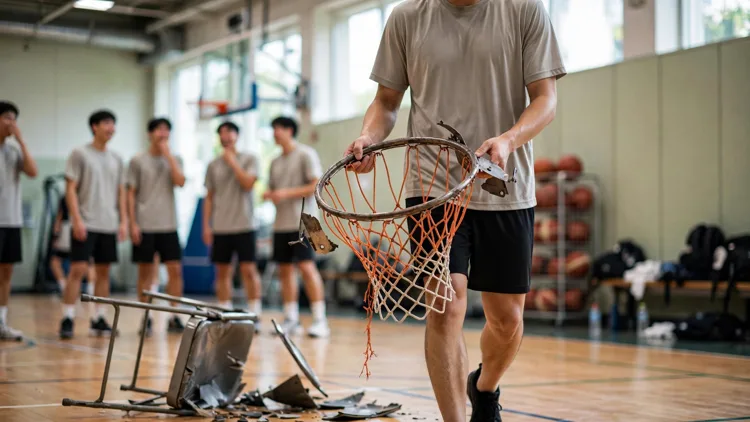
Naji Marshall Breaks a Rim and a Folding Chair at the Mavericks' First Practice in Macao
Naji Marshall brought down a rim, signed it, then broke a folding chair at Dallas's first Macao practice, as ESPN's China Games highlights recap confirms.
Karl-Anthony Towns Says Knicks Extension Talks 'Don't Look Good' After Title Win
Karl-Anthony Towns says he is nowhere close to a Knicks extension, with New York reportedly offering about $200m against a $276m maximum after a title season.
Scottie Barnes Gets First Push-Off Call as NBA's New Emphasis Debuts in Preseason Opener
Scottie Barnes was whistled for an off-arm push-off inside two minutes of the Raptors' preseason opener, the first call under the NBA's new point of emphasis.
Jaylen Brown Watches His Boston Return From the Locker Room as Fans Call Him Dramatic
Jaylen Brown's first game back at TD Garden as a 76er ended with him resting, off the bench and watching from the locker room while Celtics fans mocked the absence.
Caleb Wilson Drops a Defender and Scores 20 in the Second Half After One in the First
Bulls rookie Caleb Wilson had one point at half-time in Memphis, then 20 after it, a viral ankle-breaker three in the last minute and the final shot.