
Rugby Union vs Rugby League
On this page7
Rugby union and rugby league are two distinct codes of rugby, and the quickest way to tell them apart is team size: union fields 15 players per side, league fields 13. They also differ fundamentally in how possession works, union contests the ball after every tackle at the ruck, while league uses a structured play-the-ball and gives each team a set of six tackles to score.
The two games look similar to a newcomer, an oval ball, tackling, tries, but they play very differently once you know what to watch. Here is how the codes diverge, from players and possession to scoring and style.
A shared root, two separate games
Both codes grew from the same original sport before splitting more than a century ago over questions about professionalism and how the game should be played. From that split, the two evolved their own rules, cultures and heartlands. They are not variations of one game so much as two related sports, and a rule that is central to one is often absent from the other.
The headline differences
Before diving into detail, here is how the two codes compare on the points fans ask about most.
| Element | Rugby Union | Rugby League |
|---|---|---|
| Players per side | 15 | 13 |
| After a tackle | Contest at the ruck | Play-the-ball (no true contest) |
| Possession rule | Ball can be won back anytime | Six tackles, then hand over |
| Set pieces | Scrums and lineouts (contested) | Scrums (uncontested), no lineouts |
| Try value | 5 points | 4 points |
| Style | Contest for possession | Continuous, territory-based |
Reading down the table, almost every row points to the same theme: union is built around contesting the ball, while league is built around a structured cycle of possession. That single idea explains most of the differences between the codes.
Possession: the ruck vs the six-tackle set
This is the heart of the matter. In rugby union, when a player is tackled and goes to ground, the ball is contested at the ruck, players bind over the ball and fight to win it. Possession can change hands at any tackle, which is why the breakdown is such a crucial battleground, and why union has specialist players who hunt for turnovers.
In rugby league, the tackle does not become a genuine contest. The tackled player is allowed to get up and roll the ball back with his foot in a play-the-ball, keeping possession for his team. But there is a catch: a team gets only six tackles to make something happen. Use up all six without scoring, and possession hands over to the opposition. This “six-tackle set” gives league its distinctive rhythm, often with a kick on the last tackle to gain territory.
Set pieces: scrums and lineouts
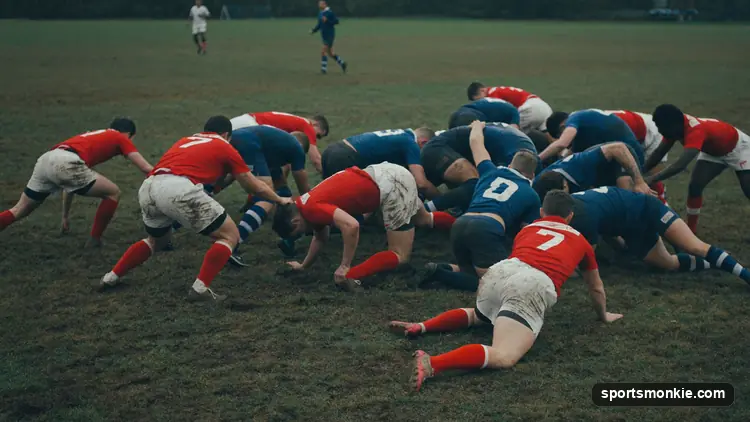
The codes handle restarts differently too. Rugby union features contested scrums and lineouts, both genuine competitions for the ball involving specialist forwards, the lineout in particular, where players are lifted to catch a throw, has no equivalent in league. These set pieces are a big part of union’s tactical texture.
Rugby league has scrums, but they are largely uncontested formalities used to restart play, and there are no lineouts at all. Fewer set-piece contests are one reason league flows more continuously.
Players, scoring and style
The difference in numbers, 15 versus 13, mostly comes from the forwards, giving league smaller packs suited to its faster game. Scoring differs slightly too: a try is worth five points in union and four in league, with different values for kicks after that, though both reward getting the ball over the line as the main event.
The net effect is two different spectacles. Union is a stop-start contest full of technical battles for possession, prizing set-piece skill and breakdown expertise. League is faster and more continuous, a relentless cycle of tackles and play-the-balls that rewards fitness, defensive organization and clever use of the six-tackle set.
Which to watch, and where each thrives
Neither code is “better”, they simply reward different tastes. If you love tactical contests, scrums and the drama of a turnover at the breakdown, union is your game. If you prefer speed, big collisions and a constant forward push, league delivers. Union has the broader global reach and the showpiece Rugby World Cup, while league has fervent strongholds in northern England and parts of Australia. Both codes rank among the country’s most followed sports, alongside football, cricket, tennis and golf, in our breakdown of the most popular sports in the United Kingdom.
If you are getting to grips with rugby generally, our guide to rugby positions explained walks through union’s 15 roles, and how long a rugby match lasts covers timing. For a common rule that trips up newcomers, see what a knock-on is in rugby, and for a cross-sport contrast, rugby versus American football shows how another collision sport handles possession.
The short version
Rugby union has 15 players and contests the ball at rucks, scrums and lineouts, making it a constant battle for possession. Rugby league has 13 players, uses a play-the-ball instead of contesting the tackle, and gives each team six tackles to score before handing over. Union is the possession-contest game; league is the faster, six-tackle, territory-based one.
Frequently asked questions
What is the main difference between rugby union and rugby league?+
The biggest differences are team size and how possession works. Rugby union has 15 players per side and contests the ball after every tackle, at rucks, plus scrums and lineouts, so possession can change hands constantly. Rugby league has 13 players and does not truly contest the tackle; instead the tackled player 'plays the ball' back with his foot, and each team gets a set of six tackles to score before possession switches. Union is a battle for the ball; league is a more structured, continuous game.
How many players are in rugby union vs rugby league?+
Rugby union has 15 players per team, while rugby league has 13. The two missing players in league come mainly from the forwards, league packs are smaller, which reflects its faster, more open style. Both games also allow substitutes from the bench, though the exact numbers and rules differ between the codes and competitions. The 15-versus-13 split is the quickest way to tell the two codes apart at a glance.
Is rugby union or rugby league more popular?+
It depends on where you are. Rugby union has the wider global footprint and the bigger international showpiece in the Rugby World Cup, and it is dominant in places like New Zealand, South Africa, France and much of the world. Rugby league has passionate strongholds, particularly in northern England and parts of Australia, where it is enormously popular. Globally, union has broader reach, but league is fiercely followed in its heartlands.
Which code is harder, union or league?+
Neither is objectively harder, they demand different things. Rugby league is relentless and physically intense, with fewer players covering the field and a constant cycle of tackles and play-the-balls that rewards fitness and defensive discipline. Rugby union adds layers of technical contest, scrums, lineouts and the breakdown, that reward specialist skills and set-piece expertise. Players who have crossed between the codes often say each took real adjustment, because the games test different abilities.
Sources
Play & tools
Free browser games and tools — no account, no download.
- Play today's Sports Connections — Today's Sports Connections — daily hints, answers, and play the grid.
- Play Guess the NFL Player — A new mystery NFL player every day. Eight guesses, with a clue on each — plus free unlimited mode.
- Explore all our games →
Related guides
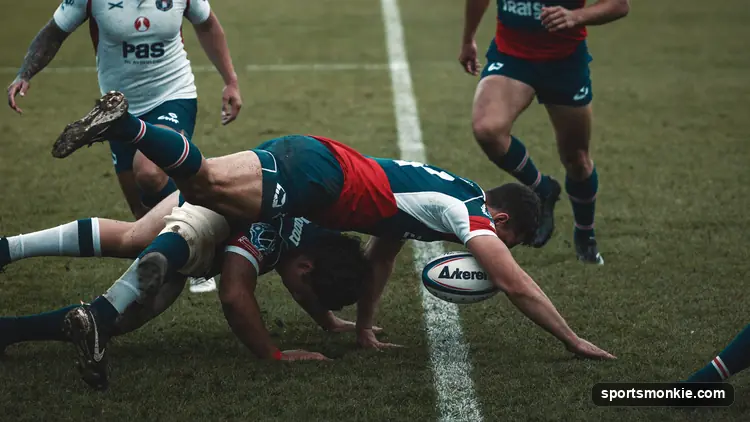
How Many Points Is a Try in Rugby?
A try in rugby union is worth 5 points, plus a 2-point conversion kick. All the ways to score in rugby, with a full points breakdown, explained clearly.
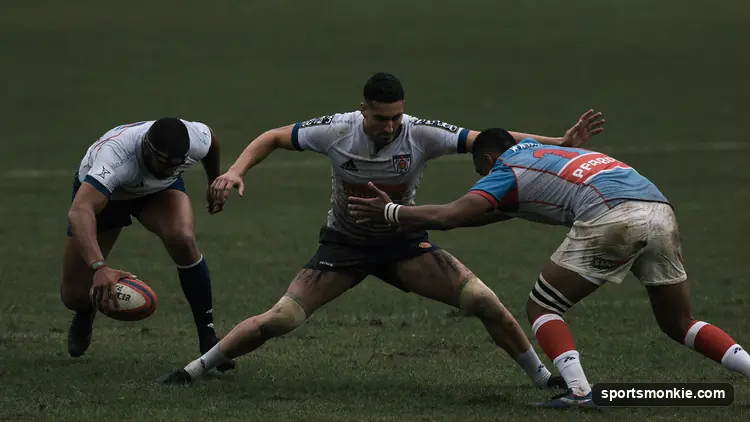
What Is a Scrum in Rugby?
A scrum restarts play after a minor infringement: 8 forwards from each team bind together and push for the ball. How it works and why, explained clearly.

How Long Is a Rugby Match? Real Length
A rugby match is 80 minutes of play, two 40-minute halves plus a halftime break. With stoppages the real elapsed time is usually about 100 minutes.
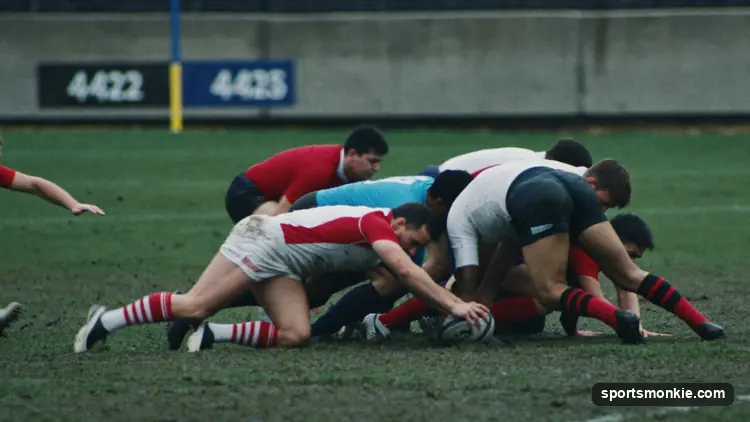
Rugby World Cup 2027: Australia, Format
The 2027 Rugby World Cup is in Australia and, for the first time, features 24 teams in a new format. Host, dates, past winners and qualification.
Rugby Positions Explained: All 15
A rugby union team has 15 players: 8 forwards and 7 backs. Every position's number, name and job, from prop to fullback, explained clearly.
Rugby Sevens Rules, Explained
Rugby sevens is seven a side on a full-size pitch, two seven-minute halves, under World Rugby's abbreviated laws. Scoring, scrums, cards and how it differs from 15s.