
Rugby Sevens Rules, Explained
On this page5
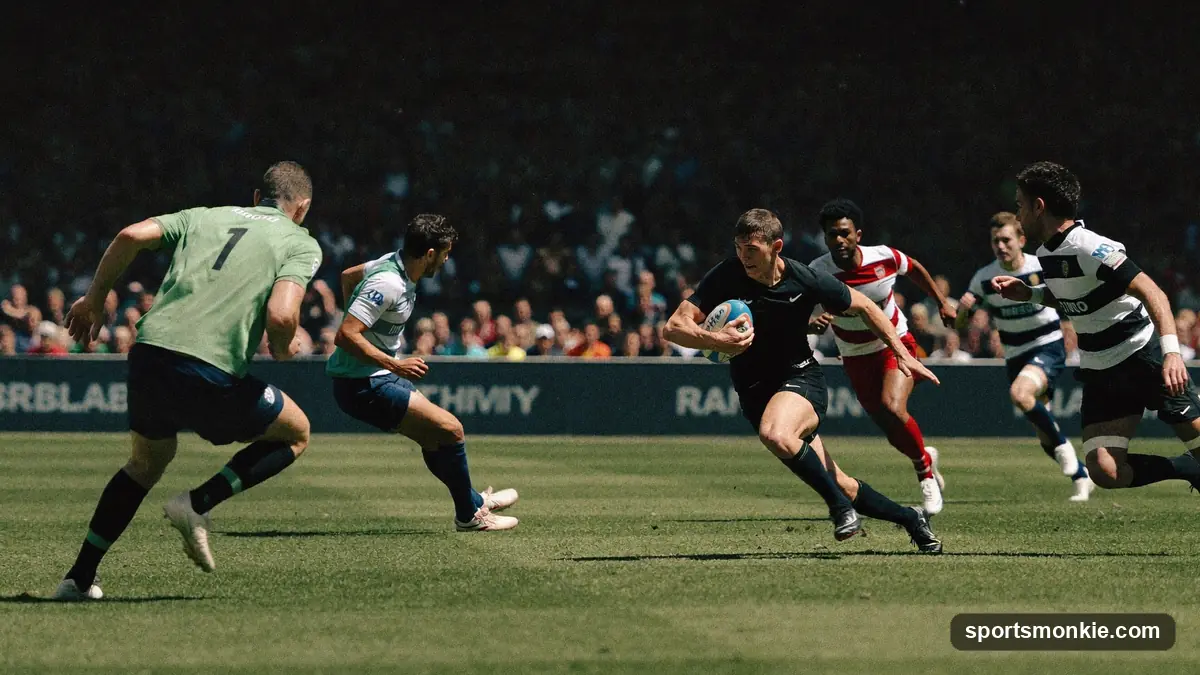
Rugby sevens is a condensed version of rugby union played with seven players a side instead of fifteen, on the same full-size pitch, under World Rugby’s abbreviated laws. Matches are two seven-minute halves, the scoring is the same as fifteen-a-side, and the extra space with fewer players makes it a fast, high-scoring, sprint-driven game.
Sevens has grown from an off-season novelty into an Olympic sport, and its short, explosive format makes it one of the easiest ways into rugby for new fans. Here is how the rules work and exactly where they differ from the traditional fifteen-a-side game.
Seven players, full-size pitch
The defining feature of sevens is the numbers. Each team has seven players on the field — typically three forwards and four backs — compared with fifteen in rugby union. Crucially, the pitch is the same size as a fifteen-a-side field. Squeezing fewer than half the players onto a full pitch creates enormous open space, which is why sevens is so fast and try-heavy: there are simply fewer defenders to beat.
Because space is everything, sevens rewards speed, fitness and one-on-one skill more than the set-piece power and forward battles that shape the fifteen-a-side game.
How it differs from fifteen-a-side rugby
Sevens keeps the spirit of rugby but trims and speeds up several laws.
| Element | Rugby sevens | Rugby fifteens |
|---|---|---|
| Players per side | 7 | 15 |
| Match length | Two 7-minute halves (finals often 2 x 10) | Two 40-minute halves |
| Scrum | 3 players | 8 players |
| Conversions | Must be drop-kicked, taken quickly | Usually placed kicks |
| Yellow card | 2 minutes in the sin bin | 10 minutes |
| Format | Weekend tournaments | Single matches |
The scoring itself is unchanged, which is the key point of continuity: a try is worth 5 points, a conversion 2, and a penalty or drop goal 3. Our explainer on how many points a try is worth in rugby applies directly to sevens.
The scrum and set pieces
Sevens still has scrums, lineouts, rucks and mauls, but they are scaled down. The scrum uses just three players per side instead of eight, so it is far less about raw shoving power and far more about getting the ball back into open play quickly. If you want the full mechanics of how a scrum is formed and contested, our guide to what a scrum is in rugby covers the set piece that sevens shrinks.
Lineouts are similarly reduced, often with just two or three players contesting the throw. The abbreviated set pieces reflect the format’s whole philosophy: minimise stoppages, maximise running.
Time, cards and tournament format
A standard sevens match is two seven-minute halves — just 14 minutes of play — with tournament finals sometimes extended to two ten-minute halves. That brevity lets organisers stage a whole tournament over a weekend, with each team playing several short, intense matches, unlike the single long fixtures of the fifteen-a-side game explained in our guide to how long a rugby match is.
Discipline is also condensed: a yellow card carries a two-minute sin-bin rather than ten, but with only seven players on the field, losing one for two minutes is a huge disadvantage.
Positions and style
With seven players, roles are less specialised than in fifteens, though sevens teams still blend forwards and backs. Understanding the fifteen-a-side positional framework in our rugby positions explained guide helps, because sevens draws players from the same pool but asks nearly all of them to run, pass, tackle and cover ground constantly.
Kicking remains a full part of the game — tactical kicks to find space and drop-kicked restarts and conversions are all legal and common — but sevens is defined by ball-in-hand attacking, breakaway tries and last-gasp defence across wide open turf.
The short version: rugby sevens is seven a side on a full-size pitch, two seven-minute halves, three-player scrums, quick drop-kicked conversions and two-minute sin bins, all under World Rugby’s abbreviated laws. Scoring matches fifteen-a-side (a try is 5 points), but the extra space makes it a faster, higher-scoring, Olympic-level sprint of a game.
Frequently asked questions
Why is rugby sevens only 14 minutes long?+
A standard sevens match is two seven-minute halves, totalling 14 minutes, because the game is designed to be short, fast and played in a tournament format. With only seven players covering a full-size pitch, the pace is exhausting, so short halves keep the intensity high. It also lets organisers run many matches across a single weekend. Tournament finals are often extended to two ten-minute halves for the biggest occasions.
Are you allowed to kick in rugby sevens?+
Yes. Kicking is fully allowed in sevens, just as in fifteen-a-side rugby. Players use tactical kicks to gain territory or chase into space, and all conversions and restarts are taken as drop kicks. One notable difference is that conversions in sevens must be drop-kicked and taken quickly (within a set time), rather than the placed kicks common in the fifteen-a-side game, which speeds the match up.
Do rugby sevens players get paid?+
Yes, elite sevens is professional. Players contracted to national sevens programmes and those competing on the World Rugby Sevens Series are paid athletes, and the sport's Olympic status since 2016 has increased funding and full-time contracts in many countries. Pay varies widely by nation and programme, and it is generally lower than the top of fifteen-a-side club rugby, but sevens is a professional discipline in its own right.
How does scoring work in rugby sevens?+
Scoring is identical to fifteen-a-side rugby: a try is worth 5 points, a conversion 2, and a penalty kick or drop goal 3. Because sevens has so few defenders on a full-size pitch, tries are frequent and matches are high-scoring. The main scoring quirk is procedural rather than numerical — conversions must be drop-kicked and taken quickly, which puts a premium on accurate kicking under time pressure.
Sources
Play & tools
Free browser games and tools — no account, no download.
- Play today's Sports Connections — Today's Sports Connections — daily hints, answers, and play the grid.
- Play Guess the NFL Player — A new mystery NFL player every day. Eight guesses, with a clue on each — plus free unlimited mode.
- Explore all our games →
Related guides
How Many Points Is a Try in Rugby?
A try in rugby union is worth 5 points, plus a 2-point conversion kick. All the ways to score in rugby, with a full points breakdown, explained clearly.
Rugby Union vs Rugby League
Rugby union has 15 players and contests possession at rucks; rugby league has 13 and uses a six-tackle set. The key differences between the two codes.
What Is a Knock-On in Rugby? Rule Explained
A knock-on in rugby is when a player loses the ball forward off the hand or arm. What counts, the difference from a forward pass, and the sanction.
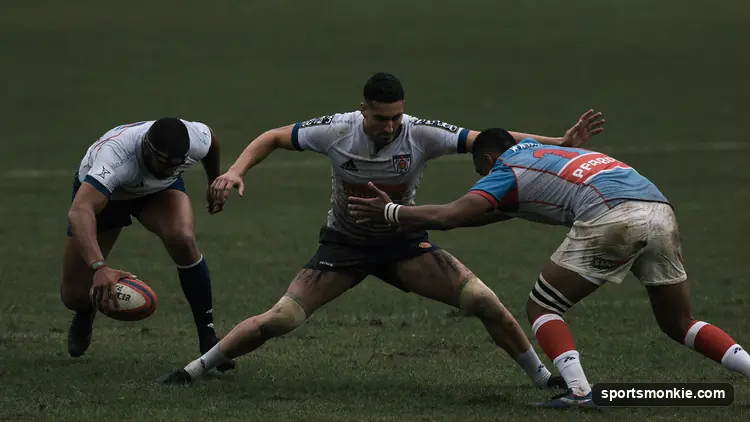
What Is a Scrum in Rugby?
A scrum restarts play after a minor infringement: 8 forwards from each team bind together and push for the ball. How it works and why, explained clearly.

How Long Is a Rugby Match? Real Length
A rugby match is 80 minutes of play, two 40-minute halves plus a halftime break. With stoppages the real elapsed time is usually about 100 minutes.
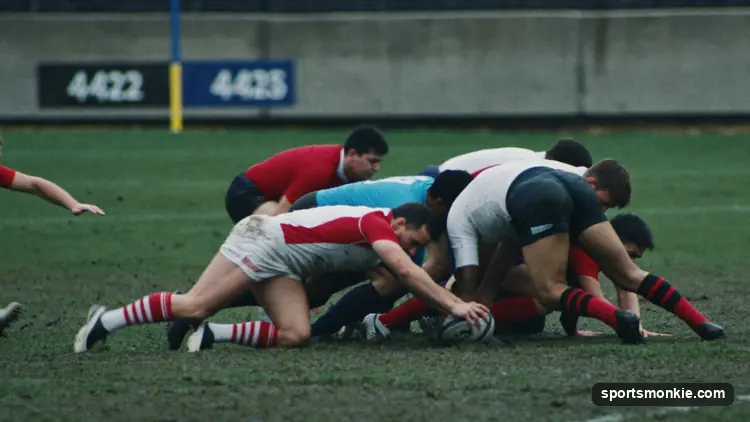
Rugby World Cup 2027: Australia, Format
The 2027 Rugby World Cup is in Australia and, for the first time, features 24 teams in a new format. Host, dates, past winners and qualification.