
8 Best Post Run Stretches to Recover Faster (Hold Times Included)
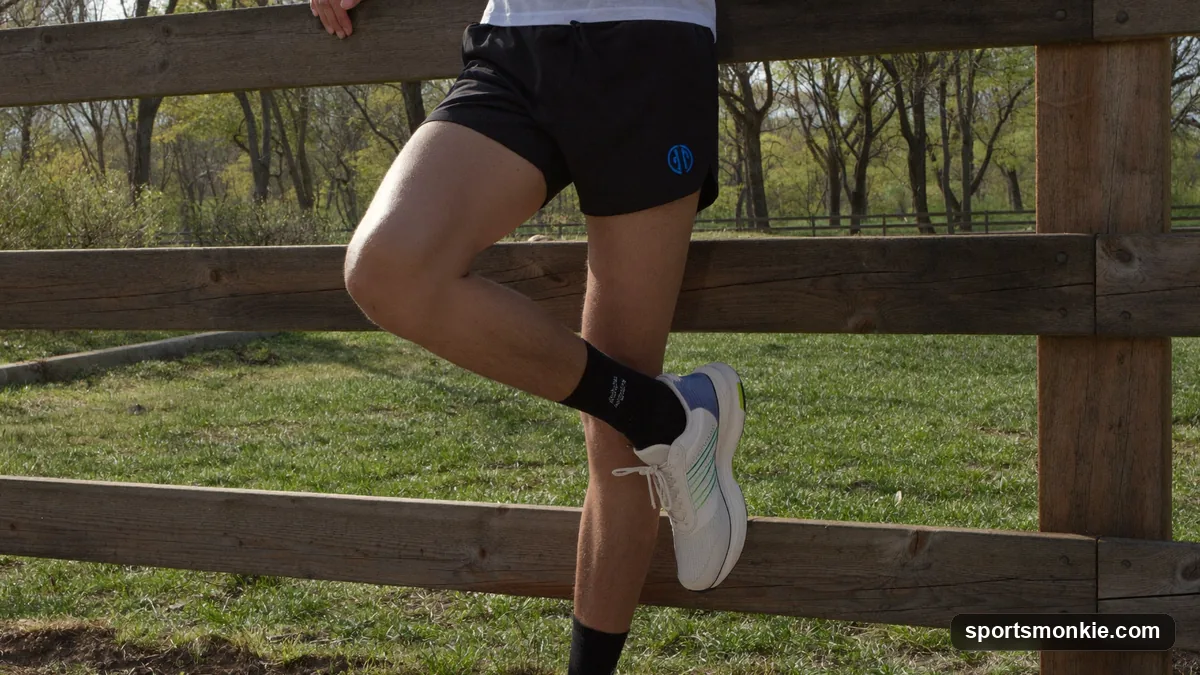
On this page13
- 01How to Stretch After a Run (the Rules)
- 02The 8 Best Post Run Stretches
- 031. Standing Calf Stretch (gastrocnemius)
- 042. Bent-Knee Calf Stretch (soleus and Achilles)
- 053. Standing Hamstring Stretch
- 064. Kneeling Hip Flexor Stretch
- 075. Standing Quad Stretch
- 086. Figure-Four IT Band and Outer-Hip Stretch
- 097. Seated or Lying Glute and Piriformis Stretch
- 108. Lower-Back and Spinal Twist
- 11When to Do These Stretches
- 12Common Post Run Stretching Mistakes
- 13How Stretching Fits Your Wider Recovery
The best post run stretches are static holds you do while your muscles are still warm, ideally within about 10 minutes of stopping. Target the eight muscle groups running loads most — calves, hamstrings, hip flexors, quads, IT band, glutes, piriformis, and lower back — holding each stretch 30 seconds per side. The full routine below takes 8-10 minutes, eases next-day stiffness, and keeps hard-working muscles from tightening as they cool.
How to Stretch After a Run (the Rules)
Stretch after the run, not before it. Your warm post-run muscles lengthen safely, which is why static holds belong at the end of a session and dynamic drills belong in your running warm-up routine beforehand. Ease into each stretch until you feel a gentle pull, never sharp pain, and hold it still — no bouncing. Breathe slowly and sink a little deeper on each exhale. Thirty seconds per side is the practical target; do each stretch twice if a muscle feels stubborn. This cool-down pairs naturally with any structured plan, whether you are following a beginner marathon training plan or the shorter build in our 5K training plan.
The 8 Best Post Run Stretches
1. Standing Calf Stretch (gastrocnemius)
Stand arm’s length from a wall, step one foot back, and press that back heel into the ground with the knee straight. Lean your hips toward the wall until you feel a stretch through the upper calf. Hold 30 seconds each side. The calves absorb enormous load every stride, so this is the stretch runners skip at their peril, especially anyone chasing a quicker turnover in our guide to how to run faster.
2. Bent-Knee Calf Stretch (soleus and Achilles)
From the same wall position, bring the back foot in slightly and bend that back knee while keeping the heel down. The stretch drops lower, into the deep soleus and Achilles tendon rather than the upper calf. Hold 30 seconds each side. Tightness here is common in runners who do a lot of interval running workouts, where hard push-off loads the Achilles repeatedly.
3. Standing Hamstring Stretch
Place one heel on a low step or curb with the leg straight and toes up. Keep your back flat and hinge forward from the hips until you feel a pull along the back of the thigh. Hold 30 seconds each side. Reaching for your toes with a rounded back cheats the stretch and stresses the lower back, so lead with the chest and hinge from the hip instead.
4. Kneeling Hip Flexor Stretch
Drop into a half-kneeling lunge, back knee on a soft surface, front knee over the ankle. Tuck your pelvis under and press your hips gently forward until you feel a stretch across the front of the back hip and thigh. Hold 30 seconds each side. Sitting all day plus repetitive running tightens the hip flexors, which quietly shortens your stride and flattens the strong posture described in our guide to proper running form.
5. Standing Quad Stretch
Standing tall, bend one knee and catch that foot behind you, drawing the heel toward the glute while keeping your knees together and hips level. Hold a wall for balance if needed. Hold 30 seconds each side. Keep the pelvis tucked rather than arching the lower back, and you will feel the stretch cleanly down the front of the thigh.
6. Figure-Four IT Band and Outer-Hip Stretch
The IT band itself is a tough band of connective tissue that does not stretch much, so target the muscles that feed into it. Cross one ankle over the opposite knee and either sit back into a gentle squat or lie on your back and draw the knee toward your chest. Hold 30 seconds each side. Outer-hip and IT-band tightness often trace back to weak hip stability, a theme that overlaps with our runner’s knee stretches for anyone feeling nagging outer-knee soreness.
7. Seated or Lying Glute and Piriformis Stretch
Lying on your back, cross one ankle over the opposite thigh, then reach through and pull the supporting thigh toward your chest until you feel a deep stretch in the back of the hip and glute. Hold 30 seconds each side. The piriformis sits deep beneath the glute and can tighten with high mileage, so ease in slowly rather than forcing the knee across your body.
8. Lower-Back and Spinal Twist
Lying on your back, drop both bent knees to one side while keeping your shoulders on the floor, and turn your head the opposite way for a gentle spinal rotation. Hold 30 seconds each side. Running keeps the trunk fairly rigid, so a slow twist releases the lower back and finishes the routine on the ground where your heart rate can settle.
When to Do These Stretches
Do this routine during the 10-minute window right after you stop, once your breathing has calmed but before the muscles cool completely. If you finish a hard session and cannot stretch immediately, walk for a few minutes to keep blood moving, then stretch once you are home rather than skipping it. On easy days, the same eight stretches double as a light mobility session, and they slot neatly into the recovery side of any structured build, from our running training plan guide to a couch to 5K plan.
Common Post Run Stretching Mistakes
Bouncing into the stretch. Ballistic bouncing triggers a reflex that tightens the muscle you are trying to lengthen. Hold each position still.
Stretching cold muscles hard before you run. Long static holds on cold tissue can briefly reduce power and do little for injury prevention. Save the holds for after.
Chasing pain. A stretch should feel like a firm pull, not a sharp bite. Pain is a signal to back off, not push through.
Rushing 5-second holds. A quick tug does almost nothing lasting. Give each muscle the full 30 seconds so the tissue actually adapts.
Only stretching the sore leg. Imbalances build when you favor one side. Stretch both legs evenly even if only one feels tight.
How Stretching Fits Your Wider Recovery
Stretching is one piece of recovery, not the whole thing. Sleep, hydration, easy mileage, and gradual training progression do more to keep you healthy than any single routine, which is why our zone 2 running explained approach and the controlled efforts in a tempo run both build fitness while limiting the overload that causes tightness in the first place. Pair this cool-down with sensible mileage jumps and simple strength work, and improving your running cadence becomes easier because your hips and calves keep their full range.
If a specific area stays tight or painful for more than a couple of weeks, that is a sign to see a physiotherapist or clinician rather than stretching harder — this routine is general guidance, not medical advice. Used consistently, though, these eight stretches are the simplest habit that keeps the running muscles loose from one session to the next.
Frequently asked questions
Should you stretch after running?+
Yes. After a run is the ideal time for static stretching because your muscles are warm and pliable, so you can lengthen them safely without forcing. A short 8-10 minute routine while you cool down helps the calves, hamstrings, and hips settle back to resting length and can reduce the stiffness you feel the next morning.
How long should I hold each post run stretch?+
Hold each stretch for about 30 seconds per side and repeat once if a muscle feels especially tight. Research on flexibility suggests 30 seconds is the sweet spot for a static hold; going much shorter gives little lasting change, while much longer offers small extra benefit. Breathe slowly and ease deeper on each exhale rather than bouncing.
Is it better to stretch before or after a run?+
Do dynamic movements before and static stretches after. Before running, leg swings and walking lunges warm the muscles without reducing power. Static holds belong after the run, when the tissue is warm. Holding long static stretches on cold muscles before a run can briefly dull power and does little to prevent injury.
Do post run stretches prevent injury?+
Stretching alone will not injury-proof you, and the evidence there is mixed. What stretching does well is restore range of motion and reduce the tightness that builds up over training weeks. Most running injuries respond better to gradual mileage increases, strength work, and rest. Treat stretching as one recovery tool among several, not a guarantee.
What muscles should runners stretch most?+
Focus on the calves, hamstrings, hip flexors, and glutes, since those absorb and produce most of the force in running. Tight calves and hip flexors are especially common because running loads them repeatedly through a limited range. The piriformis and IT-band-related hip muscles also deserve attention if you feel tightness around the outer hip or knee.
Can I skip stretching if I foam roll instead?+
Foam rolling and stretching do slightly different jobs, so they work best together rather than as substitutes. Rolling applies pressure to ease muscle tension and can improve short-term range of motion, while a held stretch lengthens the muscle through a joint's full range. If you are short on time, a few minutes of each beats a long session of only one.
Sources
Play & tools
Free browser games and tools — no account, no download.
- Play today's Sports Connections — Today's Sports Connections — daily hints, answers, and play the grid.
- Play Guess the NFL Player — A new mystery NFL player every day. Eight guesses, with a clue on each — plus free unlimited mode.
- Explore all our games →
Related guides

How to Run Faster: 7 Proven Ways to Build Real Speed
To run faster, sharpen your form and cadence, add interval and tempo sessions, build a strength base, and keep most miles easy. Here are 7 proven levers, drills, and a 4-week speed block.

9 Interval Running Workouts to Get Faster (With Reps & Rest)
Interval running workouts alternate hard efforts with recovery to build speed and stamina. Here are 9 proven sessions — 400m repeats, Yasso 800s, 30-30s and more — with exact reps, rest, paces, and the purpose of each.

10 Best Stretches for Runner's Knee (Plus the Strength Moves That Fix It)
The best stretches for runner's knee loosen the quads, IT band, hips, and calves that pull the kneecap out of line — then strengthen the glutes to keep it there. Here are 10 moves, ranked by impact, to ease pain and stop it coming back.

What Is a False Start in Track? Rules and Disqualification
A false start happens when a sprinter begins before the legal starting signal or reacts early enough to violate the competition’s reaction-time rule.
What Is the Individual Medley in Swimming? Order and Rules
The individual medley combines butterfly, backstroke, breaststroke, and freestyle in one race, in that order.

What Is a Faceoff in Lacrosse? Restart and Possession Rules
A lacrosse faceoff starts each quarter and follows goals, with two players competing for the ball while teammates stay outside the restraining area.