
Proper Running Form: A Head-to-Toe Checklist to Run Efficiently

On this page9
- 01The One Rule That Fixes Most Form Problems
- 02Head and Eyes: Set the Line From the Top
- 03Shoulders, Arms, and Hands: Relax and Drive Back
- 04Torso and Hips: Run Tall, Lean From the Ankles
- 05Legs, Cadence, and Foot Strike: Quick and Quiet
- 06Head-to-Toe Form Checklist
- 07Drills That Build Better Form
- 08Common Running Form Mistakes to Avoid
- 09How to Practice Form Without Overthinking It
Proper running form means running tall with a slight forward lean from the ankles, landing with a quiet midfoot strike beneath your hips instead of reaching out in front, and turning your legs over quickly at a cadence near 180 steps per minute. Keep your arms bent to about 90 degrees swinging front-to-back, and stay loose through the shoulders, hands, and jaw. Get those pieces right and you waste less energy and place less stress on your joints at every pace. Below is a head-to-toe checklist you can run through on any easy run.
The One Rule That Fixes Most Form Problems
If you remember nothing else, remember this: land your foot under your body, not in front of it. The single most common flaw in amateur running is overstriding, where the foot reaches far ahead and touches down as a braking force that jars the knee and hip on every step.
The fix is almost never “think about your feet.” It is to run a little taller and slightly quicken your steps so each foot naturally lands closer to your center of mass. Most other cues on this page are really just different ways of arriving at that same close, quiet landing. This is also why obsessing over heel-versus-forefoot misses the point: a heel that lands under your hip is fine, while a forefoot that lands out front still brakes.
Head and Eyes: Set the Line From the Top
Good posture starts at your head. Keep your gaze about 10 to 20 feet ahead on the ground, not down at your feet and not craned up. Where your eyes go, your head follows, and where your head goes, your spine follows.
Dropping your chin to stare at your shoes rounds your upper back and collapses your chest, which shortens your breathing. Keep your head stacked over your shoulders so your neck stays long. A quick check: every few minutes, gently level your gaze to the horizon and feel your chest open back up.
Shoulders, Arms, and Hands: Relax and Drive Back
Your arms set your rhythm and balance the drive of your legs, so a sloppy upper body quietly wrecks your stride.
- Shoulders: down and back, not shrugged toward your ears. Every few minutes, roll them back and let them drop.
- Elbows: bent to roughly 90 degrees and kept close to your sides.
- Swing: front-to-back, driving the elbow behind you, not crossing your midline. Arms that swing across the body force your torso to rotate and waste energy.
- Hands: loose and unclenched, as if lightly holding a chip you do not want to crush.
A tight upper body burns energy you would rather spend moving forward, and it is one of the first things to fix if you want to learn how to run faster without adding training volume.
Torso and Hips: Run Tall, Lean From the Ankles
Picture a straight line running from your ear through your shoulder, hip, and down to your ankle at the moment you push off. That “running tall” posture keeps your hips underneath you where they can drive you forward.
The lean is the detail most runners get wrong. Lean forward slightly from the ankles, as one straight piece, not by bending at the waist. Bending at the waist collapses your chest and pushes your hips back, which forces your feet to reach in front of you to catch your weight. A whole-body lean of just a few degrees uses gravity to help pull you forward. Engage your core lightly so your midsection stays stable and your pelvis does not sag, and coordinate that lean with how you breathe. Steady, belly-driven breathing keeps your torso from tensing up, and our guide on how to breathe while running covers the rhythmic patterns that pair with an upright, relaxed posture.
Legs, Cadence, and Foot Strike: Quick and Quiet
This is where the “land under your body” rule becomes physical.
Cadence is your steps per minute, counting both feet. A turnover around 170 to 180 is a widely cited efficient range because faster, shorter steps naturally pull your landing back under your hips and cut down on braking. It is a target, not a law: cadence rises as you speed up and varies with your height and leg length. If you tend to overstride, nudging your cadence up 5 to 10 percent is the fastest form fix there is. Count your steps for 30 seconds, double it, and if you are well under your comfortable range while overstriding, try shortening your stride slightly. Our full breakdown of running cadence explains how to measure it and raise it without forcing an unnatural sprint-style turnover.
Foot strike should be quiet. Loud, slapping footfalls usually mean you are landing hard and out in front. Aim for a light midfoot landing beneath your hips. Do not force a dramatic forefoot landing, which overloads the calves and Achilles for many runners; let your natural strike settle once your landing is close and your cadence is quick.
Knees and stride stay soft. A slightly bent knee at landing absorbs shock. Resist the urge to lengthen your stride out the front to go faster. Real speed comes from pushing the ground behind you and picking your foot up quickly, a pattern trained directly by the short, fast efforts in interval running workouts.
Head-to-Toe Form Checklist
Run through this list mid-run, top to bottom, spending a few strides on each:
| Body part | Cue | Common fault it fixes |
|---|---|---|
| Eyes | Gaze 10–20 ft ahead | Staring at feet, rounded back |
| Head | Stacked over shoulders | Craning neck, tight breathing |
| Shoulders | Down and relaxed | Shrugging, tension |
| Arms | 90°, swing front-to-back | Crossing the midline |
| Hands | Loose, unclenched | Wasted upper-body energy |
| Torso | Tall, lean from ankles | Bending at the waist |
| Hips | Underneath you, stable | Sagging pelvis, sitting back |
| Cadence | ~170–180 steps/min | Overstriding, hard landings |
| Foot strike | Quiet, under your hips | Braking, loud footfalls |
| Knees | Soft, slightly bent | Jarring, straight-leg landing |
Drills That Build Better Form
You cannot think your way to good form for a whole run; you have to make the pattern automatic with short drills before easy runs.
- A-skips and high knees: teach quick knee lift and snappy foot pickup, reinforcing turnover.
- Strides: 4 to 6 relaxed 20-second accelerations after an easy run. Because you speed up smoothly, your body finds efficient positions on its own.
- Butt kicks: encourage a quick heel recovery so your legs cycle rather than reach.
- The metronome run: set a metronome app to your target cadence and match your steps for a few minutes at a time.
Fold two or three of these into a proper running warm-up routine before you start logging miles. If you are building a routine from scratch, slot them into the easy days of a structured schedule like our running training plan guide or, for a first race, a 5K training plan, so form work sits on top of consistent mileage rather than replacing it.
Common Running Form Mistakes to Avoid
- Overstriding: the big one. Feet landing ahead of your body, brake every step, and send a jolt up the leg that is a leading cause of shin splints from running. Fix with cadence and a whole-body lean.
- Bending at the waist: collapses your chest and pushes hips back. Lean from the ankles as one line.
- Bouncing: too much vertical motion wastes energy going up instead of forward. Think “glide,” keep effort low and even.
- Crossing arms over the midline: twists the torso. Drive elbows straight back.
- Death-gripping your hands: tension travels up into the shoulders and neck. Shake your hands out.
- Forcing a footstrike: slamming onto your forefoot to look “efficient” often causes calf and Achilles strain. Let strike settle naturally.
- Shallow chest breathing: a tight, hunched torso collapses your ribcage and starves you of air; learning how to breathe while running with deep belly breaths keeps your posture tall and relaxed.
How to Practice Form Without Overthinking It
Do not try to fix all ten checklist items at once. Pick one cue per run and rotate through them. A single focus, held for a whole easy run, sticks far better than a scattered mental checklist that leaves you tense.
Do your form work on easy runs, where your pace is calm enough to notice how you move. On hard days and races, trust the pattern you built and let yourself simply run. Steady, relaxed mileage is what turns a cue into a habit, so build your form work into the easy running that anchors a plan like the one in our marathon training plan for beginners. Over a few weeks, the tall posture, the close landing, and the quick, quiet steps stop being something you think about and become the way you run.
Frequently asked questions
What does proper running form actually look like?+
You run tall with your head over your shoulders, shoulders over your hips, and a slight lean from the ankles, not the waist. Your foot lands under your center of mass with a quiet midfoot strike, your arms swing front-to-back at about 90 degrees, and your hands, shoulders, and jaw stay relaxed rather than clenched.
Is heel striking bad for you?+
Heel striking is not automatically harmful. The real problem is overstriding, which is reaching your foot far in front of your body so it lands as a braking force. Many efficient runners touch down heel-first, but under their hips, not ahead of them. Shortening your stride and quickening your cadence fixes overstriding whether you land heel or midfoot.
What is the ideal running cadence?+
Around 170 to 180 steps per minute is a common efficient range, but it is a target, not a rule. Cadence rises with pace and varies with height and leg length. If you are far below your comfortable range and overstriding, nudging cadence up 5 to 10 percent usually shortens your stride and softens your landing without extra effort.
How should I hold my arms when running?+
Bend your elbows to roughly 90 degrees and swing your arms front-to-back, not across your body. Keep them low and relaxed, brushing near your hips, with hands loose as if holding a potato chip you do not want to crush. Arm swing balances leg drive, so an efficient, compact swing keeps your torso from twisting.
Should I land on my heel, midfoot, or forefoot?+
Where you land matters less than landing under your body rather than ahead of it. A midfoot strike beneath your hips is a safe default for most runners, but forcing a forefoot landing can strain your calves and Achilles. Focus on a quiet, close landing and quick turnover, then let your natural footstrike settle in.
Can better running form make me faster?+
Yes, indirectly. Efficient form wastes less energy braking and bouncing, so more of your effort goes into moving forward, and it lowers injury risk so you can train consistently. Form alone will not add speed, but combined with structured workouts it lets you hold faster paces for the same effort.
Sources
Play & tools
Free browser games and tools — no account, no download.
- Play today's Sports Connections — Today's Sports Connections — daily hints, answers, and play the grid.
- Play Guess the NFL Player — A new mystery NFL player every day. Eight guesses, with a clue on each — plus free unlimited mode.
- Explore all our games →
Related guides

Running Cadence Explained: What 180 Really Means and How to Improve Yours
Running cadence is how many steps you take per minute. The popular 180 figure is a guideline, not a law — your ideal cadence depends on height and pace. Here is how to measure it and raise it safely.

How to Run Faster: 7 Proven Ways to Build Real Speed
To run faster, sharpen your form and cadence, add interval and tempo sessions, build a strength base, and keep most miles easy. Here are 7 proven levers, drills, and a 4-week speed block.
Running Strides Explained: What They Are and How to Do Them
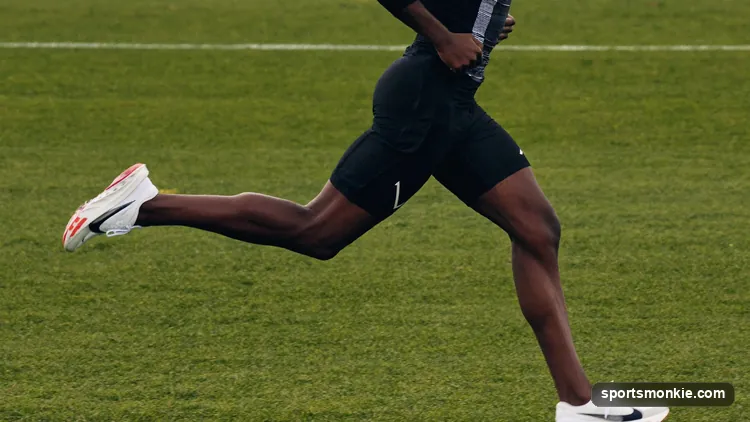
Running strides are short 15-30 second accelerations to about 85-95% of top speed, done relaxed with full recovery. They sharpen form, running economy, and leg speed without adding hard training.

Proper Bench Press Form: A Step-by-Step Guide to a Safe, Stronger Press
Proper bench press form starts with a shoulder-width-plus grip, retracted shoulder blades, a slight arch, and a bar path that touches the lower chest. Here is how to set up, press, and avoid the mistakes that stall your bench and hurt your shoulders.
Proper Deadlift Form: A Step-by-Step Setup, Hinge, and Lockout Guide
Proper deadlift form starts with the bar over your midfoot, a neutral spine, and a braced core, then drives through the floor to a tall lockout. Here is the full setup-to-lockout checklist plus the mistakes that wreck it.

Proper Lifting Form: A Complete Guide to the Big Lifts
Proper lifting form comes down to five things: a braced core, a neutral spine, a controlled bar path over mid-foot, timed breathing, and adding weight only after the pattern holds. Here is how to apply them to every barbell lift.