
8 Best Plyometric Exercises for Dunking (Ranked by Carryover)

On this page12
- 01How to Choose the Right Plyometric for Dunking
- 021. Depth Jump (reactive strength, one-leg carryover)
- 032. Single-Leg Bound (horizontal speed to vertical lift)
- 043. Approach Jump (skill-specific transfer)
- 054. Box Jump (max power, safe landings)
- 065. Single-Leg Box Jump (one-foot power and stability)
- 076. Broad Jump (horizontal force production)
- 087. Tuck Jump (rate of force, knee drive)
- 098. Hurdle Hop (elastic response, stiffness)
- 10How to Program These Plyometrics for Dunking
- 11Common Mistakes That Kill Carryover
- 12Safety and Prerequisites Before You Start
The best plyometric exercises for dunking are depth jumps, single-leg bounds, and approach jumps — the moves that train the fast, one-leg takeoff a dunk actually uses. A dunk is not a slow, grinding squat jump; it is an explosive plant off a full-speed run, so the plyometrics with the most carryover are the ones that build reactive strength and convert horizontal speed into vertical lift. Below are 8 exercises, ranked by how directly they add the inches that clear a 10-foot rim, plus how to program them.
How to Choose the Right Plyometric for Dunking
Match the drill to how you dunk. A running, one-foot dunker needs single-leg and horizontal-to-vertical work; a two-foot dunker off a short gather needs more bilateral power. Reactive drills (short ground contact, like depth jumps) train the “fast” side of your jump, while max-effort drills (box jumps, broad jumps) train the “force” side. You need both. The complete model — strength plus reactivity plus coordination — is laid out in our pillar guide on how to jump higher, and this list is the dunk-specific slice of it. For the general vertical version of these moves, see our plyometric exercises for vertical jump breakdown.
1. Depth Jump (reactive strength, one-leg carryover)
The single most dunk-specific plyometric. Step off a 12-18 inch box, land on the balls of both feet, and rebound upward as fast as possible — minimizing ground-contact time is the whole point. This trains the exact reflex your plant leg uses to convert a hard landing into instant lift. Start at 12 inches; only raise the box when your landings stay soft and quiet. Cue: “touch and go,” not “land and jump.” Do 3-4 sets of 3-5 reps, fully rested between reps.
2. Single-Leg Bound (horizontal speed to vertical lift)
Because most running dunks take off from one foot, bounding is high-value. Take exaggerated, powerful leaping strides down the court — driving the opposite knee up hard and covering maximum distance per bound. This teaches your body to absorb speed on one leg and redirect it upward, the core skill of a one-foot dunk. Aim for 3-4 sets of 6-8 bounds per leg. These pair naturally with the single-leg patterns in our plyometric leg exercises guide.
3. Approach Jump (skill-specific transfer)
The closest plyometric to an actual dunk. Take a 3-4 step run-up, gather with a long-step/short-step plant, drive your free knee up, and jump as high as you can while reaching for a target — a rim, net, or mark on a wall. This rehearses timing, knee drive, and takeoff foot under real speed. It is the bridge between raw jump ability and finishing at the rim, and it directly supports the technique in how to dunk a basketball. Do 4-6 crisp reps with full recovery.
4. Box Jump (max power, safe landings)
Box jumps build the explosive concentric power that gets you off the floor, with a soft landing that spares your joints. Stand a foot back from a knee-to-hip-height box, dip fast, and jump onto it, landing quietly in an athletic position. The value is jumping up, not the drop down — step down between reps, never jump off. Use 3-4 sets of 3-5 reps. Box jumps are a staple of any serious vertical jump workout plan because they let you train max intent without pounding your knees.
5. Single-Leg Box Jump (one-foot power and stability)
A one-leg progression that closes the gap between bilateral box jumps and true one-foot dunking. Jump onto a low box (start at 6-12 inches) off a single leg, landing balanced on that same leg or both feet. This builds unilateral power and the ankle-knee-hip stability a fast plant demands. Master the two-leg box jump first. Keep it low and controlled: 3 sets of 3-4 reps per leg. It is one of the highest-return moves for players training specifically for how to increase vertical for basketball.
6. Broad Jump (horizontal force production)
The standing broad (long) jump develops the powerful hip extension that also drives vertical height, and it teaches full-body force through the whole foot. From a two-foot stance, swing your arms, load your hips, and jump forward for maximum distance, sticking the landing. Because dunking blends horizontal momentum with vertical lift, this horizontal power carries over well. Do 4-5 sets of 2-3 max-effort reps with full rest. It complements the reactive drills that dominate our plyometric exercises list.
7. Tuck Jump (rate of force, knee drive)
Tuck jumps train explosive knee drive and quick, repeated force — the same knee-whip that pulls your hips higher on a dunk takeoff. From a standing position, jump straight up and pull both knees toward your chest, landing softly and immediately resetting. Keep contact time short and posture tall; do not let your chest collapse forward. Use 3 sets of 5-8 reps. This is a lower-impact entry point that still reinforces the aggressive knee action good dunk approaches rely on.
8. Hurdle Hop (elastic response, stiffness)
Hurdle hops over 6-18 inch obstacles build lower-leg stiffness and elastic response — the “springy” quality that keeps ground-contact time short so more of your force becomes lift. Hop continuously over a row of 4-6 mini hurdles, spending as little time on the ground as possible between them, landing on the balls of your feet. Do 3-4 sets of 4-6 hurdles. It is a lower-intensity reactive drill that fits well in the technique-focused sessions of our how to increase your vertical leap guide.
How to Program These Plyometrics for Dunking
Do plyometrics on two non-consecutive days a week, before your strength work while you are fresh. Pick 3-6 moves and keep total ground contacts to about 40-100 quality reps — plyometrics reward intent, not grinding. Order them from most explosive and reactive (depth jumps, approach jumps) to less taxing (tuck jumps, hurdle hops), and rest 60-120 seconds between sets so every rep is maximal.
Weeks 1-4 — build a base: box jumps, broad jumps, tuck jumps, low hurdle hops. Master soft landings first.
Weeks 5-8 — add reactivity: introduce depth jumps and single-leg bounds; keep box and broad jumps for power.
Weeks 9-12 — get specific: bias toward approach jumps and single-leg box jumps, rehearsing your real takeoff at a rim or lowered hoop.
Pair every phase with two strength sessions — squats, Romanian deadlifts, hip thrusts — because plyometrics only sharpen the force you already have.
Common Mistakes That Kill Carryover
Chasing volume. Fifty sloppy, tired jumps build fatigue, not power. Stop the set when reps lose their pop.
Ignoring landings. Loud, stiff landings mean you are absorbing force poorly and inviting knee and ankle strain. Land quiet, balanced, and athletic before you ever add height or box size.
Skipping strength. Plyometrics without a squat and hip-hinge base plateau fast — this is the number-one reason close dunkers stall a few inches short.
Training the wrong takeoff. If you dunk off one foot but only do two-foot box jumps, you are leaving inches on the floor. Bias your drills toward your actual plant.
No progression or recovery. Jumping high-impact every day breaks tendons down faster than they rebuild. Keep two sessions weekly with rest between, and retest your vertical every 3-4 weeks.
Safety and Prerequisites Before You Start
Plyometrics are high-impact, so earn them first. You should be able to squat and land under control, warm up 8-10 minutes with dynamic movement before every session, and start from low boxes and small hurdles before adding height. Progress volume and intensity gradually rather than maxing out in week one. If you are returning from a knee, ankle, or back injury, or are new to structured training, check with a coach or physician before beginning a plyometric program. This is general training information, not medical advice, and no program guarantees how many inches you will gain or how fast — but train these moves consistently for 8-12 weeks and the rim gets a lot closer.
Frequently asked questions
What plyometrics are best for dunking?+
Depth jumps, single-leg bounds, and approach (run-up) jumps have the highest carryover because a dunk is a fast, one-leg takeoff. Depth jumps build the reactive strength that turns your landing into lift, bounds convert horizontal speed into vertical, and approach jumps rehearse the exact skill on the court. Pair them with box jumps for raw power.
How long does it take plyometrics to improve your dunk?+
Most athletes add measurable vertical in 8-12 weeks of consistent, twice-weekly plyometric work paired with strength training. Reactive and coordination gains come first, often within 3-4 weeks. Closing a large reach-to-rim gap of 8-plus inches realistically takes several months, since raw power builds slower than the neural coordination that appears early.
How many days a week should I do plyometrics for dunking?+
Two dedicated plyometric sessions a week is the sweet spot for most jumpers, with at least one full rest day between them. High-impact plyometrics stress tendons and the nervous system, so quality beats volume. Keep sessions to 40-100 ground contacts of crisp, maximal-intent reps rather than grinding out tired, sloppy jumps.
Are depth jumps good for dunking?+
Yes — depth jumps are one of the most dunk-specific plyometrics because they train reactive strength, the ability to convert a fast, hard landing into an immediate explosive jump. That is precisely what your plant leg does on a running dunk approach. Start from a 12-inch box, minimize ground-contact time, and only progress the height once landings stay soft and quiet.
Can plyometrics alone make you dunk?+
Rarely on their own. Plyometrics sharpen how fast you use force, but you also need a strength base to have force to use. Athletes who only do plyometrics hit a ceiling quickly. Combine two plyometric sessions with two strength sessions of squats and hip hinges, and add approach practice, to actually clear the rim.
Should I dunk off one foot or two, and does it change my plyometrics?+
Most running dunks use a one-foot takeoff, so single-leg bounds, single-leg box jumps, and approach jumps should dominate your program. If you dunk off two feet from a short gather, weight box jumps and depth jumps more heavily. Train both patterns early, then bias your plyometrics toward the takeoff you actually use at the rim.
Sources
Play & tools
Free browser games and tools — no account, no download.
- Play 82-0 — Draft five, one per position, and see if your lineup can go a flawless NBA season.
- Play Era Ball — Draft an all-time NBA roster from a single era, then simulate a season and chase a perfect run.
- Play 32-0 — Draft five college basketball legends, one per position, and chase a perfect 32-0 national title.
- Explore all our games →
- Get the printable bracket — Download and print a blank tournament bracket to fill out by hand.
- Open the TS% calculator — Calculate TS% from points, field goal attempts and free throw attempts — scoring efficiency in one number.
- Explore all our free sports tools →
Related basketball guides
View all →
9 Plyometric Exercises to Jump Higher (Ranked Beginner to Advanced)
9 plyometric exercises to jump higher, ranked from beginner pogo hops to advanced depth jumps, with landing-load cues, rep ranges, and a 2-day weekly plan.

10 Best Plyometric Exercises for Basketball (Ranked for Explosive Jumping)
The best plyometric exercises for basketball build reactive, explosive power to jump higher and move quicker. Here are 10 drills ranked by real on-court carryover.
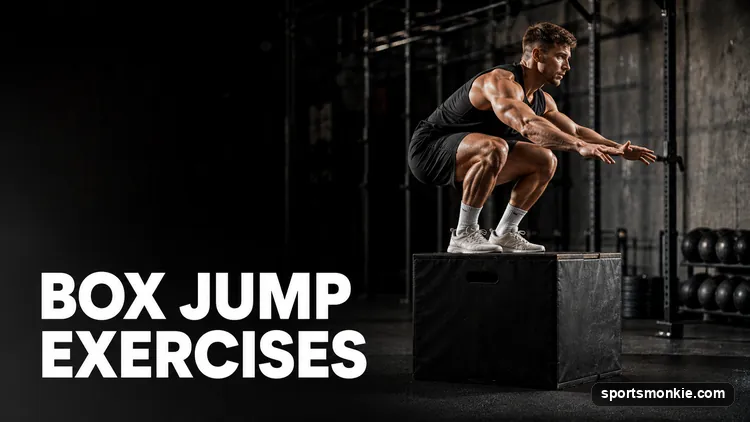
10 Plyometric Box Jump Exercises to Build Explosive Power
Plyometric box jump exercises train explosive power fast: box jumps for takeoff, depth jumps for reactive strength, and lateral box jumps for multi-directional force. Here are 10 box drills, ranked by difficulty.

9 Plyometric Exercises for Baseball (Power + Arm Health)
The best plyometric exercises for baseball train rotational power and elastic arm strength: med-ball rotational throws, lateral bounds, and depth drops that build bat speed and protect the throwing arm.

9 Plyometric Exercises for Explosive Power (Ranked by Payoff)
The best plyometric exercises for explosive power are ground-contact moves like the depth jump, broad jump, and medicine-ball slam that train your muscles to fire fast. Here are 9, ranked by how much power they build.

9 Best Plyometric Exercises for Football Explosiveness
The best plyometric exercises for football are bounds, box jumps and med-ball throws that train the fast triple extension behind a first step, tackle and jump. Here are 9, ranked, with sets, reps and cues.