
9 Plyometric Exercises for Baseball (Power + Arm Health)

On this page6
The best plyometric exercises for baseball train rotational power for bat and arm speed and elastic strength that protects the throwing arm, because those are the two demands hitting and pitching place on the body. Below are 9 drills, ranked by payoff for players: med-ball rotational and overhead throws build the swing and delivery directly, while lateral bounds and low depth drops teach the legs and arm to absorb and redirect force. Do them explosively at low reps twice a week on top of a strength base, and the speed shows up on the field.
At-a-Glance: 9 Baseball Plyometrics
| # | Exercise | Trains | Sets × Reps |
|---|---|---|---|
| 1 | Rotational Med-Ball Throw | Bat/arm speed, hip fire | 3–4 × 4–5/side |
| 2 | Med-Ball Overhead Slam | Core, deceleration | 3 × 6–8 |
| 3 | Skater (Lateral) Bound | Lower-body drive, direction | 3 × 5–6/side |
| 4 | Med-Ball Scoop Toss | Posterior chain, launch | 3 × 5–6 |
| 5 | Low Depth Drop | Reactive strength, landing | 3 × 4–5 |
| 6 | Broad Jump | Horizontal drive (stride) | 3 × 4–5 |
| 7 | Single-Leg Bound | Stride power, balance | 3 × 5–6/leg |
| 8 | Overhead Med-Ball Backward Throw | Full-body extension | 3 × 5–6 |
| 9 | Split-Squat Jump | Single-leg power, landing | 3 × 6/leg |
Why Plyometrics Matter for Baseball
Baseball is a rotational, single-effort power sport, and plyometrics are the training tool that turns strength into that fast, one-shot output. The swing and the throw both use the stretch-shortening cycle: the body coils, loads elastic energy, then fires it in a fraction of a second. Slow strength work builds how much force you can make; plyometrics build how fast you deliver it, which is exactly what bat speed and arm speed are. They also train the eccentric, force-absorbing side of the movement, so the throwing arm and lead leg learn to decelerate safely. Build these on top of a strength base like a vertical jump workout plan rather than in place of it.
The 9 Best Plyometric Exercises for Baseball
1. Rotational Med-Ball Throw (fixes: bat and arm speed)
Stand side-on to a wall in your hitting stance, load into your back hip with a 4 to 6 pound ball, then fire your hips and core to throw it hard into the wall, catching the rebound. This is the single most transferable baseball plyo because it trains the exact hip-then-core-then-arm sequence of the swing and the throw. Throw for speed, not distance. Do 3 to 4 sets of 4 to 5 max-intent throws per side.
2. Med-Ball Overhead Slam (fixes: core power, deceleration)
Reach a 6 to 10 pound ball fully overhead, then slam it to the floor using your whole torso, catching the bounce and repeating. The slam trains explosive trunk flexion and, just as importantly, the deceleration your core provides after ball release. Keep the effort violent and the reps low. Do 3 sets of 6 to 8.
3. Skater (Lateral) Bound (fixes: lower-body drive, direction)
Push off one foot and jump sideways onto the other, absorbing softly on a bent knee before rebounding back. Pitching and hitting both start with a lateral move into the front side, so this frontal-plane bound trains power in the direction the sport actually uses. It is a staple across explosive sports and a core drill in our plyometric leg exercises guide. Do 3 sets of 5 to 6 per side.
4. Med-Ball Scoop Toss (fixes: posterior chain, launch angle)
Hold the ball low between your legs in a quarter squat, then explode up and back, tossing it high overhead behind you. The scoop toss trains triple extension of the ankles, knees and hips, the same drive that powers a jump and a hard first move off the mound. Do 3 sets of 5 to 6 throws, resetting fully each rep.
5. Low Depth Drop (fixes: reactive strength, landing)
Step off a 6 to 12 inch box, land on both feet, and stick the landing soft and quiet with the shortest possible ground contact. Start with a plain landing (a “depth drop”) before ever adding a rebound jump, since the eccentric control it teaches is what protects joints and trains reactive strength. This is a scaled version of the depth work in our plyometric exercises to jump higher list. Do 3 sets of 4 to 5, keeping the box low.
6. Broad Jump (fixes: horizontal drive)
Swing your arms back, then drive forward off both feet for maximum distance, landing soft in an athletic stance. Baseball power moves the body forward into the throw or the swing, so horizontal jumps carry over better than pure vertical ones for stride drive. Do 3 sets of 4 to 5 reps, resetting between each.
7. Single-Leg Bound (fixes: stride power, balance)
Push off one leg driving forward and up, swing the opposite knee high, land, and immediately push off the other leg. Single-leg bounds build the unilateral push a pitcher’s drive leg and a hitter’s back leg depend on, and they expose left-right imbalances that two-footed jumps hide. Do 3 sets of 5 to 6 bounds per leg.
8. Overhead Med-Ball Backward Throw (fixes: full-body extension)
Hold the ball low, dip into a shallow squat, then explosively extend your whole body and throw it up and back over your head as far as you can. This is a max-effort total-body power expression that mirrors the launch of a hard throw. Do 3 sets of 5 to 6 throws with full recovery between reps.
9. Split-Squat Jump (fixes: single-leg power, landing)
From a staggered lunge, drop shallow then jump explosively, switching legs in the air and landing soft in the opposite stance. It builds single-leg power and the hip stability a pitcher needs to land and decelerate on the front leg. Do 3 sets of 6 reps per leg, prioritizing a controlled landing over height.
How to Program Baseball Plyometrics
Treat plyometrics as speed work, not conditioning: low reps, long rest, maximum intent on every throw and jump. Two sessions a week on non-consecutive days is standard, with total throws plus ground contacts kept around 60 to 100 quality reps and every set ended the moment speed drops. In the off-season you can add depth work and higher volume; in-season, cut it back and drop high-impact landings close to games so the nervous system stays fresh for hitting and throwing. Rest 60 to 90 seconds between sets. The same low-rep, high-quality logic runs through our broader how to jump higher guide and the full plyometric exercises list.
Common Mistakes to Avoid
Throwing a heavy ball slowly. A 4 to 8 pound ball fired at full speed builds power; a 15 pound ball heaved slowly trains strength-endurance and blunts the plyometric effect. Pick a load light enough to move fast.
Chasing volume. Once throws or jumps slow down, the set has become conditioning and the power stimulus is gone. Stop early and keep reps crisp.
Skipping the strength base. Depth drops and heavy med-ball work load joints that need a squat-and-hinge foundation first. Build general strength before layering reactive plyos on top, as covered in our plyometric exercises for vertical jump progression.
Ignoring arm workload. Plyometrics stack on top of throwing volume. Count them in your weekly arm load and back off if the elbow or shoulder feels beaten up.
A Simple 2-Day Weekly Plan
Fit this around throwing and hitting, not on top of your hardest arm days:
- Day 1 (rotational + drive): Rotational med-ball throws, scoop tosses, skater bounds, broad jumps
- Day 2 (power + landing): Overhead slams, single-leg bounds, low depth drops, split-squat jumps
Warm up with dynamic movement and a few submaximal throws first, keep every landing soft and quiet, and reassess bat speed, jump height or throwing velocity every three to four weeks. Plyometrics and med-ball throwing are high-intent by design, so any player who is new to training, returning from injury, or dealing with arm pain should check with a coach or physician before starting. This is general training information, not medical advice.
Frequently asked questions
What are the best plyometric exercises for baseball players?+
Med-ball rotational throws, overhead slams, skater bounds and low depth drops are the highest-value plyometrics for baseball because they train rotational and vertical power in the planes hitting and pitching use. Rotational throws build bat and arm speed directly, while landing-based drills teach the arm and legs to absorb force safely. Do them explosively at low reps, not to fatigue.
Do plyometrics improve pitching velocity?+
Yes, indirectly. Plyometrics like med-ball throws, lateral bounds and depth drops build the reactive lower-body and rotational power that a fast delivery is built on, which research links to higher throwing velocity when layered on a strength base. They do not replace mound work or a long-toss program, but they improve the force production the pitch relies on. Progress volume slowly to protect the arm.
How often should baseball players do plyometric training?+
Two sessions a week on non-consecutive days is the standard for in-season and off-season baseball plyometrics. Keep total throws and ground contacts low, roughly 60 to 100 quality reps, and stop any set the moment speed drops. During the season, cut volume and skip high-impact depth work close to games so the nervous system stays fresh for hitting and throwing.
Are med ball throws considered plyometric exercises?+
Yes. Med-ball rotational throws, overhead slams and chest passes are upper-body plyometrics because they use the stretch-shortening cycle: a fast loading stretch immediately followed by an explosive release. That reactive coil-and-fire pattern mirrors the swing and the throw, which is why med-ball work is the backbone of most baseball power programs. Use a light 4 to 8 pound ball and throw for speed, not weight.
Can plyometric exercises help prevent arm injuries in baseball?+
Plyometrics can support arm health by training the shoulder, elbow and core to absorb and redirect force efficiently, which reduces the shock the throwing arm takes on deceleration. Controlled catch-and-throw med-ball drills and single-leg landing work build that elastic durability. They are one piece of arm care, alongside sound mechanics, workload management and a proper long-toss and recovery routine, not a standalone fix.
What plyometrics build bat speed?+
Rotational med-ball throws are the most direct bat-speed builder because they train the hips and core to fire in the same sequence and plane as the swing. Side-toss shotput throws, scoop tosses and overhead slams all reinforce that explosive rotation. Pair them with a lower-body strength base and low-rep, high-intent effort, since bat speed comes from quality reps thrown as hard as possible, not high volume.
Should youth baseball players do plyometrics?+
Youth players can do low-impact plyometrics such as squat jumps, skater bounds and light med-ball throws with an emphasis on soft landings and clean technique, but they should avoid heavy depth jumps and high-volume throwing until they have a strength base and mature mechanics. Keep sessions short, supervised and low-rep. Any young athlete with arm pain or a medical condition should see a coach or physician first.
Sources
Play & tools
Free browser games and tools — no account, no download.
- Play today's Sports Connections — Today's Sports Connections — daily hints, answers, and play the grid.
- Play Guess the NFL Player — A new mystery NFL player every day. Eight guesses, with a clue on each — plus free unlimited mode.
- Explore all our games →
Related guides

9 Plyometric Exercises for Explosive Power (Ranked by Payoff)
The best plyometric exercises for explosive power are ground-contact moves like the depth jump, broad jump, and medicine-ball slam that train your muscles to fire fast. Here are 9, ranked by how much power they build.

10 Best Plyometric Exercises for Tennis (Court-Speed Power)
The best plyometric exercises for tennis train the explosive, side-to-side power you actually use on court: lateral bounds, split-step reactions, and rotational med-ball throws. Here are 10 tennis-specific plyos, ranked by court payoff.

9 Best Plyometric Leg Exercises for Explosive Power (Ranked)
The best plyometric leg exercises for explosive power, ranked: squat jumps, depth jumps, broad jumps, single-leg bounds and more, with sets, reps, and form cues.
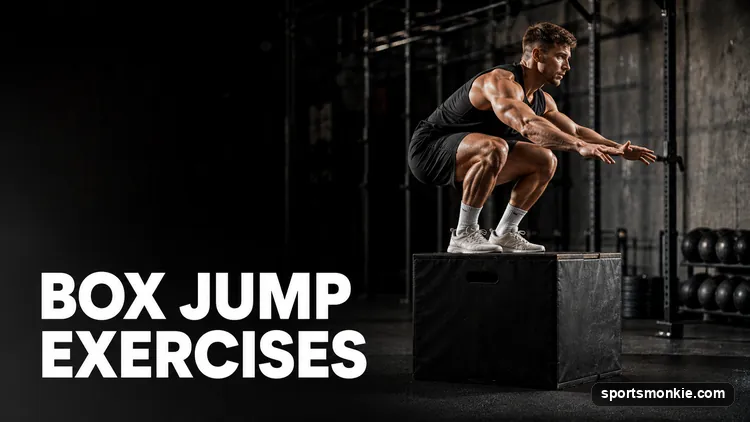
10 Plyometric Box Jump Exercises to Build Explosive Power
Plyometric box jump exercises train explosive power fast: box jumps for takeoff, depth jumps for reactive strength, and lateral box jumps for multi-directional force. Here are 10 box drills, ranked by difficulty.

9 Best Plyometric Exercises for Football Explosiveness
The best plyometric exercises for football are bounds, box jumps and med-ball throws that train the fast triple extension behind a first step, tackle and jump. Here are 9, ranked, with sets, reps and cues.

10 Plyometric Exercises for Runners (Build Speed and Economy)
The best plyometric exercises for runners are pogo hops, ankle bounds, and single-leg hops. Ten drills ranked from easiest to hardest to build running economy.