
10 Best Plyometric Exercises for Basketball (Ranked for Explosive Jumping)

On this page16
- 01Box Jump
- 02Squat Jump
- 03Depth Jump
- 04Broad Jump
- 05Lateral Bound
- 06Skater Hop
- 07Tuck Jump
- 08Single-Leg Bound
- 09Pogo Jump
- 10Approach Jump to Rim
- 11How We Ranked These Drills
- 12What Makes a Plyometric Rep Actually Work
- 13How to Program Plyometrics Without Overtraining
- 14Common Mistakes Basketball Players Make
- 15Drills at a Glance
- 16A Simple 6-Week Basketball Plyometric Plan
We ranked these drills by carryover to real basketball movements, not by how hard they look. A drill scores higher when it trains fast ground-contact and reactive force (the quality that decides a jump), transfers to multiple planes you actually use on the court, and delivers that benefit at a risk level most players can handle safely.
- Foundation builder
Box Jump
The box jump earns the top spot because it delivers the best power-to-risk ratio of any drill here: you get maximal takeoff effort while the box absorbs the landing impact your knees and tendons would otherwise take. That makes it the one drill safe to start with on day one, before you have built the strength base that higher-impact jumps demand. Stand a foot from a sturdy box, dip into a quarter-squat, and explode up, landing soft and balanced in an athletic stance. It ranks above the squat jump at No. 2 because the reduced landing load lets beginners groove clean takeoff mechanics without accumulating impact. Step down every rep, never jump down, and reset. A structured box jump workout is the fastest way to build those mechanics before you add real impact.
Builds: takeoff power, landing control · Reps: 3-4 sets of 5 · Risk: low, ideal starting drill
- Takeoff force
Squat Jump
From a quarter- to half-squat, pause briefly, then jump as high as you can with full ankle, knee, and hip extension, landing soft. That deliberate pause is the point: it removes the elastic bounce so you train pure concentric force, the power you generate from a dead stop, exactly like rebounding off a jump stop or rising for a set shot. It sits just below the box jump because the ground landing carries slightly more load, but above the reactive drills because it needs no strength prerequisite. Keep sets to 5-6 reps so every jump is genuinely maximal, and it becomes the backbone of any how to jump higher plan.
Builds: concentric power, triple extension · Reps: 5-6 per set · Prerequisite: none
- Reactive gold standard
Depth Jump
Step off a 12-18 inch box, land on the balls of both feet, and immediately rocket straight up, keeping ground contact as short as possible. This is the most potent reactive drill in the sport because it directly trains the stretch-shortening cycle, and drop-jump work shows large drop-jump gains after 12 weeks of consistent plyometric training in experienced athletes. It ranks below the two takeoff drills only because of its cost of entry: it is high-impact, so add it only once you can land a box jump softly and squat roughly 1.5x your bodyweight. Start low, prioritize a lightning-quick bounce, and fold it into a broader plyometric exercises for vertical jump routine.
Builds: reactive strength, stretch-shortening cycle · Box: 12-18 in · Prerequisite: soft box-jump landing + ~1.5x BW squat
- Horizontal power
Broad Jump
Load into a countermovement and jump forward as far as you can, swinging your arms hard and sticking the landing. Its rank comes from a quality the vertical drills above miss entirely: horizontal force, which drives your first step and your acceleration in transition. It edges out the lateral drills below because it is the simplest honest test of explosive progress. Measure the distance every few weeks; a longer broad jump almost always tracks a quicker first step on the court.
Builds: horizontal power, first-step explosiveness · Reps: 4-6 per set · Bonus: doubles as a progress test
- Lateral power
Lateral Bound
Push off your outside foot and leap sideways, landing on the opposite foot, then stabilize before bounding back. Basketball demands as much side-to-side explosiveness as vertical leaping, and this skater-style drill trains the exact hip and glute mechanics behind closing out shooters and staying in front on defense. It ranks here because it opens the frontal plane that the top four drills largely ignore, but sits below the broad jump because the sticking-landing version is more of a strength-and-control drill than a maximal reactive one. Nail controlled landings before you speed it into continuous bounds.
Builds: side-to-side power, defensive slides · Plane: frontal · Progression: stick, then chain into continuous bounds
- Single-leg spring
Skater Hop
A continuous cousin of the lateral bound: bound side to side, absorbing and re-firing off one leg each time with no long pause. This builds the single-leg reactive strength that protects your knees and powers off-balance finishes, and because so much of basketball happens on one foot, that quality belongs in every player's plan. It ranks just under the lateral bound because the continuous, single-leg rhythm demands more control and carries a bit more knee load. Runners chase the same single-leg spring in plyometric exercises for runners, which shows how universal the quality is across sports.
Builds: single-leg power, lateral stability · Contacts: 8-12 per side · Focus: quiet, controlled re-fire
- Repeat takeoff
Tuck Jump
Jump straight up, drive both knees toward your chest, and rebound into the next rep with minimal ground time. Tuck jumps train quick, repeated takeoffs, the exact demand of grabbing an offensive rebound and going right back up over traffic. It lands mid-pack because it improves takeoff frequency rather than peak power, and fatigued reps lose all their value fast. Keep them snappy and stop at 6-8; the moment the knees stop reaching your chest cleanly, the set is done.
Builds: hip-flexor explosiveness, air control · Reps: 6-8 · Cue: stop the moment reps get sloppy
- Moving takeoff
Single-Leg Bound
Bound forward off one leg for distance, driving your knee up hard on each push and landing on the same leg or alternating. Most layups and putbacks launch off a single leg while moving, so this drill mirrors a real in-game takeoff better than any two-foot jump. It ranks below the tuck jump for the average player purely on risk: single-leg landings at speed are demanding and unforgiving of weak ankles or hips. Master control before chasing distance, and it becomes one of the most game-specific drills on the list.
Builds: unilateral power, running takeoff · Distance: 4-6 bounds per rep · Risk: high, needs landing control first
- Ankle stiffness
Pogo Jump
Keep your legs nearly straight and bounce rapidly off the balls of your feet, spending as little time on the floor as possible. This teaches ankle and Achilles stiffness, the springy elastic quality that lets elite jumpers rebound off the ground almost instantly. It sits low not because it is unimportant but because it is a supporting quality rather than a primary power driver, and it is best used as a warm-up primer or low-intensity filler. Do 15-20 quick contacts and judge by sound: a soft, fast tap, never a heavy thud.
Builds: ankle stiffness, reactive rebound · Contacts: 15-20 · Role: primer / low-intensity filler
- Game transfer
Approach Jump to Rim
Take a two- or three-step gather and jump to touch the rim, net, or a target, mimicking your real dunk or rebound approach. This drill ranks last by design, not by value: it is the capstone that ties every quality above into the actual movement you use in a game. It belongs at the end of the progression because it only pays off once you have built the takeoff force, reactive strength, and single-leg control the earlier drills develop. If dunking is the goal, blend it with the technique work in how to dunk a basketball so new power meets clean approach timing.
Builds: game transfer, jump timing · Reps: 4-6 full-effort approaches · Placement: capstone drill, do it last
Reader interaction
Build your ranking
Drag the names into the order you think is right — or use the arrows — then submit to see how your list compares with everyone else's.
- Box Jump
- Squat Jump
- Depth Jump
- Broad Jump
- Lateral Bound
- Skater Hop
- Tuck Jump
- Single-Leg Bound
- Pogo Jump
- Approach Jump to Rim
Audience ranking
How everyone ranked them
Built from reader rankings using position-based points.
The best plyometric exercises for basketball train fast, reactive power — the ability to produce force in the split second you plant to jump, cut, or explode past a defender. The ten drills above are ranked by their carryover to the court, from foundational takeoff builders you can start today to advanced reactive work that demands a real strength base first. This section covers how we ranked them and how to program them without getting hurt.
How We Ranked These Drills
Two drills can both “build explosiveness” and still deserve very different placements. We weighted each one on three things. First, quality of the stimulus: does it train fast ground-contact and reactive force, the trait that actually decides a jump, or slow grinding effort? Second, breadth of transfer: a drill that carries into vertical, horizontal, and lateral movement outranks one stuck in a single plane. Third, risk-adjusted value: a powerful drill you cannot perform safely yet is worth less than a slightly less potent one you can do well from day one.
That is why the box jump tops the list over the flashier depth jump: it delivers near-maximal takeoff effort at a fraction of the landing cost, so every player can start there. The higher-impact reactive drills rank below the foundational ones not because they are less effective, but because their payoff depends on strength and landing control you build first.
What Makes a Plyometric Rep Actually Work
Basketball is played in short, explosive bursts, so the drills that matter train the stretch-shortening cycle — the rapid load-and-release your muscles and tendons perform every time you gather to jump. A good rep is quick, springy, and full-effort, not slow or grinding. Keep ground-contact time short, land soft, and stop the set the moment your jumps lose their snap. The instant a rep feels heavy instead of bouncy, you are training slowness, which is the opposite of the goal.
How to Program Plyometrics Without Overtraining
Plyometrics are high-intensity nervous-system work, so treat volume like a precious resource. Two sessions a week, at least 48 hours apart, is plenty for almost every player. Count ground contacts rather than reps: beginners should stay near 60-80 low-intensity contacts per session, advancing to 100-120 for higher-impact drills only after months of clean work. Always train jumps when you are fresh, early in a session after a full warm-up, never as a fatigued finisher. Combine this with the lifting in vertical jump strength training, because power is simply strength expressed quickly, and a stronger squat raises the ceiling on every jump.
Common Mistakes Basketball Players Make
Chasing volume over quality. The moment your jumps stop feeling springy, the set is over. Grinding out 20 fatigued reps trains slow, not fast.
Skipping landing mechanics. Loud, stiff, or wobbly landings are an injury waiting to happen. Learn to land soft, quiet, and balanced before you add height or speed.
Jumping onto strength you don’t have yet. Depth jumps and high box jumps demand a real strength base. If you cannot control a moderate box-jump landing, build strength first — the exact progression covered in how to increase your vertical leap.
Ignoring the horizontal and lateral plane. A big two-foot vertical is not enough. Broad jumps, lateral bounds, and single-leg work translate to the cuts, closeouts, and first steps that actually decide games.
Drills at a Glance
| Drill | Primary quality | Impact / risk | Best for |
|---|---|---|---|
| Box Jump | Takeoff power | Low | Everyone, day one |
| Squat Jump | Concentric power | Low-moderate | Standstill power |
| Depth Jump | Reactive strength | High | Advanced, strong base |
| Broad Jump | Horizontal power | Moderate | First step, transition |
| Lateral Bound | Frontal-plane power | Moderate | Defense, closeouts |
| Single-Leg Bound | Unilateral power | High | Layups, moving takeoffs |
| Pogo Jump | Ankle stiffness | Low | Warm-up primer |
A Simple 6-Week Basketball Plyometric Plan
Weeks 1-2 — Build the base. Two sessions a week of box jumps, squat jumps, and pogo jumps. Keep contacts low (around 60), land soft, and film yourself to check landing control.
Weeks 3-4 — Add reactive and horizontal work. Introduce broad jumps, lateral bounds, and low depth jumps (12 inches). Push effort up while keeping reps at 5-6 per set so each jump stays maximal.
Weeks 5-6 — Sharpen game transfer. Layer in single-leg bounds, tuck jumps, and approach jumps to the rim. Test your standing vertical and broad jump at the start of week 6 against your baseline to confirm carryover.
Retest, deload for a week, then repeat the block at slightly higher intensity. Combined with consistent strength work and a smart plyometric exercises list for variety, this cycle turns raw effort into the springy athleticism that shows up on the court — a higher jump, a faster first step, and the reactive power to finish above the rim.
Frequently asked questions
What equipment do I need to start basketball plyometrics?+
Very little. Most of this list needs only open floor space and your bodyweight: squat jumps, broad jumps, lateral bounds, skater hops, tuck jumps, single-leg bounds, and pogo jumps require nothing but room to move. Box jumps and depth jumps need one sturdy, non-slip plyo box you can adjust in the 12-24 inch range. Cushioned court shoes and a hard, flat surface round out the setup, so cost is rarely a barrier to starting.
Can I do plyometrics during the basketball season?+
Yes, but cut the volume roughly in half and drop the highest-impact drills. In-season, your games and practices already deliver plenty of jumping and cutting, so one short session a week of low-contact work like box jumps, pogo jumps, and squat jumps maintains your power without draining fresh legs. Skip heavy depth jumps in-season, keep every session well clear of game day, and treat plyometrics as maintenance rather than a building block.
Do plyometric exercises actually increase your vertical jump?+
Yes. Meta-analyses find plyometric training improves jump height by roughly 5-10 percent, often a few centimeters, over programs of several weeks, by sharpening rate of force development and the stretch-shortening cycle. Experienced athletes and longer programs of 10-plus weeks tend to see the biggest gains. Pair the jumps with strength work like squats, because a stronger base lets you produce more force in the split second of a takeoff.
How high should the box be for box jumps and depth jumps?+
For box jumps, choose a height you can land on in a soft quarter-squat without slamming your knees toward your chest; most players belong in the 18-30 inch range, and higher is not better if it wrecks your landing. Depth jumps are different, since you step off and react, so start low at 12 inches and only progress toward 18-24 inches once your ground contact stays short and your landings stay quiet and balanced.
Are plyometrics safe for young basketball players?+
Low-intensity plyometrics like line hops, pogo jumps, and low box jumps are safe and genuinely beneficial for youth athletes when technique is taught first and volume stays low. The key is sequencing: teach a soft, balanced landing before adding any height or speed, and keep ground contacts modest. Save high-impact drills like depth jumps and single-leg bounds for older, stronger players who can already control their body cleanly on impact.
How long until plyometrics improve my game?+
Most players feel springier within 2-3 weeks as their nervous system adapts, and see measurable vertical and first-step gains after roughly 6-8 weeks of consistent, twice-weekly training. Progress comes fastest when you also fix landing mechanics and add lower-body strength, since power is strength expressed quickly. Track a standing vertical and broad jump at the start so you have an honest baseline to measure real carryover against.
Sources
Play & tools
Free browser games and tools — no account, no download.
- Play 82-0 — Draft five, one per position, and see if your lineup can go a flawless NBA season.
- Play Era Ball — Draft an all-time NBA roster from a single era, then simulate a season and chase a perfect run.
- Play 32-0 — Draft five college basketball legends, one per position, and chase a perfect 32-0 national title.
- Explore all our games →
- Get the printable bracket — Download and print a blank tournament bracket to fill out by hand.
- Open the TS% calculator — Calculate TS% from points, field goal attempts and free throw attempts — scoring efficiency in one number.
- Explore all our free sports tools →
Related basketball guides
View all →
9 Plyometric Exercises to Jump Higher (Ranked Beginner to Advanced)
9 plyometric exercises to jump higher, ranked from beginner pogo hops to advanced depth jumps, with landing-load cues, rep ranges, and a 2-day weekly plan.

How to Increase Vertical for Basketball: A 12-Week Jump Program
To increase your vertical for basketball, combine heavy lower-body strength, explosive plyometrics, and hip mobility three days a week. Here is the exact program, cues, and mistakes to avoid.
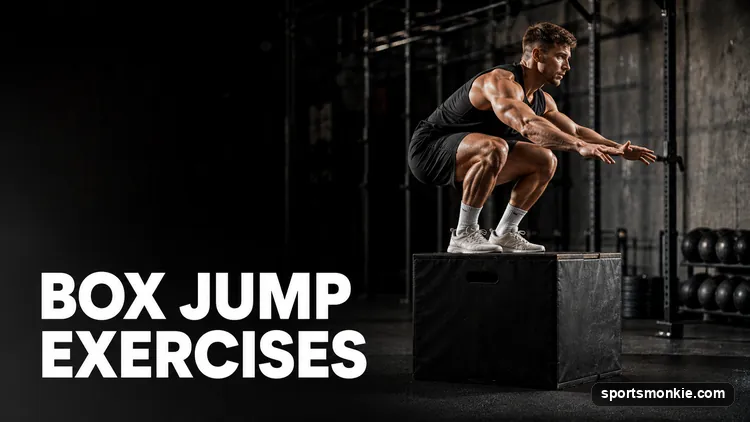
10 Plyometric Box Jump Exercises to Build Explosive Power
Plyometric box jump exercises train explosive power fast: box jumps for takeoff, depth jumps for reactive strength, and lateral box jumps for multi-directional force. Here are 10 box drills, ranked by difficulty.

How to Jump Higher: The Complete Vertical Jump Training Guide
How to jump higher comes down to three trainable factors: leg and hip strength, explosive power (plyometrics), and jump technique — trained together in a structured program over 6 to 12 weeks.

8 Best Plyometric Exercises for Dunking (Ranked by Carryover)
The best plyometric exercises for dunking are depth jumps, single-leg bounds, and approach jumps — the moves that train the fast, one-leg takeoff a dunk actually uses. Here are 8, ranked by how directly they add rim-clearing vertical.

9 Plyometric Exercises for Explosive Power (Ranked by Payoff)
The best plyometric exercises for explosive power are ground-contact moves like the depth jump, broad jump, and medicine-ball slam that train your muscles to fire fast. Here are 9, ranked by how much power they build.