
Vertical Jump Strength Training: The Lifts That Actually Raise Your Jump

On this page7
Vertical jump strength training builds the raw leg and hip force that everything else in a jump program depends on, centered on five key lifts: the squat, trap-bar deadlift, hip thrust, Romanian deadlift, and split squat, trained heavy two to three times a week. Strength doesn’t make you jump higher by itself — it raises the ceiling on how much force your legs can produce, and plyometric training is what teaches your body to unleash that force quickly. This guide covers the lifts, the sets and reps that actually build jump-transferable strength, and a simple block you can run before layering in explosive work.
How strength converts to a higher vertical
A jump is a rapid extension of the hips, knees, and ankles against the ground. The height you reach is a function of two things: how much force your muscles can generate, and how fast you can generate it. Strength training builds the first piece — maximal force capacity in the glutes, quads, and hamstrings — while plyometrics build the second, called rate of force development.
Think of strength as the size of your fuel tank and rate of force development as how fast you can burn it. A bigger tank with no ability to spend it quickly still produces a mediocre jump, which is why strength training alone rarely maximizes a vertical. But without a bigger tank, plyometric training has less raw force to work with in the first place. Athletes with below-average relative strength (squat weight compared to bodyweight) consistently see their biggest jump gains from strength work first, before adding advanced plyometrics like depth jumps.
The core lifts for vertical jump strength
Build your strength sessions around these five movements, all trained with control and a full range of motion.
- Back squat. Bar on the upper back, feet shoulder-width, hips and knees bend together until thighs are at least parallel to the floor, then drive up through the whole foot. This is the single most transferable strength exercise for jumping because it loads the same hip-and-knee extension pattern used on takeoff. Dial in your proper squat form before you load the bar heavy, because a small fault in depth or bar path magnifies under real weight. If your squat depth or torso position breaks down under the bar, spend a few weeks grooving the pattern with correct goblet squat form first — the front-loaded hold teaches an upright, deep squat before you add a barbell.
- Trap-bar deadlift. Stand inside the trap bar, hinge at the hips with a flat back, grip the handles, and stand up by driving the floor away with your legs. The trap bar’s neutral grip and centered load make it a safer, more jump-specific alternative to a straight-bar deadlift for many lifters.
- Hip thrust. Upper back against a bench, barbell across the hips, drive through the heels to lift the hips until the body forms a straight line from shoulders to knees, squeezing the glutes hard at the top. The hip thrust isolates the glutes more directly than any other lift on this list, and the glutes are the single biggest contributor to jump height.
- Romanian deadlift (RDL). Holding a barbell or dumbbells, push the hips back while keeping a soft knee bend and a flat back, lowering the weight along the shins until you feel a stretch in the hamstrings, then drive the hips forward to stand. This builds the hamstring and posterior-chain strength that controls the final hip extension in a jump.
- Split squat (or Bulgarian split squat). One foot forward, one foot back (elevated behind you for the Bulgarian variation), lower straight down until the back knee nearly touches the floor, then push through the front foot to stand. Most game-speed jumps happen off one leg, and single-leg strength often lags behind double-leg strength, making this an easy gap to overlook.
A short calf-raise accessory (2-3 sets of 10-15 reps) rounds out the lower leg, but treat it as a supplement — the ankle contributes far less to jump height than the hips and knees, so it should never crowd out the five lifts above. For a balanced athlete, pair this lower-body work with an upper-body pushing lift trained with clean overhead press form, which builds the shoulder strength and stability a powerful arm swing relies on.
Sets, reps, and loading that actually build jump strength
Not every rep range builds the same quality. For vertical jump purposes:
- 3-6 reps per set, 3-5 sets, at a challenging but controlled load is the sweet spot for building maximal strength — the primary goal of this phase.
- Rest 2-3 minutes between heavy sets. Cutting rest short turns a strength session into a conditioning session and blunts the force output on each set.
- Beginners start at 8-10 reps with lighter loads for the first 2-3 weeks to groove technique before adding significant weight. Rushing load before technique is the fastest way to stall progress or get hurt.
- Progress by adding small amounts of weight or a rep every 1-2 weeks, not by jumping loads dramatically session to session.
A simple 6-week strength block
| Week | Squat/Deadlift focus | Hip thrust & split squat | Notes |
|---|---|---|---|
| 1-2 | 3x8 at moderate load | 3x10 | Groove technique, build base |
| 3-4 | 4x5 at heavier load | 3x8 | Increase intensity, same or slightly higher volume |
| 5-6 | 4-5x3-4 at near-max controlled load | 3x6 | Peak strength phase |
Run two to three sessions per week, alternating a squat-focused day with a deadlift/hip-thrust-focused day, and leave at least one full rest day between heavy lower-body sessions. This block is designed to feed directly into a jump-specific program — once it’s complete, layer in dedicated plyometric exercises for vertical jump and a box jump workout to convert the new strength into explosive height, following the full how to jump higher framework for how the pieces fit together. If you want the strength days, plyo days, and technique work already mapped onto a calendar, follow our week-by-week vertical jump workout plan, which schedules all three around adequate recovery.
Common mistakes and how to fix them
- Chasing plyometrics with no strength base. Jump training without adequate strength caps your gains fast and raises injury risk. Fix: run a 4-to-6-week strength block like the one above before adding intense plyometric work.
- Training too light, too often. High-rep, low-load sets build endurance, not the force capacity that transfers to a jump. Fix: keep the core lifts in the 3-8 rep range with real, controlled loading.
- Skipping single-leg work. Most sport jumps happen off one leg, and neglecting split squats leaves a real strength gap. Fix: include split squats or step-ups every week, not just as an afterthought.
- Rushing load before technique. Adding weight to a poorly grooved squat or deadlift pattern is a common cause of injury. Fix: master bodyweight and light-load technique first, then progress load steadily.
- No planned rest between heavy sessions. Strength gains happen during recovery, not the workout itself. Fix: schedule at least one rest day between heavy lower-body sessions.
Responsible training note
Warm up for 5-10 minutes with light cardio and dynamic mobility before every strength session, and prioritize controlled, full-range technique over chasing a heavier number. Progress load gradually — sudden jumps in weight are a common cause of strain and joint injury in lifters at every level. If you are new to structured strength training, returning from an injury, or managing a joint or cardiovascular condition, consult a qualified coach or physician before starting this program.
Where this fits in a complete jump program
Strength training is one leg of a three-part system: strength sets the ceiling, plyometrics teach your body to express it quickly, and technique (arm swing, dip depth, landing mechanics) makes sure none of that force leaks out. Running this strength block on its own will build stronger legs, but pairing it with the plyometric and technique work covered in the full how to jump higher guide is what actually turns that strength into extra inches on your vertical.
Frequently asked questions
What is the best strength exercise for vertical jump?+
The back squat is generally considered the single best strength exercise for vertical jump because it loads the quads, glutes, and hamstrings together through the same hip-and-knee extension pattern used when jumping. The trap-bar deadlift and hip thrust are close seconds, since both heavily target the glutes, the primary driver of jump height.
Does squatting increase your vertical jump?+
Yes, for most athletes who are not already strong relative to their bodyweight. Squatting builds the maximal lower-body strength that sets the ceiling on how much force you can produce, and research on strength-trained athletes consistently links higher relative squat strength to a higher vertical jump, though squatting alone must be paired with plyometrics to fully convert that strength into jump height.
How often should you strength train for vertical jump?+
Two to three sessions per week is the standard prescription, with at least one rest day between heavy lower-body sessions. This frequency builds strength consistently without accumulating the fatigue that would blunt performance on plyometric or jump-testing days scheduled elsewhere in the week.
How much can strength training add to your vertical jump?+
Athletes who start with below-average relative strength often see the largest gains, commonly 2 to 5 inches over a 10-to-12-week block once strength work is paired with plyometrics and technique. Already-strong athletes typically see smaller strength-driven gains and need to lean more on power and technique work instead.
What rep range is best for vertical jump strength?+
A 3-to-8 rep range with a challenging but controlled load builds the maximal strength that underpins jumping, while very light, high-rep sets (15+) build endurance rather than the force capacity that transfers to a jump. Beginners should master form in the 8-to-10 rep range before progressing to heavier, lower-rep work.
Should you do strength training or plyometrics first?+
Build a baseline of strength first, typically 4 to 6 weeks, since plyometrics are more effective and safer once the legs can absorb and produce force reliably. After that base is set, strength and plyometric training run together in the same program rather than one replacing the other.
What is a good squat-to-bodyweight ratio for jumping higher?+
A back squat of around 1.5 to 2 times bodyweight is commonly cited by strength coaches as a strong benchmark for athletic jumping ability, though this is a general guideline rather than a strict requirement. Athletes below this ratio typically gain the most from prioritizing strength work before adding advanced plyometrics like depth jumps.
How long does it take to see vertical jump gains from strength training?+
Early gains from improved technique and neural efficiency can appear within 3 to 4 weeks, but measurable strength-driven increases in vertical jump typically take a full 8-to-12-week training block to show up reliably on a test. Consistent, progressive loading matters more than any single workout.
Sources
Play & tools
Free browser games and tools — no account, no download.
- Play 82-0 — Draft five, one per position, and see if your lineup can go a flawless NBA season.
- Play Era Ball — Draft an all-time NBA roster from a single era, then simulate a season and chase a perfect run.
- Play 32-0 — Draft five college basketball legends, one per position, and chase a perfect 32-0 national title.
- Explore all our games →
- Get the printable bracket — Download and print a blank tournament bracket to fill out by hand.
- Open the TS% calculator — Calculate TS% from points, field goal attempts and free throw attempts — scoring efficiency in one number.
- Explore all our free sports tools →
Related basketball guides
View all →
How to Jump Higher: The Complete Vertical Jump Training Guide
How to jump higher comes down to three trainable factors: leg and hip strength, explosive power (plyometrics), and jump technique — trained together in a structured program over 6 to 12 weeks.

How to Dunk a Basketball: The Jump, Approach & Training Plan
How to dunk a basketball comes down to one number: your standing reach plus your vertical leap has to clear the 10-foot rim. Here's the math, the approach mechanics, and a realistic training path to your first dunk.

How to Increase Vertical for Basketball: A 12-Week Jump Program
To increase your vertical for basketball, combine heavy lower-body strength, explosive plyometrics, and hip mobility three days a week. Here is the exact program, cues, and mistakes to avoid.

The Best Plyometric Exercises for Vertical Jump
The best plyometric exercises for vertical jump train your legs to produce force faster, not just harder. Here are 9 ranked plyos with form cues, sets, reps and a progression plan.

10 Vertical Jump Exercises at Home (No Equipment Needed)
The best vertical jump exercises at home need no equipment: squat jumps, split-squat jumps, calf raises, and broad jumps build strength and power in a small space. Here are 10 moves plus a weekly plan.
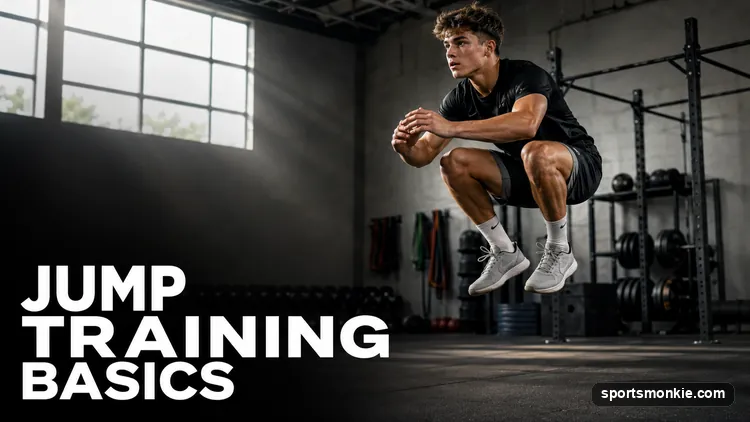
Vertical Jump Training Basics: How to Start (Beginner Guide)
Vertical jump training basics: build leg and hip strength, add plyometrics to turn that strength into speed, and train two to three days a week. Here is how to start from scratch and what to skip.