
How to Play the Dilscoop in Cricket: Step-by-Step Technique
On this page8
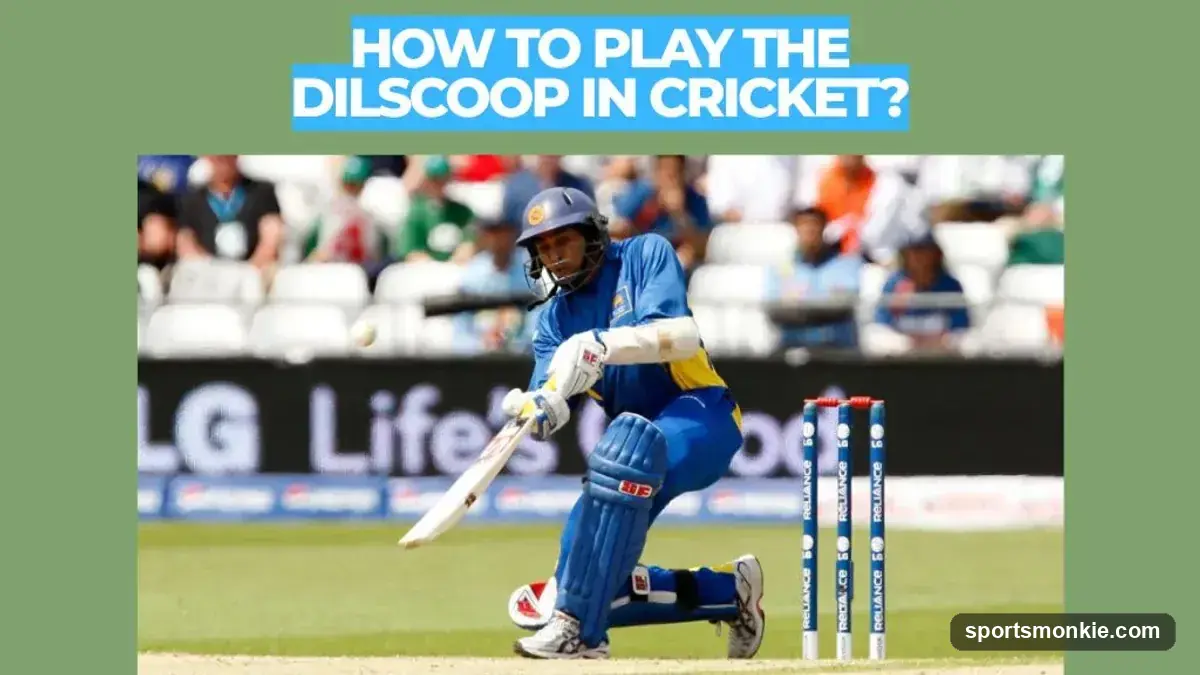
Tillakaratne Dilshan built a shot around one idea: kneel into a full delivery, open the bat face to the sky, and scoop it over the wicketkeeper’s head. He unveiled it at the 2009 World T20 and pace bowlers still haven’t fully solved it. The Dilscoop is one of the few unorthodox strokes that looks like a stunt but works on pure logic.
Why It Works
Fielding captains set conventional fields for the powerplay, which usually leaves fine leg and the region behind the keeper thin, sometimes covered by just one fielder inside the circle. The Dilscoop sends the ball straight over the keeper, into a gap no field setting can close without opening another one elsewhere.
Prerequisites
- A full helmet with a secure visor is mandatory, not optional.
- It works best during powerplay overs, when fine leg has to stay inside 30 yards.
- It needs a full-length delivery. Don’t attempt it against anything short-pitched.
Footwork
- As the ball is released, step your front foot across toward the off side, putting your body directly in front of or slightly outside the ball’s line.
- Lower your body by bending both knees; the back knee may come close to the pitch.
- Get your head and eyes behind the ball. This is the critical safety element: your head needs to sit to the off side of the ball’s path, never in its way.
Bat Angle and Contact
| Element | Detail |
|---|---|
| Bat face | Fully open, pointing straight up, then toward fine leg |
| Bottom hand | Loosened grip; top hand guides direction |
| Contact point | Ball met early, in front of the body |
| Direction | Angled: over the keeper’s head, toward fine leg or straight |
| Follow-through | Bat sweeps upward and over, ending behind the head |
Execution: Step-by-Step
- Read the length, spotting the full delivery early from the bowler’s hand.
- Step across, front foot crossing outside off stump.
- Bend both knees, lowering your body toward the pitch.
- Open the bat face, rotating the handle so the face points skyward.
- Meet the ball early, scooping it in front of your body, not beside it.
- Direct it fine. A slight angle on the bat face decides whether it goes straight over the keeper or finer toward fine leg.
When to Use It
- Powerplay overs, when fielding restrictions make the area behind the keeper the most profitable target.
- Against pace bowlers attacking full at the stumps, since their own pace does the work of carrying the ball.
- When a boundary is needed off a specific ball and every conventional shot is covered.
- Against bowlers who lean on yorkers; the Dilscoop unsettles their length and can force them to bowl short instead.
Common Mistakes
- Not getting across: staying on the leg-stump line means the ball arrives at your body and the shot gets cramped.
- Staying upright: without knee bend, the ball sits too high at contact, producing a leading edge or a complete miss.
- Head in the line of the ball. This is the most dangerous error possible; keep the head to the off side of the ball’s path, always.
- Too much bottom hand: the ball goes to fine leg without any height. Let the top hand steer the direction upward instead.
Practice Drill
Set a bowling machine to medium pace, full length, on off stump. Before you add a ball, rehearse the footwork alone: step, bend, open the face. Then work in soft balls to build confidence with contact, and only move to a real cricket ball once the head position and body movement feel automatic.
Frequently asked questions
Who invented the Dilscoop?+
The shot is named after Sri Lankan batter Tillakaratne Dilshan, who popularised it prominently during the ICC World Twenty20 2009, using it consistently to devastating effect against pace bowlers.
What delivery is best suited to the Dilscoop?+
The ideal delivery is full in length and aimed at or around off stump or the body. The batter moves into line and scoops upward over the wicketkeeper's head. Yorkers make the shot harder; short deliveries make it near-impossible.
Is the Dilscoop dangerous to the batter?+
Yes — if the scooping bat does not meet the ball, it can hit the face or helmet visor. Wearing a full helmet with a visor is essential. Gloves also protect the hands if the swing misses.
Sources
Play & tools
Free browser games and tools — no account, no download.
- Play today's Sports Connections — Today's Sports Connections — daily hints, answers, and play the grid.
- Play Guess the NFL Player — A new mystery NFL player every day. Eight guesses, with a clue on each — plus free unlimited mode.
- Explore all our games →
Related cricket guides
View all →
How to Play the Reverse Scoop in Cricket: Full Technique Guide
The reverse scoop scoops the ball over the wicketkeeper or third man by reversing the bat. Learn the footwork, grip, and when this T20 shot is worth the risk.
How to Play the Ramp Shot in Cricket: Technique Guide
The ramp shot deflects a full or back-of-length ball over the keeper toward fine leg or third man. Master the wrist angle and head position for T20.
How to Play a Sweep Shot in Cricket: Complete Technique Guide
The sweep shot is a front-foot stroke to full-length spin, hitting the leg side with a horizontal bat. Learn the kneeling position, grip, and placement.
How to Play a Hook Shot in Cricket: Technique and Timing
The hook shot punishes short-pitched deliveries, hitting them fine behind square on the leg side. Learn the grip, footwork, and head position to play it.
How to Play the Periscope Shot in Cricket
The periscope shot is a vertical-bat stroke to short balls at the body, holding the bat upright to deflect it over the leg-side fielders. Learn the method.
How to Play a Straight Drive in Cricket: Technique and Timing
The straight drive is cricket's classic front-foot shot, played to a full ball on off stump and hit past the bowler. Learn the stance, grip, and swing.