
Most Dangerous Hard Hitters in Cricket, Ranked
On this page17
- 01Cricket's most dangerous power hitters at a glance
- 02Chris Gayle
- 03Andre Russell
- 04AB de Villiers
- 05Rohit Sharma
- 06Kieron Pollard
- 07Glenn Maxwell
- 08Viv Richards
- 09Shahid Afridi
- 10Jos Buttler
- 11Liam Livingstone
- 12Yuvraj Singh
- 13Virender Sehwag
- 14How We Ranked Them
- 15What Separates a Dangerous Hitter From a Good One
- 16Hard Hitters by Era
- 17The Hard Hitter’s Role in Team Strategy
Placement rewards proven output over highlight reels: total six-hitting volume, strike rate against real bowling, and record-setting knocks that changed how a format is played. A one-innings legend ranks below a decade of destruction.
Cricket's most dangerous power hitters at a glance
| Rank | Batter | Team | Defining power record |
|---|---|---|---|
| 1 | Chris Gayle | West Indies | 1,056 T20 sixes |
| 2 | Andre Russell | West Indies | 174.71 IPL strike rate |
| 3 | AB de Villiers | South Africa | 31-ball ODI century |
| 4 | Rohit Sharma | India | 645 international sixes |
| 5 | Kieron Pollard | West Indies | About 980 T20 sixes |
| 6 | Glenn Maxwell | Australia | 40-ball World Cup century |
| 7 | Viv Richards | West Indies | Modern attacking template |
| 8 | Shahid Afridi | Pakistan | 37-ball ODI century |
| 9 | Jos Buttler | England | T20 run-scoring leader |
| 10 | Liam Livingstone | England | Regular 100m-plus sixes |
| 11 | Yuvraj Singh | India | Six sixes; 12-ball fifty |
| 12 | Virender Sehwag | India | 219 in an ODI |
- All-time six leader
Chris Gayle
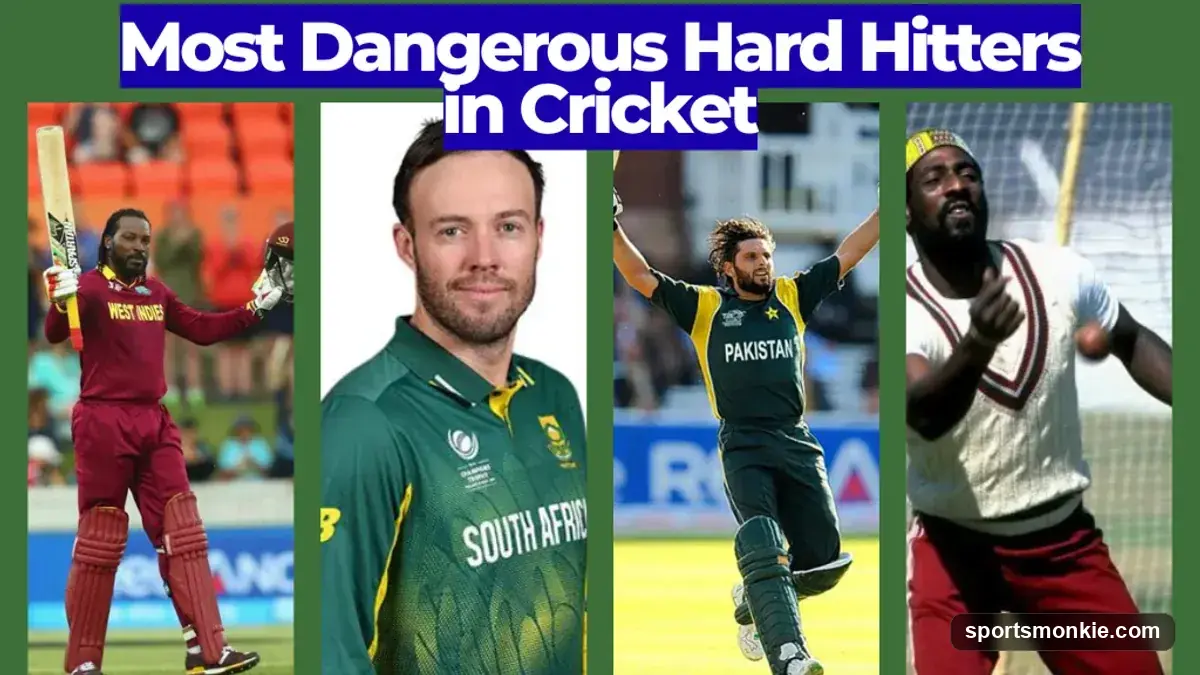
Gayle has cleared the rope more than anyone who has held a bat: 1,056 sixes across all T20 cricket, a total no active or retired player is close to, and the first man ever to reach 1,000. He ranks above Kieron Pollard because the gap is roughly 70 sixes and Gayle needed far fewer innings to build it. See the biggest sixes in cricket history for where his longest hits land by pure distance.
His 175 not out off 66 balls for Royal Challengers in 2013 — with a century off 30 deliveries — is still the highest individual T20 score on record. As a left-hander, his lofted arc over midwicket is the shot that reshaped how captains protect one side of the ground.
Team: West Indies · Signature: 1,056 T20 sixes (most ever) · Peak: 175* off 66 balls (2013)
- Efficiency king
Andre Russell
No batter converts strike into scoreboard damage faster. Russell's IPL strike rate of 174.71 is the highest of any player with 1,500-plus tournament runs, ahead of Nicholas Pooran, AB de Villiers, and Chris Gayle on that measure. He ranks above the volume hitters below him because his damage is concentrated: he does it in fewer balls, usually in the overs that decide games.
In 2019 he scored 510 runs at a strike rate above 200, taking the IPL's Super Striker award. He also bowls genuine pace, which makes him a two-way death-overs weapon — a role our best finishers in cricket breakdown covers in depth.
Team: West Indies · Signature: 174.71 IPL strike rate (best, 1,500+ runs) · Role: pace-bowling finisher
- Fastest to a hundred
AB de Villiers
De Villiers holds the fastest century in one-day international history — 31 balls against West Indies in Johannesburg in January 2015, inside an innings of 149 off 44 with 16 sixes. That mark has now stood for more than a decade; our fastest century in cricket page shows how it compares across formats.
What separates him from the pure sluggers is range. He played orthodox drives as cleanly as anyone, then switched without warning to reverse-sweeps and ramps behind the keeper — the 360-degree hitting that earned the "Mr. 360" tag and forced captains to abandon conventional field settings.
Team: South Africa · Record: fastest ODI century (31 balls, 2015) · Nickname: Mr. 360
- Career volume leader
Rohit Sharma
Rohit owns the all-time record for sixes in international cricket: 645 across Tests, ODIs, and T20Is, passing Chris Gayle's long-standing 553 in 2023. In late 2025 he also overtook Shahid Afridi for the most sixes in ODI history, and his 205 T20I sixes are a format record no one else has approached.
He ranks here rather than higher because his volume is spread across a long career rather than concentrated per ball. What is unusual is the method: the power sits inside a genuinely orthodox technique, not a slog — our most sixes in international cricket list tracks the full standings.
Team: India · Record: 645 international sixes (most ever) · Also: most ODI and T20I sixes
- Death-overs specialist
Kieron Pollard
Pollard is the second-most prolific six-hitter in T20 history, close to 1,000 for his career and trailing only Gayle. Across more than 700 matches he was rarely asked to bat time — teams sent him in specifically to bend the run rate inside a handful of balls, and for over a decade he delivered that in nearly every franchise league on the calendar.
He sits below Rohit because his damage came almost entirely in franchise T20 rather than international records, but on the narrow job of "score fast from ball one," few have a longer track record.
Team: West Indies · Signature: ~980 T20 sixes (2nd all-time) · 700+ T20 matches
- Unpredictable
Glenn Maxwell
Maxwell's value is that no field can be set for him. He holds the fastest century in men's ODI World Cup history — 40 balls against the Netherlands in 2023 — finishing 106 off 44 with eight sixes. Weeks later he made an unbeaten 201 against Afghanistan while barely able to run, one of the format's most extraordinary chases.
He ranks below the record-volume names because his output is streakier, but at his peak he targets any bowler to any part of the ground, mixing reverse scoops and conventional power inside the same over.
Team: Australia · Record: fastest ODI World Cup century (40 balls) · Peak: 201* vs Afghanistan
- The template
Viv Richards
Richards is the reason "attacking batting" has a benchmark at all. He faced genuinely hostile fast bowling without a helmet and still came out swinging from the first ball, decades before power hitting had coaching manuals or specialist bats. His ODI strike rate was exceptional for an era when scoring rates were a fraction of today's.
He ranks below the modern volume leaders on raw six counts — the shorter formats and smaller boundaries simply didn't exist for him — but on intimidation per innings he set the standard everyone since has been measured against.
Team: West Indies · Era: 1970s–80s · Signature: attacking template, no helmet
- Teenage phenom
Shahid Afridi
Afridi announced himself at 16 with an ODI century off 37 balls against Sri Lanka in 1996 — a record that stood for 18 years. "Boom Boom" then built an entire career around clearing the biggest grounds in the world, batting essentially one way regardless of the match situation.
He ranks in the middle because consistency was never the point — the dismissals came as often as the fireworks. His leg-breaks gave opponents a second problem, but the fear he created was almost entirely about the bat.
Country: Pakistan · Debut feat: 37-ball ODI century at 16 · Held record 18 years
- Modern great
Jos Buttler
In 2026 Buttler became the all-time leading run-scorer in T20 cricket, passing Kieron Pollard — a tally built on a T20I strike rate above 148 across more than 160 matches rather than sheer longevity. His ramp-scoop over the keeper's head turned a once-rare shot into a mainstream scoring option.
He ranks above the pure specialists because he does it as a wicketkeeper-batter carrying an international side, not just a franchise finisher. Check highest score in T20I cricket for where his biggest innings rank.
Team: England · Record: all-time leading T20 run-scorer (2026) · T20I strike rate 148+
- Longest hitter
Liam Livingstone
For raw distance, Livingstone may hit them harder than anyone active. His sixes in The Hundred and in T20Is for England have been measured among the longest struck, several clearing 100 metres — our longest sixes in cricket roundup stacks them against the biggest ever recorded.
He ranks here rather than higher because the body of work is shorter than the veterans above him, but he routinely takes games away from an opponent on his own, often from a position where he faces fewer deliveries than anyone else on this list.
Team: England · Signature: 100m-plus sixes · Position: lower-middle-order finisher
- One-over legend
Yuvraj Singh
Yuvraj hit six sixes in a single over off England's Stuart Broad at the 2007 T20 World Cup — the first time it was done in a major tournament, and still the most-replayed over in the format's short history. He reached his fifty off 12 balls in that innings, a T20I record for years.
He ranks below the career-volume names because his peak was shorter, but this was no fluke: he was a genuine match-winner across ODIs and T20Is for over a decade, with the wrist-work to clear the rope from deep in the crease rather than a full swing.
Team: India · Signature: six sixes in an over (2007) · Fastest T20I fifty (12 balls)
- Ball-one striker
Virender Sehwag
Sehwag hit from the first delivery as hard as most batters manage once set. His 219 off 149 balls remains one of the most destructive innings in ODI history, and he made two Test triple centuries at strike rates that would look aggressive in a T20.
He ranks last here only because his damage came in an era of smaller totals, not because it was any less brutal — he proved hard hitting and a high average weren't mutually exclusive. See highest score in ODI cricket for where his 219 sits.
Team: India · Peak: 219 off 149 balls (ODI) · Also: two Test triple centuries
Reader interaction
Build your ranking
Drag the names into the order you think is right — or use the arrows — then submit to see how your list compares with everyone else's.
- Chris Gayle
- Andre Russell
- AB de Villiers
- Rohit Sharma
- Kieron Pollard
- Glenn Maxwell
- Viv Richards
- Shahid Afridi
- Jos Buttler
- Liam Livingstone
- Yuvraj Singh
- Virender Sehwag
Audience ranking
How everyone ranked them
Built from reader rankings using position-based points.
Viv Richards batted without a helmet against bowlers actively trying to hurt him, and still attacked from the first ball as if the threat didn’t register. That is the baseline for a dangerous hitter: not just someone who clears the rope, but someone whose presence rewrites how the fielding captain sets his field before a ball is bowled. The T20 era turned the skill into a specialist trade, yet the trait has surfaced in every generation. The 12 ranked above are ordered by the numbers behind the reputation — the sections below explain how, and where the eras diverge.
How We Ranked Them
The list weighs three things together rather than trusting any single stat:
- Peak six-hitting volume or rate — total sixes (Gayle, Pollard) and per-ball efficiency (Russell).
- Record-breaking scoring speed — the fastest hundreds and fifties on record (de Villiers, Maxwell, Afridi, Yuvraj).
- Career-long, cross-format destruction — international volume and longevity, not one famous night (Rohit, Sehwag, Buttler).
No metric wins on its own, which is why a player who dominates efficiency (Russell) sits near a player who dominates total volume (Rohit). Where two hitters were close, the tie broke toward the one who did more damage in fewer balls, and toward records that still stand today rather than reputation alone.
What Separates a Dangerous Hitter From a Good One
Power gets you noticed; it doesn’t make you feared. The batters above share four traits a raw slugger usually lacks:
- Scoring from ball one — no settling-in period before the damage starts.
- All-ground range — big scoring in any direction, so no field setting contains them.
- Bowler intimidation — captains change their best bowlers’ plans specifically to counter them.
- Repeatability — a career pattern of destruction, not a single highlight innings.
Hard Hitters by Era
Six counts across generations aren’t apples-to-apples: smaller totals, larger boundaries, and no T20 format all held the earlier names’ raw numbers down. This is who defined power hitting in each period.
| Era | Notable hard hitters |
|---|---|
| 1970s–1980s | Viv Richards, Kapil Dev, Ian Botham |
| 1990s–2000s | Shahid Afridi, Virender Sehwag, Yuvraj Singh |
| 2000s–2010s | Chris Gayle, AB de Villiers, Kieron Pollard |
| 2010s–present | Andre Russell, Rohit Sharma, Glenn Maxwell, Jos Buttler, Liam Livingstone |
The Hard Hitter’s Role in Team Strategy
Modern T20 sides build the batting order around power, not the other way round. Some open with their biggest hitter to maximize the balls he faces; others hold him back for the death overs, where a six is worth more than the two singles it would replace. Either way, hard hitting is no longer a bonus skill on top of a batter’s game. It is a defined role, trained for deliberately, and the 12 names above are the ones that role is measured against.
Frequently asked questions
Who is the most dangerous hard hitter in cricket history?+
There's no single answer, which is why we ranked by output rather than reputation. Chris Gayle tops our list on total six-hitting volume — 1,056 across all T20 cricket. Andre Russell wins on efficiency, AB de Villiers on scoring speed, and Rohit Sharma on international longevity. Each dominates a different measure, so your pick depends on whether you value volume, rate, or peak speed.
What actually makes a batter a 'dangerous' hitter rather than just a big hitter?+
Raw power alone gets you noticed, not feared. A dangerous hitter scores from the first ball without a settling-in period, hits to all parts of the ground so no field contains him, and does it consistently enough that captains rebuild their bowling plans around him specifically. One famous innings makes a highlight; a career of forcing tactical changes makes a threat. That distinction drove our ranking order.
Does the fastest ODI century record still belong to AB de Villiers?+
Yes. De Villiers scored a 31-ball century against West Indies in January 2015, and no one has beaten it in the years since. Corey Anderson's 36-ball effort held the mark just before him, and Shahid Afridi's 37-ball hundred stood from 1996 until 2014. De Villiers' 149 off 44 balls, with 16 sixes, remains the benchmark for scoring speed in the 50-over game.
Are hard hitters only a T20 phenomenon?+
No. Viv Richards and Ian Botham were feared strikers in Tests and ODIs decades before T20 existed, and Virender Sehwag's 219 in an ODI and back-to-back Test triple centuries prove destruction predates the format. T20 turned power hitting into a specialist trade with its own coaching and equipment, but the trait itself shows up in every era of the game, just against different scoring baselines.
Who has hit the most sixes across all formats of cricket?+
Rohit Sharma holds the international record with 645 sixes across Tests, ODIs, and T20Is combined, having passed Chris Gayle's 553 in 2023. For franchise and all-T20 cricket, Gayle leads with 1,056. The two records measure different things — Rohit's counts only country cricket, Gayle's counts every T20 league — so both men can accurately be called the game's leading six-hitter.
Why is Andre Russell ranked above bigger names like Rohit Sharma?+
Because our criteria weight rate and impact, not just career totals. Russell's IPL strike rate of 174.71 is the highest of anyone with 1,500-plus runs, and his damage is concentrated in the death overs that decide matches. Rohit's six tally is larger but spread across far more innings and a longer career. On a per-ball basis in the phase that matters most, Russell is simply harder to bowl to.
Sources
Play & tools
Free browser games and tools — no account, no download.
- Play today's Sports Connections — Today's Sports Connections — daily hints, answers, and play the grid.
- Play Guess the NFL Player — A new mystery NFL player every day. Eight guesses, with a clue on each — plus free unlimited mode.
- Explore all our games →
Related cricket guides
View all →
Longest Sixes in Cricket: The Biggest Hits Ever Recorded
The 12 longest sixes ever measured in cricket, ranked by distance — from Shahid Afridi's 153m strike at the Wanderers to Tim David's 129m hit in 2025.
How to Play the Periscope Shot in Cricket
The periscope shot is a vertical-bat stroke to short balls at the body, holding the bat upright to deflect it over the leg-side fielders. Learn the method.
Best Finishers in Cricket History: Who Seals Games Under Pressure
The 12 best finishers in cricket, ranked: MS Dhoni, Michael Bevan, AB de Villiers, Lance Klusener, Javed Miandad and the closers who win from lost positions.
Most Sixes in T20I Cricket: All-Time Records and Top Hitters
Rohit Sharma and Martin Guptill lead the way for most sixes in T20 Internationals. See the biggest hitters, key records, and what defines T20I six-hitting.
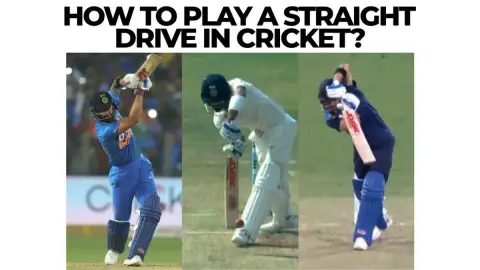
How to Play a Straight Drive in Cricket: Technique and Timing
The straight drive is cricket's classic front-foot shot, played to a full ball on off stump and hit past the bowler. Learn the stance, grip, and swing.
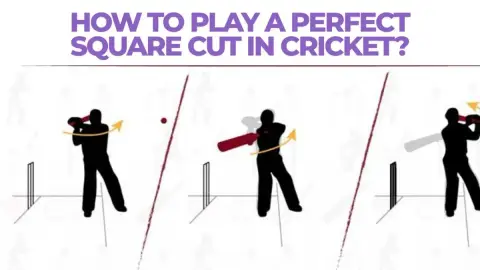
How to Play a Perfect Square Cut in Cricket: Step-by-Step
The square cut is played to a short, wide delivery outside off stump. Learn the grip, back-foot movement, and bat swing to send the ball through point.