
Biggest Sixes in Cricket History: The Longest Hits Ever Recorded
On this page5
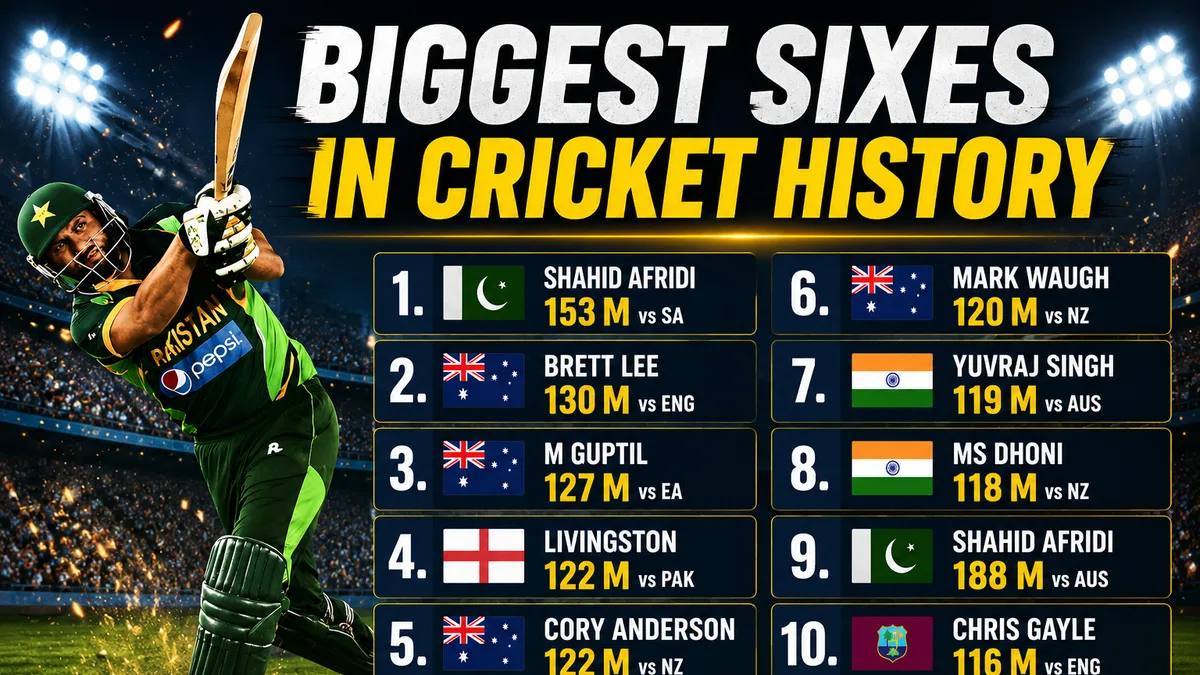
Shahid Afridi’s six off Ryan McLaren at the Wanderers in Johannesburg on March 17, 2013 is the hit most often credited as the biggest six in cricket history, widely reported at 153 metres. It’s also the most disputed: ESPNcricinfo’s own measurement analysis puts the real carry closer to 100-120 metres. That gap between legend and measurement is the whole story of cricket’s “biggest six” lists — spectacular hits, unreliable rulers.
The Biggest Sixes in Cricket: Full Leaderboard
The distances below are the figures most consistently cited across broadcast graphics, cricket stats sites, and match reports. None of them come from an official governing-body ledger — cricket doesn’t have one — so treat the numbers as widely reported estimates rather than certified facts. Where a figure is seriously disputed by independent analysis, it’s flagged.
| Rank | Batter | Distance | Match / Venue | Year |
|---|---|---|---|---|
| 1 | Shahid Afridi | 153m (disputed — see below) | Pakistan vs South Africa, Wanderers, Johannesburg (ODI) | 2013 |
| 2 | Brett Lee | 143m (also reported 130-135m) | Australia vs West Indies, the Gabba, Brisbane (Test) | 2005 |
| 3 | Jacob Oram | 130m | New Zealand vs Australia (ODI) | 2006 |
| 4 | Tim David | 129m | Australia vs India, Hobart (T20I) | 2025 |
| 5 | Martin Guptill | 127m | New Zealand vs South Africa (T20I) | 2012 |
| 6 | Liam Livingstone | 122m | England vs Pakistan, Headingley (ODI) | 2021 |
| 7 | Corey Anderson | 122m | New Zealand vs India (ODI) | 2014 |
| 8 | Mark Waugh | 120m | Australia vs New Zealand (ODI) | 1997 |
| 9 | Yuvraj Singh | 119m | India vs Australia, Kingsmead, Durban (T20I) | 2007 |
| 10 | MS Dhoni | 118m | India vs New Zealand, Christchurch (ODI) | 2009 |
| 11 | Shahid Afridi | 118m | Pakistan vs Australia (ODI) | 2005 |
| 12 | Shivam Dube | 117m | India vs Australia, Hobart (T20I) | 2025 |
| 13 | Chris Gayle | 116m | West Indies vs India (T20I) | 2010 |
| 14 | Ijaz Ahmed | 115m | Pakistan vs India (ODI) | 1999 |
| 15 | Hardik Pandya | 109m | India vs Namibia, T20 World Cup | 2026 |
The Top Entries, Explained
1. Shahid Afridi — 153m, Johannesburg 2013 (widely cited, seriously disputed)
Afridi’s free-hit six off Ryan McLaren cleared long-on and landed near the stadium’s upper tier, repeated across highlight reels and stat pages as the longest six ever hit. It’s also the record ESPNcricinfo’s Cricket Monthly pushed back on hardest: mapping the contact point against Google Earth, its analysis found the ball couldn’t have traveled much beyond 100-120 metres unimpeded, calling “130-plus” out of the question. The Wanderers sits roughly 1,700 metres above sea level, and thinner air there does help a ball carry farther than sea-level grounds — likely why a huge hit happened here, even if the number attached to it is inflated.
2. Brett Lee — 143m, the Gabba 2005
Lee, batting at the tail as a fast bowler rather than a specialist, launched Darren Powell over deep square leg and into the practice nets outside the Gabba during a 2005 Test against West Indies. It’s the most commonly cited longest six by a bowler in international cricket, though some broadcast reviews put the true distance closer to 130-135 metres. Either figure puts it among the two or three longest hits ever recorded with any reasonable evidence behind them.
3-5. Oram, David, and Guptill
Jacob Oram’s 130-metre hit against Australia in 2006 remains one of New Zealand’s biggest ODI strikes. Tim David’s 129-metre six off Axar Patel in Hobart during a 2025 T20I is the most recent hit to crack the traditional top five, proof today’s power hitters still produce distances that rival hits from two decades ago. Martin Guptill’s 127-metre six against South Africa is the reference point for New Zealand’s power-hitting tradition — he’s also a former holder of the most sixes in T20I cricket career record.
What “Distance” Actually Measures — and Why It’s Hard to Verify
Six distance isn’t an official cricket statistic the way runs, wickets, or strike rate are. There’s no ICC-certified measurement system, no Guinness-style ratification process, and no consistent methodology across broadcasters. In practice, three different things get called “distance”:
- Carry distance — how far the ball traveled through the air before it would have hit the ground, which is what most broadcast graphics claim to show.
- Unimpeded distance — an estimate of how far the ball would have gone if it hadn’t been stopped by a stand, roof, or fielder.
- Total distance — carry plus any roll or bounce after landing, which inflates the number and is rarely disclosed as such.
Older sixes, especially anything from before the mid-2000s, were often estimated by eye rather than any camera-based system. Even modern ball-tracking varies by broadcaster. That’s why independent reviews — most notably ESPNcricinfo’s Cricket Monthly piece “The longest shot” — have gone back and re-measured famous hits against satellite imagery and stadium dimensions, and found that some of cricket’s most repeated numbers, Afridi’s 153m chief among them, don’t hold up.
How This List Was Cross-Checked
No single source publishes a verified “biggest six” leaderboard, so the ranking above is built by cross-referencing distances that appear consistently across multiple independent trackers, then flagging any figure that a credible outlet has specifically challenged. Afridi’s 153m and Lee’s 143m both clear that bar for “widely and consistently reported,” even though the underlying measurement itself is shaky — which is exactly why both carry a dispute note rather than being presented as settled fact.
Active in 2026: Who’s Chasing the Record
The record at the very top hasn’t moved in years — Afridi’s disputed 153m and Lee’s 143m both date to the mid-2000s and 2013. But today’s power hitters keep the conversation alive. Tim David’s 129m in Hobart (2025) and Shivam Dube’s 117m in the same series are the two biggest broadcast-tracked distances from the last two years. Hardik Pandya’s 109m six against Namibia was the standout blow of the 2026 T20 World Cup so far. With white-ball bats and training now built specifically around bat speed, it’s plausible a modern hitter eventually produces a distance that survives closer scrutiny than the sport’s older, shakier legends.
For the volume side of six-hitting rather than single-shot distance, see our full breakdown of most sixes in international cricket, or browse more cricket records and stats on SportsMonkie.
Frequently asked questions
Who hit the biggest six in cricket history?+
Shahid Afridi is most widely credited with the biggest six in cricket history, an estimated 153-metre strike off Ryan McLaren at the Wanderers in Johannesburg during a 2013 ODI. ESPNcricinfo's own analysis has questioned that figure, suggesting the real carry was closer to 100-120 metres.
How far did Brett Lee's famous six travel?+
Brett Lee's six off Darren Powell at the Gabba in a 2005 Test against West Indies is usually listed at 143 metres, though some broadcast graphics and analysts put it closer to 130-135 metres. It remains the longest six widely credited to a fast bowler.
What is the longest six in T20I cricket?+
Liam Livingstone's 122-metre six for England against Pakistan at Headingley in 2021 is the most commonly cited longest six specific to men's T20 internationals, though Martin Guptill (127m) and Corey Anderson (122m) also rank among the format's biggest hits.
Why are cricket's biggest-six distances so disputed?+
There's no official body that measures and certifies six distances. Broadcasters estimate carry using camera angles and graphics software, and older hits were guessed by eye. ESPNcricinfo's Cricket Monthly used Google Earth mapping to show several famous distances, including Afridi's 153m claim, were likely overstated.
How are six distances actually measured?+
Modern broadcasts estimate the ball's landing point using multiple camera angles combined with ground mapping software, giving a 'carry' distance. Analysts have since cross-checked some of these using Google Earth and stadium dimensions, and the two methods don't always agree.
Who is chasing the longest-six record in 2026?+
Active power hitters like Tim David (129m, 2025), Shivam Dube (117m, 2025), and Hardik Pandya (109m, at the 2026 T20 World Cup) are the players most frequently producing top-15 distances now, keeping the record conversation alive without yet toppling Afridi's or Lee's marks.
Which format produces the longest sixes?+
Test and ODI cricket account for most of the top all-time distances, including Brett Lee's 143m and Shahid Afridi's 153m, largely because those hits happened before T20 became cricket's dominant format. T20 and T20I cricket now produce the highest volume of huge sixes even if it hasn't broken the very top of the all-time list.
Did altitude help Shahid Afridi's record six?+
Yes. The Wanderers Stadium in Johannesburg sits roughly 1,700 metres above sea level, and thinner air at altitude reduces drag on the ball, which is one reason analysts cite for why Afridi's hit there is widely (if disputedly) credited as the longest six on record.
Sources
Play & tools
Free browser games and tools — no account, no download.
- Play today's Sports Connections — Today's Sports Connections — daily hints, answers, and play the grid.
- Play Guess the NFL Player — A new mystery NFL player every day. Eight guesses, with a clue on each — plus free unlimited mode.
- Explore all our games →
Related cricket guides
View all →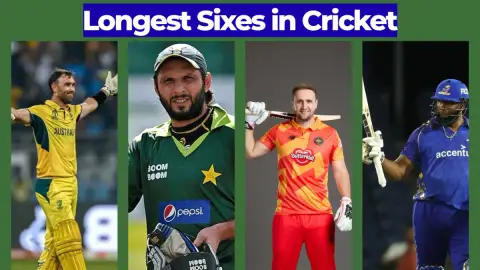
Longest Sixes in Cricket: The Biggest Hits Ever Recorded
The 12 longest sixes ever measured in cricket, ranked by distance — from Shahid Afridi's 153m strike at the Wanderers to Tim David's 129m hit in 2025.

Longest Six in Cricket History: Shahid Afridi's Disputed 153m Claim, Ranked
Shahid Afridi's 153–160m six at the Wanderers in 2013 is the most-cited longest six in cricket history, but independent remeasurement puts it closer to 100–120m. Every major claim from 1856 to 2026, ranked and fact-checked.
Most Sixes in International Cricket (All-Time List)
Rohit Sharma holds the record for most sixes in international cricket, passing Chris Gayle's 553 in 2023. Full all-time list across Tests, ODIs and T20Is.
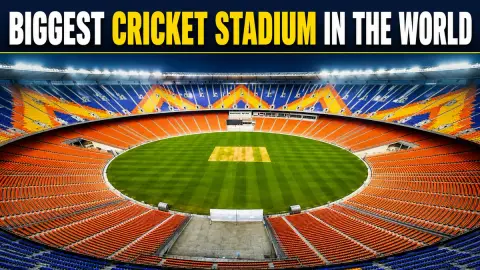
Biggest Cricket Stadium in the World: Narendra Modi Stadium (132,000)
The Narendra Modi Stadium in Ahmedabad holds 132,000 fans, making it the biggest cricket stadium in the world. See the full ranked list of the 12 largest grounds.

Shortest Test Matches in Cricket History
The shortest Test matches ever, measured by balls bowled: from the 642-ball Cape Town record of 2024 back to the two-day classics of 1888, 1932 and 2021.
Fastest Century in Cricket (Every Format)
AB de Villiers holds the fastest ODI century at 31 balls. The fastest hundreds in T20, ODI and Test cricket explained, with the record-holders for each format.