
Highest Wicket-Takers in ODI Cricket: Muralitharan's 534, Ranked Top 15
On this page6
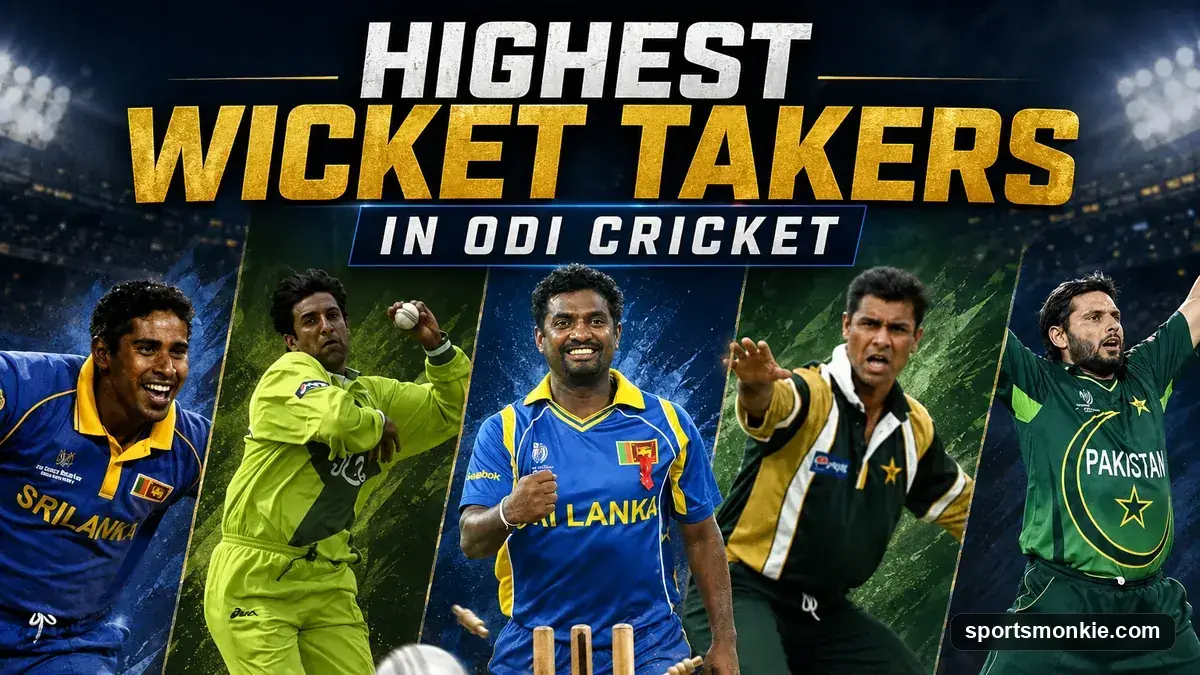
Muttiah Muralitharan is the highest wicket-taker in ODI cricket history, with 534 wickets from 350 matches between 1993 and 2011 — a total no other bowler has come within 30 wickets of in the 15 years since he retired. Wasim Akram sits second with 502, the only fast bowler ever to reach 500 ODI wickets. Between them, an off-spinner from Sri Lanka and a left-arm quick from Pakistan who helped pioneer reverse swing as a weapon took wickets across three decades of one-day cricket, and their tallies still sit clear of everyone who has bowled in the format since.
How this list is ranked
This ranking uses career ODI wickets as the sole ordering criterion, sourced from ESPNcricinfo’s official bowling records and cross-checked against Wikipedia’s compiled list of 300-plus-wicket bowlers. Ties are broken by fewer matches needed to reach the total (a rough proxy for strike rate). The list covers only men’s full-member international ODIs; wickets in T20Is, Tests, or franchise leagues are not counted here. Career figures for retired players are final; figures for anyone still playing would need checking against a live source, though none of the top 15 below is currently active.
All-time highest wicket-takers in ODIs (top 15)
| Rank | Bowler | Country | Wickets | Matches | Career span | Average |
|---|---|---|---|---|---|---|
| 1 | Muttiah Muralitharan | Sri Lanka | 534 | 350 | 1993–2011 | 23.08 |
| 2 | Wasim Akram | Pakistan | 502 | 356 | 1984–2003 | 23.52 |
| 3 | Waqar Younis | Pakistan | 416 | 262 | 1989–2003 | 23.84 |
| 4 | Chaminda Vaas | Sri Lanka | 400 | 322 | 1994–2008 | 27.53 |
| 5 | Shahid Afridi | Pakistan | 395 | 398 | 1996–2015 | 34.51 |
| 6 | Shaun Pollock | South Africa | 393 | 303 | 1996–2008 | 24.50 |
| 7 | Glenn McGrath | Australia | 381 | 250 | 1993–2007 | 22.02 |
| 8 | Brett Lee | Australia | 380 | 221 | 2000–2012 | 23.36 |
| 9 | Lasith Malinga | Sri Lanka | 338 | 226 | 2004–2019 | 28.87 |
| 10 | Anil Kumble | India | 337 | 271 | 1990–2007 | 30.89 |
| 11 | Sanath Jayasuriya | Sri Lanka | 323 | 445 | 1989–2011 | 36.75 |
| 12 | Shakib Al Hasan | Bangladesh | 317 | 247 | 2006–2023 | 29.52 |
| 13 | Javagal Srinath | India | 315 | 229 | 1991–2003 | 28.08 |
| 14 | Daniel Vettori | New Zealand | 305 | 295 | 1997–2015 | 31.71 |
| 15 | Shane Warne | Australia | 293 | 194 | 1993–2005 | 25.74 |
Figures verified against ESPNcricinfo and Wikipedia’s 300+ ODI wickets list as of 2026. Sanath Jayasuriya and Shakib Al Hasan were primarily all-rounders whose wickets came alongside major batting contributions.
Muralitharan’s record: how he got to 534
Murali built his tally on two deliveries: the standard off-break and the doosra, a variation that spun the other way and left batters guessing which was coming. He took wickets at a similar rate at home in Colombo as he did on neutral pitches in England, South Africa, and Australia — conditions that historically punished finger-spinners — while keeping his economy low enough that captains could bowl him through the middle overs without bleeding runs. His 534 wickets came from 350 matches, a strike rate of roughly one wicket every 34 balls, sustained across an 18-year career. Combined with his 800 Test wickets, he is also the all-time leader in Test wickets and, across all formats combined, the most wickets in cricket history by any bowler.
Wasim Akram: the only fast bowler past 500
Wasim Akram’s 502 wickets remain the standard for pace bowling in limited-overs cricket, and no other quick has come within 85 wickets of that number. He got there with late swing, mastery of reverse swing with the old ball, and the versatility to open the bowling with the new ball and then return for the death overs — a combination that made him a fixture among the greatest fast bowlers in the game’s history. His new-ball partner Waqar Younis sits third on this list with 416, and together they gave Pakistan the two highest fast-bowling wicket tallies the format has produced.
What separates the top of this list
Sustained success in ODIs, more than any single skill, requires:
- Longevity — reaching the top of this list means playing 250–450 matches across a decade or more; Jayasuriya needed 445 games to reach 323 wickets, while McGrath got to 381 in just 250
- Wicket-taking over containment — the players here average between 22 and 37 with the ball, but all of them were picked to take wickets, not just slow the run rate
- Adaptability — performing on flat subcontinental pitches, seaming English decks, and bouncy Australian tracks in the same career
- Durability — ODI careers stretching 15+ years, which is rarer now than it was for this generation
2026 status: how far away are today’s bowlers?
Nobody currently playing is within striking distance of this list. As of 2026, the leading active ODI wicket-taker is Australia’s Mitchell Starc with roughly 244 wickets — over 250 short of Muralitharan’s total and short even of Shane Warne’s 293 at #15. India’s Ravindra Jadeja (around 231) and England’s Adil Rashid (around 224) are next among active bowlers, with India’s Mohammed Shami around 206. The gap exists because modern international schedules split workload across Tests, ODIs, and T20Is, so even durable, long-serving bowlers now play far fewer 50-over matches per year than Murali, Akram, or Jayasuriya did in the 1990s and 2000s. Barring an unusually long and prolific late-career run from one of today’s leaders, both the 534 and 502 marks look safe for years to come.
Frequently asked questions
Who has the most wickets in ODI cricket?+
Muttiah Muralitharan of Sri Lanka has the most ODI wickets ever: 534, taken across 350 matches between 1993 and 2011. His combination of the off-break and the doosra let him take wickets in the middle overs on almost any surface, and no one else has come within 30 wickets of his total since he retired.
How many ODI wickets did Wasim Akram take?+
Wasim Akram took 502 ODI wickets in 356 matches for Pakistan between 1984 and 2003, at an average of 23.52. He is the only fast bowler in ODI history to pass 500 wickets, and he remains the benchmark for left-arm pace in the 50-over format.
Which bowlers have taken 500 or more ODI wickets?+
Only two bowlers have reached 500 ODI wickets: Muttiah Muralitharan with 534 and Wasim Akram with 502. Waqar Younis is next at 416, a gap of 86 wickets, which shows how far clear the top two sit above the rest of the all-time list.
Who is the leading fast bowler on the all-time ODI wickets list?+
Wasim Akram leads all fast bowlers with 502 ODI wickets, ahead of Waqar Younis (416), Shaun Pollock (393), Glenn McGrath (381), and Brett Lee (380). Akram and Waqar's new-ball partnership for Pakistan through the 1990s produced two of the format's five highest wicket tallies.
Is any active bowler close to breaking the ODI wickets record?+
No. As of 2026, the leading active ODI wicket-taker is Mitchell Starc with roughly 244 wickets, still around 290 short of Muralitharan's 534. Reduced ODI schedules and workload management across three formats make it unlikely anyone closes that gap in the foreseeable future.
How many ODI wickets did Shane Warne take?+
Shane Warne, better known for his 708 Test wickets, took 293 ODI wickets in 194 matches at an average of 25.74. That total is enough to place him among the top 15 all-time ODI wicket-takers, underlining how effective his leg-spin was across formats, not just in Tests.
Why is Muralitharan's ODI wickets record considered so hard to break?+
Muralitharan needed 18 seasons and 350 matches to reach 534 wickets, a pace of roughly 1.5 wickets per game sustained over two decades. Modern bowlers play far fewer ODIs because of packed T20 and Test schedules, so matching that longevity, let alone the wicket rate, is extremely difficult today.
Who took the most ODI wickets for a team other than Pakistan or Sri Lanka?+
Shaun Pollock is the leading non-Pakistani, non-Sri Lankan bowler on the list, with 393 wickets for South Africa between 1996 and 2008. Anil Kumble (337, India) and Glenn McGrath (381, Australia) are the next-highest wicket-takers from other major cricket nations.
Sources
Play & tools
Free browser games and tools — no account, no download.
- Play today's Sports Connections — Today's Sports Connections — daily hints, answers, and play the grid.
- Play Guess the NFL Player — A new mystery NFL player every day. Eight guesses, with a clue on each — plus free unlimited mode.
- Explore all our games →
Related cricket guides
View all →
Highest Score in ODI Cricket (Individual and Team)
Rohit Sharma holds the highest individual ODI score with 264. England's 498/4 is the record team total. Full lists of both, explained.
Highest Batting Average in ODI Cricket: Shubman Gill Leads at 60.33
Shubman Gill's 60.33 is the highest qualified ODI batting average in 2026, just ahead of Virat Kohli's 58.59 across five times the innings. Full ranked top 20.
Highest Score in T20I Cricket: Full Leaderboard of Team and Individual Records
Zimbabwe's 344/4 vs Gambia is the highest team total in men's T20Is. See the top 9 team totals, the highest full-member score, and Aaron Finch's 172, updated for 2026.

Fastest Century in ODI Cricket: AB de Villiers' 31-Ball Record
AB de Villiers holds the fastest ODI century ever: 31 balls, South Africa v West Indies, 2015. Ranked list of the 10 fastest ODI hundreds, verified against ESPNcricinfo and Wisden.
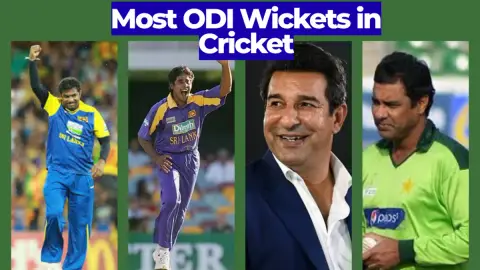
Most ODI Wickets in Cricket: All-Time Records and Top Bowlers
Muttiah Muralitharan holds the record for most ODI wickets ever. See the all-time leaders, what makes an elite ODI bowler, and key ODI bowling milestones.
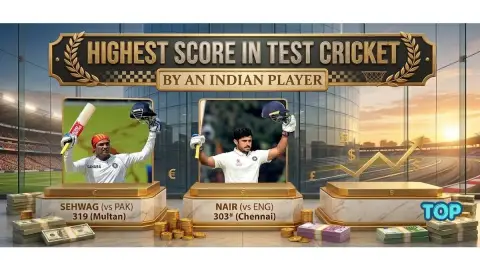
Highest Score in Test Cricket by an Indian Player
The highest Test score by an Indian is Virender Sehwag's 319 against South Africa in Chennai, 2008. See the top innings by India's batters here.