
How to Bowl the Doosra: Grip, Action, and Technique
On this page7
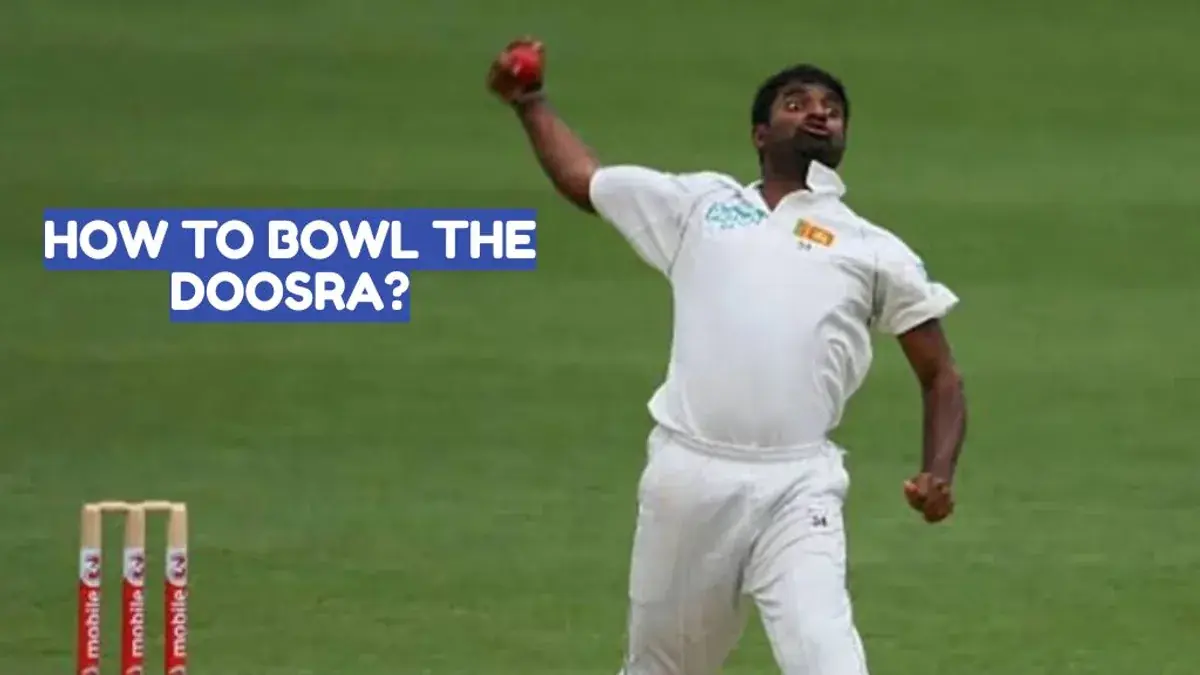
Saqlain Mushtaq named it well: doosra just means “the other one” in Urdu, and that’s exactly the point. A batter reads the hand, sees an off-break coming, plays for the turn into their pads, and instead watches the ball spin the wrong way past the outside edge. Bowled correctly, it looks identical to a stock off-break out of the hand, which is the entire reason it works and the entire reason it’s so hard to bowl legally.
What Makes the Doosra Different
A standard off-break turns from off to leg for a right-handed batter. The doosra turns the other way, leg to off, released with a wrist and finger action that’s meant to look nearly identical to the stock ball. The disguise is the whole point.
The Grip
- Place the index and middle fingers across the seam, close together.
- Rest the thumb lightly on the underside of the ball. It takes almost no weight.
- Unlike a leg-break, the ring finger does real work here: it presses against the side of the ball to generate the reversed spin.
- Rotate the wrist outward, away from the body, at release, rather than inward as with a standard off-break.
That outward rotation is the core difference in the mechanics, and it’s also why this delivery loads the elbow joint in a way the stock ball doesn’t.
Stance and Run-Up
Nothing about your approach should change. A run-up that mirrors your stock off-break exactly is non-negotiable; any deviation tips off an experienced batter before the ball even leaves your hand. Stay side-on through the crease, same as always.
The Release
| Phase | Standard Off-Break | Doosra |
|---|---|---|
| Wrist at release | Rotates inward (clockwise for right-arm bowler) | Rotates outward (anti-clockwise) |
| Fingers at release | Roll over the top of the ball | Flick/push from underneath |
| Ball rotation | Clockwise (from batter’s view) | Anti-clockwise |
| Drift | Into right-handed batter | Away from right-handed batter |
The key moment is the final flick. Instead of rolling your fingers over the ball, push the ring finger through and snap the wrist outward. That’s what reverses the spin while keeping your arm path looking the same.
When to Use It
The doosra earns its keep in a few specific moments: against a batter who sweeps hard across the line, expecting turn into their pads; against someone who’s settled in against your stock ball and is looking to drive through the off side; and as a surprise delivery you save for when it counts rather than a stock ball in its own right. Against a left-hander, it flips into a conventional turning delivery (spinning into the batter), which gives you another option bowling around the wicket.
A Note on Legality and Safety
The ICC allows a maximum of 15 degrees of elbow extension during the bowling action. The doosra pushes right up against that limit for most bowlers, and it has cost several prominent players suspensions over the years. Before adding it to your game:
- Work with a qualified coach who can monitor your elbow angle.
- Film your action from multiple angles and review it properly, not just a glance.
- Build up gradually. Don’t bowl it in a competitive match until your coach confirms the action is legal.
An illegal action risks both a suspension and long-term damage to the elbow.
Practice Drill
Set a target on a good-length spot just outside off stump. Practise the outward wrist rotation in slow motion off a couple of steps before working up to a full run-up. Watch the seam position closely: if it wobbles, the wrist isn’t rotating cleanly.
Frequently asked questions
What does 'doosra' mean?+
'Doosra' is an Urdu word meaning 'the other one' or 'the second one'. It was coined because the ball behaves like the opposite of a standard off-break.
Is the doosra legal in cricket?+
The doosra has been controversial because it can require bending the elbow beyond the 15-degree tolerance allowed by the ICC. Bowlers must work with coaches to develop a legal action before attempting it in match conditions.
Which bowlers are famous for the doosra?+
Saqlain Mushtaq of Pakistan is widely credited with inventing the delivery. Muttiah Muralitharan and Harbhajan Singh also became well known for bowling effective versions of it.
Sources
Play & tools
Free browser games and tools — no account, no download.
- Play today's Sports Connections — Today's Sports Connections — daily hints, answers, and play the grid.
- Play Guess the NFL Player — A new mystery NFL player every day. Eight guesses, with a clue on each — plus free unlimited mode.
- Explore all our games →
Related cricket guides
View all →
How to Bowl an Off Cutter in Cricket: Grip & Technique
An off cutter is a seam ball that cuts from off to leg into a right-hander. Grip across the seam and drag the middle finger down at release for movement.
How to Bowl a Leg Cutter in Cricket: Grip & Technique
A leg cutter is a fast bowler's delivery that cuts from leg to off. Grip fingers across the seam, then drag the index finger down at release for movement.
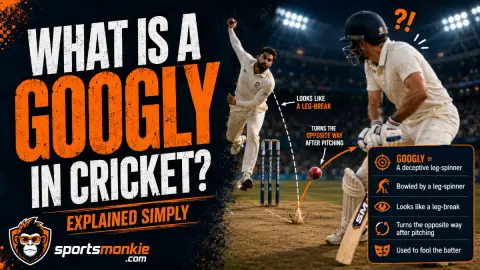
What Is a Googly in Cricket?
A googly is a leg-spinner's disguised delivery that turns the opposite way to a leg break, spinning into a right-hander. See how it's bowled and deceives.
How to Bowl Reverse Swing in Cricket: Technique Explained
Reverse swing makes an old, scuffed ball curve opposite to normal swing. Keep the shiny side toward your target, angle the seam, and bowl at high pace.
How to Play a Sweep Shot in Cricket: Complete Technique Guide
The sweep shot is a front-foot stroke to full-length spin, hitting the leg side with a horizontal bat. Learn the kneeling position, grip, and placement.
How to Play a Reverse Sweep in Cricket: Technique Guide
The reverse sweep flips your grip and stance to hit spin to the off side. Learn the exact technique, footwork, and when to use it in a match.